
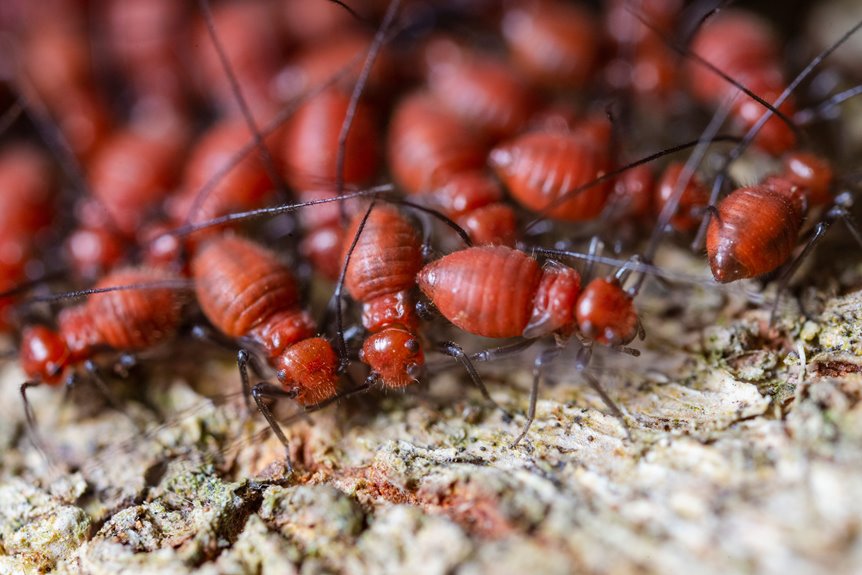
I’ve battled termites in my raised beds twice, and this is what works. First, I dig out every speck of infested soil and woody debris: old stumps, hidden logs, the works. I swap it for fully decomposed compost, not fresh bark. Then I hunt for their entry points: those pencil-thin mud tubes on wood frames, spongy corners, and damp soil patches where they snuck in. I refill with 12 inches of clean, fluffy, earthy-smelling mix that drains well with no soggy pockets. Next, I apply beneficial nematodes. Steinernema feltiae works for my clay soil, applied at dawn when it’s damp, to hunt any survivors underground. I block re-entry with metal mesh (1/8 inch or finer) around the bed’s edge, pressure-treated lumber lining the walls, and a coarse gravel trench below ground level. Finally, I eliminate moisture traps and keep watching. These persistent engineers will always scout for a way back in, so continued monitoring prevents reinfestation.
Remove Termite-Infested Soil and Woody Debris Now
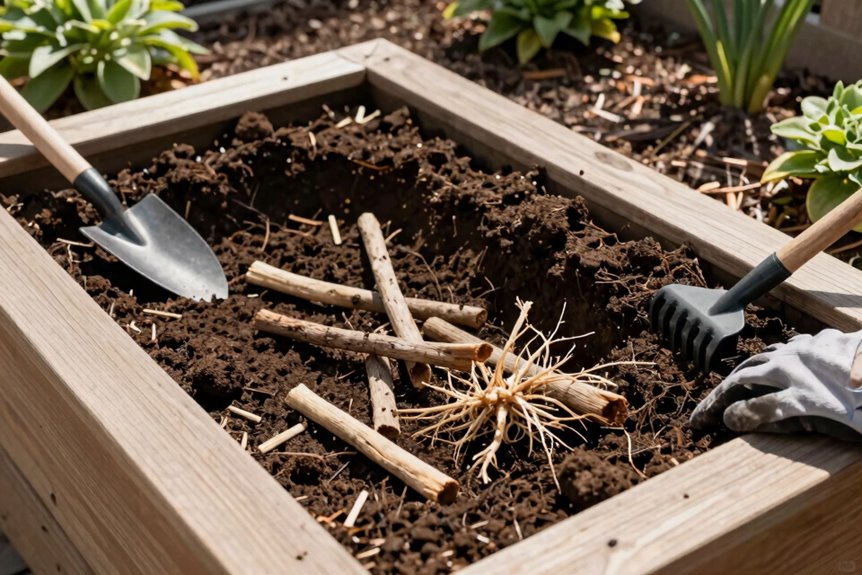
Where do termites love to hide? In every cozy corner of your raised bed where wood meets damp soil. Termite control in raised beds starts with immediate, decisive action.
First, dig out all infested soil and woody debris right away. This disrupts their food supply and destroys their nesting spots. Use a sturdy shovel and remove every scrap of buried wood, old stumps, hidden logs, and that tempting woody mulch tucked around tomatoes.
Next, swap the disturbed dirt for a non-wood, fully decomposed growing mix; think compost that’s broken down completely, not chunky bark. If topsoil is too contaminated to save, wash tools thoroughly and discard it, then bring in fresh, termite-free soil.
Finally, scan your yard for moisture traps and stray wood that might invite them back.
Find Where Termites Entered Your Raised Bed
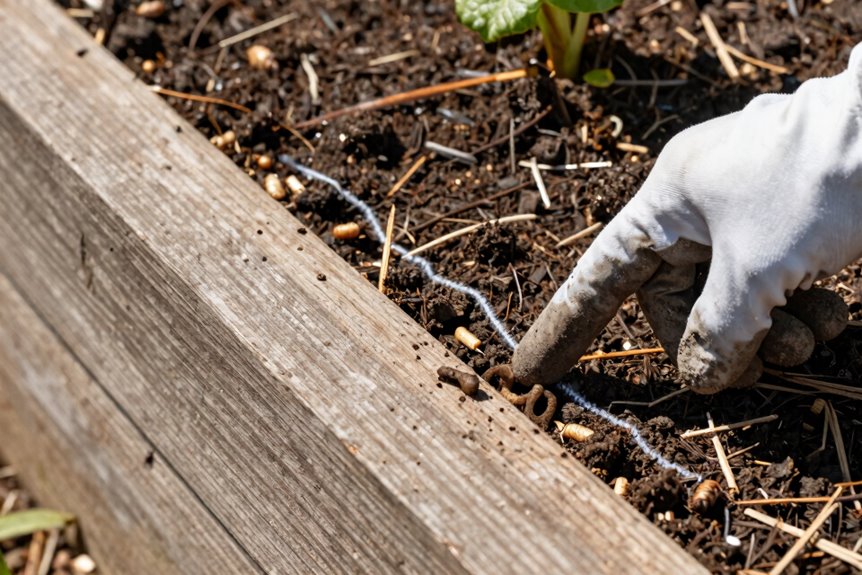
How exactly did those tiny invaders sneak into your garden sanctuary? Trace termites entering raised bed structures by following these specific inspection steps.
Start at ground level, scanning for pencil-thin mud tubes climbing wood-framed sides. These are termite highways, about 1/4 inch wide. Press your fingers against corners where soil meets timber, feeling for spongy, hollow spots. In Alabama, Eastern subterranean and Formosan subterranean termites nest underground, so follow moisture trails. Even with crushed stone bottoms and weed barriers, check if wood components above created bridges.
Dig gently around the perimeter, hunting buried wood chunks that indicate a food source. Any damp, dark soil patches warrant investigation. Spotted wood with visible tunnels represents a confirmed entry point. Mark these zones for treatment planning.
Refill With Termite-Free, Fully Decomposed Growing Mix
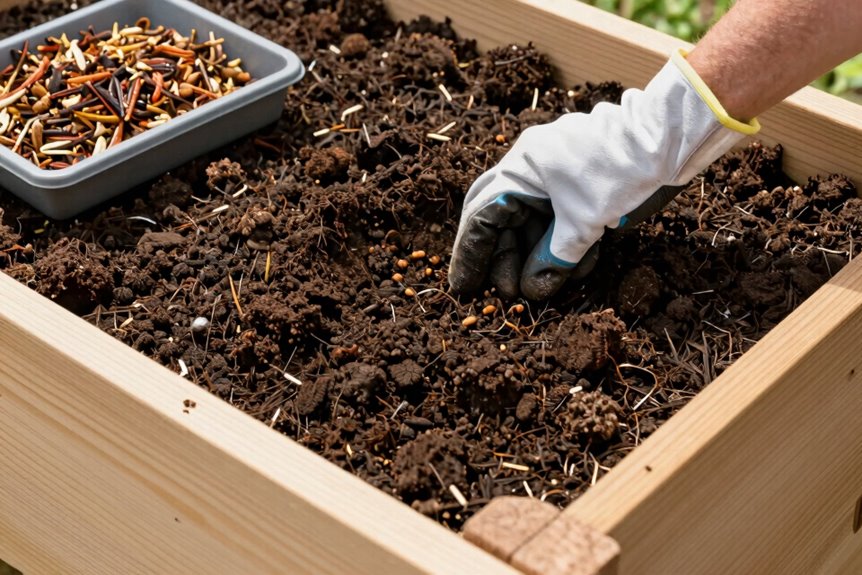
Once I’ve marked every entry point and cleared out the infested soil, I’m ready to give my raised bed a complete fresh start.
I grab my termite-free growing medium: fully decomposed compost, not fresh woody material that attracts termites. I skip the chunky bark mulch entirely. Heat-treated potting mix works perfectly here, and I can usually spot the label right at my garden center.
I fill the bed with about 12 inches of this fluffy, dark mixture. It smells earthy, like a forest floor after rain, not like the sour odor of decaying wood. Good drainage prevents soggy pockets where termites establish nests.
I pat the soil gently, water it in, and step back. My garden bed feels reborn. I’ll watch it closely, keeping moisture steady but not swampy.
Apply Beneficial Nematodes to New Soil
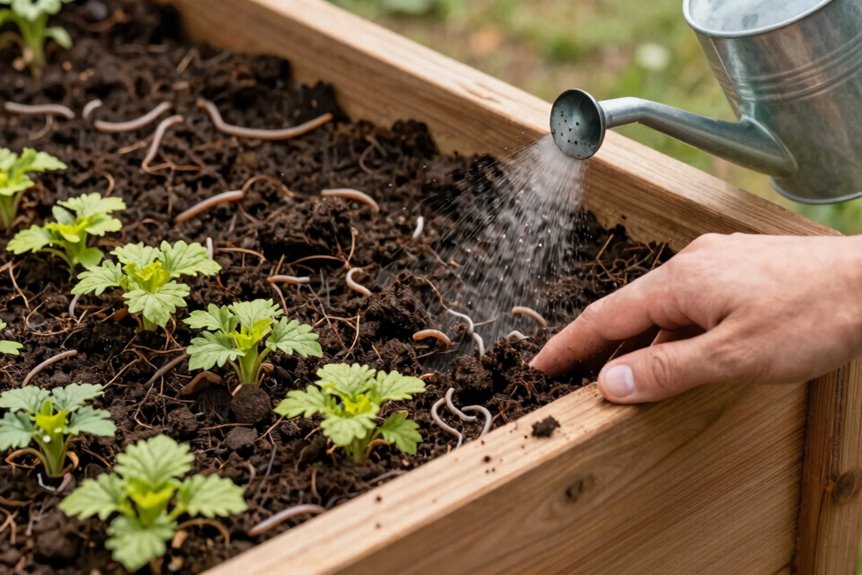
Why add beneficial nematodes to new soil? These microscopic roundworms hunt termites underground. Steinernema feltiae works great in clay-heavy beds, while S. carpocapsae suits sandy spots better.
Apply them when soil feels damp like a wrung-out sponge, never soggy. Early morning or dusk works best since these nematodes are sensitive to harsh sunlight. Mix them with water following the package directions, then sprinkle evenly across your raised bed. A gentle watering afterward helps them burrow down to where termites hide.
Skip fertilizer for two weeks before and after application, as chemicals reduce nematode effectiveness. If you can’t use them immediately, store them in your fridge for up to fourteen days.
Block Termites From Re-Entering Your Raised Bed
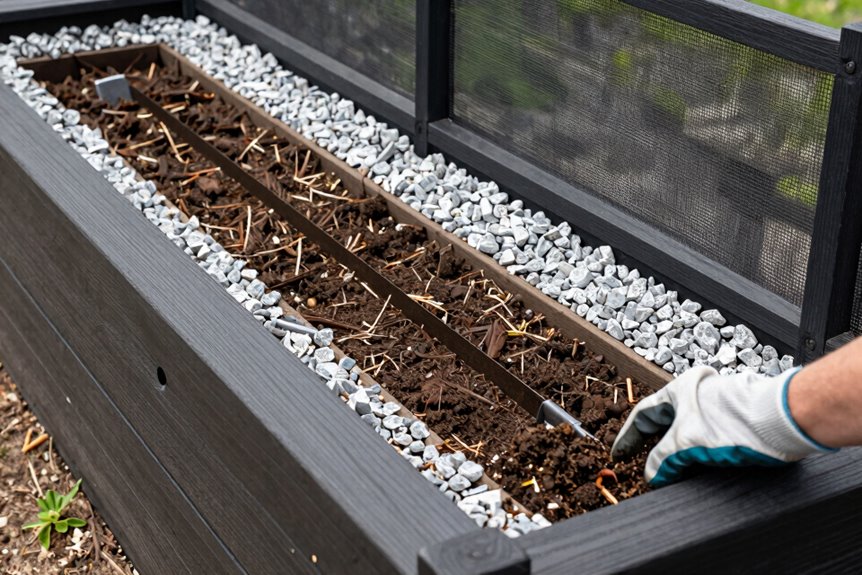
Keeping termites out requires both physical barriers and smart soil treatments. Install tight-sealing termite stakes around your bed’s perimeter and swap woody mulch for clean, decomposed organic matter to remove their food source. Apply beneficial nematodes like Steinernema feltiae to the surrounding soil as a living shield against re-infestation.
Physical Barrier Methods
Although termites are stubborn little tunnelers, a solid physical barrier stops them effectively without chemicals.
I install metal mesh, 1/8 inch or finer, around a bed’s outer edge. This termite barrier blocks subterranean pests from sneaking back in. Inside, I line walls with pressure-treated lumber or metal flashing so they can’t crawl up from the soil.
My most effective technique involves digging a shallow trench and filling it with coarse gravel, creating a mineral barrier they avoid crossing. The barrier must sink below ground and rise several inches up the sides; termites will exploit every gap.
After heavy rains, I inspect for cracks or soil buildup. A quick reseal keeps the barrier intact. This method protects vegetables without relying on chemical treatments.
Soil Treatment Options
Physical barriers work great, but sometimes you need to fight termites where they live, right in the dirt. Beneficial nematodes serve as an effective tool here. These microscopic roundworms hunt down subterranean termites like tiny predators in a horror movie.
Apply Steinernema feltiae for clay-heavy soil, or S. carpocapsae if yours runs sandy. Timing matters: early morning or dusk, when the sun won’t fry them. Water your bed beforehand, sprinkle the nematodes, then water again, just enough to keep things moist, not swampy. Skip fertilizer two weeks before and after; nitrogen kills their appetite.
Soil temps between 42–95°F work best. Use them fresh, refill with clean soil after, and monitor progress. Nematodes wipe out existing pests but won’t block new invaders permanently.
Eliminate Moisture and Monitor for Return
I’m going to start by draining every drop of excess water from around my raised bed, because termites thrive in soggy soil. I’ll check the dirt weekly, sticking my finger two inches down to feel if it’s damp like a wrung-out sponge or wet like a soaked towel. If it’s the latter, I’ll cut back on watering and maybe poke a few extra drainage holes to prevent wood-eating insects from establishing a presence.
Drain Excess Water
Where exactly are termites finding their cozy hideout? Usually, it’s in soggy soil pockets where water lingers. Proper drainage isn’t just about holes in the bottom; it’s about keeping my raised bed from becoming a termite spa.
First, I check for standing water after rain. If I see puddles clinging to corners or slow-draining zones, I know I’ve got trouble. I tilt my bed slightly or add coarse gravel beneath the soil to speed things up. Between waterings, I let the surface dry until it feels like a wrung-out sponge, damp but not dripping.
Before I grab my watering can again, I scan for mud tubes or sawdust-like frass. Keeping things drier reduces termite activity and protects my garden.
Check Soil Regularly
The soil in my raised bed is a termite weather report. Damp and dark conditions create trouble. I check it constantly, especially during warm, sticky stretches when termites swarm. I’m hunting for sudden dirt mounds, pale mud channels, or winged explorers.
For serious termite monitoring, I deploy beneficial nematodes: Steinernema feltiae or S. carpocapsae. These work best when soil temperature reads between 42 and 95°F. I dampen the ground first, apply per the label, then water gently after. No fertilizer for two weeks; these microscopic warriors need focus without distractions.
I patrol my bed’s interior and perimeter weekly, probing for moisture imbalances. Early detection prevents the difference between a quick fix and starting over.