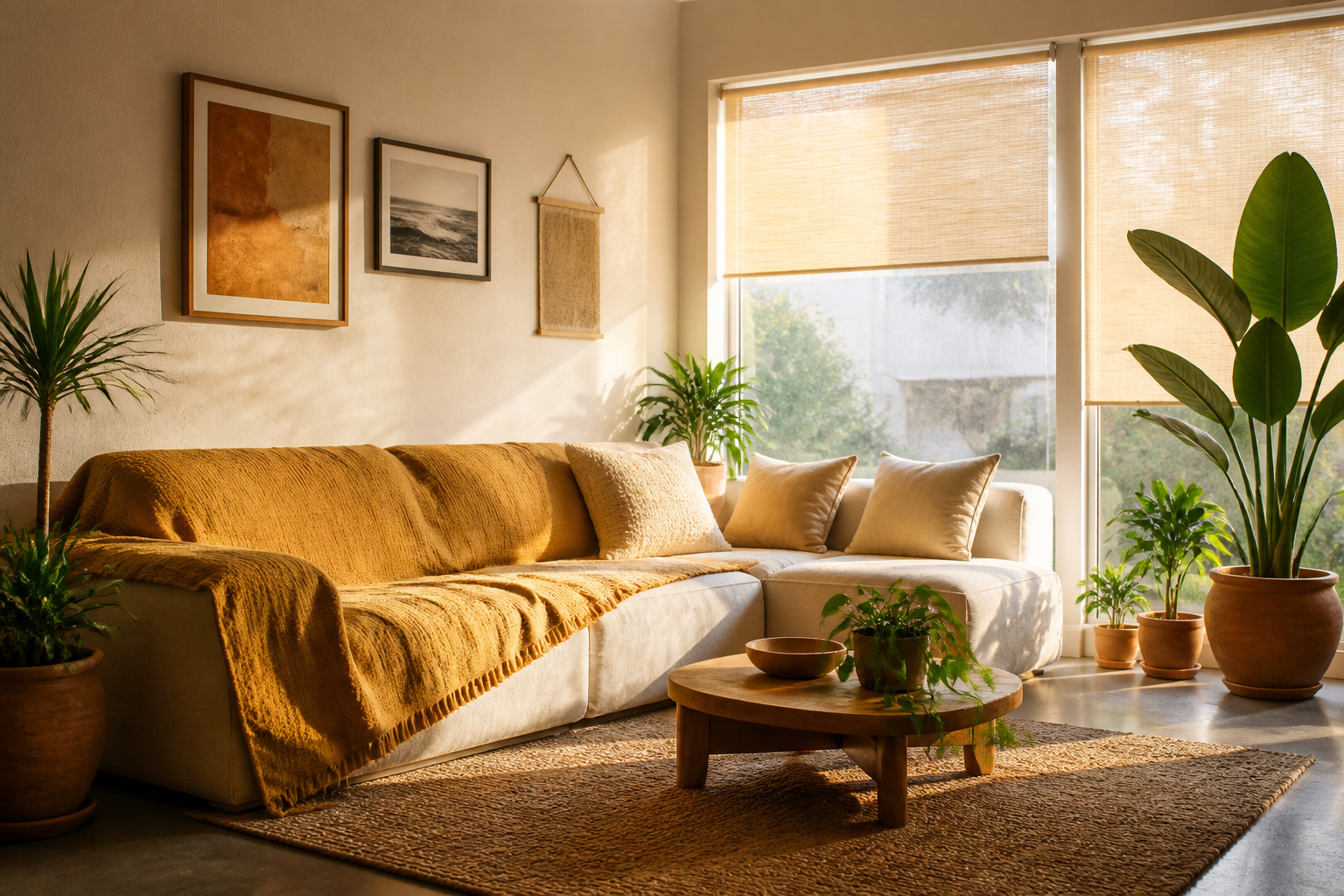
Motorized blinds are the upgrade most people actually end up wanting once they see them work. Scheduled sunrise openings and voice-controlled adjustments through Alexa or Google Home remove the daily chore of reaching across furniture or climbing to tall windows, and the hardware pays back through reduced HVAC strain if you stay in the home long enough to use it.
The catch is cost and permanence. Renters and anyone content to spend thirty seconds on manual cords will get more value from standard cordless blinds, which the article covers next.
1. Motorized Blinds
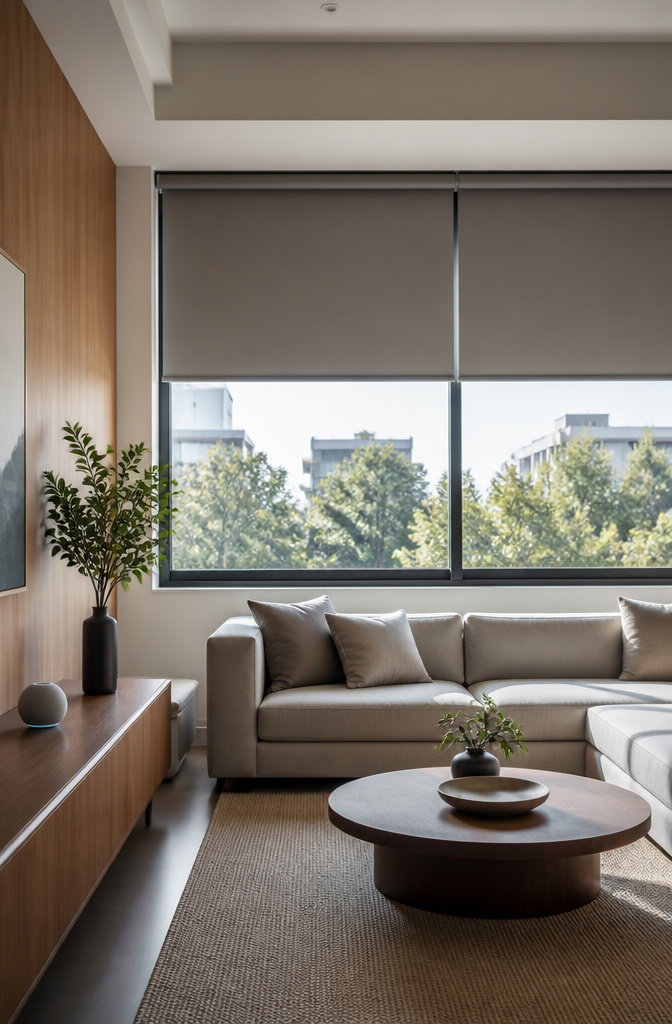
Motorized blinds have become the most requested upgrade of 2025, and the reason is simple: hands-free control that actually fits how people live now. You can schedule them to open with sunrise, close during the hottest part of the day, or adjust them from the couch through an app or a voice command to Alexa or Google Home. That automated opening and closing by time or temperature isn’t just convenient; it reduces strain on your HVAC system by blocking summer heat and retaining winter warmth.
The integration runs deeper than a remote on the coffee table. Many systems now coordinate with whole-home automation, so your blinds, lighting, and climate control move together. For tall windows or large sliders that are a pain to reach, a programmed schedule turns a daily chore into something you forget about.
Skip these if you rent short-term or your windows are already covered by simple, functional treatments. The hardware costs more than standard blinds, and the payoff assumes you’ll stay long enough to enjoy the scheduling. They’re also overkill for anyone who opens and closes shades once a day and doesn’t mind the thirty seconds it takes. Cordless manual blinds still exist for a reason, and that reason is budget.
2. Cellular Shades
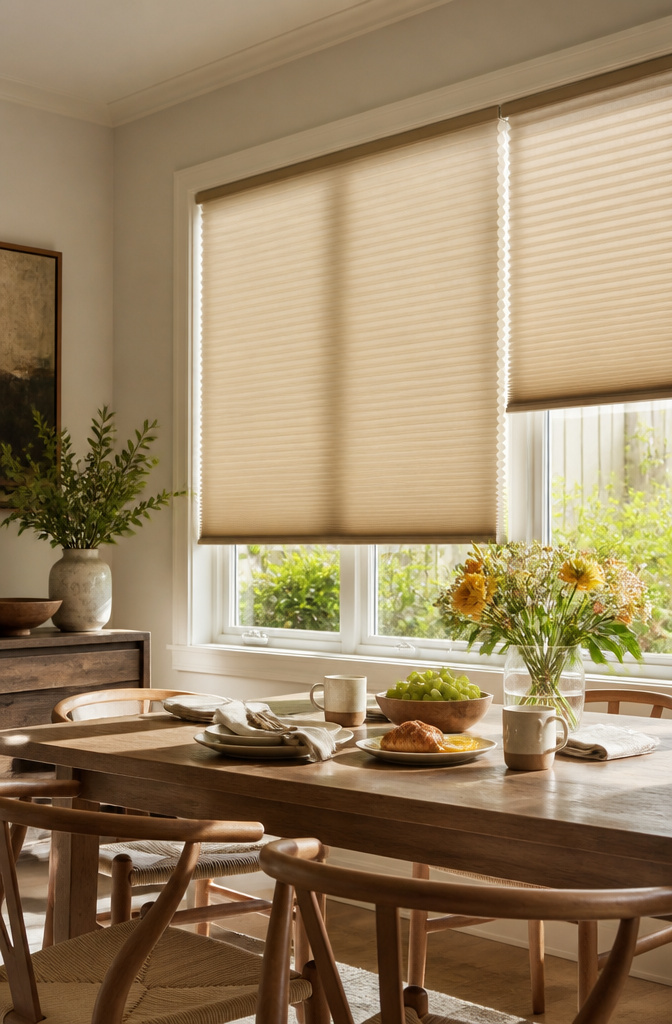
The honeycomb cells in cellular shades trap air in distinct pockets, creating insulation at the glass that cuts heat loss through windows by up to 64%. That translates to real savings on energy bills, especially in rooms with older single-pane glass or east-facing walls that take the morning sun.
These shades have never looked better than they do right now. The fabrics coming out now carry actual color depth, and the pleats stay crisp enough to read as structure rather than a cheap accordion fold. Cordless and motorized versions keep the lines clean, and top-down/bottom-up operation lets you drop the shade from the top for privacy without killing the daylight.
Skip these if you need precise tilt control. The shade goes up or it goes down; there is no slat to angle. For a home office where you cut glare on a monitor at 3 p.m. but want full sun at 10 a.m., that limitation will grate within a week.
3. Roller Shades
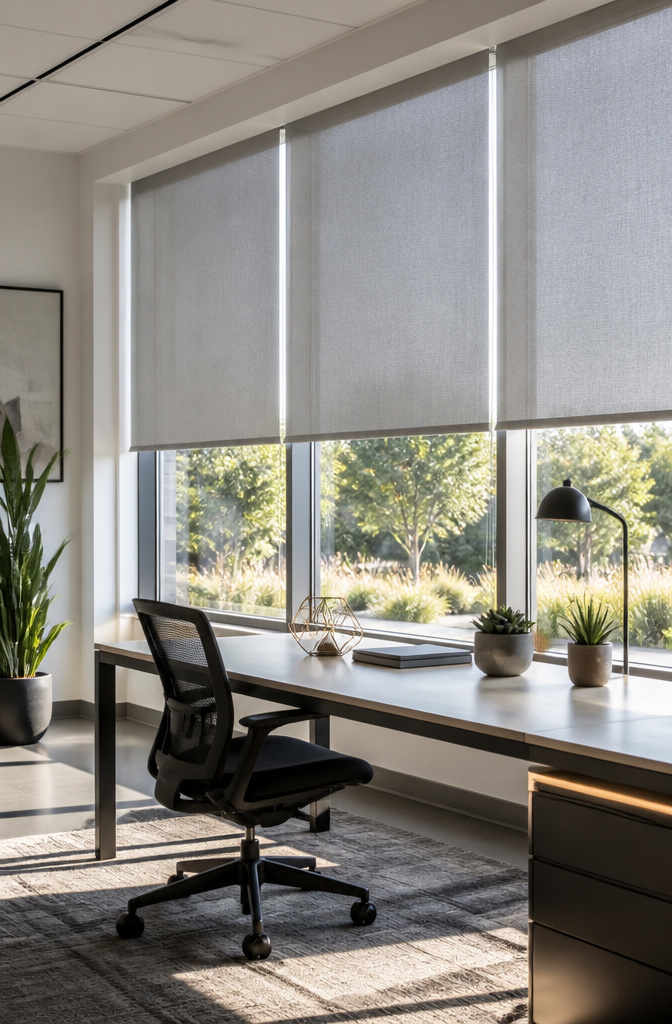
A roller shade is essentially a single panel of fabric that rolls up onto a hidden tube, and that clean profile is exactly why it keeps landing on lists of popular window blinds year after year. In a room with black-trimmed windows or any modern frame, the shade sits tight to the glass without bulky hardware interrupting the line. Light-filtering fabrics soften direct sun and cut glare while still letting you keep some view, and you can choose between sheer or semi-opaque opacities depending on how much landscape you want to keep.
The material story has shifted too. Recycled fabrics are now a real option for roller shades, not a specialty order, and they hold up with the same durability as conventional ones. That matters if you are trying to reduce the carbon footprint of a project without sacrificing function.
Where roller shades fall short is architectural character. A flat fabric panel does not add texture or warmth the way woven materials do, and in a traditional room with detailed moldings, the minimalism can read as underdressed rather than intentional. Skip these if your windows are the decorative feature you want to highlight, or if you need serious insulation, since the slim profile trades thermal mass for that streamlined silhouette.
4. Blackout Shades
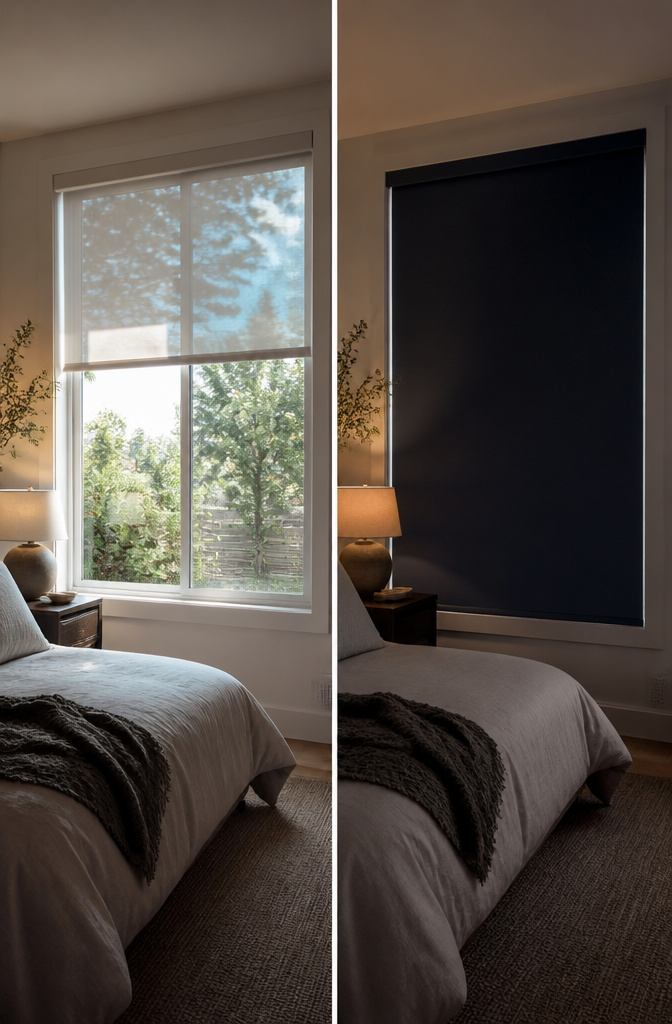
Blackout shades earn their spot among popular window blinds by solving the one problem standard shades only promise at: actual darkness. The construction differs in the fabric itself, which is coated or layered to block light entirely rather than filter it, and in the mounting details that seal the edges. Outside mount brackets and side channels close the gap where morning light usually leaks through, turning a window into something closer to a wall for anyone who needs to sleep past sunrise or watch a screen without glare.
The same engineering that traps light also traps heat. Cellular construction, with its honeycomb pockets of air, adds insulation that standard roller or Roman shades do not match. That combination is why blackout shades show up in bedrooms facing direct sun and in media rooms where both temperature and reflection matter.
They are not the right pick everywhere. A north-facing living room that gets soft daylight all day will feel cave-like with blackout fabric, and the heavier hardware looks bulky on small windows. Skip these if you are dressing a space where you want filtered light or an outside view; standard light-filtering shades or sheers handle that job without the overkill.
5. Faux Wood Blinds
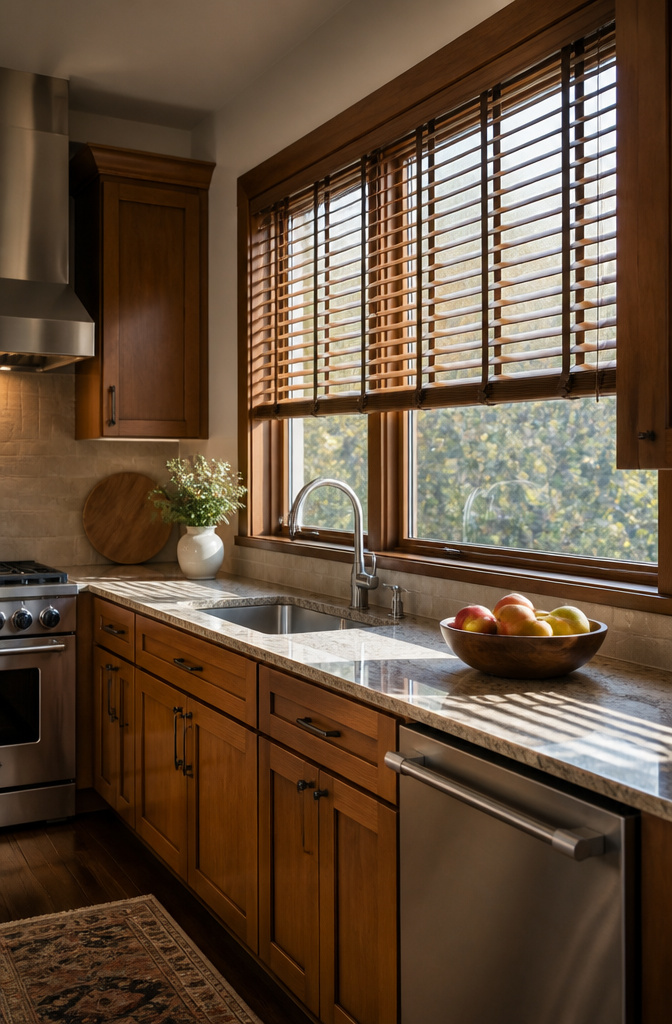
Faux wood blinds sit at the top of nearly every retailer’s bestseller list for a reason that matters once you actually live with them. The PVC or composite slats shrug off bathroom steam and kitchen grease without the warping that ruins real wood in high-humidity rooms, which is why you’ll spot them most often in exactly those spaces. The price gap is real too; expect to pay significantly less per window than for genuine wood, money that renters especially can redirect toward other projects.
The catch is weight and sheen. These blinds run heavier than their wood counterparts, so wide windows over about 72 inches can sag the headrail over time, and the manufactured surface never quite captures the warmth of actual grain under afternoon light. Someone restoring a 1920s bungalow or chasing that organic, hand-finished look should skip faux wood and hold out for the real thing. For the rest of us, particularly anyone in an apartment who needs clean slats that tilt precisely for privacy without babying the material, the compromise lands squarely on the practical side of worth it.
6. Real Wood Blinds
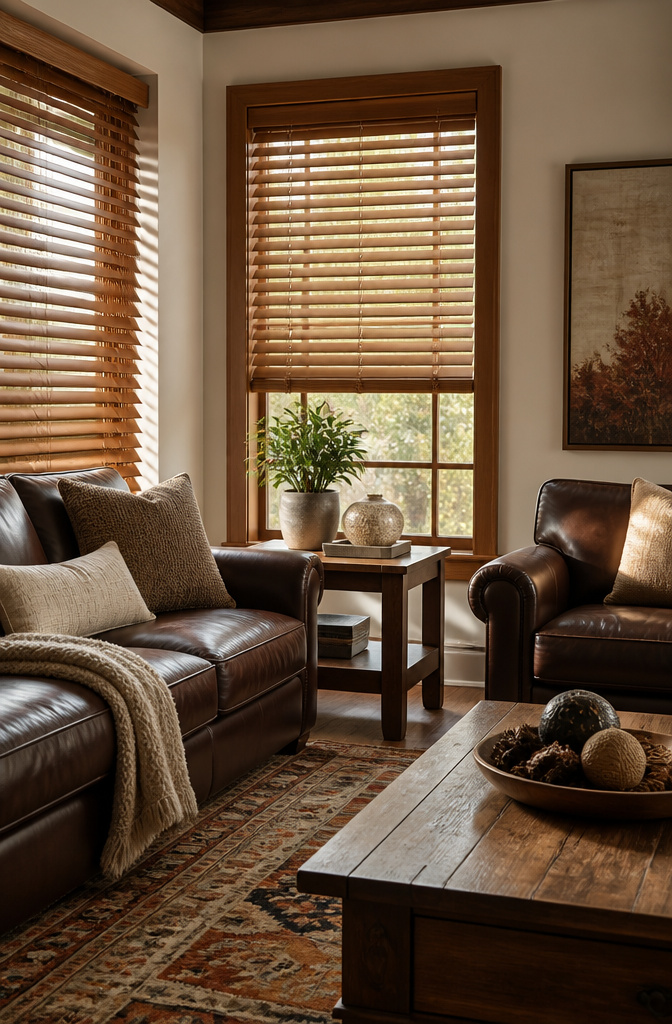
Real wood blinds carry a warmth that photographs poorly and shows up in person the moment the afternoon light hits the grain. Basswood slats take stain unevenly in the best way, so no two windows read exactly the same, and that variation is the point in a room already full of flat painted surfaces and laminate edges.
The maintenance tradeoff is real and immediate. Faux wood shrugs off the humidity that warps real slats over a few seasons, which is why the synthetic option tends to win in kitchens and bathrooms where steam collects. Wood demands a dry environment and a willingness to dust the slats rather than wipe them down with anything damp.
Skip real wood if you rent somewhere humid or if you need the blinds to outlast your lease without fuss. The material rewards homeowners who plan to stay and who want the option to refinish or repaint down the line. For everyone else, the visual gain is not worth the swelling and cracking that follows a bathroom installation or a coastal climate.
7. Vertical Blinds
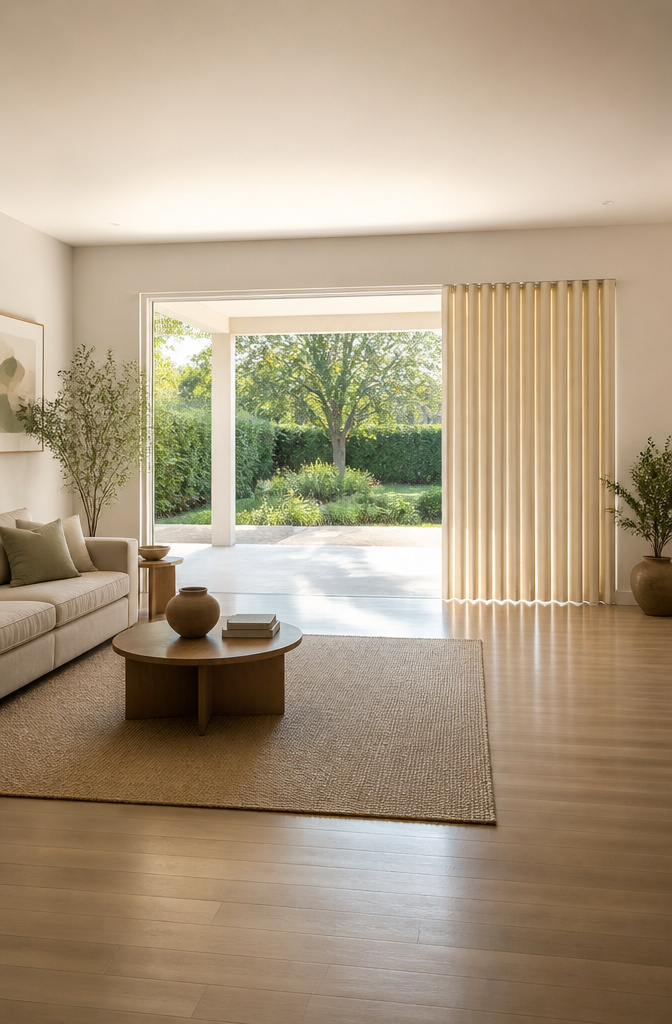
Vertical blinds still hang in more rental units than any other treatment for sliding glass doors, and the reason is mechanical simplicity. The vanes traverse to one side and stack flat, which clears the entire doorway. That same track lets you tilt the slats to block direct sun without killing the room’s daylight, a balance that matters in west-facing living rooms where afternoon glare turns a sofa into a hot seat.
Materials run from vinyl and fabric to faux wood, so the look shifts more than people remember. The vinyl holds up to hands and pets; fabric softens the lines for a space that reads more lounge than office.
The catch is width. Vertical blinds need a run of track wide enough to let the stack park off the glass. A narrow slider with a wall pocket solves this; a 48-inch patio door with framing tight to the casing does not, because the stacked vanes block a third of the opening they are supposed to free. Anyone with that layout should skip the vertical format and look at a rolling panel system instead.
8. Woven Wood Shades
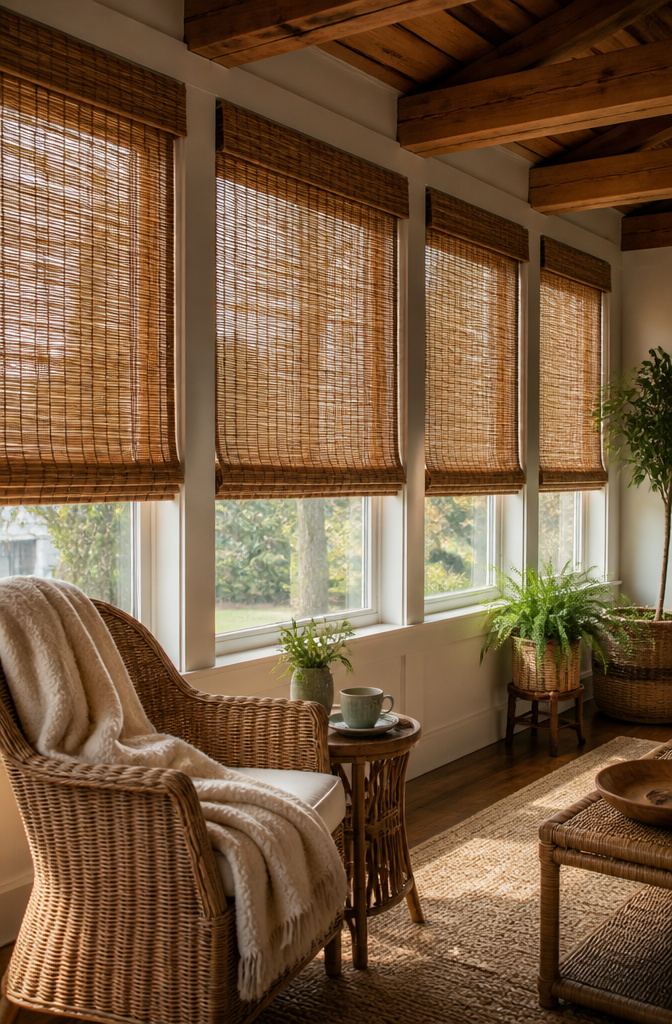
Woven wood shades bring in the texture people are actually asking for right now, built from bamboo, grass, and reed that each carry a slightly different weave and color range. The material reads as warm in a way vinyl never manages, and the light filters through the gaps in the weave with a softness that full blackout fabrics kill entirely. You can add a liner if you need room darkening, or layer a honeycomb shade behind for insulation, though that dual setup pushes the cost toward territory where other options start looking simpler.
Sustainability here is straightforward: these are plant fibers, not petroleum-based slats, and the shades age visibly in a way that reads as patina rather than wear. The catch is moisture. A bathroom with daily steam or a kitchen over the sink will warp the weave and stain it in ways you cannot clean out, so skip woven wood anywhere humidity lives. For renters, the weight matters too; these run heavier than roller shades and need sturdier brackets than the kind that peel off with adhesive strips.
9. Sheer Shades
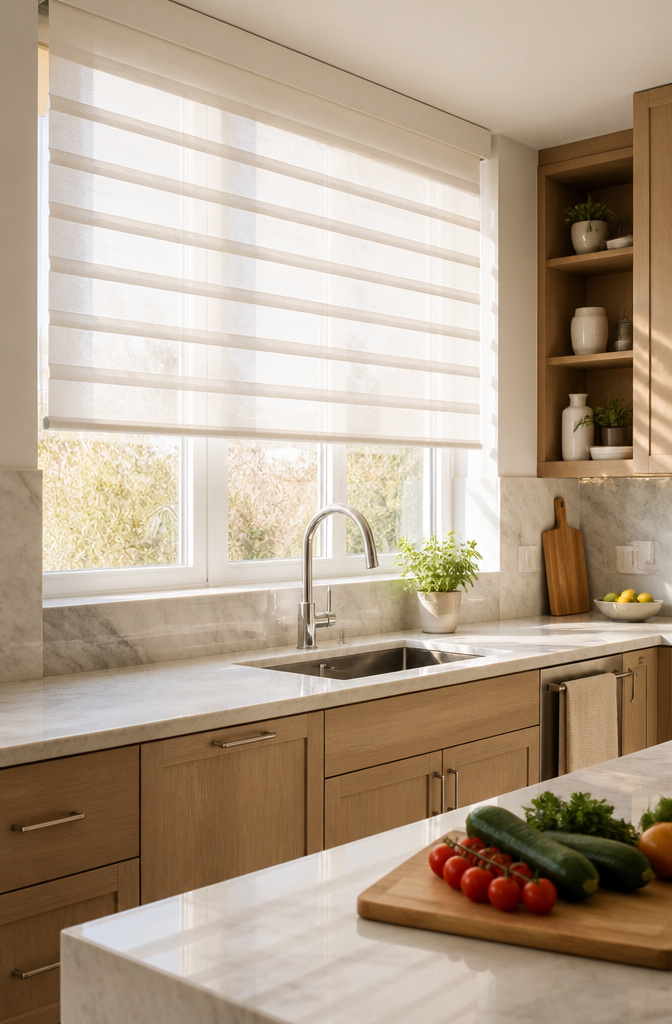
Sheer shades sit in that narrow space where you want daylight without the headache. Two layers of fabric with horizontal vanes between them soften what comes through the window, so the room glows instead of glaring, and you keep a hazy view of whatever is outside. Close the vanes and you trade that for privacy and dimmer light, though full blackout is not what these do. They are popular for living rooms and kitchens where the goal is reducing UV on the furniture, not sleeping through noon.
Pirouette® and Silhouette® styles from Hunter Douglas built this category, and the generic versions that followed kept the same idea: fabric that stacks small, operates cordlessly or motorized, and reads as clean lines rather than heavy drapery. The fabrics resist dust and stains, which matters more than it sounds in a house with a dog or a toddler.
The failure point is bedrooms. Even room-darkening sheers leak light at the edges and through the weave. If you need real darkness for sleep, skip these and go to cellular shades or a dual shade setup that pairs a sheer with a blackout layer. Sheers also disappoint on west-facing windows in summer; the diffused heat still warms the room, and the UV protection is partial, not total. Renters sometimes love them for the view, then discover the landlord’s cheap vinyl windows underneath get just as warped by sun as they would with nothing.
10. Dual Shades
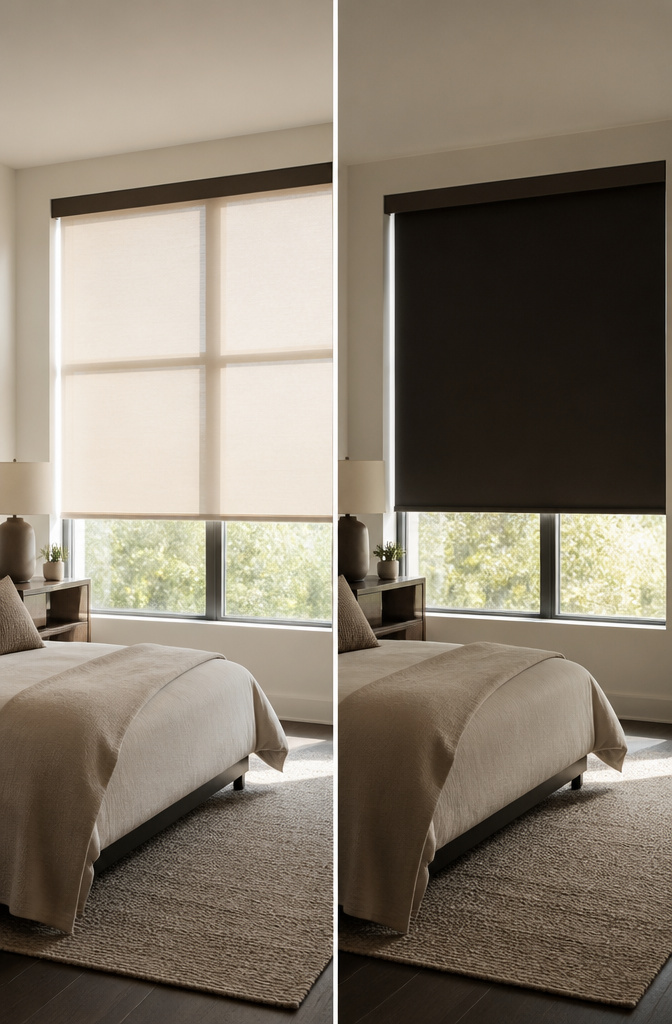
Dual shades give you two fabrics on one window: a light-filtering layer that softens daylight and preserves the view, plus a room-darkening layer that drops for privacy and sleep. The same headrail holds both, so you’re not stacking two separate treatments or drilling extra holes into the frame.
Most versions work as roller shades, Romans, or cellulars, and the operation is straightforward. A cord or cordless lift lowers the sheer or light-filtering fabric first; continue the pull and the blackout layer follows. Reverse the motion to expose just the view layer again. What you gain in flexibility, you pay for in headrail depth and cost. The hardware runs thicker than a single shade to house both rolls, and the price sits roughly a third above a standard shade of the same size and material.
Renters in strict buildings should check before ordering. The bulkier headrail may not fit inside an existing window frame, and the weight of two fabrics can exceed what a tension-mount bracket handles securely. If your lease forbids new holes or your frames are shallow, a single blackout shade with a separate sheer curtain is the easier workaround.
The honeycomb design with two layers means that there’s great privacy from the outside looking in, a nice finished look, and excellent thermal and sound insulation.
That double-layer construction is what makes dual shades worth considering for bedrooms facing busy streets. The air pocket between fabrics quiets more noise than a single layer alone, and you still get the daytime light you want without swapping hardware seasonally.
Energy Efficiency
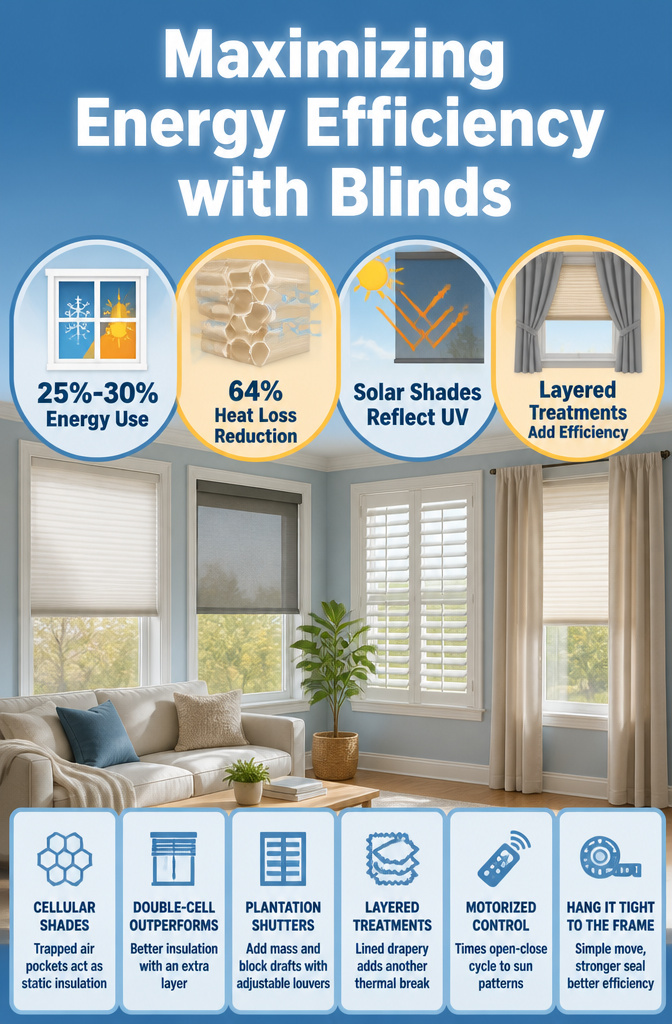
Windows bleed heat. In winter they leak it out; in summer they pull it in. The Department of Energy estimates windows account for 25%–30% of residential heating and cooling energy use, which makes the right blind less a style choice than a utility bill decision.
Cellular shades, the honeycomb type, lead here by a wide margin. The trapped air pockets between fabric layers act as static insulation, and certain designs cut heat loss through glass by up to 64%. Double-cell construction outperforms single-cell, though the price climbs with the extra layer. I have seen the same room hold a steadier temperature after swapping standard roller shades for cellular ones, and the difference shows up in the monthly statement more than the wall color ever did.
Other styles help selectively. Solar shades reflect UV and infrared while keeping the view, which matters in south-facing rooms where you want light without the bake. Plantation shutters add mass and block drafts with adjustable louvers. Layering any shade with lined drapery adds another thermal break, though that eats wall space and budget.
Motorization pushes savings further by timing the open-close cycle to sun patterns, but the upfront cost only pays back in homes with predictable daily heating loads. For most renters and first-time owners, the simpler move is choosing the right material and hanging it tight to the frame.
Smart Technology
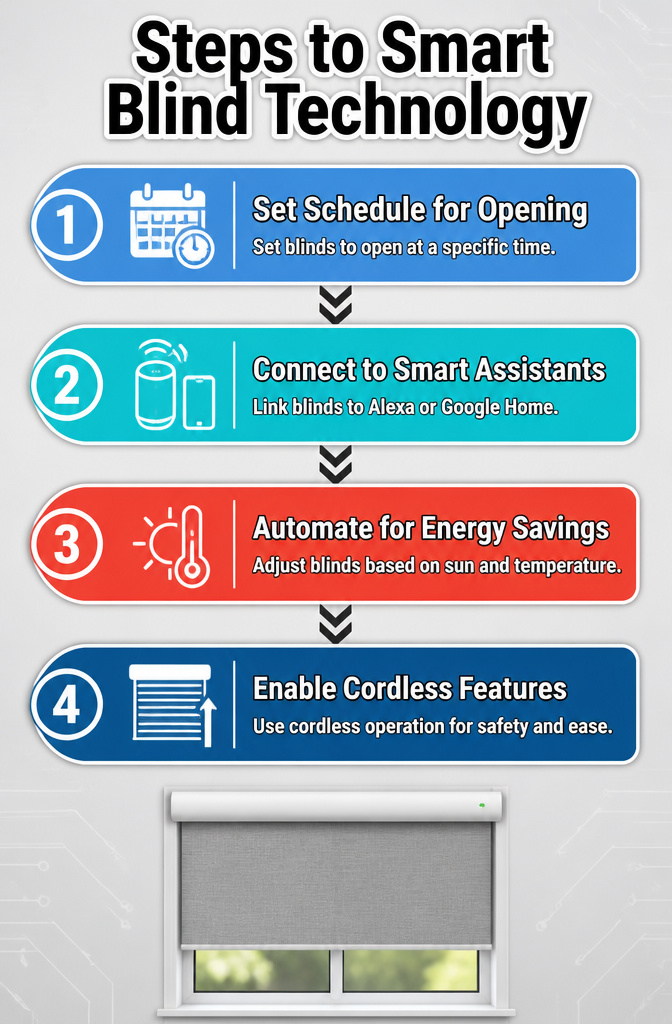
Motorized blinds that open on a schedule are where the convenience actually pays off. I set mine to drop at 3 p.m. in July, which is when the west-facing bedroom turns into a greenhouse. The motor itself is old news by now; the newer systems tie into Alexa or Google Home so the blinds respond to voice commands or temperature sensors rather than just a clock. That matters because a fixed schedule does not know when a cold front blows through.
The energy automation is the part that surprised me, reading through the specs. Windows account for roughly 25%–30% of residential heating and cooling energy use, and programming blinds to close during peak heat blocks enough solar gain to ease the load on your AC. In winter the same logic reverses: open during sun hours, close at night to keep warmth in. The savings are real but not dramatic enough to justify the upgrade on their own; treat it as a side benefit to the daily convenience, not a finance decision.
Cordless operation is another quiet win. No dangling strings means one less hazard if you have small children or a cat who treats every cord as prey. For tall windows or anything behind a desk you cannot reach, automation turns a chore into nothing at all. The integration with whole-home systems is still patchy in practice. Some brands talk to your thermostat smoothly; others need a separate hub and their own app. If you are already deep in one ecosystem, say Google Home or Alexa, check compatibility before you buy rather than after you have drilled the brackets in.
Light Control and Privacy
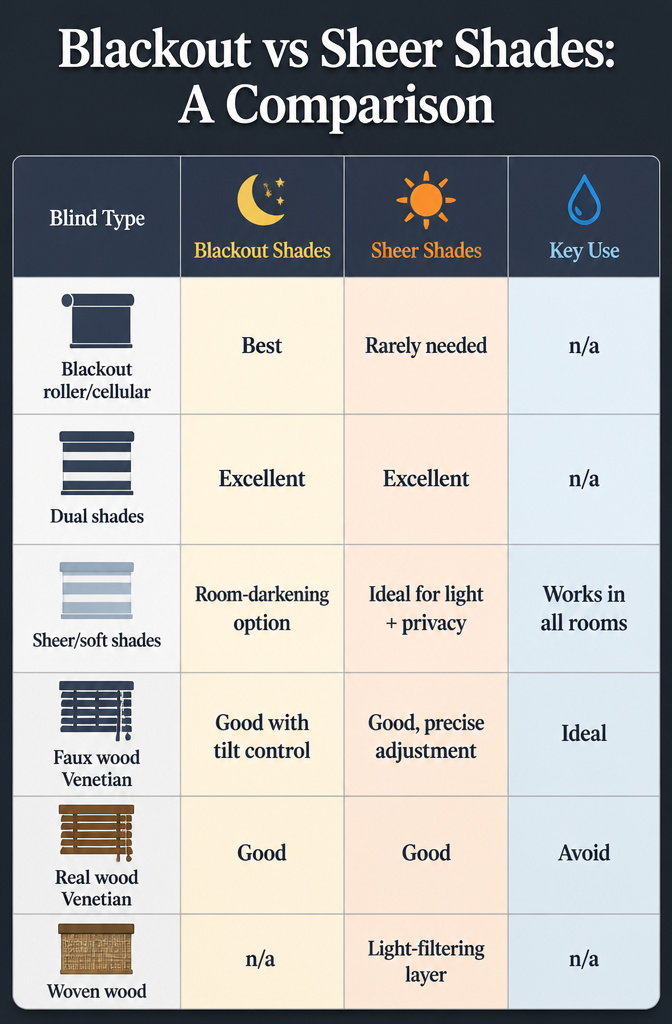
Blackout shades give full darkness for bedrooms and media spaces, while sheer shades soften daylight and keep a view. Most rooms fall somewhere between, and the blind type matters more than the fabric choice.
| Blind Type | Bedroom | Living Room | Bathroom |
|---|---|---|---|
| Blackout roller/cellular | Best | Rarely needed | n/a |
| Dual shades | Excellent | Excellent | n/a |
| Sheer/soft shades | Room-darkening option | Ideal for light + privacy | Works in all rooms |
| Faux wood Venetian | Good with tilt control | Good, precise adjustment | Ideal (moisture-resistant) |
| Real wood Venetian | Good | Good | Avoid (warps in humidity) |
| Woven wood | n/a | Light-filtering layer | n/a |
I learned the hard way that edge glow ruins blackout shades in a street-facing bedroom. Outside mount or side channels fix it, but only if you plan for them before ordering. For bathrooms, faux wood Venetians handle shower humidity where real wood swells. Living rooms are where I see people overspend on blackout they never use: dual shades or a sheer layer with separate mini blinds give you the same flexibility for less.
Aesthetic Appeal
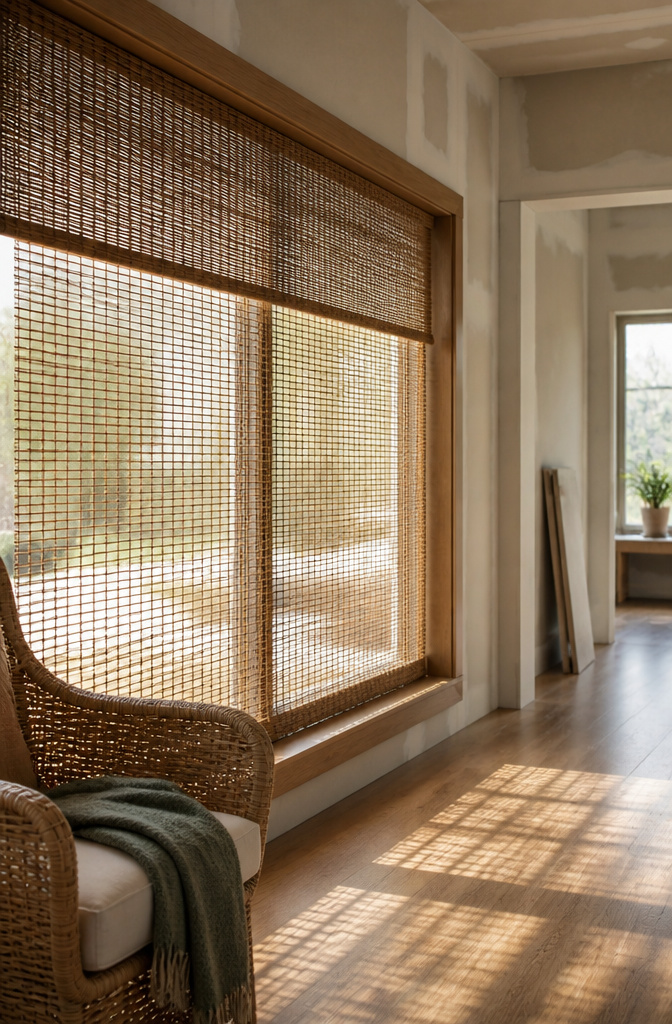
Woven wood shades bring in texture that reads as finished even when the rest of the room is still a work in progress. The weave itself varies, from tight and smooth to loose and almost basket-like, and that variation lets you match the grain to whatever else is in the space: oak trim, a rattan chair, bare drywall waiting for paint. Real wood blinds do something similar with warmth, especially in stains that pick up existing floors or furniture. Basswood slats, in particular, take stain evenly and read as richer than their price suggests.
Roller shades move the other direction. Their flat face and hidden hardware suit rooms where you want the window to disappear, not announce itself. The minimalism works best in spaces that already have enough going on: patterned rugs, gallery walls, small rooms where every visual layer counts against you.
Vertical blinds draw the eye upward, which matters more than people credit in rooms with low ceilings or sliding doors that already eat wall space. Fabric, vinyl, and faux wood options each give a different weight to that vertical line; fabric softens, vinyl holds crisp, faux wood splits the difference.
The layered treatment that keeps showing up in 2026 runs sheer panels inside, blackout drapery outside, and often a roller or cellular shade between. Morning light comes through the sheer, afternoon heat gets cut by the shade, and night gets the blackout layer. The trick is planning the stack depth so all three layers do not crowd the window frame. Three inches of wall return is usually enough, but measure before you order hardware.
Frequently Asked Questions
What are the most popular types of window blinds?
The most popular window blinds for 2026 include motorized blinds, cellular shades, roller shades, blackout shades, and faux wood blinds. Motorized blinds top request lists for hands-free control, while cellular shades lead for energy efficiency and faux wood dominates humid rooms like kitchens and bathrooms.
How do I choose the right blinds for my home?
Start with what each room demands: bathrooms and kitchens need moisture-resistant materials like faux wood, bedrooms facing east need blackout construction, and living rooms with views call for sheer or light-filtering fabrics. Budget and how long you plan to stay matter too; motorized systems only pay off if you will use them for years, while renters often do better with simpler cordless options.
What are the benefits of motorized blinds?
Motorized blinds let you schedule opening and closing by time, temperature, or voice command through Alexa and Google Home. That automation cuts strain on your HVAC by blocking summer heat and keeping winter warmth in, and it turns hard-to-reach windows into something you never think about. The hardware costs more than manual blinds, so skip them if you rent short-term or do not mind adjusting shades by hand.
Which blinds are best for energy efficiency?
Cellular shades with honeycomb construction are the clear leader, trapping air in pockets that cut heat loss through windows by up to 64%. Double-cell versions outperform single-cell, though they cost more. For a simpler option, solar shades reflect UV and infrared while keeping the view, and layering any shade with lined drapery adds another thermal break.
What are blackout shades?
Blackout shades use coated or layered fabric plus edge-sealing hardware like outside mount brackets and side channels to block light entirely rather than filter it. The same construction that traps light also insulates, making them common in bedrooms that face direct morning sun and in media rooms where both darkness and temperature control matter.