I’ve built raised beds from scrap lumber, rusted rebar, and once from a stack of old roofing tiles I found behind a shed, so I know that choosing the right material comes down to balancing your budget, your climate, and how long you want to avoid rebuilding the structure.
Cedar and redwood top my list for untreated durability; 2×6 boards give you 15 to 20 years without chemicals.
Galvanized steel lasts 30-plus years and warms soil fast, though it traps heat that can wilt lettuce in July.
Stone and concrete feel permanent but require serious muscle and money.
Skip anything creosote-soaked or arsenic-treated. That old railroad tie charm isn’t worth the toxins seeping into your tomatoes.
The performance of each material varies significantly depending on your regional climate and conditions.
Toxic Materials to Avoid in Edible Garden Beds
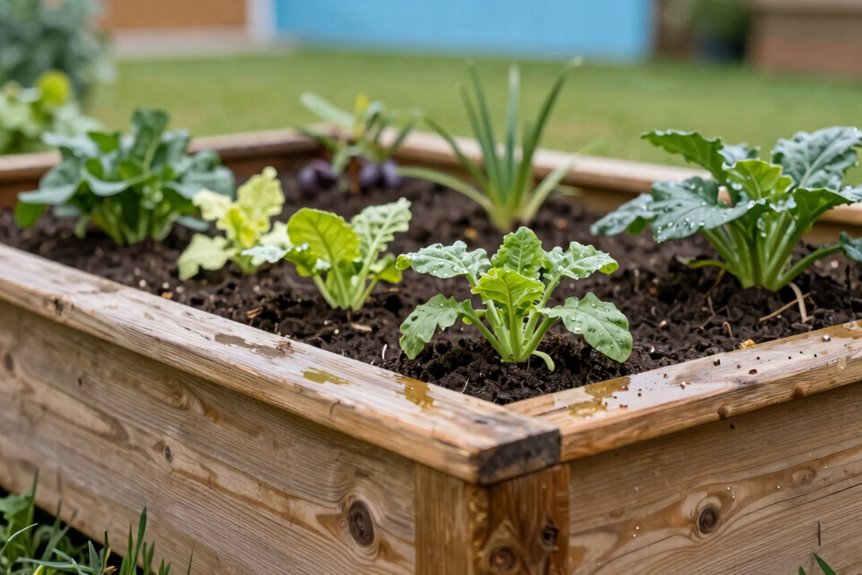
I’ve learned to avoid creosote-soaked railroad ties. They smell like a leaky car shop and leach chemicals right into soil. Arsenic-treated wood is problematic. That old arsenic-treated wood can still lurk in salvage yards, so I steer clear of mystery lumber. Toxic paints and coatings flake into dirt where kids dig. Even pressure-treated lumber, modern versions included, gives me pause. It’s safer than older versions, but not ideal for organic beds.
Instead, I choose untreated cedar, which is non-toxic and food-safe. Metal beds work too; galvanized steel or powder-coated metal keeps things clean. Tomatoes grown in chemical-free beds produce better results.
Five Criteria for Choosing Raised Bed Materials
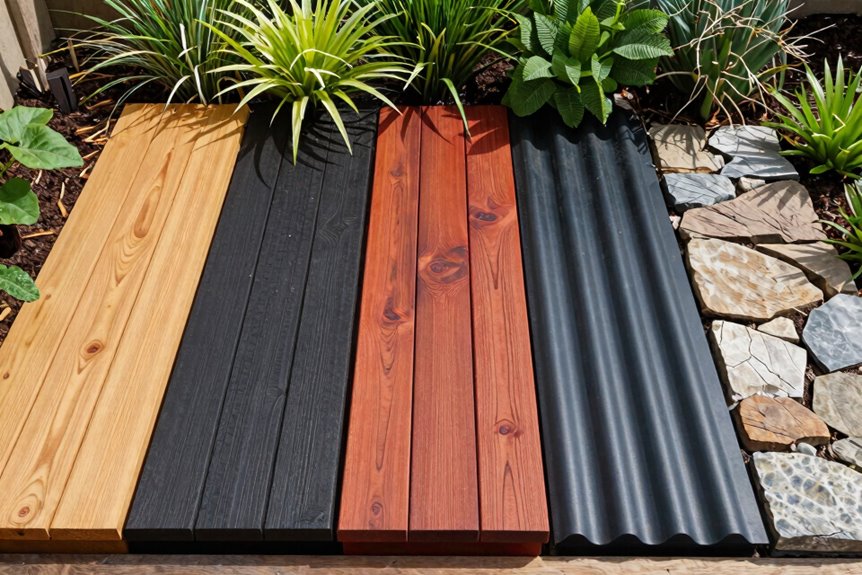
How do you pick the right material when every garden center aisle offers multiple options. I’ve faced this choice between cedar planks and galvanized steel, and several factors consistently guide the decision.
| Material | Best For | Watch Out For |
|---|---|---|
| Untreated wood | Safety, natural aesthetics | Shorter longevity (5-20 years) |
| Stone/brick | Lifetime durability, classic looks | Higher cost, heavy installation |
| Metal raised beds | Modern aesthetics, rust-resistant options | Heat absorption in hot climates |
Safety comes first when growing food your family eats, making untreated wood preferable to chemically treated options. Durability matters significantly; stone and brick outlast other materials, while metal raised beds offer a reasonable middle ground. Sustainability should factor into your decision. Quality materials cost more upfront, but replacement expenses accumulate faster with cheaper options. Aesthetics reflect your garden’s design preferences.
Cedar and Redwood: Best Wood Species for Raised Beds
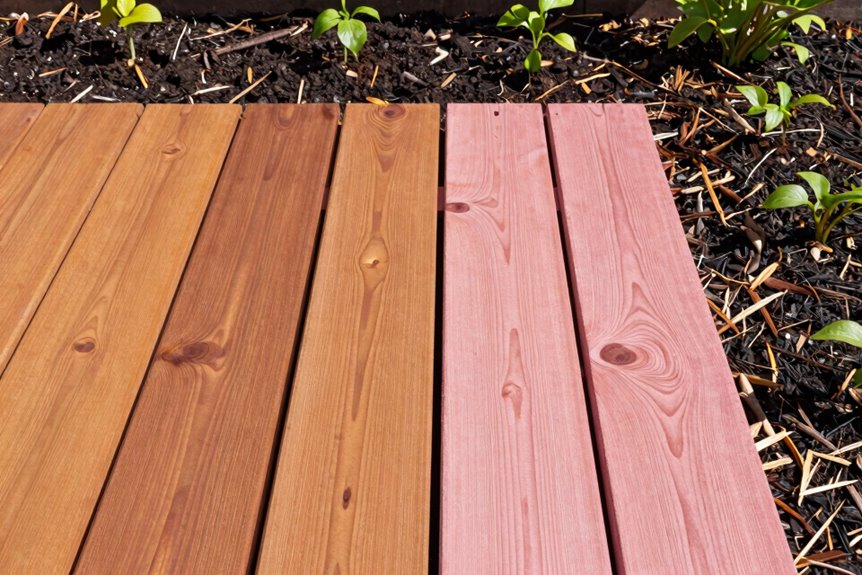
When I’m standing in the lumber aisle, I always reach for the cedar first. Its warm, honeyed scent and straight grain indicate quality.
Cedar’s warm, honeyed scent and straight grain make it my first reach in the lumber aisle.
Cedar and redwood dominate my raised beds for good reason. Both offer exceptional rot resistance without chemical treatments, making them soil-safe for vegetables and herbs. I gravitate toward 2×6 cedar boards for their sturdy construction and proven longevity; these durable boards last 15–20 years with minimal maintenance.
For organic gardening purists, untreated wood is essential. Cedar provides natural rot resistance without chemical additives. Redwood offers the same durability in regions where it’s available, shifting from blush pink to sun-bleached grey as it weathers.
Either choice means building once and harvesting for decades.
Board Thickness and Sourcing: Buying Wood That Lasts
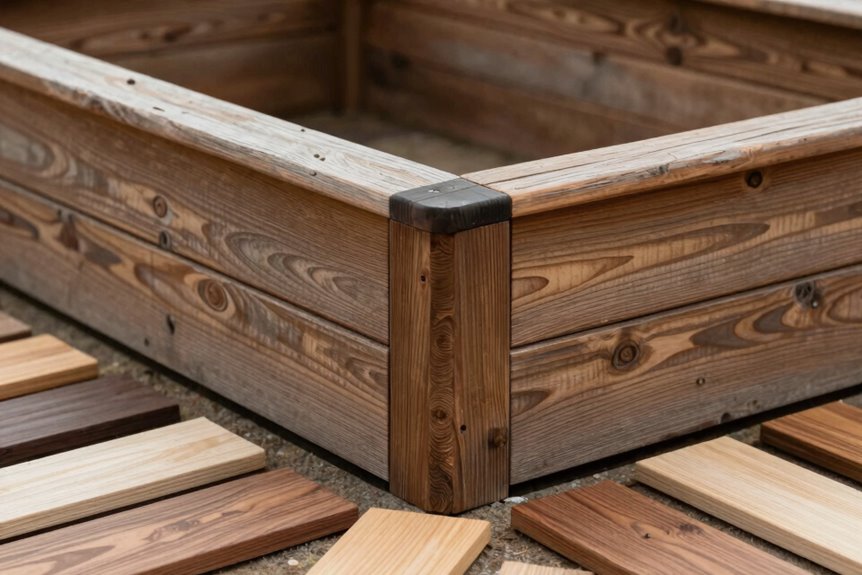
Why settle for flimsy boards that’ll twist like wet noodles after one rainy season? Board thickness makes or breaks your wood raised bed. Skip the 1-inch stuff. It warps fast and fails prematurely.
I always reach for 2×6 cedar or 2×8 cedar. These thick planks resist heavy soil and spring rains. Their durability comes from real mass, not promises. You get moisture resistance and warp resistance that thinner stock cannot provide.
Smart stock sourcing matters too. Hunt for straight, tight-grained pieces at local yards or trusted suppliers. Thicker boards cost more upfront, but their longevity reduces future expenses. You’ll rebuild less often and spend less time on maintenance.
For big spans, beef up your raised bed materials or mix in stone accents. This investment extends the lifespan of your raised bed significantly.
Steel Raised Beds: Rust, Heat, and Wet Climate Performance
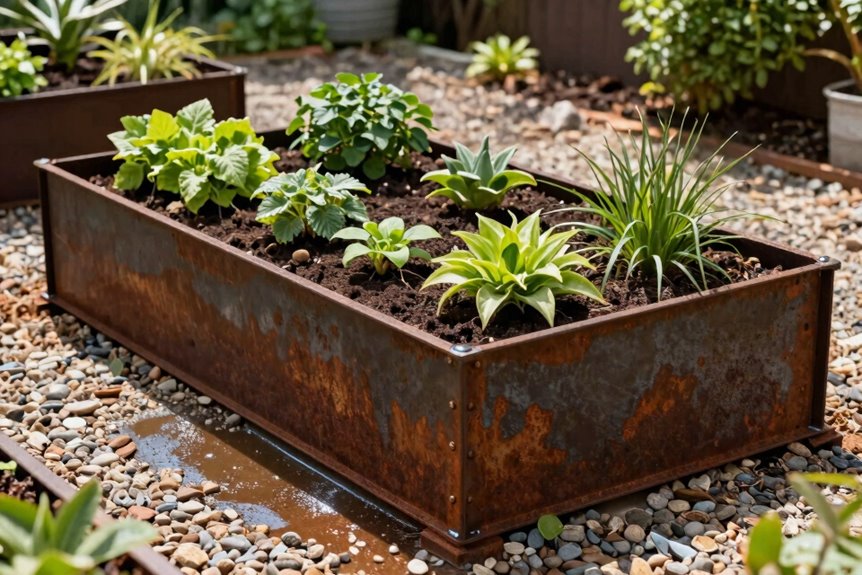
Picture a steel bed sitting in your yard, soaking up morning sun like a metal pancake on a griddle. That thin galvanized skin, usually 0.6 millimeters thick, traps heat and pushes soil temperatures 10 to 15 degrees higher than wood. This temperature increase benefits some crops but causes lettuce to wilt in July heat. The real question isn’t whether it’ll rust; it’s whether you want that silvery zinc coating to age into a mottled gray patina or if you’ll apply rust-inhibiting sprays every spring.
Rust and Patina
How does steel handle decades of rain and sun without falling apart? Galvanized steel resists rust effectively. That zinc coating acts like armor against weathering, providing 30+ years of growing raised beds without maintenance headaches.
Sure, edge corrosion sneaks in when coatings wear thin. The resulting patina isn’t ugly; it’s character. Like favorite jeans, steel earns its story through honest wear. I check corners yearly, maybe touch up spots where corrosion peeks through.
Powder coatings add another shield, especially for heat management in scorching summers. And when the bed finally retires, recyclable steel starts a new life with no landfill waste. This approach builds something lasting, literally and figuratively, with clean lines and zero rot.
Soil Temperature Effects
Zinc armor does more than fight rust; it turns steel beds into soil-warming machines. Galvanized steel raised beds boost soil temperature faster than wood or stone could.
This heat retention lets me plant tomatoes and peppers weeks earlier. On sunny days, the near-surface temperature rises several degrees. That warmth increases germination rates for heat-loving crops.
In wet climates, galvanized steel resists rot while wood warps and deteriorates. I pick bed height carefully: 12 inches for herbs, 24 or 32 inches for root vegetables. Taller beds improve drainage and reduce physical strain.
Steel’s soil warming combined with compost interaction extends the growing season at both ends.
Stone and Concrete Raised Beds: Cost and Installation Reality
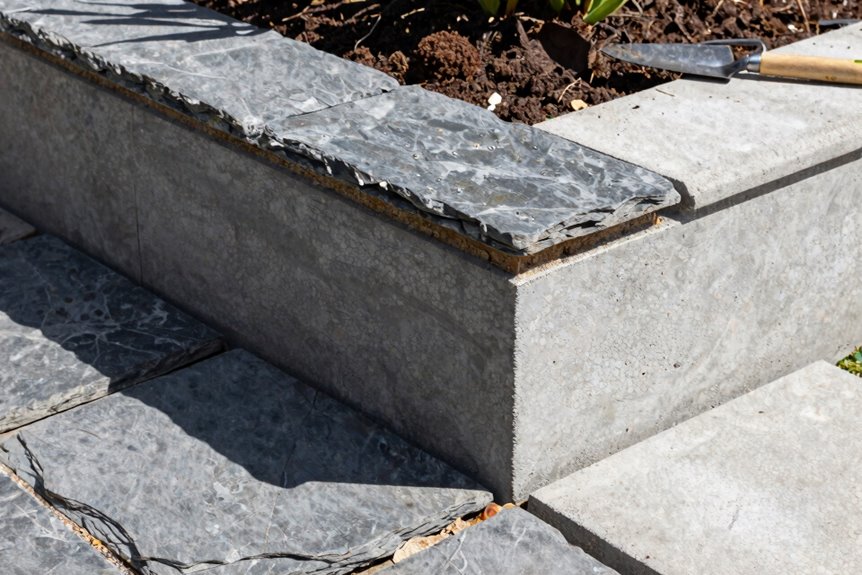
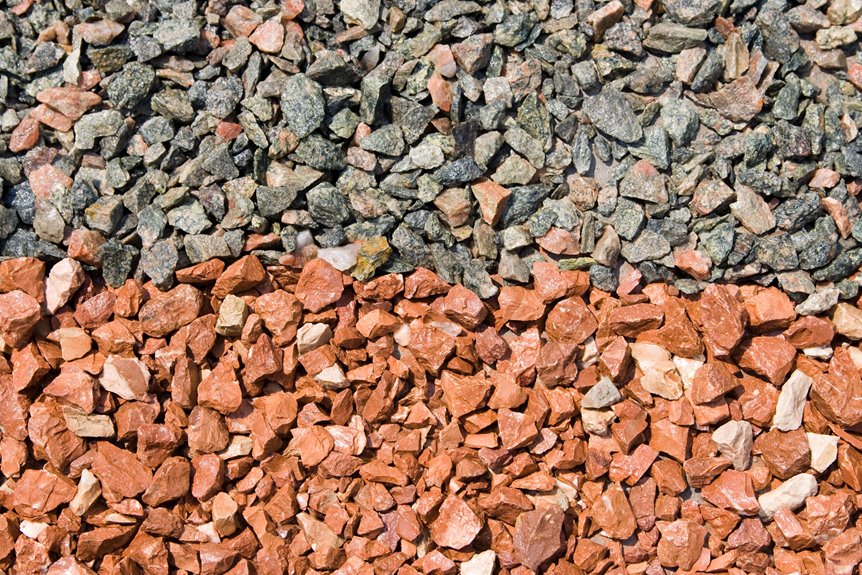
Stone and concrete raised beds offer permanence that wood cannot match—but permanence comes with serious cost and labor.
Stone and concrete raised beds offer permanence that wood cannot match. These structures last for decades without rotting or rusting, but expect to spend $500 to $2,000+ per bed depending on wall height.
Installation requires serious landscape masonry work. Dry-stacking stone works for short 1–2 course beds, but anything taller needs mortar and a solid gravel base. Concrete blocks demand compacted sand underneath, especially in flood-prone spots.
What you’re committing to:
- Durability that spans generations, no rotting, no rusting
- Mortar work or professional help for tall, stable walls
- Heavy lifting that demands physical effort and time
- Fixed layout once construction is complete
Natural stone provides the rustic, settled appearance many gardeners prefer. Irregular pieces complicate construction and require careful fitting. When properly installed, natural stone remains food-safe for edible gardens.
Match Your Raised Bed Material to Climate, Budget, and Body
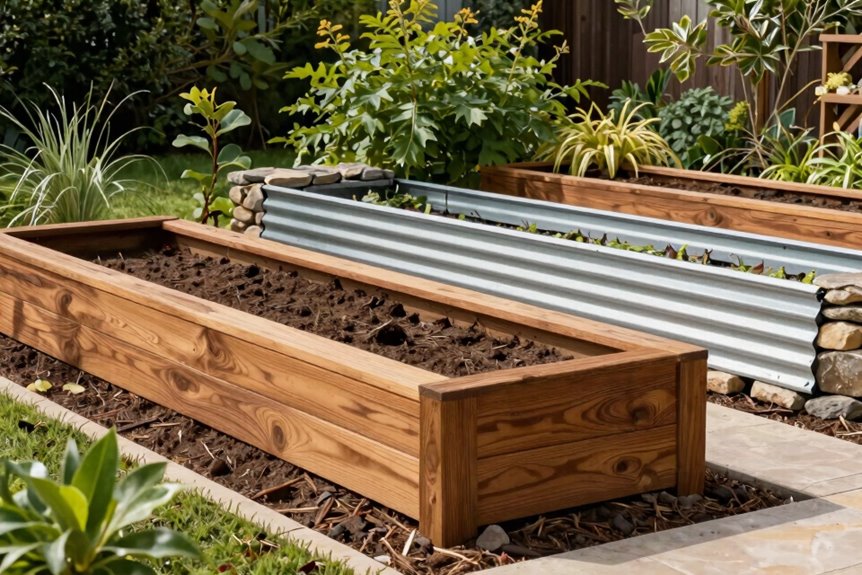
Stone and concrete beds might outlast your mortgage, but they won’t do you much good if you can’t afford them or lift them. Matching your material to your reality makes gardening feel welcoming, not overwhelming.
Galvanized steel beds heat up fast in cool climates and shrug off rain for years. Cedar raised beds cost more upfront but reward you with 15–20 years of beauty. Pressure-treated wood saves money now, though it’s not organic-friendly. For your body, aim for 24 inches high. Your back will thank you.
| Material | Best For | Trade-Off |
|---|---|---|
| Galvanized steel | Wet climates, fast warming | Can feel industrial |
| Cedar | Longevity, natural look | Higher initial cost |
| Pressure-treated wood | Tight budgets | Chemical concerns |
| Stone/concrete | Permanent structure | Heavy, pricey install |
| Metal + wood combo | Balanced durability vs cost | More planning needed |
Pick steel for soggy yards and cedar for dry ones. Accessibility height matters most. Measure your comfortable reach before building.