
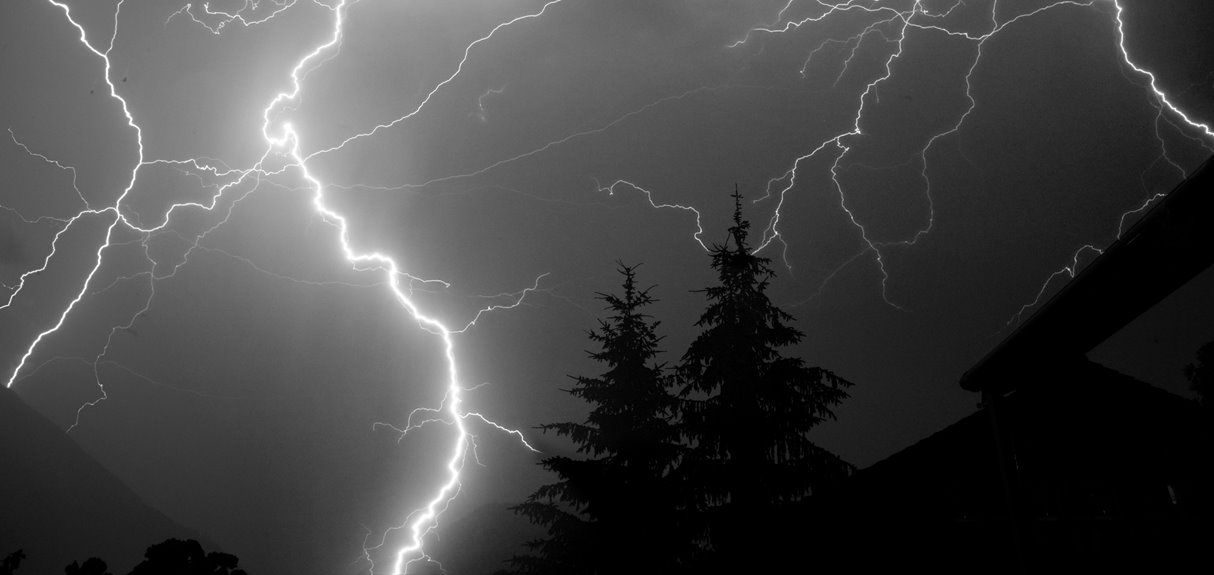
I picture a storm cloud like a giant blender full of ice crystals and soft hail called graupel. Warm air shoves crystals upward while heavier graupel tumbles down, and every collision swipes electrons like kids trading stickers. Crystals turn positive and crowd the top; graupel drags negative charge to the middle. When enough charge piles up, about 100 million volts, the air cracks open like a snapped rubber band. Lightning bridges the gap in 50-meter hops until it finds something to touch. You can learn how to tell if that strike is creeping closer.
What Happens Inside a Cloud to Create Lightning?

Picture a thundercloud as a giant, invisible factory where tiny ice particles bash into each other like bumper cars. Ice crystals shoot upward on warm drafts while heavier graupel, soft hail basically, tumbles down. Every collision steals electrons, creating charge separation. The crystals turn positive and float high; the graupel drags negative charges below.
This thunderstorm builds a layered battery with positive charge on top and negative charge in the middle. The electric field intensifies until dielectric breakdown occurs. That’s when the air itself can’t insulate anymore.
You get intra-cloud lightning dancing internally or cloud-to-cloud lightning leaping sideways. A stepped leader tunnels through, then the brilliant return stroke answers back. Nature’s circuitry sparks before us.
How Does Lightning Choose Where to Strike?
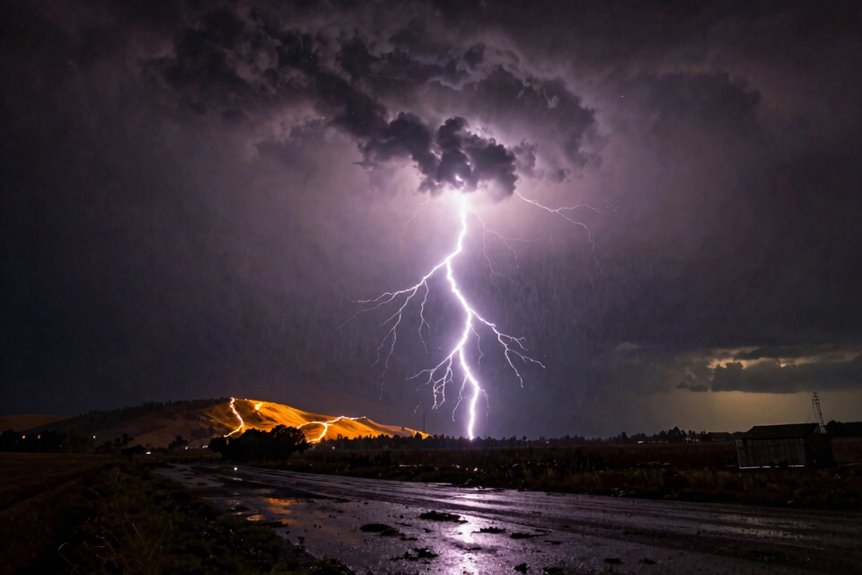
So how exactly does lightning decide where to crash down? It doesn’t really “choose”—it’s physics doing its thing. Inside a cloud, charge separation builds up, piling positive/negative charges in different zones until the electric field becomes intensely stressed.
A stepped leader zigzags down from the cloud in 50-meter chunks, feeling around like a blind finger. Meanwhile, the ground isn’t just sitting there. Ground-based initiation sends an upward streamer reaching to meet it. When they connect, you’ve got your discharge path.
Most lightning stays as intra-cloud (IC) lightning, never bothering with earth at all. But when cloud-to-ground happens, ground conductivity matters: wet soil or salty earth helps complete the circuit. Positive cloud-to-ground flashes are rare beasts, less than 5% of strikes, with their own distinct characteristics.
How Dangerous Is Lightning Really?
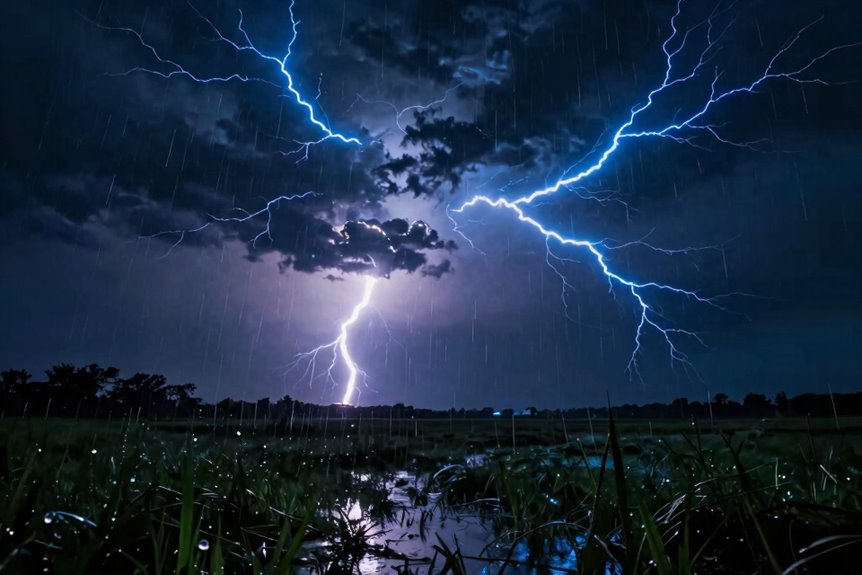
Understanding how lightning picks its targets is one thing, but let’s talk about what happens when it actually hits. Lightning risk is real, especially when you’re outside enjoying summer’s peak months from June through September.
Here’s what you need to know:
- Positive cloud-to-ground flashes pack the nastiest punch. Less than 5% of strikes, but peak currents hit 400,000 amps. That’s enough to fry anything in its path.
- A ground strike happens fast. The stepped leader creeps down, then the return stroke blasts upward in microseconds. Multiple strokes can hammer the same spot before the thunder even rumbles.
- Outdoor safety matters because about 400 Americans get struck yearly. Roughly 50 die; hundreds survive with lifelong disabilities.
Charge separation builds killer storms. Respect the current; it’s not picky about where it lands.
Lightning Safety Rules That Work Indoors and Outdoors

Where should you be when thunder booms? Indoors, where the walls provide protection against cloud-borne lightning. Stay in rooms without windows and sip cocoa while the storm continues. Avoid showers, sinks, and texting on charging phones, since water and wires conduct electricity. Wait thirty full minutes after the last thunder before going back outside.
Outdoors, hard shelter offers the only real protection. Dash for a building or a car with a metal roof before storm clouds darken. If caught outside without shelter, squat low with feet together, staying away from fences and poles. Plan ahead and watch forecasts to avoid dangerous situations.
Why Thunder Follows Lightning: and What the Delay Tells You
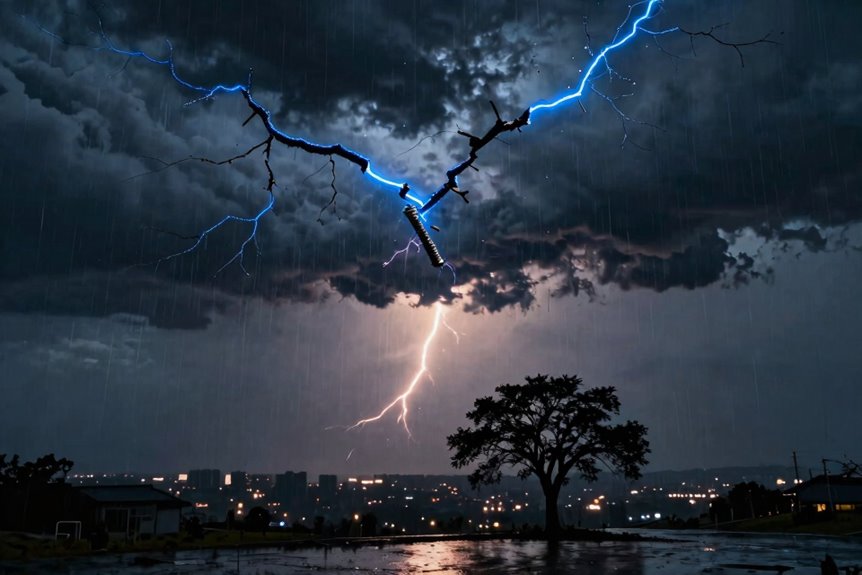
Why does thunder always show up late to the party? I notice the flash first, then wait for the sound, every single time. During a thunderstorm, lightning creates a shockwave through rapid heating of air to 30,000°C. That explosive air expansion produces the thunderclap we hear.
Light travels about 1,000,000 times faster than sound, so I see the lightning instantly while the sound lags behind. This sound delay isn’t just annoying; it’s useful. I use distance estimation to stay safe: about 5 seconds between flash and thunder equals roughly 1 mile. Longer delays mean the strike is farther away.
Three things I watch for:
- A sharp crack means the lightning struck close. Take cover now.
- Rolling rumbling indicates distant air vibrations continuing for minutes.
- Decreasing intervals between flash and thunderclap warn that the storm is approaching.