I always start by killing power at the breaker and waiting five to twenty minutes for the housing to cool. Those metal edges stay hot longer than you’d expect. I grab a stepladder tall enough that I’m not stretching, then use either a ten-inch loop of duct tape or a suction cup changer to grip the bulb and twist counterclockwise.
Once it’s loose, I match my new bulb to the housing type. C-clips mean direct twist-in, while empty cans need retrofit brackets with torsion springs at twelve and six o’clock. I seat the new bulb snugly, flip the breaker back, and test the switch. The next section covers handling rough drywall edges and preventing wobble issues.
Shut Off Power and Let the Housing Cool
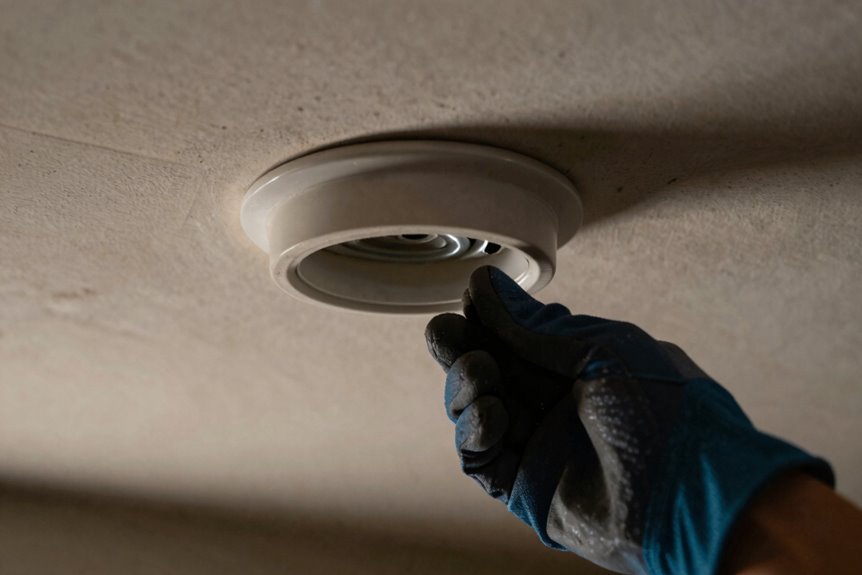
Why start with anything else? I’ve learned the hard way that skipping safety steps never pays off. Before I touch anything, I shut off power at the circuit breaker, not just the wall switch. Those recessed housings trap heat like a tiny oven, so I let the housing cool for five to twenty minutes. I’ve singed my fingertips on “off” bulbs before, and that smell of scorched skin isn’t worth rushing. I grab my non-contact voltage tester and double-check that the power is truly dead. No blinking lights, no surprises. The metal edges inside can slice you, so I move slowly. Protecting yourself means you get to enjoy the finished job without bandages.
Grab a Ladder and Choose Your Bulb Grip Tool
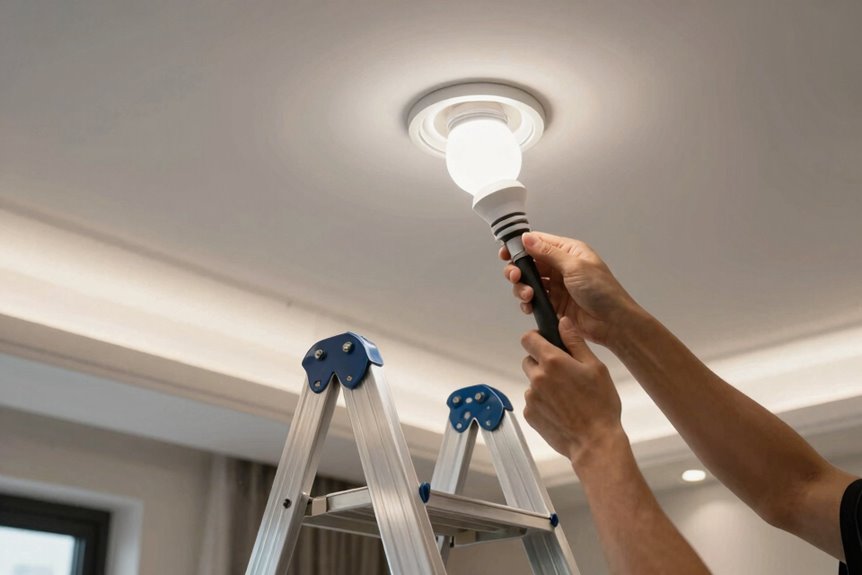
I always start by hauling out my stepladder and checking that it’s tall enough so I’m not doing that awkward stretch-and-wobble thing. You want your feet planted solidly, arms reaching up without strain. Safety first, always.
For picking your bulb grip tool: recessed lighting sits flush and tight, so bare fingers often fail. I keep two options handy. Duct tape works in a pinch. Just fold a 10-inch strip into a loop, sticky side out, and press it against the bulb. For frequent jobs, I grab a suction cup bulb changer kit from the hardware store. The rubber cup grips smooth glass like a determined octopus. Both tools prevent the frustration of stuck bulbs.
Unscrew the Old Bulb With Duct Tape or Suction Cup
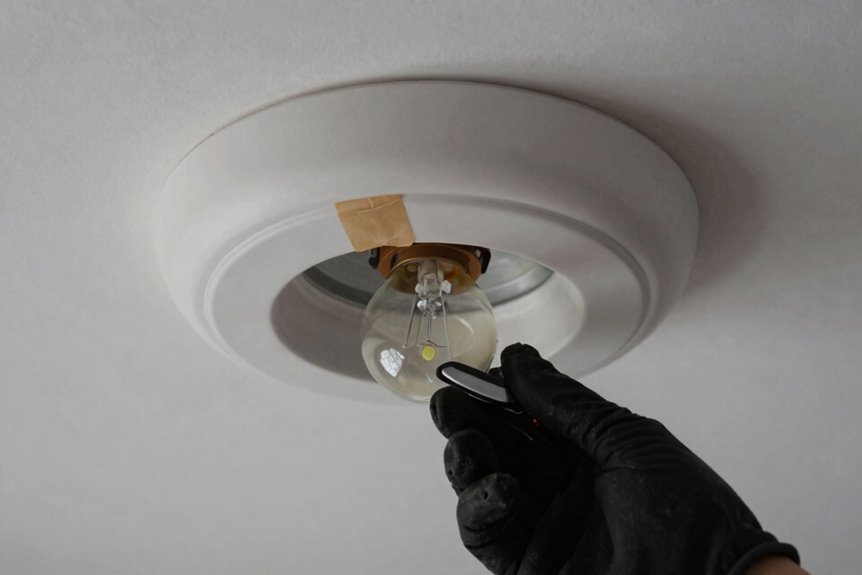
Ever wondered how to grip something you can’t grab? I’ve stared up at a stubborn recessed light fixture that resists removal.
Take about ten inches of duct tape and fashion a loop with the sticky side out. Press it firmly against the bulb until it adheres, then twist counterclockwise. The bulb will loosen. No direct glass contact is needed.
If you don’t have tape available, purchase a suction cup bulb changer kit from the hardware store. Push it flat against the bulb surface, wait for the suction to activate, and twist. This method works effectively on stuck light bulbs.
Once loosened, finish removing the bulb by hand. Keep the breaker off during the entire process. If the bulb remains stuck after these attempts, contact a West Lake Village electrician for assistance.
Match the New Bulb to Your Recessed Housing Type
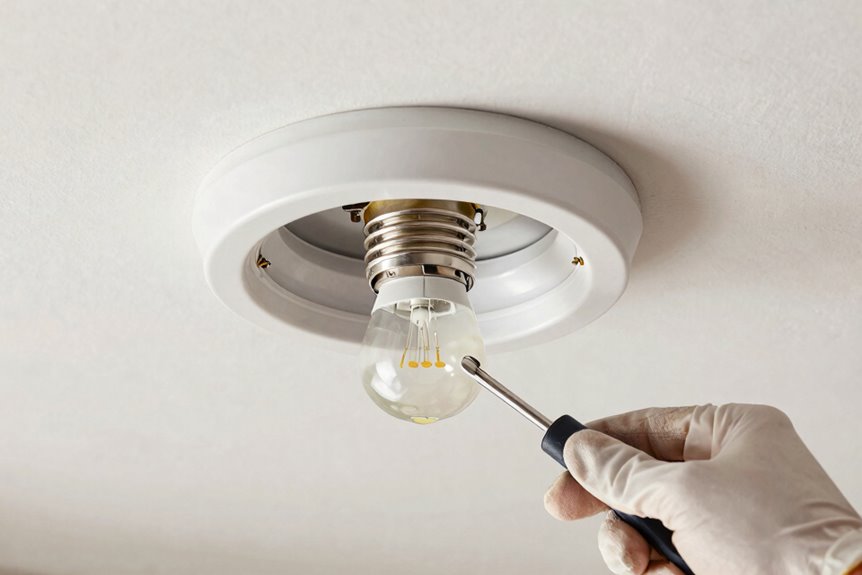
What’s the real difference between your old housing and the new LED you’re eyeing? Recessed housings come in two types, and picking wrong means a wobbly light that won’t stay secure.
| Housing Type | What You’ll Need |
|---|---|
| Has c-clips inside | LED twists right in—done |
| No c-clips (just empty can) | Retrofit brackets with torsion springs |
| Rough drywall edges | Sandpaper for flush finish |
Most LED lights need those spring brackets when c-clips are missing. Mount two clips opposite each other at clock positions 12 and 6 so nothing tilts. Curve the springs into place, and your LED seats flat against the ceiling. The proper installation prevents movement and keeps the fixture stable long-term.
Lock In the Bulb, Restore Power, and Test
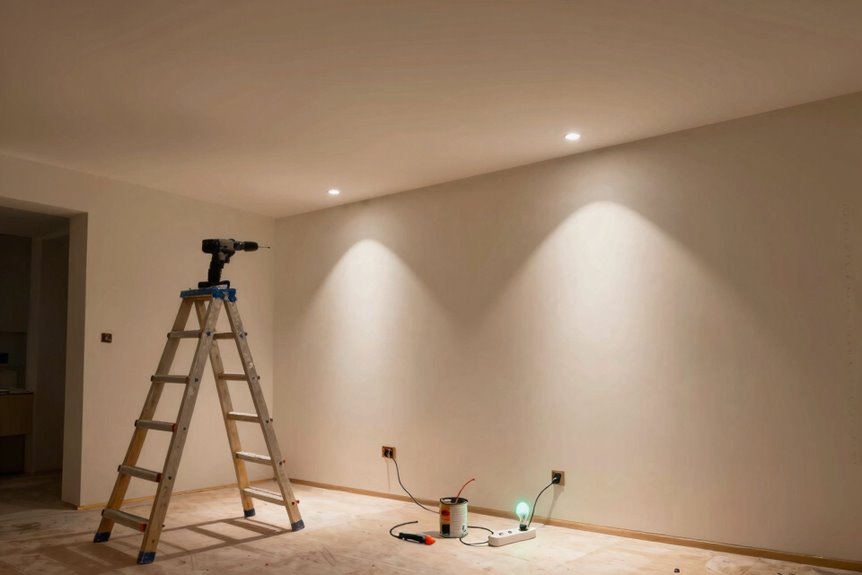
You’ve come this far, so let’s finish strong. I take the new bulb and feel its cool glass against my fingertips. I align the base with the socket, then twist clockwise until it snugly seats. Keep it tight, but not so tight that you risk cracking the bulb or jamming the base.
Now I flip the breaker, restoring power with a satisfying snap. The room holds its breath. I hit the switch.
Light floods down, warm and golden. The job is complete.
If darkness persists, I turn power off again and reseat the bulb. Sometimes they wobble loose from vibration or loose installation. But usually, that clockwise twist does the trick. You’ve saved the day without calling an electrician.