
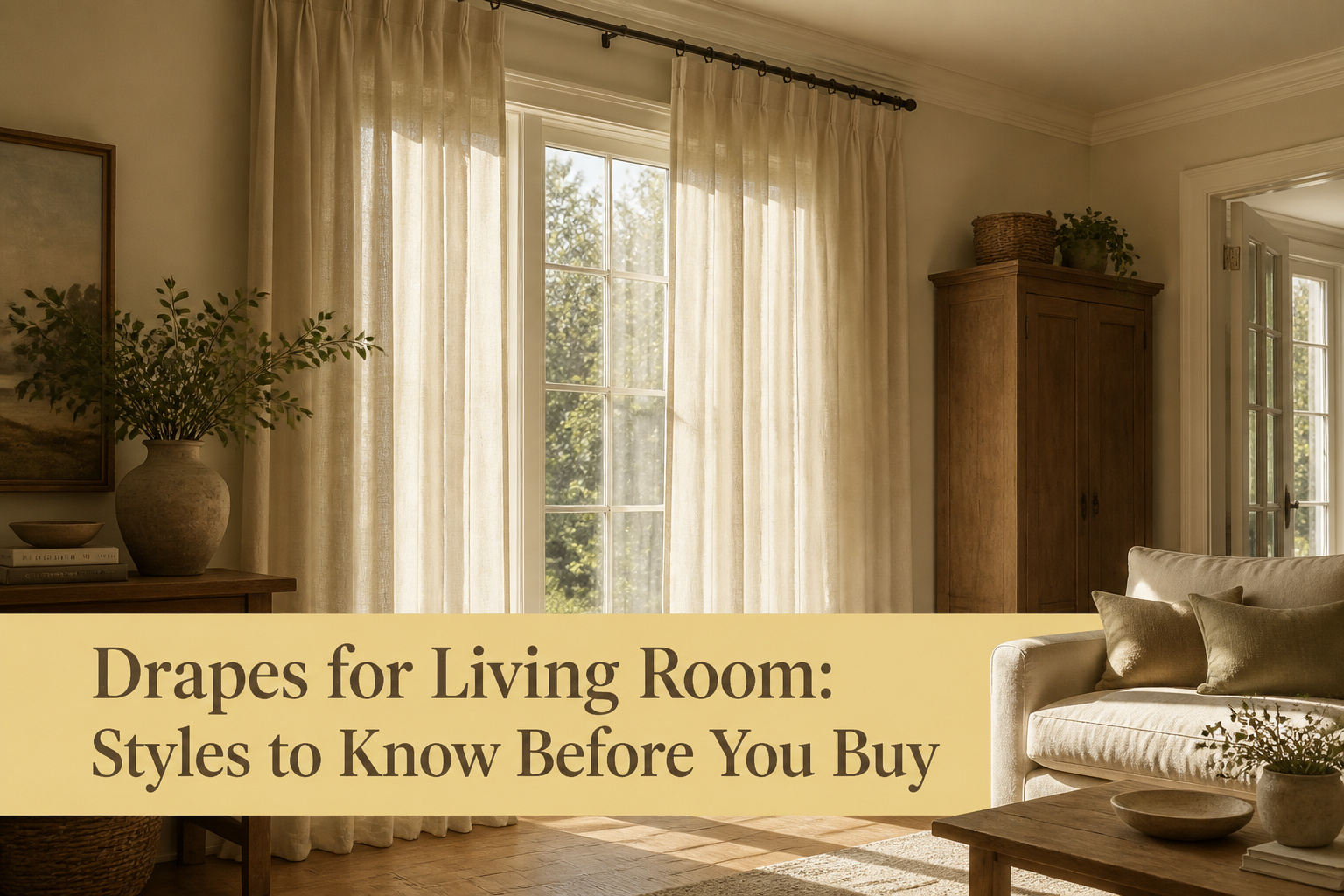
Drapes for living room windows range from simple floor-length panels to formal swags with pointed tails, and the style you choose determines whether the room feels finished or fussy. The catch is proportion: an 84-inch panel suits standard ceilings, but swags need nine feet or higher to avoid swallowing light and shrinking the wall. I learned the hard way that a valance over bare glass looks like a hat without a coat until you add a roller shade beneath it.
1. Classic Panels

The first thing most people picture when they think of drapes for living room windows is a pair of classic panels hanging from a simple rod. These come in standard lengths, and the ones stocked everywhere are 63", 84", and 96" off the shelf. Rod pockets and grommets are the two common ways they attach, with grommets sliding easier and rod pockets sitting closer to the wall for a cleaner header line.
Wall coverage is straightforward: two panels flanking the window frame the glass and stop at the sill, apron, or floor depending on which length you bought. An 84" panel is the safe bet for a typical ceiling height, landing right at the baseboard without pooling. I have passed on the 63" length in every living room I have worked; the shorter drop reads as an afterthought against most furniture, though it works over a radiator or behind a sofa back where the hem hides.
These panels work alone when you need darkness and do not mind a flat, single-layer look at night. They need a partner layer if you want filtered daylight without stripping the hardware bare every morning. A sheer behind them is the common pairing, or a blind tucked inside the frame if wall space is tight.
2. Valances

A valance is a short top treatment, usually about 14 inches high, that frames the window without covering the glass itself. It does two practical jobs: hiding the hardware above the frame and adding a finished horizontal line across the top. In my own living room, I tried one over a bare window during a rental year where drilling for full rods was not an option.
The risk is real. A valance over an undressed window below can look like a hat with no coat, top-heavy and unfinished. The fix is either pairing it with blinds or sheers underneath, or using it only where the view itself is the feature and the frame needs quieting, not covering. I learned that the hard way after a weekend install that looked orphaned until I added a cheap roller shade beneath it.
The 14-inch height is the standard that reads as intentional, not afterthought. Go shorter and it shrinks the window visually; go taller and you start blocking daylight you meant to keep. For renters, the appeal is the low commitment: a tension rod or two small brackets, fabric you can take with you, and a finished look that does not fight the lease.
3. Swags
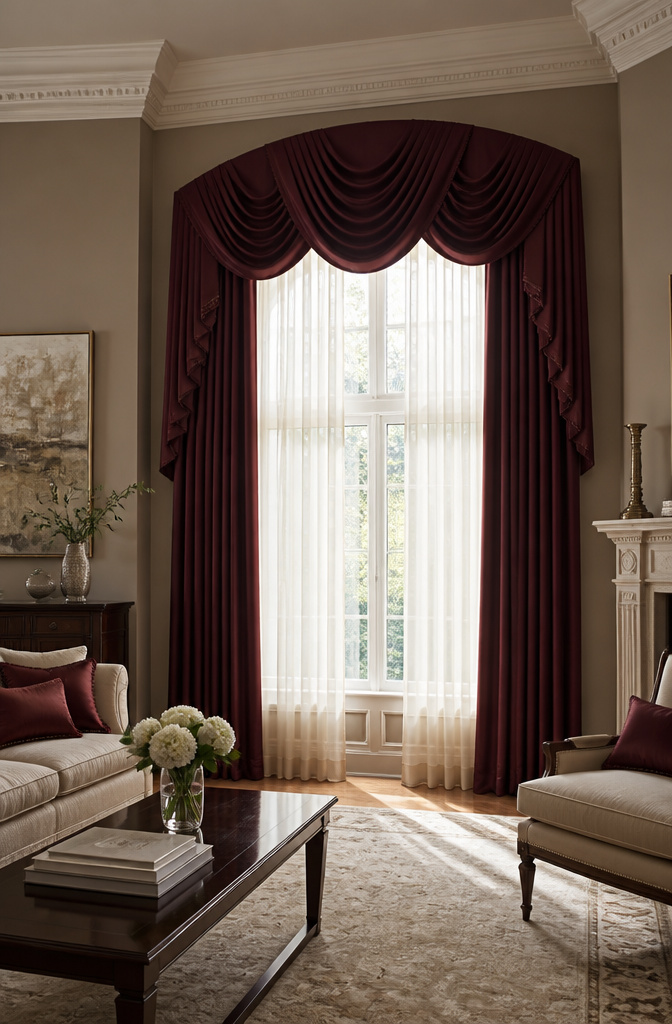
Swags drape fabric in soft, curved folds across the top of a window, usually layered with matching tails or jabots at the sides. Each swag section runs about 25 inches wide, so a standard 36-inch window needs roughly two sections to look intentional rather than skimpy. The style still makes sense in formal living rooms with ceilings at nine feet or higher, where the volume of fabric has room to breathe and the curves echo traditional molding. In a typical eight-foot rental living room, swags tend to read as dated or fussy, swallowing light and making the wall feel shorter than it is. I would skip them entirely in spaces with low ceilings, modern furniture, or any window narrower than 30 inches; the proportions fight the room rather than frame it. If you inherit swags you did not choose, removing the mounting board and patching the wall usually takes under an hour, which is time well spent.
4. Tiers
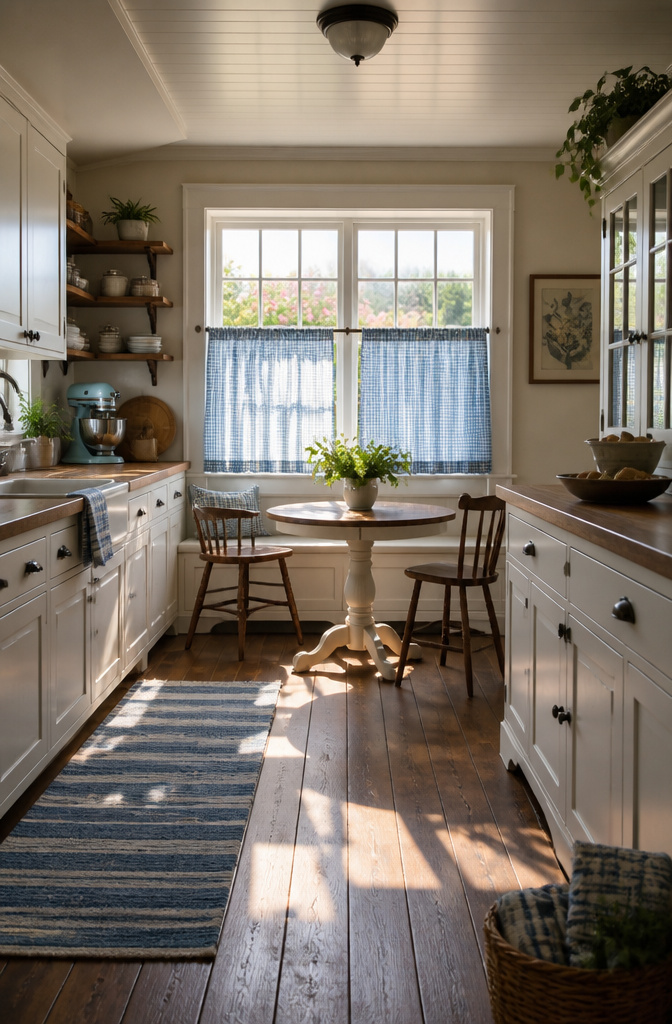
Tier curtains stop at the middle of the window, covering only the lower sash and leaving the upper half open to daylight. The privacy they offer is partial at best; anyone passing by sees straight through the top glass into the room, which is why they work in kitchens and bathrooms where you want light more than seclusion and the sightline from a sidewalk is already limited. In a living room, that open upper half faces the street or a neighbor’s yard directly, and the whole point of drapes there is usually to close the room off completely after dark. Tiers also read visually as a kitchen fixture, rooted in the same cottage style as gingham tablecloths and open shelving, so they tend to shrink a living room rather than finish it. If you are renting and the landlord left hardware for tiers, swapping the short panels for full-length ones on the same rod is a thirty-minute fix that changes the whole wall.
5. Prairie Gathered Swags
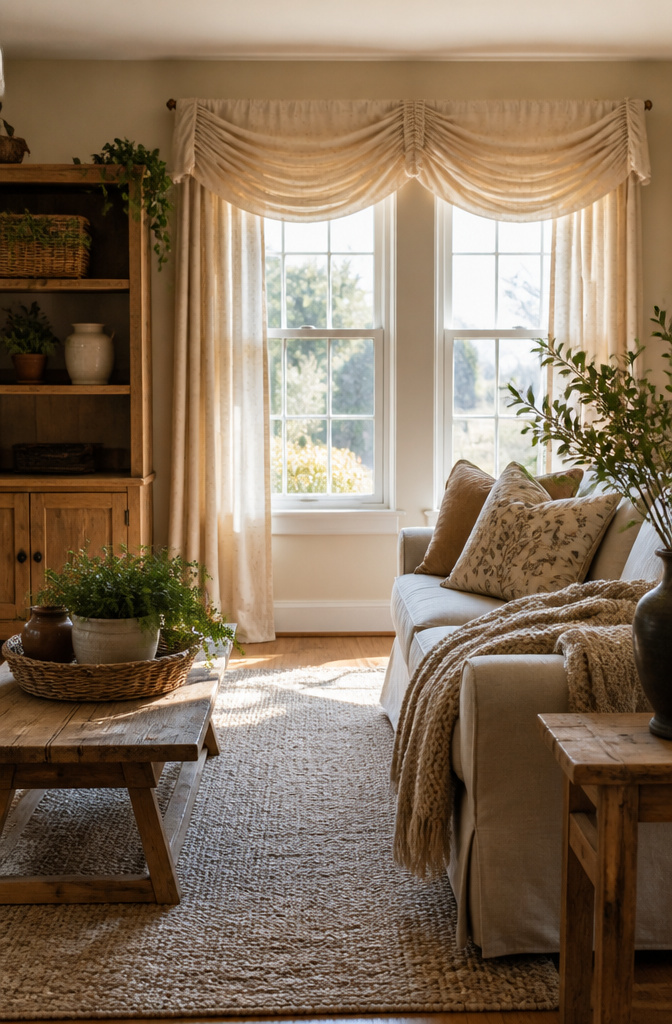
Prairie gathered swags take the same basic shape as a formal swag but let the fabric do the work instead of the tailoring. The top gathers into soft folds rather than sharp pleats, and the tails hang shorter and fuller, almost like a valance that happens to drape. That extra volume hides a lot of sins: uneven window frames, hardware mounted a little off-center, or fabric that was never meant to hold a crease.
This is the style to reach for when your living room already leans cottage or farmhouse, anywhere the goal is warmth instead of architecture. It pairs well with worn wood, slipcovered seating, and the kind of walls that have texture rather than gloss. Skip it if your trim is modern and minimal; the ruffles will look lost against flat planes.
The casual structure also means you are not married to expensive drapery weight. A medium cotton or a soft linen blend gathers beautifully without the investment of formal silk, and the shorter tails keep yardage reasonable. What you save in fabric you may spend on width, though. prairie swags need to look abundant, not skimpy, so plan for at least two and a half times your window width to get that relaxed pouf.
6. Fishtail Swags

Fishtail swags are the most formal of the lot, with pointed tails that angle down from the top of the window frame like folded drapery frozen mid-gesture. You still see them in historic homes and formal dining rooms where the architecture itself demands that kind of ceremony. The shape draws the eye upward and outward, which is exactly the problem in a standard living room: the tails compete with whatever else you’ve got going on, whether that’s a TV, a fireplace, or simply the sofa you actually want people to notice. I looked at a set once for my own living room and realized the swags would have been the loudest thing in a space that already had enough going on with exposed brick and built-in shelves. They work when the room is built around them, not when they’re dropped in to dress up drywall and rental blinds. If your living room has standard 8-foot ceilings and ordinary proportions, fishtail swags will read as costume rather than character. Save them for spaces where the crown molding is original and the chandelier is already there.
How Style Sets the Mood

Living room drapes do more than block light; they set the emotional temperature of the space. Panels lean clean or cozy depending on fabric weight, with linen or cotton blends reading relaxed and heavier weaves feeling tucked-in. Valances, whether board-mounted or gathered on a rod, push a room toward cottage softness or traditional formality based on trim and proportion. Swags drape in curves that read ceremonial; they need tall windows and enough wall width to avoid looking like leftover fabric.
Color and pattern amplify whatever the structure starts. A solid charcoal panel stays modern. The same shape in faded floral shifts toward English garden. Small repeats keep the eye moving and soften architectural flaws; large-scale prints anchor a wall but fight with busy furniture.
What convinced me, reading through a dozen of these guides, is that every one circles back to the same decision. You have to name the mood before you measure. Renters especially: a panel you can take down in ten minutes only works if you bought the right personality to begin with.
How Fabric Changes What You Get
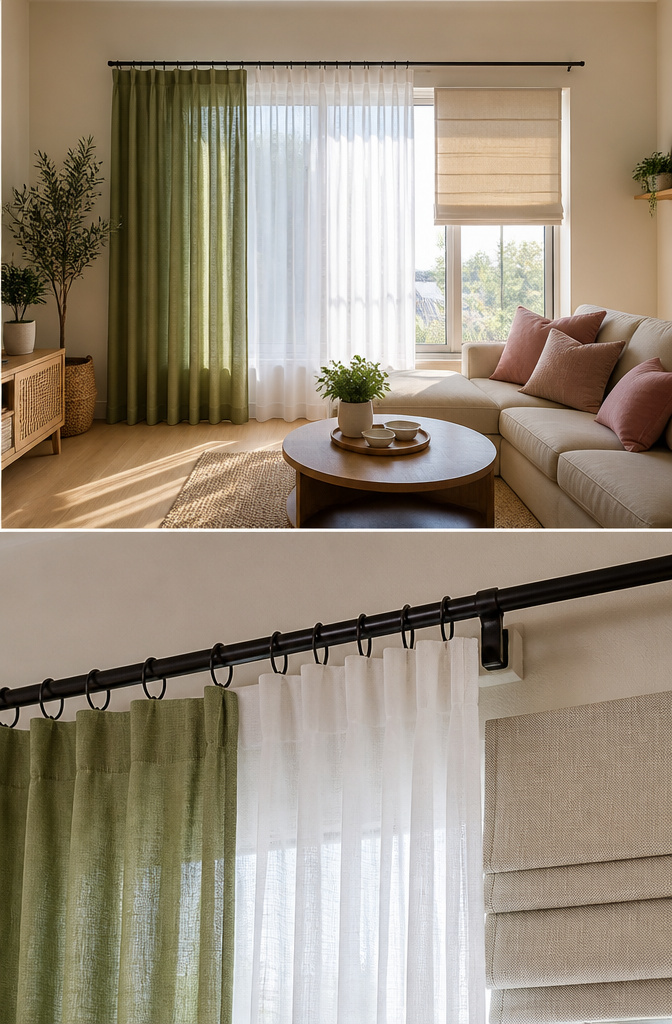
Cotton, linen, and polyester are the fabrics you will actually find on most living room rods, and each one changes what the room feels like by noon and what it costs to heat by January. Cotton hangs with a soft fold that filters daylight into something usable without turning the room into a cave, though it will let the streetlight through after dark unless you line it. Linen does almost the same job but keeps a slubbed texture that reads relaxed even when the rest of the room is trying too hard; it also creases if you so much as look at it wrong, which is either charming or a maintenance job depending on your patience. Polyester is the practical vote: it keeps a pressed edge, blocks more light than its weight suggests, and survives a rental washing machine without the shrinkage that turns cotton panels into highwaters.
Heavier cloth does two jobs at once. It insulates the glass, which matters in older rentals with single-pane windows, and it falls straight from the rod with that formal stack that pools slightly on the floor if you leave the extra length. Lighter fabric balloons outward and lets air move behind it, which reads as airy in summer and drafty by February. The weight also determines how the panel behaves when you draw it: thick linen slides in a single motion, thin cotton can bunch and snag on the rings unless you guide it by hand.
Layering With Sheers or Blinds

Pairing drapes with a second layer sounds fussy until you live with a west-facing living room in July. The sun pours in from 4 p.m. onward, bleaching the sofa arm and heating the room past what the AC can handle. Sheers or blinds behind your main drapes solve this without making the space feel like a cave by 6 p.m.
The practical rhythm is simple: keep the sheers or blinds drawn during the day to filter light and block UV, then close the drapes at night for privacy and insulation. In a living room you actually use, that adjustability matters more than any single fabric choice. You want to read on the couch at 3 p.m. without squinting, and you want to watch a movie at 9 p.m. without the streetlight glaring back off the screen.
Blinds give crisper light control; sheers soften the whole wall and still let you glimpse the yard. Either way, the double layer adds depth that reads as intentional, not like you bought one set of drapes and called it finished. The cost is modest, usually an extra $30–80 per window for basic sheers or vinyl blinds, and the hardware doubles without much extra fuss if you plan the rod placement ahead.
What I skip: decorative side panels that don’t close. They frame the window nicely in photos, but they don’t solve the sun problem, and in a rental you are probably not rewiring for motorized shades.
Measuring Before You Buy

- Rod width is only your starting number. The fabric itself needs to be 2–2.5 times that width so the panels read as drapes rather than stretched bedsheets. I skimped once at 1.5x and the living room looked like a motel until I reordered.
- Height starts at the floor and works backward. Measure from where you want the bottom to sit up to where the rod will live, not to the top of the window frame. Mount the rod 4–8 inches above the frame and 6–10 inches past each side; the window instantly looks larger and the stackback clears the glass when the panels are open.
- Those 84-inch panels sold everywhere? They hang awkwardly on most standard windows because they land somewhere between the sill and the floor, a length that flatters nobody. A quick check before you drill: tape a string across the wall at your planned rod height and let it drop. Pin the bottom at 84 inches and at 96 inches. The difference in proportion is obvious standing ten feet back.
Seasonal Swaps

Swapping drapes with the seasons sounds refreshing in theory, and a few extra panels folded in a closet do make it possible. The rod stays up, the rings or hooks stay put, and the change takes maybe twenty minutes if the hardware is already right. That is the practical side.
The rest of it is harder. Decent panels run $60–$150 per window even at mid-range retailers, so a full second set for a living room with two or three windows is a real outlay. Storage becomes its own project; fabric creases in cramped closets and smells musty if the basement is the only space left. Most renters I know, myself included, pick one neutral set that reads fine in July and still works in January, then forget the idea of a rotation. A seasonal swap only pays off if you genuinely enjoy the ritual and have the closet space to spare. For a weekend project budget and a rental timeline, one good set almost always wins.
What I Hang and What I Skip

Of the six styles, classic panels are the only ones I have hung in every rental living room I’ve had. They fill the frame, hide cheap blinds, and move with me when the lease ends. Valances and swags I skip entirely; the hardware costs more than the fabric, and the effect reads dated against plain walls.
My mistake was fullness. I once ordered panels at exactly the window width, thinking crisp and flat would look cleaner. They hung like bedsheets. The fix was doubling the width, which meant a second set of panels, but the difference was immediate. The extra fabric gives the drape its shape, and the rod hides the seam where the two panels meet.
Tiers and prairie swags I have never tried in a living room. They belong over kitchen sinks, and scaling them up to a 6-foot slider looks costume-y no matter the fabric. Fishtail swags I have seen done well once, in a house with 10-foot ceilings and original trim. In a standard rental box with 8-foot drywall, the points just draw the eye to how low the ceiling is.
Frequently Asked Questions
What are the best curtains for a living room?
Classic panels are the most versatile choice for most living rooms, since they frame the window, hide cheap blinds, and work with almost any furniture. The best style depends on the mood you want: panels read clean or cozy, valances and prairie swags lean cottage, and swags suit formal rooms with tall ceilings. Name the mood before you measure, then pick the fabric weight that matches it.
How do I choose the right size drapes?
Buy panels that are 2 to 2.5 times your rod width so they hang with proper fullness, not like stretched sheets. Mount the rod 4–8 inches above the window frame and 6–10 inches past each side, then measure from the rod down to where you want the hem to land. Skip the 84-inch length unless you have a specific low-mount plan; it usually lands at an awkward in-between spot that flatters no window.
What fabric is best for living room drapes?
Cotton filters daylight into something usable without darkening the room, though it needs a liner if you want night privacy. Linen gives a relaxed, textured look but creases easily; polyester blocks more light, holds a pressed edge, and survives machine washing without shrinkage. Heavier cloth insulates better and falls straight with a formal stack, while lighter fabric reads airy but can feel drafty in winter.