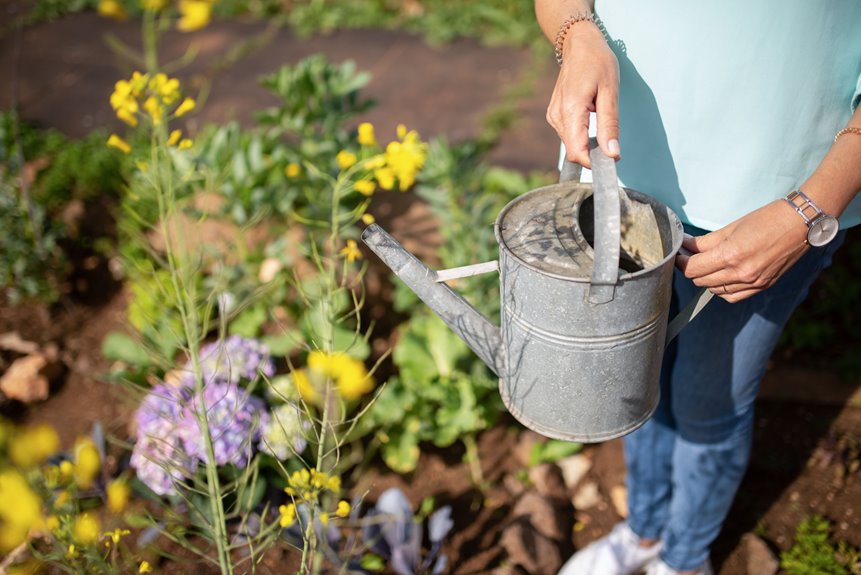
I’ve used metal raised beds for years. They’ll last 15 to 30 years with barely any work. No rotting boards, no termite damage, just snap-together panels that go up in minutes. The metal soaks up sunshine like a cat in a window, warming your soil weeks earlier for spring planting. That same heat can fry your tomatoes in July without thick mulch, and you’ll drop $100 to $300 upfront. Galvanized steel is food-safe, though acidic soil slowly wears it down. Managing root health through scorching summers requires careful attention to soil moisture and mulch thickness.
How Long Do Metal Raised Garden Beds Actually Last?
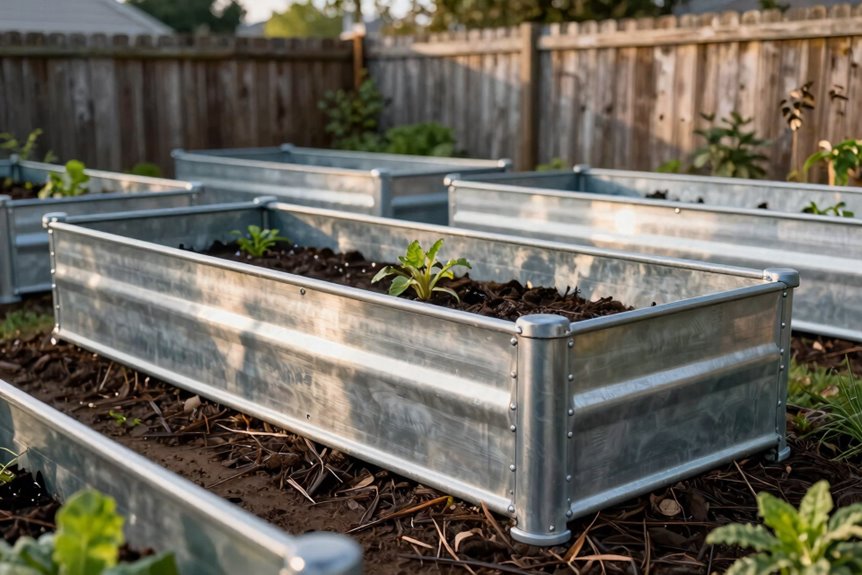
When I’m standing in my garden, dirt under my fingernails, I want beds that’ll stick around. I’ve found that galvanized steel delivers exactly that. Roughly 25 to 30 years of solid performance represents decades longer than my old wooden boxes, which warped and surrendered to rot.
The secret lies in rust resistance. Quality powder-coated finishes create a tough shield against corrosion, though bare galvanized steel still holds its own. Soil acidity matters; acidic dirt slowly nibbles away at protective layers over time. My yearly inspection routine involves checking corners, joints, and coatings. This ten-minute task prevents costly damage.
Maintenance stays minimal. No sealing, no replacing boards. Just sturdy durability season after season. For gardeners seeking lasting homes for tomatoes and herbs, metal beds provide reliable long-term performance.
Will a Metal Raised Garden Bed Overheat Your Soil?
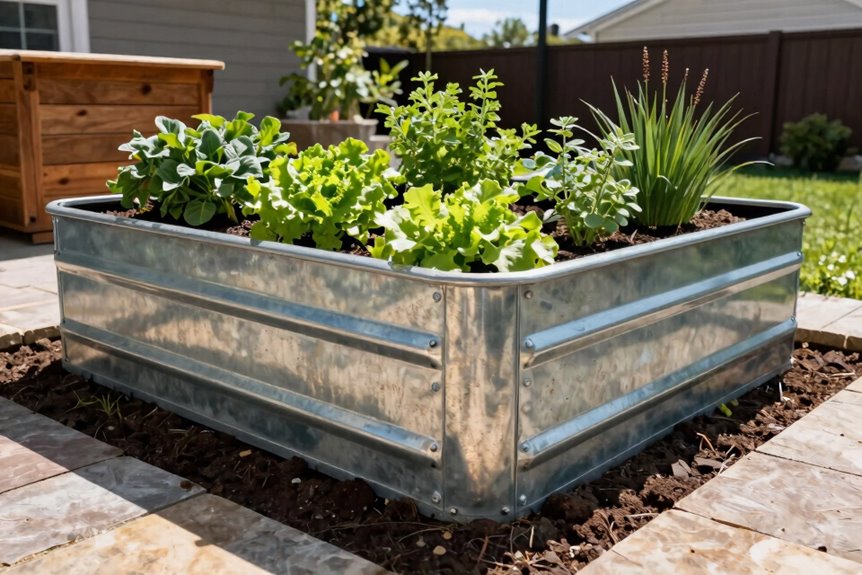
How much does soil temperature really matter when you’re choosing a bed? It matters quite a bit, especially with metal beds.
Metal beds, particularly aluminum and galvanized steel, absorb sunshine fast. I’ve felt the burn on scorching afternoons. That heat retention warms your soil, which is great for spring starts but tricky in hot climates.
What works to manage these issues:
| Problem | Fix |
|---|---|
| Rising soil temperature | Add 2-3 inches of straw mulch on top |
| Extra irrigation needs | Water deeply morning and evening |
| Heat stress on roots | Line sides with insulation boards |
| Dark metal getting too hot | Choose lighter finishes or paint them |
Metal beds won’t prevent successful growing. I’ve grown thriving tomatoes in metal beds through July. Stay observant by checking your soil regularly. Touch your soil to assess its temperature. If it feels like a warm handshake, you’re fine. If it feels like a sidewalk in August, add more mulch.
Are Metal Raised Garden Beds Safe for Growing Food?
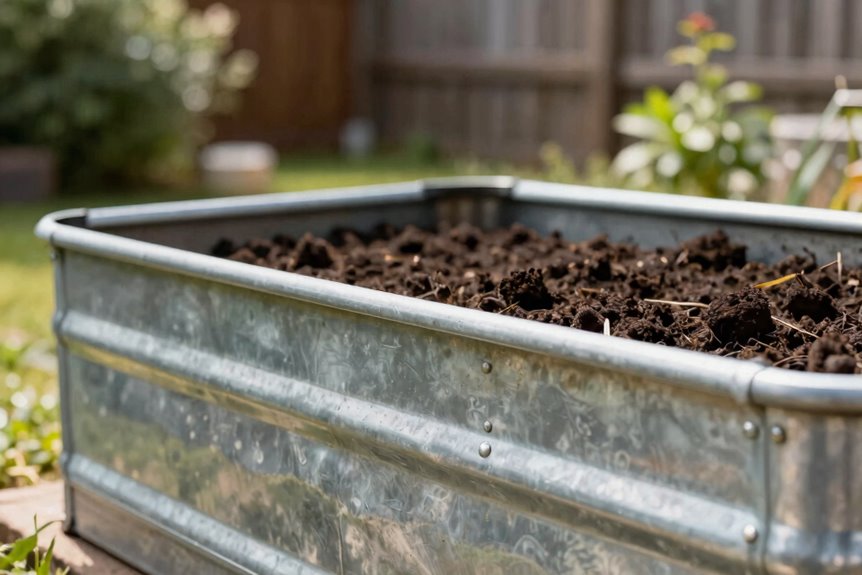
Heat isn’t the only thing on my mind when I’m touching those sun-warmed bed walls. I’m also wondering: are my tomatoes actually safe to eat?
Galvanized metal beds are generally food-safe for growing vegetables and herbs. The zinc coating creates excellent corrosion resistance, and under normal conditions, leaching stays minimal. I’ve learned to monitor my soil pH, keeping it closer to neutral, since highly acidic conditions increase any risk.
Zinc-coated beds protect your harvest: neutral pH keeps vegetables safe, corrosion minimal.
That heat conductivity I mentioned earlier helps warm spring soil faster. For summer’s scorching days, I simply add mulch; two to three inches of straw or wood chips will protect tender roots.
Before buying, I always check the warranty and request manufacturer safety data. Quality powder-coated finishes provide additional protection against leaching. With basic attention, these beds serve my kitchen garden for fifteen to twenty years.
Do Metal Raised Garden Beds Cost More Than Wood?
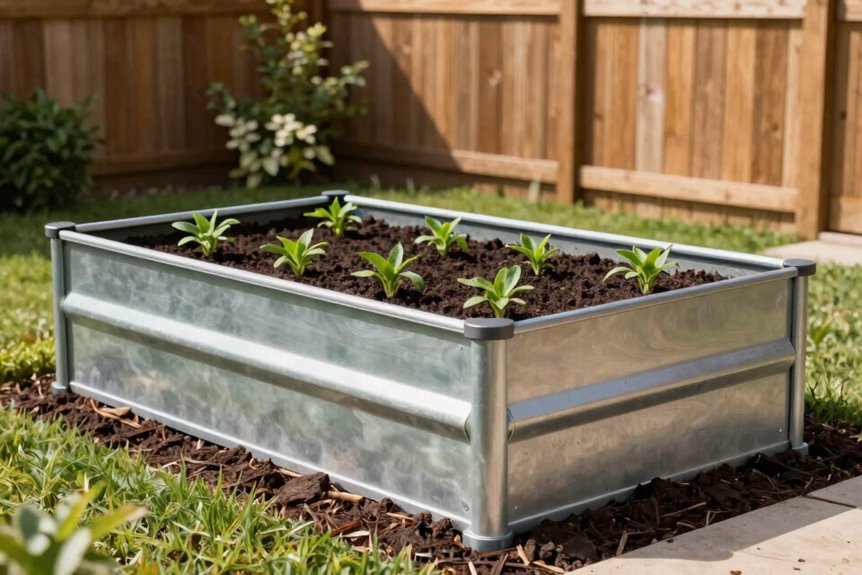
Why does my wallet always feel lighter after browsing garden supplies. Let’s talk real numbers. Metal beds cost more upfront; quality galvanized metal or powder-coated options usually hit the $100–$300 price range per bed. That upfront cost stings compared to basic wood.
Wood might seem cheaper, yet its lifespan often caps at 7–10 years. Meanwhile, galvanized metal stretches 15–30 years with minimal maintenance. No rot, no termites, no warping.
Long-term durability matters when deciding between materials. Less maintenance means fewer weekends fixing things. Plus, modular metal beds snap together fast, saving labor costs.
Is a Metal Raised Garden Bed Right for Your Garden?
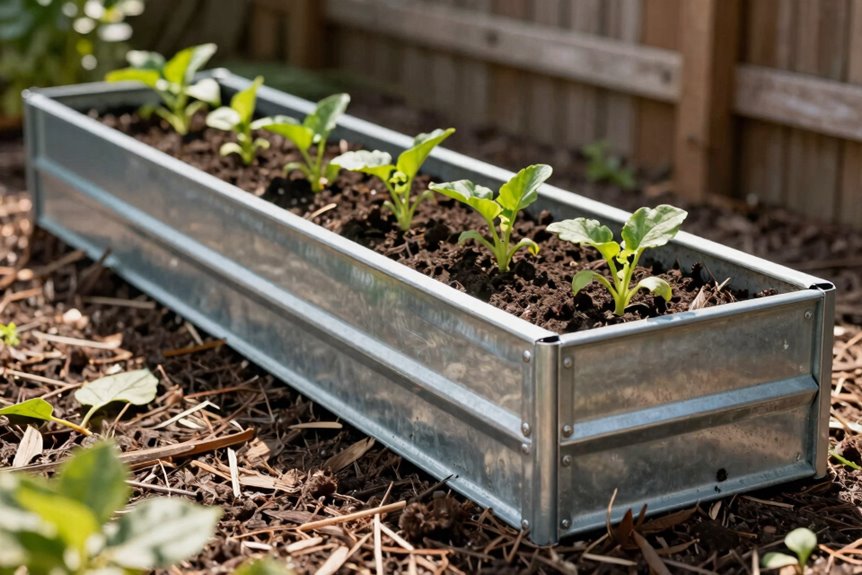
Price tag shock aside, I’m now wondering if metal beds actually fit my yard’s personality and my plants’ needs.
Metal raised garden beds offer serious durability: 15 to 20 years, even 25 with proper maintenance. That longevity justifies the upfront cost for me. But I’ll check my climate first. Heat retention can spike soil temperature, stressing tender lettuce in July. My acidic soil poses a corrosion risk, so I’m choosing galvanized or powder-coated finishes. These coatings block rust and look sleek.
I’ll mulch heavily to cool roots and lock moisture. Sharp edges need filing, and sturdy corners matter. For low-maintenance style that lasts, metal works if I plan around its quirks. My tomatoes should perform well in these conditions.