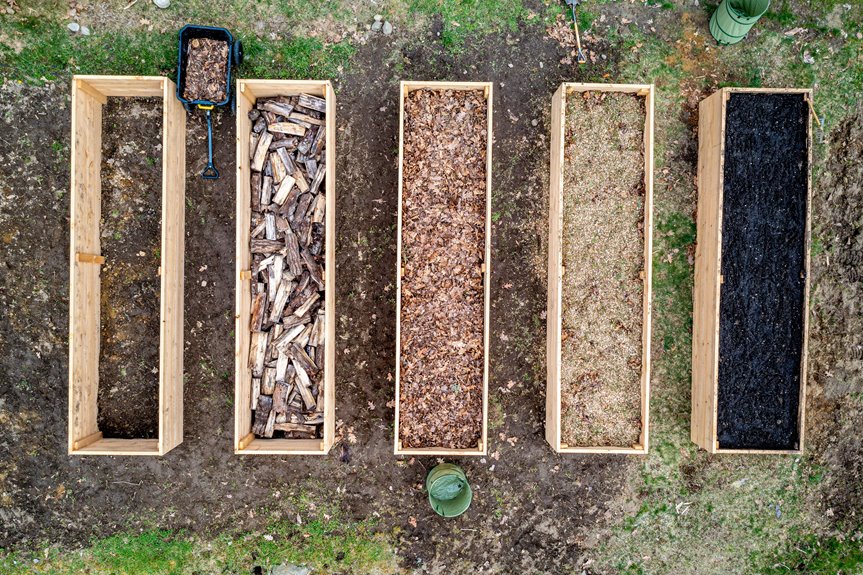
I’ve found cedar raised beds typically last 10 to 15 years, though mine hit twelve and still feels solid. Dry climates stretch that toward 15-plus; soggy ones chew through years faster. The secret isn’t fancy wood; it’s keeping bottom edges dry. I elevate mine two inches on gravel, space planks slightly for airflow, and skip plastic liners that trap dampness like a sweaty raincoat. Check corners yearly, tighten screws after winter, and you’ll likely extend the lifespan significantly. Proper moisture management directly impacts how long your beds will function before requiring replacement.
How Long Do Cedar Raised Beds Actually Last?
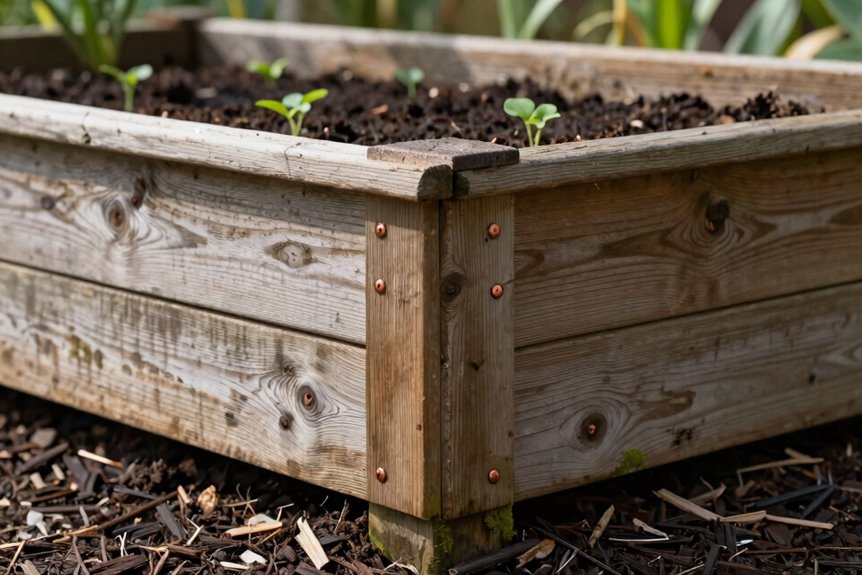
How long can you really expect cedar raised beds to hold up? I’ve found mine last about ten years, matching pressure-treated 2x10s in similar conditions. Your cedar longevity really depends on moisture exposure and drainage. In dry climates, I’ve seen beds push 10–15 years; wet climates shorten that fast.
The bottom edges sitting in soil contact take the biggest hit. Splashback soaks them repeatedly. I always elevate mine slightly and ensure airflow underneath so they dry between rains. Corner supports add years too. Seasonal maintenance matters. I check for soft spots each spring and touch up trouble areas before they spread. Skip the maintenance, and you’ll replace sooner. Treat your cedar right, and it will reward you with a solid decade of growing.
What Makes Cedar Naturally Rot-Resistant?
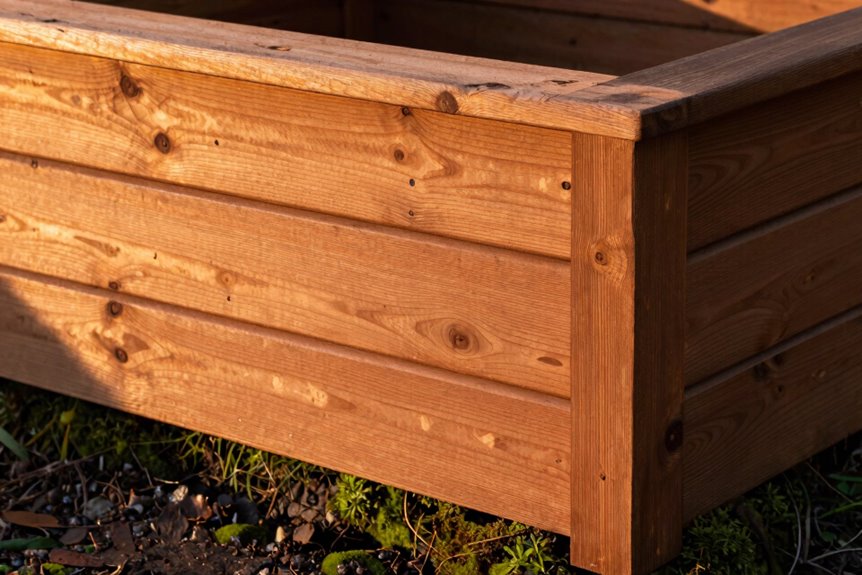
Cedar wood functions as nature’s own weatherproof jacket. It contains natural oils that repel water like a duck’s feathers, plus tannins that deter termites and carpenter ants. These built-in defenses prevent your raised bed from deteriorating after a few rainy seasons, though moisture can still cause damage if left unmanaged.
Natural Oils Protect
Why does cedar laugh at rain while other woods crumble? I’ve built enough raised beds to know the secret: Cedar oils. These natural compounds act like built-in armor, boosting rot-resistance against decay and hungry insects. You’re investing in lumber that performs.
Here’s how cedar’s natural defenses stack up:
| Cedar Feature | Your Garden Benefit | What It Means for You |
|---|---|---|
| Cedar oils | Repels rot and insects | Less worry, more growing |
| Tannins | Deters decay organisms | Beds last years longer |
| Natural density | Aids moisture management | Healthier soil, happier plants |
Drainage matters. Without proper drainage, even cedar suffers. Climate impact plays a role too. Dry regions extend your bed’s life, while soggy climates demand extra attention. Ground contact remains the real enemy. Elevate those beds, and they’ll remain functional for a decade or more.
Moisture Resistance Properties
Where does cedar get its superpower against rot? It starts with smart moisture management. Cedar fights rot best when it’s not constantly soggy. That’s where drainage becomes your best friend. Elevate beds slightly and add gravel underneath, about two inches, to keep soil from smothering the bottom boards.
Airflow matters just as much. Space cedar planks a fingernail’s width apart, letting breezes whisk away dampness between rains. In dry climates, cedar lasts fifteen years or more. In wet regions, you’ll need to work harder, but good drainage still prevents rot.
Watch those splashback zones where soil meets wood; that’s rot’s favorite hiding spot. Line bed interiors with landscape fabric, keeping moisture where roots want it, not where cedar doesn’t.
Insect Deterrent Qualities
The same tannins that keep cedar standing strong against rot also send bugs packing. Cedar beds fight off termites and beetles without additional pest management. That natural insect deterrent means fewer chewed boards and more seasons of growing tomatoes.
| Factor | How It Helps Your Bed |
|---|---|
| Rot-resistance | Tannins block decay fungi from spreading |
| Moisture control | Dry wood stays unappetizing to pests |
| Drainage | Moving water prevents soft spots bugs love |
You’ll want to keep that drainage sharp by elevating beds six inches minimum and skipping the plastic liners that trap dampness. When cedar dries between waterings, its defenses remain effective. Picking wood that guards itself reduces future pest problems and maintenance needs.
Cedar or Pressure-Treated: Which Outlasts the Other?
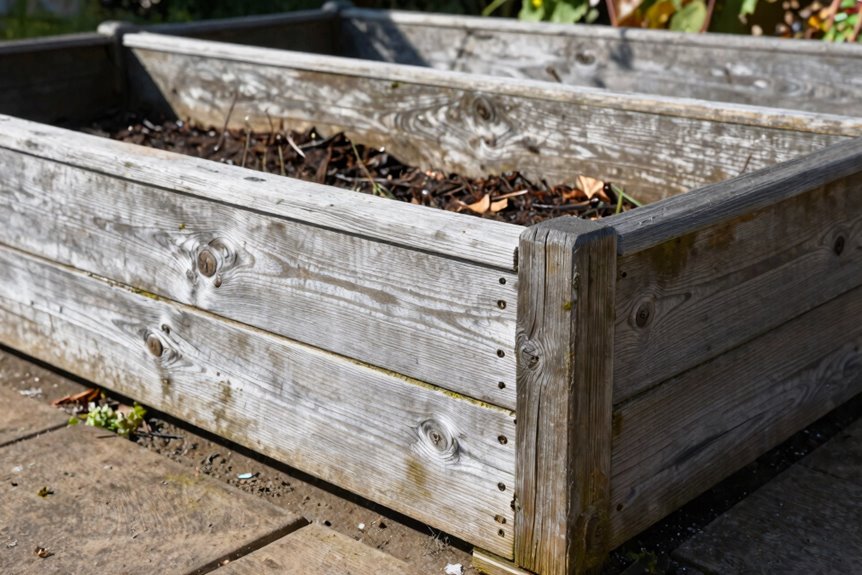
So how do I choose between cedar and pressure-treated lumber when both seem to clock out around ten years. Cedar brings natural rot resistance and those protective oils that boost longevity without chemical worries. Pressure-treated holds its own through factory fortification, though some folks question the additives.
Drainage matters more than the label on your boards. Sloped beds, gravel bases, and gaps between soil and wood do the heavy lifting. My cedar bed lasted eight years before I noticed soft corners; my neighbor’s pressure-treated box hit nine with identical care.
Maintenance determines the outcome either way. I check corners each spring, tightening bolts after winter’s freeze-thaw cycles. Neither material outlasts the other dramatically. Smart installation and vigilant upkeep make the difference.
Does Cedar Last Longer Than Metal Raised Beds?
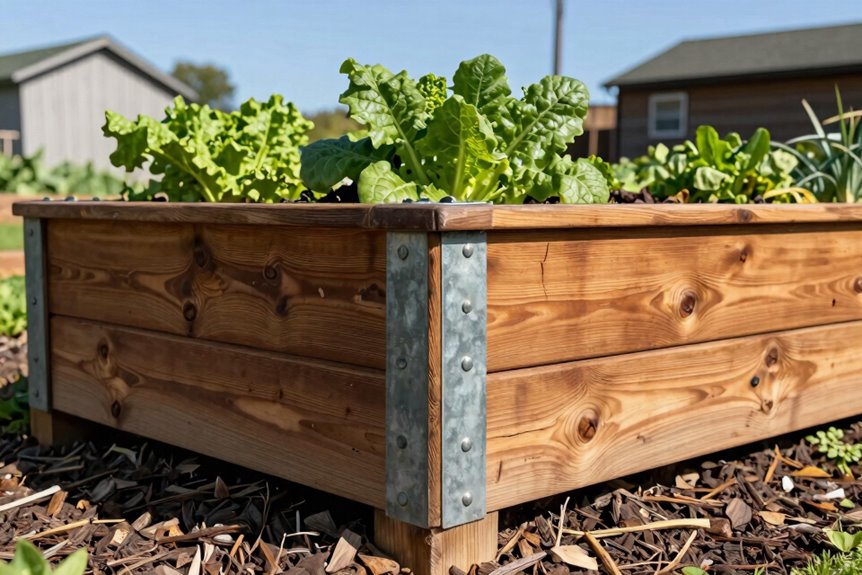
How do cedar and metal stack up when you’re counting years in the garden? Cedar longevity and metal bed coatings both give you roughly a decade of growing joy when you treat them right.
Cedar and metal beds both offer roughly a decade of growing joy when properly maintained.
Climate impact and moisture exposure shape everything. Cedar beds in drier spots push past ten years, while soggy ground nibbles at them faster. Metal beds rely more on their paint or galvanizing than the steel itself. Chipped spots rust, screws loosen, and suddenly you’re patching.
Consider these practical differences:
- Golden cedar planks weathering to silvery gray, smelling like a forest hike after rain
- Metal edges warming in morning sun, then cooling at dusk
- Dark soil lines creeping up wood grain like coffee rings on a table
- Rust blooming orange where a stone scraped the coating
Maintenance factors matter more than material alone. Your choice depends less on which material theoretically lasts longer and more on how much upkeep you’re willing to perform.
Climate Factors That Shorten or Extend Cedar Lifespan
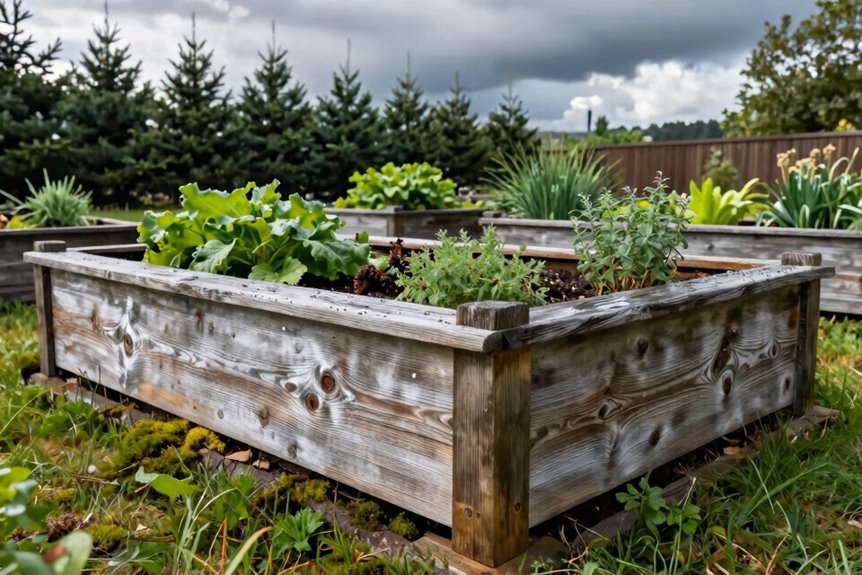
While metal beds battle chipped paint and creeping rust, cedar faces its own climate tests. Cedar longevity can stretch past 15 years in dry Arizona gardens, then crumble in seven seasons along soggy Gulf Coast plots. Climate moisture is the silent thief here. Your boards drink up humidity like a sponge at a picnic.
Soil contact matters enormously. That bottom edge sitting in damp earth creates vulnerability to decay. Elevate beds on 4×4 runners or gravel to break that wicking action. Drainage becomes essential; water should flow through, not pool against the grain.
Sun exposure helps too. Those warm rays dry wood fast after storms. However, brutal sun without moisture makes cedar split like overcooked bacon. Balance is critical: adequate moisture paired with good air circulation and sun exposure extends cedar lifespan significantly.
Installation Mistakes That Cause Early Rot
I’ve seen too many cedar beds crumble before their time because of three fixable mistakes during setup. Poor drainage placement turns your bed into a soggy bathtub, while soil contact issues let moisture creep up like a slow-moving tide. If you don’t leave breathing room around the sides, you’re basically wrapping your boards in a wet blanket.
Poor Drainage Placement
Where exactly did you put your raised bed? I’ve watched too many gardeners plant their cedar dreams in low spots where water naturally gathers. Poor drainage placement kills longevity faster than you’d think.
Groundwater pooling beneath your bed creates a moisture trap. Without proper elevation, your bottom boards sit in damp soil, accelerating rot. I learned this the hard way when my first bed turned spongy after two seasons.
- Muddy footprints that never dry around your bed’s base
- Water glinting in puddles that hug your cedar walls for days
- Dark, soft wood that yields when you press with your thumb
- Splitting edges where moisture has worked its wicked way in
Direct runoff toward lower ground. Add four inches of gravel beneath for drainage. Your cedar boards will rot within two to three years without this protection.
Soil Contact Issues
Why do so many of us build beautiful cedar beds only to watch them crumble from the ground up. Ground contact exposure is usually the culprit. When soil contact hugs the bottom edges, moisture seeps in and refuses to leave. That dampness spikes rot risk and slashes cedar longevity.
What works:
| Problem | Fix | Result |
|---|---|---|
| Soil touching bottom boards | Elevate 2+ inches on gravel or pavers | Faster drainage, drier wood |
| Beds nestled against trees | Move 3+ feet away | Less splashback, fewer damp zones |
| Joints sitting in dirt | Use metal brackets to lift corners | Reduced rot risk at weak points |
| Flat ground installation | Slope soil slightly outward | Water escapes, boards breathe |
Always check that beds dry between waterings. Small elevation changes make significant differences. Cedar bed longevity depends on keeping wood separated from soil moisture.
Inadequate Airflow Design
Even with your cedar bed lifted off the ground, you might still spot soft, dark patches creeping up the sides. This happens when airflow gets blocked and moisture lingers where you can’t see it. Poor drainage traps humidity against the wood, and your bed’s durability suffers.
Trapped dampness shows up as:
- Fuzzy green mold clustering in the shadowy corners where two boards meet
- A musty, earthy smell rising when you brush against the panel on humid mornings
- Dark streaks bleeding upward like coffee stains from soil splashback
- Spongy wood that yields slightly when you press your thumb near the base
Rot starts inside, hidden from view. Space boards slightly, elevate on 4×4 runners, and ensure drainage flows freely to prevent structural failure.
Should You Add Corner Supports to Cedar Beds?
How exactly do you keep a cedar bed from slowly turning into a wobbly rectangle? I add corner supports. These simple braces, 2×2 or 2×4 lumber works perfectly, shore up the joints where cedar beds take the most stress. My own beds stay square and sturdy because of this maintenance.
Corner supports boost stability against heavy soil loads and accidental kicks from wheelbarrows. For sag prevention, they’re essential on longer beds. You don’t need to install them immediately. I waited three years before adding mine during a quiet winter afternoon.
Check your corners yearly. Tighten screws and add a brace if joints loosen. This habit extends your cedar bed’s life to around ten years.
Why Gravel Under Your Cedar Bed Prevents Early Rot
Because cedar beds sit directly on damp ground, moisture becomes their biggest enemy. Adding gravel underneath prevents rot by creating a drainage gap that lifts cedar beds off soggy soil, eliminating ground contact that invites decay.
This simple layer accomplishes several things:
- Rainwater drains through the stones instead of pooling around roots
- Air circulates beneath, allowing wood to dry faster after storms
- Boards stay elevated above the muck, avoiding direct soil contact
- Splashback gets blocked, keeping undersides from wicking up moisture
With proper drainage in place, your cedar beds resist early rot and remain structurally sound for years.
Seal Cedar or Leave It Untreated?
Some gardeners swear by sealing their cedar beds, while others insist nature knows best. We all want our garden structures to thrive.
Untreated cedar beds usually last 10 to 15 years, depending on your climate. Cedar durability comes from natural oils that fight rot, but bottom-edge exposure to wet soil is the real problem. Moisture ingress sneaks in where boards touch the ground, especially from splashback.
Cedar’s natural oils fight rot, but wet soil at the bottom edge is what ultimately takes it down.
A good water-repellent stain, like Thompson’s WaterSeal, can slow that moisture down, particularly in rainy zones. It extends the lifespan by several years.
For maintenance longevity, check corners yearly and keep drainage sharp. Whether you seal or not, lift those bottom edges with gravel or pavers.
Seasonal Care That Extends Cedar Bed Lifespan
I keep my cedar beds performing well past their tenth birthday by syncing my chores with the seasons rather than applying the same routine year-round. Each season presents distinct challenges for the wood: spring thaw, summer humidity, and winter freeze. I’ve developed targeted maintenance habits to address each one.
Spring Inspection Routine
Where should you start when your cedar beds wake up from winter? Begin your inspection routine by walking the perimeter with your hands, feeling for trouble spots that winter left behind.
- Fingertips tracing corner joints, hunting for wiggles that betray loosening
- Eyes scanning board faces for hairline cracks or soft, give-way spots where rot starts its quiet work
- Knees pressing damp soil to check drainage; water should escape, not pool like a forgotten bath
- Nose catching earthy whiffs where moisture management failed and decay begins its feast
Tighten wobbly corners with 2×2 supports to ensure corner stability. Verify drainage slopes away from beds. These small acts protect cedar durability and keep your beds functional through seasonal changes and soil contact.
Summer Moisture Management
The summer sun turns my garden into a steam room, and my cedar beds feel it too. Moisture management isn’t just about watering plants; it’s about rot prevention for the cedar itself.
I check my drainage first. I make sure soil stays loose underneath and slopes away from the boards so water never pools. Standing water is cedar decay’s best friend, and I’m not inviting that trouble.
I walk my beds weekly, feeling for soft spots or warping. Early catches save everything.
I mulch with compost instead of wood chips. It regulates dampness and stops splashback, that annoying spray that soaks bottom edges during heavy rains. Those edges rot first, so I protect them.
In wet summers, I remain vigilant. Good airflow between boards helps everything dry faster.
Winter Protection Measures
Why let winter wreck what summer built? I protect my cedar beds before frost hits, and you should too. Winter protection isn’t complicated; it’s just smart.
When cold winds blow, I follow these steps:
- I shore up wobbly corners with 2×2 or 2×4 braces, hearing the drill bite wood as corners stiffen against freeze-thaw cycles
- I tilt beds slightly so water slides away like rain off a roof, never pooling against the grain
- I slide gravel underneath, feeling the crunch as I check that bottom boards breathe and drain
- I run my hands along every edge, spotting hairline cracks before they split wide
These maintenance checks and moisture control habits boost cedar durability. Proper drainage means your beds dry between storms. Consistent care extends the life of your beds to ten to fifteen years or more.
Fix It or Start Over? Making the Call
When your cedar bed starts sagging or you spot soft, dark wood around the corners, you’ve got a choice to make. Check the damage first. Is it surface wear or deep rot?
Your cedar bed’s lifespan depends heavily on your original installation and ongoing maintenance. Proper drainage during setup, gravel underneath with gaps between boards, makes rot prevention far easier down the road.
If only one corner’s compromised, sister a 2×4 support alongside the weak spot. When the bottom planks feel spongy throughout, start fresh. Ten to fifteen years is respectable, and patching buys time. Gardening involves learning when to mend and when to rebuild.