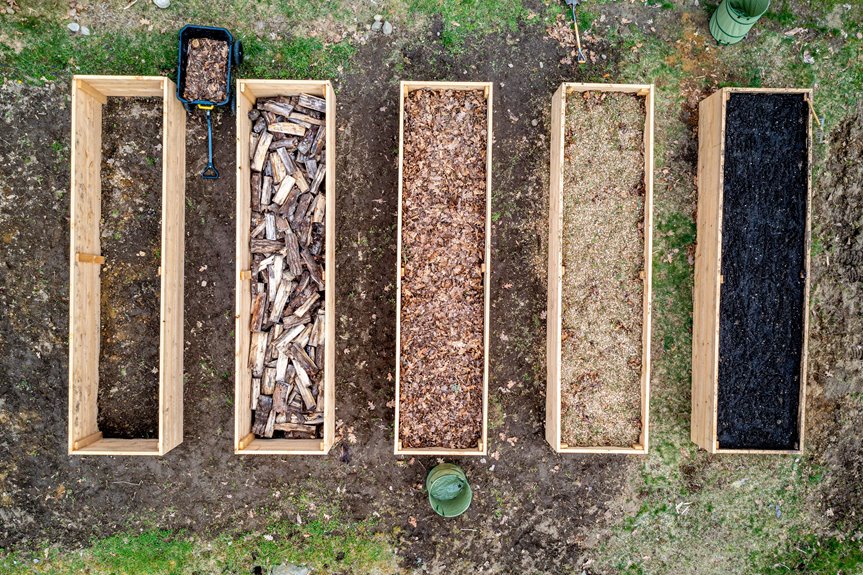
I’ve grown tomatoes in galvanized steel beds for years, and when you buy from reputable brands like Vego Garden or Birdies with intact hot-dip zinc coatings, metal raised beds are safe for growing vegetables. The zinc actually acts as a natural plant nutrient in tiny amounts, and soil in new beds stays well within healthy bounds for edibles. Keep your soil pH around 6.5 to 7.0, neutral to slightly alkaline, to keep zinc stable and prevent extra leaching. If you’re dealing with old salvaged materials, flaky rust, or kids digging in the dirt, slip in a food-safe pond liner as backup protection. Corten steel avoids zinc concerns entirely by forming its own protective orange-brown skin, while powder-coated steel gives instant color but scratches need watching. Check surfaces each spring for wear, dents, or rough spots to identify potential issues early and maintain bed integrity.
Are New Metal Beds Safe? What About Old Salvaged Materials?
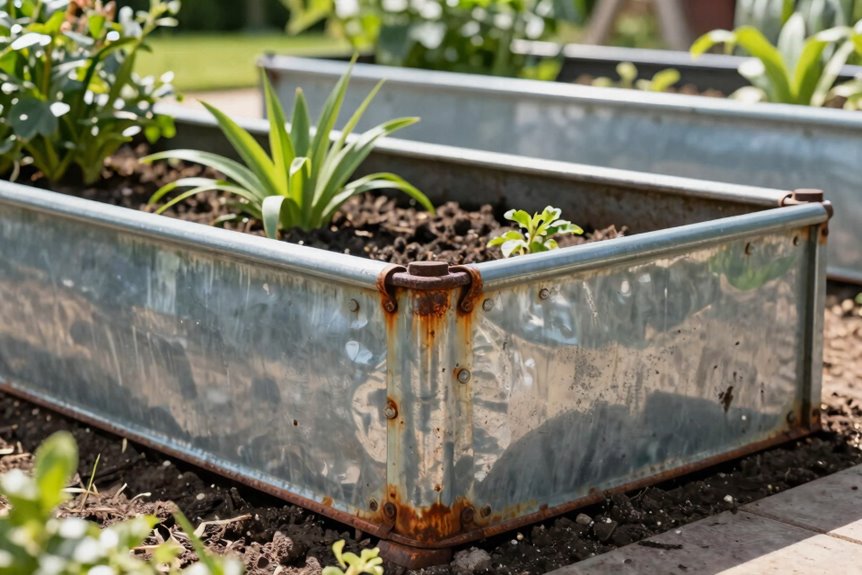
Why do so many gardeners eye metal raised beds with suspicion? I used to wonder the same thing. Then I learned that modern galvanized steel beds pose minimal zinc leaching risks. Zinc is actually a natural plant nutrient, not a villain.
Modern galvanized steel beds pose minimal zinc leaching risks—zinc is actually a natural plant nutrient, not a villain.
New beds typically keep soil safety levels well within healthy bounds for vegetables and herbs. I’ve planted tomatoes in mine for years without worry.
Old salvaged materials tell a different story. Weathered panels might harbor lead, cadmium, or other contaminants from decades past. When I source reclaimed metal, I always add a sturdy liner. Landscape fabric or food-grade plastic creates a protective barrier between soil and metal.
Soil testing through your local extension office is essential. They’ll check for heavy metals and guide your next steps.
Food-Safe Materials: What Gardeners Actually Need to Check
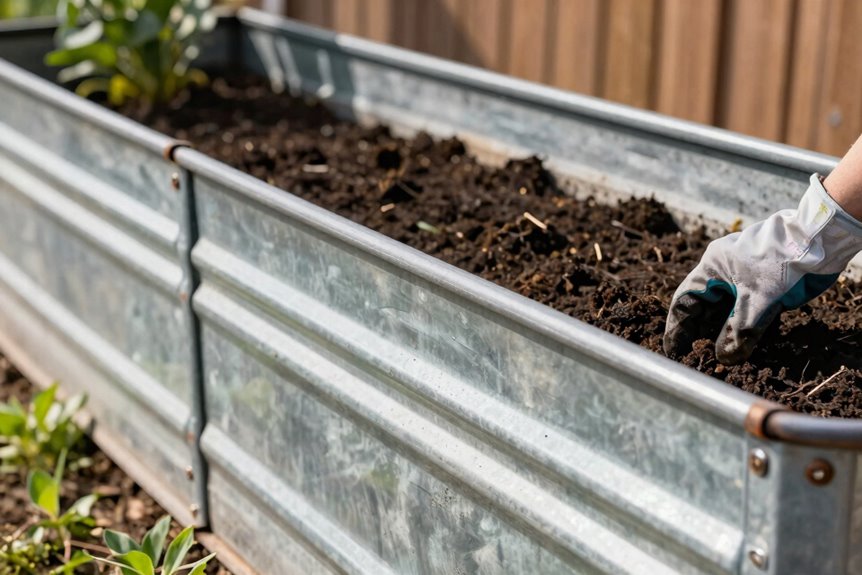
So what exactly makes a raised bed “food-safe”? It means nothing harmful seeps into your tomatoes or lettuce.
I always check galvanized steel beds for intact coatings. That shiny silver layer matters. If it’s flaking or rusting, I steer clear. Reputable vendors matter here; I don’t gamble with sketchy sellers.
For older salvaged materials, I’m extra cautious. Lead and arsenic hide in unexpected places, so I grab a food-safe liner. Pond liner works great as a protective wall between soil and metal, creating a barrier that prevents contamination.
Soil pH testing is essential. I keep mine neutral to slightly alkaline, around 7.0, because that reins in zinc leaching. This simple chemistry prevents metal compounds from dissolving into your soil.
Cedar feels easier, but modern steel with proper certifications works equally well for vegetable gardening.
Corten vs. Powder-Coated vs. Galvanized: Which Metal Type Fits Your Garden?
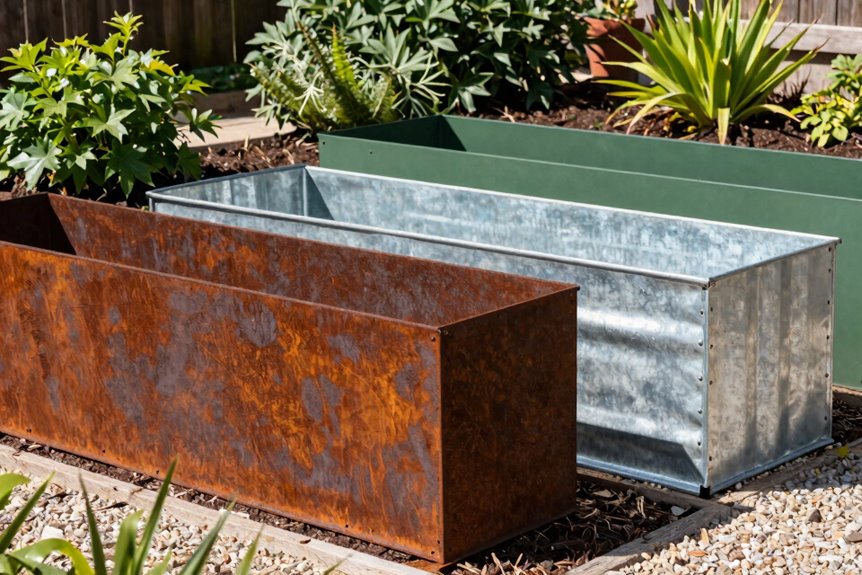
I want to walk you through the three main metal choices you’ll see at garden centers. Corten steel arrives looking like plain gray sheet metal, then slowly transforms into that gorgeous orange-brown rust color over about six months. Picture an old barn roof settling into the landscape. Powder-coated beds come in colors like sage green or matte black right out of the box, while galvanized steel keeps its shiny silver look for years thanks to that zinc coating. Each handles rust differently, so understanding how their surfaces hold up when dirt and water press against them season after season will help you choose the right option for your garden.
Corten Steel Basics
How do you pick between three metal beds that all promise to outlast your trowel? I always start with Corten steel because it tells a story right in your backyard.
When your Corten steel bed arrives, it looks like ordinary bare metal, shiny and new. Then weathering takes over. Rain and sun coax out a rich orange-brown patina that self-seals like a scab healing. That protective oxide layer stops rust in its tracks, giving you decades of rust protection without maintenance.
Powder-coated steel offers baked-on color that stays put, and galvanized steel fights corrosion with a zinc shield. Zinc coatings can leach into soil over time. With Corten, you avoid this potential contamination entirely.
Coating Durability Comparison
Where exactly does your metal bed start to fail—at the surface or somewhere deeper?
Weathering steel like Corten arrives bare and rusty-looking, then seals itself over months into a protective skin that lasts decades. Powder-coated durability gives you instant color and resists chips, though scratches can invite trouble. Galvanized coatings shield steel with zinc, but zinc can leach into acidic soil, which matters for vegetable gardens and compost systems.
Coating durability depends on your specific conditions. Corten tolerates neglect; powder-coating requires careful handling; galvanized coatings need intact surfaces to function effectively. Each has genuine tradeoffs, and selecting the right coating means matching its strengths to your garden’s actual environment and maintenance capacity.
Will Zinc From Galvanized Beds Harm Your Vegetables?
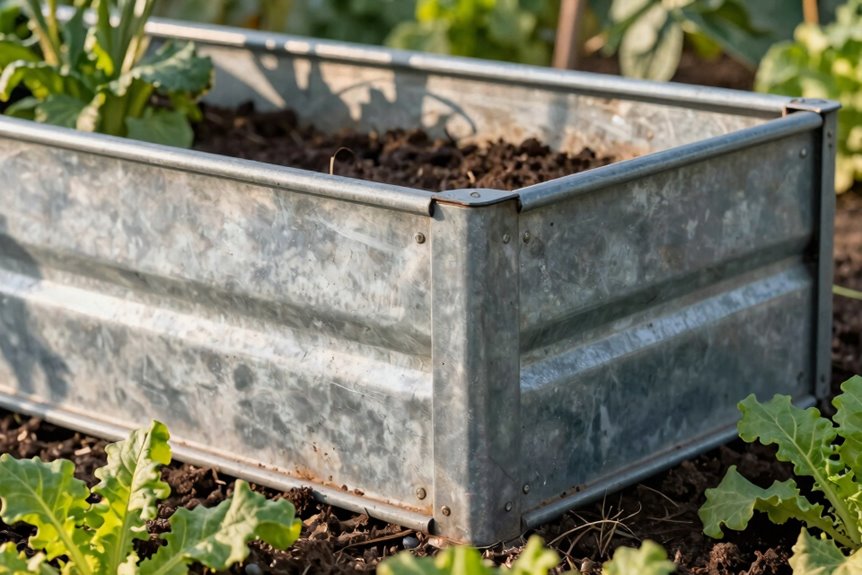
Why do so many of us worry about our veggies tasting like pennies? Galvanized zinc leaching sounds scary, but the reality differs from the concern.
- Soil zinc uptake stays minimal in typical garden beds, with levels well below safety thresholds for edible crops.
- Zinc actually helps plants as a micronutrient they need in tiny amounts, not a toxic invader.
- The pH effect on zinc matters: neutral to slightly alkaline soil keeps zinc stable, while acidic conditions increase mobility.
- Coating quality from reputable vendors makes all the difference. Well-maintained beds pose very low risk.
Tomatoes from galvanized beds are safe to eat.
When Acidic Soil Speeds Up Zinc Leaching in Galvanized Beds
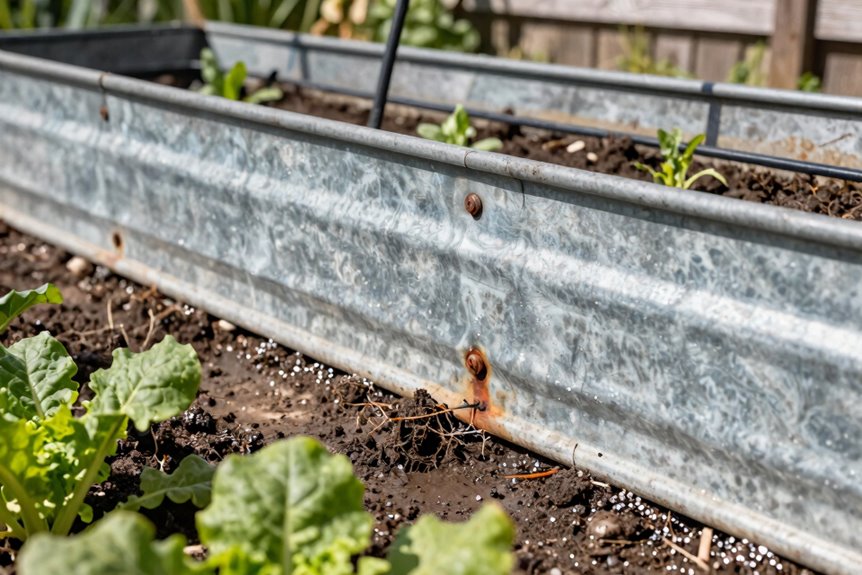
I want you to picture your soil’s pH like a dimmer switch that controls how much zinc leaks out of your galvanized bed. When that pH drops below 6.0, the acidic environment liberates the zinc coating, allowing it to move into your soil faster than expected. Testing your dirt beforehand with a simple $10 kit from your local garden center enables you to predict and prevent this chemical process before planting.
Soil pH Impact
How much does your soil’s acidity really matter when you’re growing veggies in a galvanized bed? It matters significantly. Zinc leaching from galvanized coatings speeds up when soil pH drops below 6.0. Acidic soil acts like a key, releasing zinc from that protective metal layer faster than neutral ground.
Here’s what to know about managing pH impact in raised bed gardens:
- Test your soil pH yearly with a simple kit from any garden store. Accurate measurements eliminate guessing.
- Add garden lime if readings fall below 6.0. This binds zinc to soil particles, slowing release.
- Install liners or barriers like heavy-duty landscape fabric as backup protection in stubbornly acidic beds.
- Aim for that sweet spot around 6.5–7.0 where galvanized coatings stay stable and your plants grow without zinc accumulation concerns.
Zink Mobility Factors
Once your soil pH sits between 6.5 and 7.0, continue monitoring zinc levels. I check my galvanized coatings each spring because leaching factors change with the seasons.
Acidic soils below 6.0 significantly increase zinc mobility. This tangy, sharp soil allows zinc to dissolve from the metal and into the dirt. Rain soaking the bed accelerates this process through increased moisture.
I use a $12 soil pH test kit from my local hardware store before planting tomatoes. Neutral to slightly alkaline ground keeps zinc locked tight against the steel, forming a stable bond.
Even when soil drifts acidic, the zinc entering my lettuce remains within safe ranges. Mindful adjustments to soil pH prevent accumulation issues.
Do You Need a Liner? Three Cases Where Barriers Help
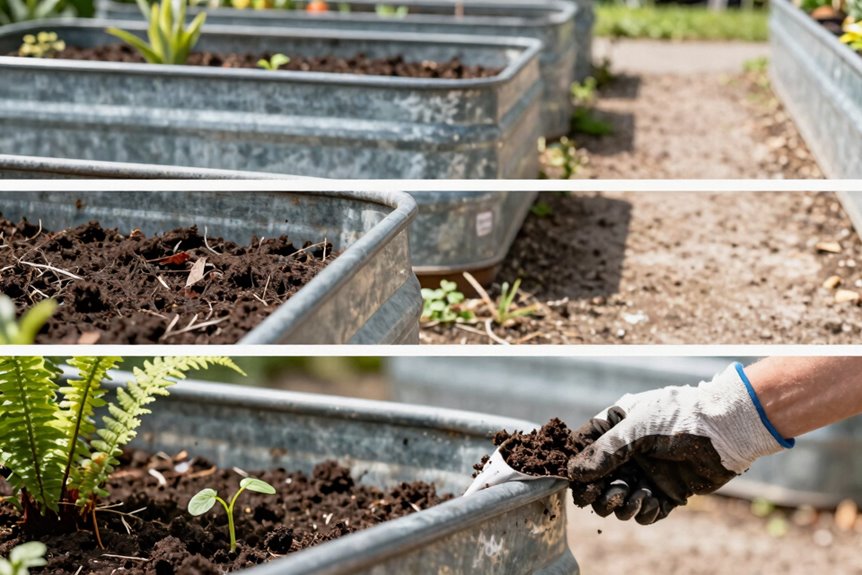
Your metal bed’s soil doesn’t have to touch its walls if you’re concerned about contamination.
I use a liner in three specific situations. First, old galvanized beds with that flaky, rust-speckled look that leaves orange dust on your gloves. Second, when growing vegetables where kids help, especially if soil contamination is already a neighborhood concern. Third, when soil pH dips below 6.0, making metals more mobile and likely to leach into the soil.
What works best in practice:
- Punch drainage holes every few inches, or roots will sit in waterlogged soil
- Skip full bottom coverage; water needs escape routes
- For beds over 14 inches, line the sides only; the top barrier matters most
- Use food-safe pond liner, which is inexpensive and effective
A liner prevents direct contact between soil and metal surfaces, reducing the risk of metal contamination in edible crops.
How to Spot Quality Metal Beds and Avoid Problem Surfaces
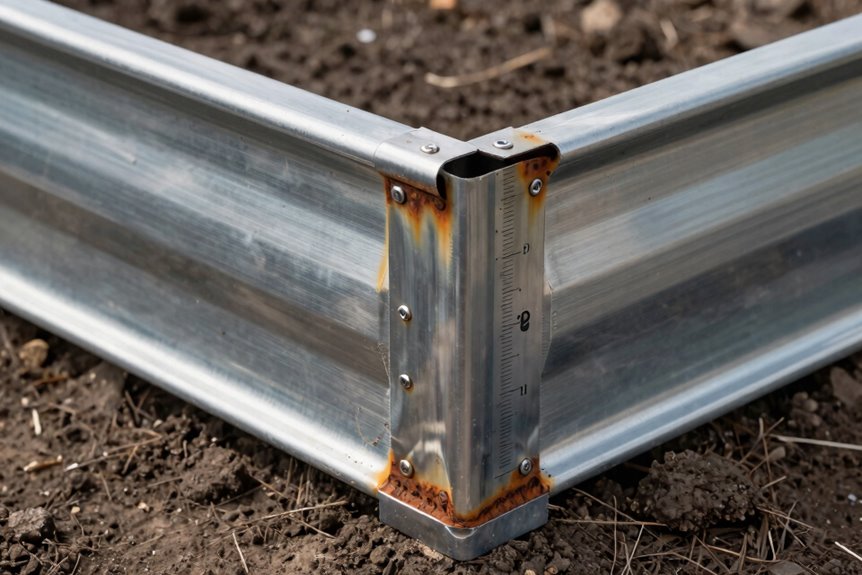
Liners help, but I’d rather not need one in the first place. That’s why I hunt for galvanized steel with a proper hot-dip zinc coating. The coating forms a true metallurgical bond, not just paint that’ll flake like old nail polish. I always check for coatings and certifications proving food-safe finishes; reputable brands like Vego Garden or Birdies usually display these prominently.
Before buying, I run my fingers along the interior, feeling for rough corrosion, wear, or suspicious scratches. Second-hand beds receive extra scrutiny; no mysterious dents or rust spots are acceptable. I verify specs for rolled edges and internal bracing, as flimsy corners warp within seasons.
Even with quality builds, I keep liner options handy. A simple landscape fabric barrier costs little and provides a protective layer against soil contact.