

Large window curtains are panels sized to cover spans of six feet or more without looking like stretched bedsheets. The catch is that each header style demands its own fullness ratio, and getting that wrong costs you either the drape or your wall space. A double pinch pleat needs 2.0x to 2.5x the window width to hold its folds; drop below 2.0x and the pleats flatten into nothing. That is the difference between curtains that look dressed and curtains that look defeated.
Pinch Pleat Double
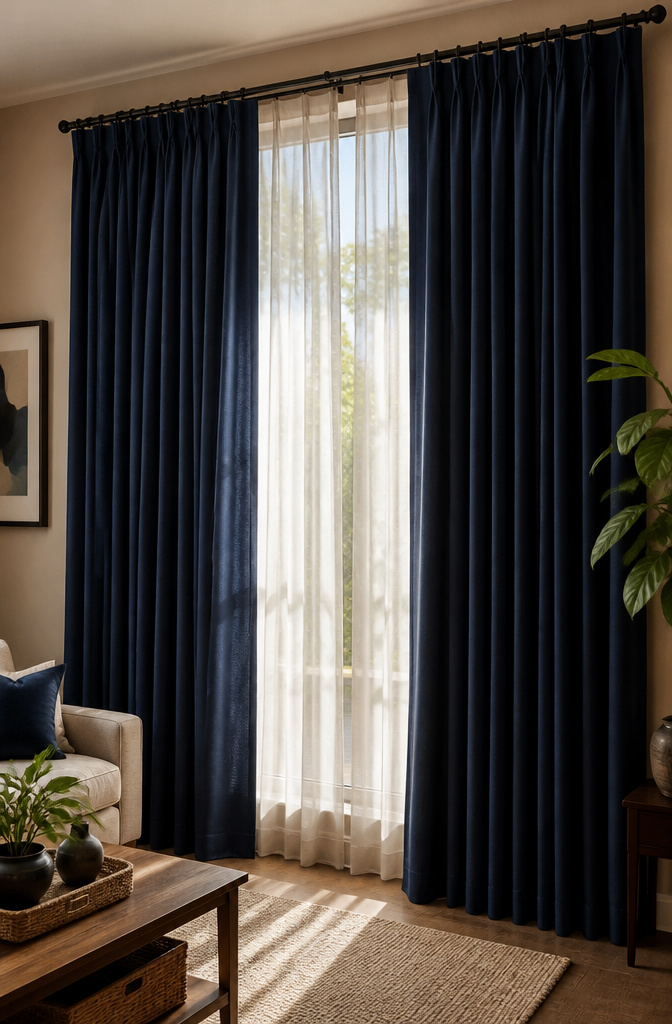
A double pinch pleat stacks two folds into each pleat, and that extra fabric is what gives the style its full, dressed-up look. The fullness ratio runs 2.0x at minimum and 2.5x at ceiling; below 2.0x the pleats flatten out and lose the point, while 2.5x is the lush end of the range with deep, rich folds that read as the most formal option for large windows.
That extra yardage costs more upfront, which is where a renter has to decide. In a space you’ll leave in two years, 2.5x fullness can feel like dressing a rental in tuxedo pants. The 2.0x minimum still gives you the structured header and the tailored drape without the fabric bill. If the window is the room’s one architectural feature and you carry the panels with you, the 2.5x version makes sense. Otherwise the lower end of the range does the job.
Grommet Top
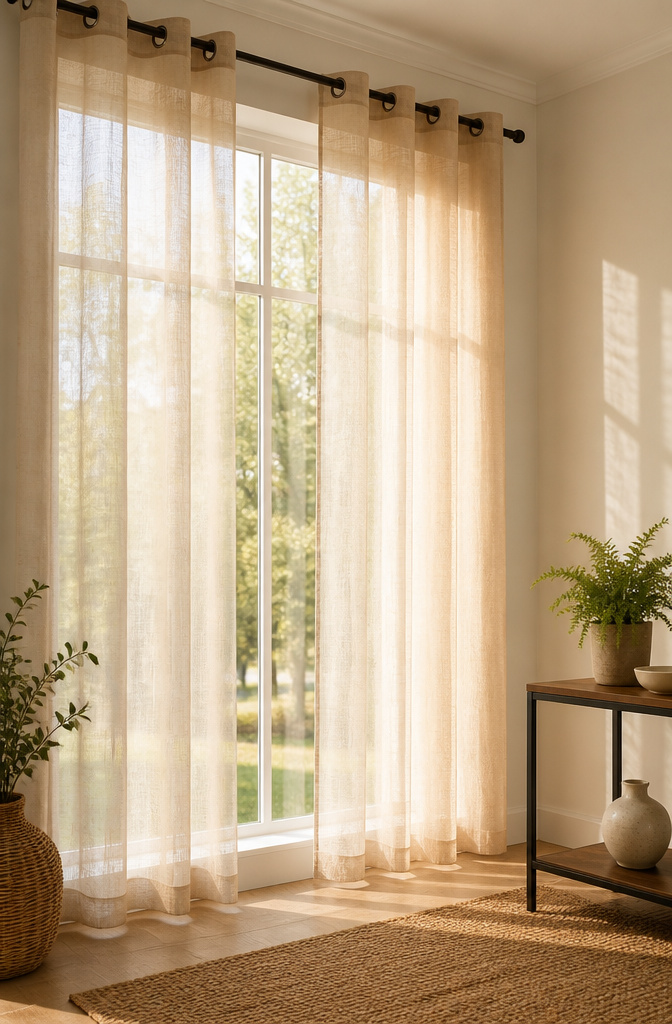
Grommet tops use rust-proof metal rings with an inner diameter of 1.57 inches and an outer diameter of 2.3 inches. That 2.3-inch face sits on the outside of the fabric and determines how far apart the folds fall, so the spacing matters for the overall look more than most people expect going in.
The fullness recommendation runs 1.7x to 2.0x the window width. Less than 1.7x and the panels hang flat and skimpy; more than 2.0x and the stack-back eats wall space you may not have. On a large window with only six or eight inches of wall to each side, that minimal stack-back is the reason grommets win over bulkier headers. The rings slide straight along the rod with almost no fabric bunched behind, which also makes them the easiest style to hang and adjust without fighting folds into place.
Single Rod Pocket

A rod pocket curtain fits onto the rod through a sewn-in channel at the top, which means the rod can only be so thick: about 1.77 inches at most before the fabric starts to strain. I have watched heavier drapes bunch and fight the rod at the opening, especially on wide windows where the weight collects at each slide point. The channel has no give, so stiff or bulky material ends up catching instead of gliding.
That same channel is why this style works best with lightweight fabrics that move easily. Cotton voile, lightweight linen, or thin sheers slip through without protest and stack neatly when you push them aside. The fullness ratio runs 1.7 to 2.0 times your window width, which for a large window means a lot of fabric even at the lower end. With lightweight material, that volume stays manageable. With anything heavier, you are wrestling the curtain every morning.
The look is soft and gathered rather than structured, which suits casual rooms where you want the window to feel dressed but not formal. Just do not expect the crisp folds of a pleated header; the pocket distributes the gathers unevenly by design, and on a big window that randomness is part of the charm or a dealbreaker depending on what you had in mind.
Double Rod Pocket

A double rod pocket hides a second channel behind the first, with a 1.57-inch ruffle sitting above the upper opening. Both pockets take the same 1.77-inch rod limit, so you are not gaining capacity for a thicker pole, just doubling the fabric layers.
That extra channel is what makes this style useful on large windows. Slide a sheer through the back pocket and a heavier panel through the front, and you get filtered daylight without swapping sets seasonally. Both layers move as one unit, which saves the wrestling match of two independent rods on a wide span.
The ruffle height matters more than it looks. At 1.57 inches, it sits lower than most decorative headers, so the stack reads as softer and less formal than a pleated top. On an eight-foot sliding door or a picture window, that plain heading keeps the visual weight low where the fabric itself does the work.
The catch is bulk. Two layers of even medium-weight cotton turn into a tight squeeze through the machine, and the gathered width at each side can eat more wall space than you planned. Check your wall clearance before you order; the pocket depth does not change, but the doubled fabric does.
Back Tab
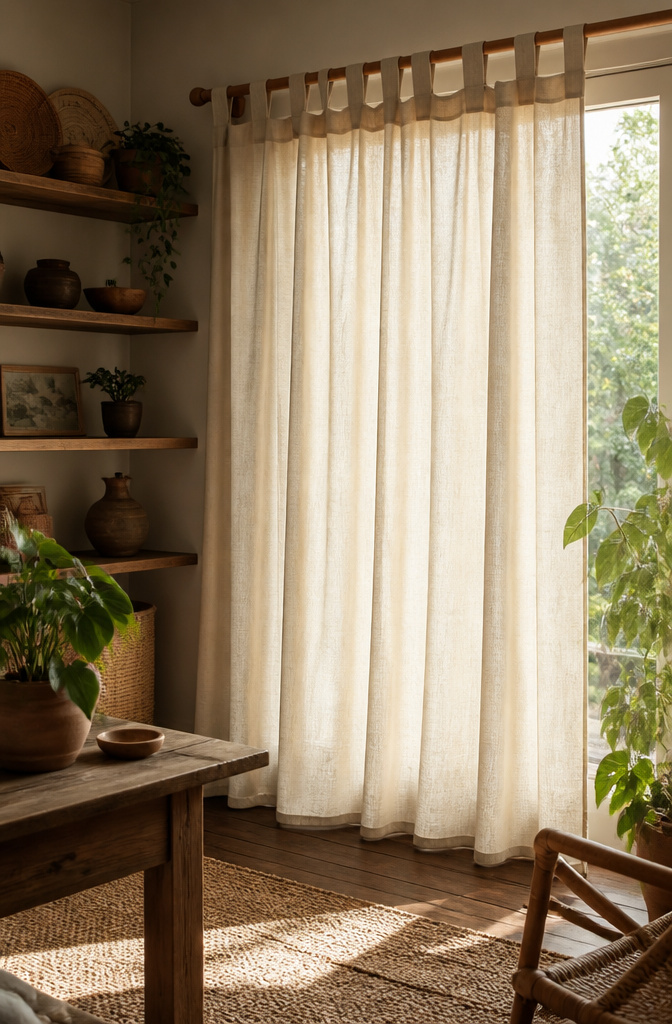
Back tab panels hide their attachment points on the reverse side, which gives the face a flat, uninterrupted line that reads cleaner than a rod pocket but still hangs without rings or clips. The tabs are usually spaced every 6 to 9 inches across the panel width, and the rod slips through behind the fabric so the front stays smooth.
For lightweight curtains, plan on 1.7 to 2.0 times the window width to get enough fullness for the pleating to look intentional rather than skimpy. Anything under 1.7x tends to hang flat and read like a bedsheet. The tabs themselves typically fit rods up to about 2 inches in diameter, though some makers will cut larger ones if you ask before the order ships.
The weight limit matters more here than with rings or grommets. Back tab construction is not meant for heavy blackout linings or thick weaves; the stress concentrates at each tab point instead of distributing along a ring. I would keep these to sheers, light cottons, or unlined linens. If you need daily opening and closing, this is not the best choice either; the friction at the tabs wears faster than a glide system.
Tab Top
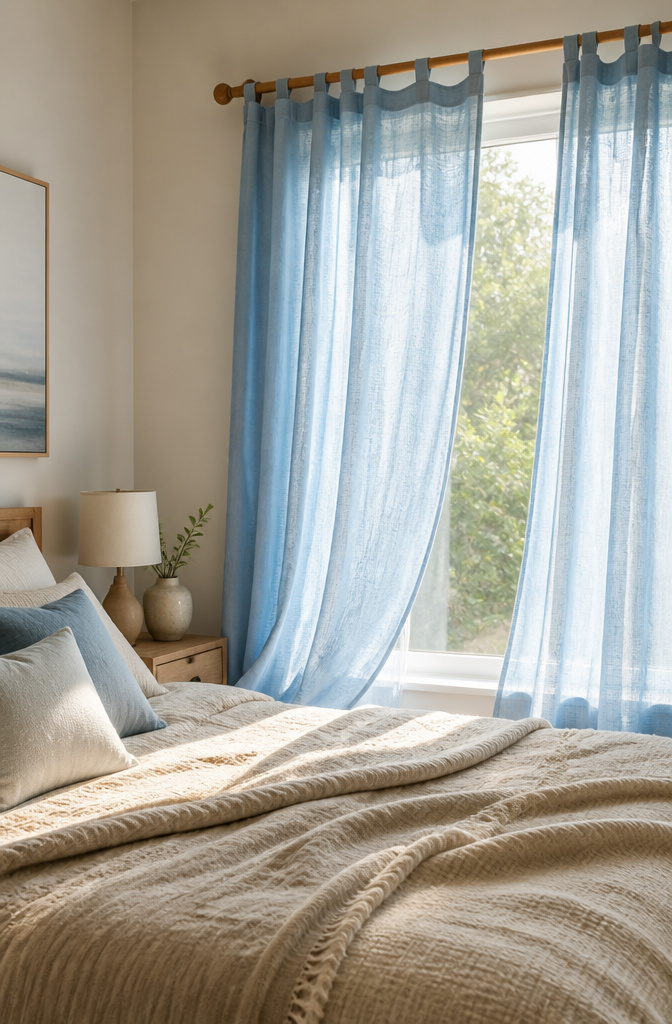
Tab top curtains run loops across the top surface of the panel, not hidden behind it, so the rod stays visible the whole way across. That openness suits casual spaces but means hardware choice matters more, since you will be looking at it daily. The same 1.7x–2.0x fullness that works for back tab applies here too, and lightweight fabric is still the better call; the loops do not glide smoothly, so heavier cloth fights you every morning.
The spacing is fixed by those tabs, typically one every 6 to 9 inches of panel width, which limits how the fabric falls compared with the continuous channel of a back tab. Rods up to about 2 inches in diameter fit standard 3.15-inch-high tabs, though custom sizes exist if you already own something thicker. Between the two styles, back tab hides the rod and slides easier; tab top keeps things simpler to sew and more relaxed in look, at the cost of showing every inch of metal.
Measuring for Curtains
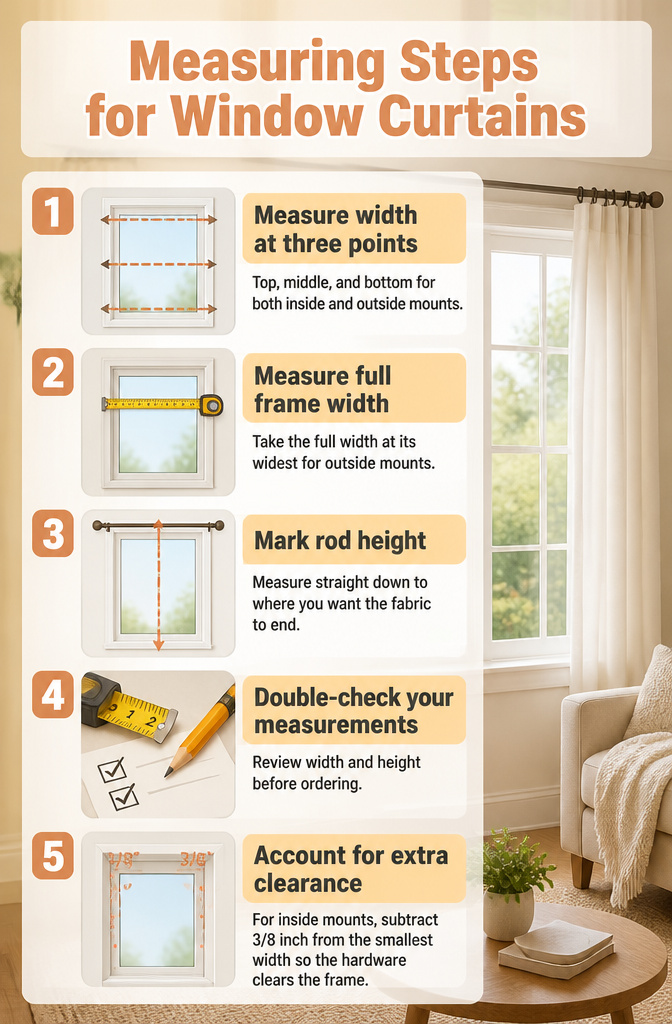
- Measure the width at three points—top, middle, and bottom—for both inside and outside mounts. For an inside mount, use the smallest of those three widths and subtract 3/8 inch so the hardware clears the frame without jamming. For an outside mount, take the full frame width at its widest and add 1 to 3 inches if you want the curtain to block light and give real privacy.
- Height runs the same way: mark where the rod will sit, then measure straight down to where you want the fabric to end. The rod position matters more than the window itself. Mounting 4 to 6 inches above the frame keeps the glass clear when the panels are open.
- I always order twice because one of my width or height numbers is almost always off the first time through. A quarter-inch gap on each side of an inside mount lets light leak in, so double-checking is the difference between coverage and a crooked stack that never quite closes.
Curtain Fullness
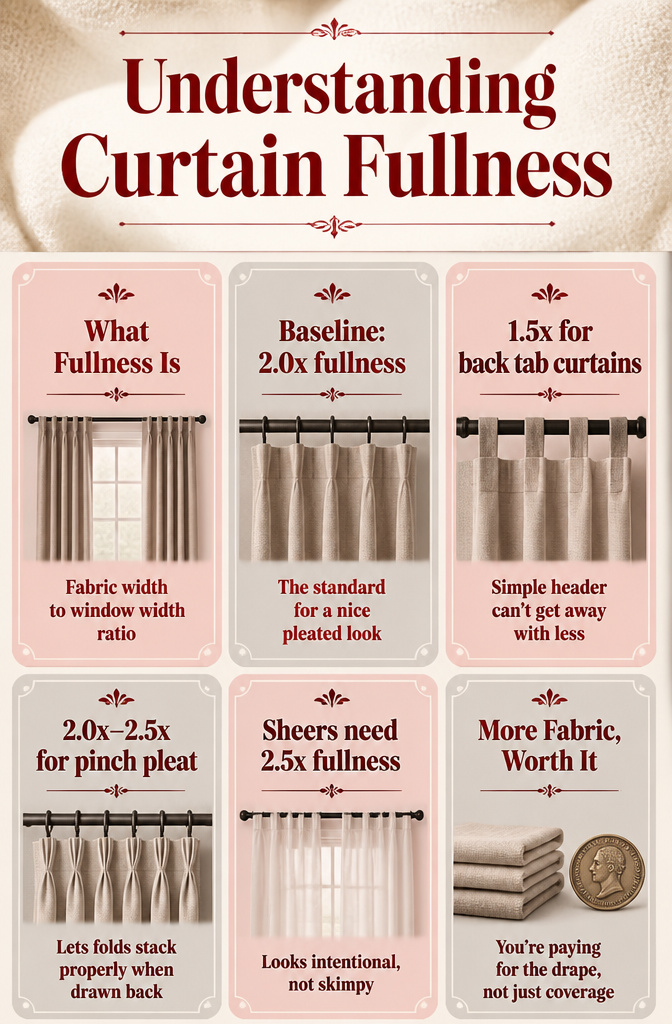
Fullness is the ratio of fabric width to the width you actually need to cover, and it makes or breaks how curtains hang on a large window. A 2.0x fullness is the baseline for a nice pleated look, meaning a 100-inch wide panel covers a 50-inch window. Less than that, and the fabric pulls flat against the glass like a bedsheet.
I have cheated down to 1.5x fullness on a back tab panel for a rental bedroom, thinking the simpler header could get away with it. The curtains hung stiff and awkward, pooling no grace at all. The 1.7x–2.0x range works for grommet tops and rod pockets because those styles carry their own structure, but pinch pleat needs 2.0x–2.5x to let the folds stack properly when you draw them back. More fabric costs more upfront, yet the drape is what you are paying for, not just the coverage. Sheer curtains especially need that lush 2.5x fullness to look intentional rather than skimpy.
Curtain Fabrics
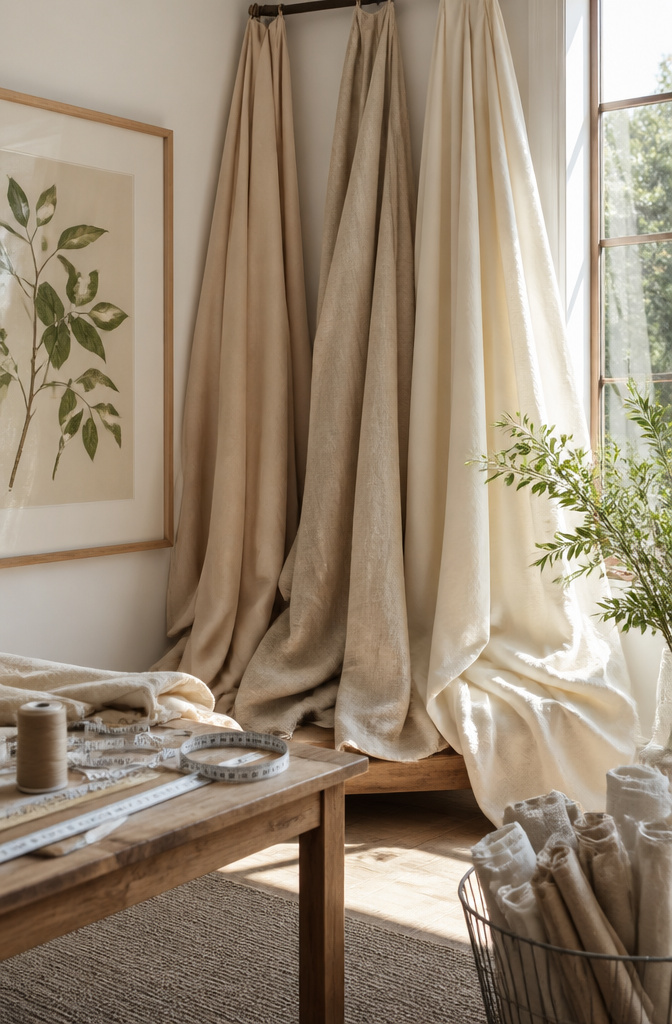
Canvas drop cloths are the fabric I keep coming back to for large window curtains. The material is thick, durable, and washes down to a soft drape that looks intentional rather than improvised. You can find them in 4 x 6, 6 x 9, 9 x 12, and 10 x 15 foot sizes, which covers most oversized windows without needing to seam pieces together.
I always run drop cloths through the washer and dryer before cutting anything. The fabric shrinks significantly, and measuring before washing means your finished panels end up three inches shorter than planned. The double-stitched hem already sewn into most drop cloths saves finishing work, though the neutral thread color means the edge is functional rather than decorative.
For the look, the untreated canvas starts out a warm oatmeal tone that darkens slightly after washing. It filters light rather than blocking it, so bedrooms need a liner or a double layer. The tradeoff is worth it in living spaces where you want the texture of linen without the price.
Installing Curtain Rods
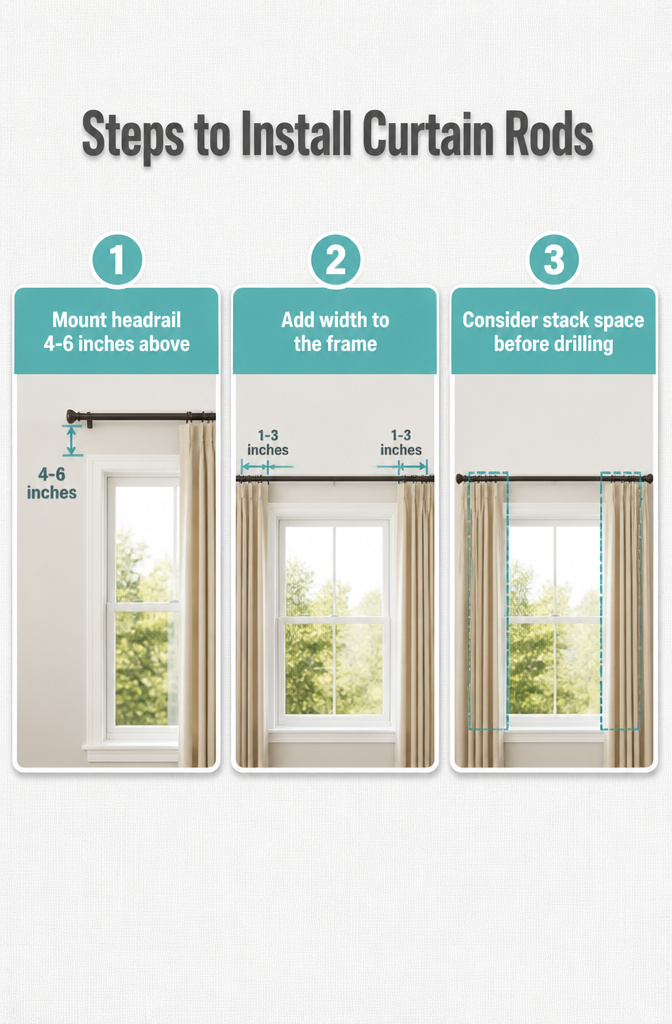
- Mount the headrail 4 to 6 inches above the window frame so the rolled-up fabric clears the glass and you keep the view. I learned this the hard way in my first apartment, where I mounted too close to the frame and lost the top third of the window to bunched-up panels.
- Go wider than the frame itself. Add 1 to 3 inches to the widest of your three width measurements so the open curtains park past the trim, not over the glass.
- Think about stack before you drill. The fabric that bunches when the curtains are open needs somewhere to go. Mounting high and wide gives that stack room at the sides and above, which also cuts the light leakage that slips through the edges.
Frequently Asked Questions
Can you make drop cloth curtains no-sew?
Yes, this is an easy project. You can use the double-stitched hem already sewn into most drop cloths as your finished edge, so you only need to cut the fabric to length after washing it. The finished panel length plus 10 inches gives you the cut size you need.
Are canvas drop cloths washable?
Yes. Drop cloths are washable and should be washed before you cut or hang them. The fabric shrinks significantly in the first wash, so measuring before washing means your finished panels end up shorter than planned.
What is canvas drop cloth fabric?
Drop cloth fabric is the thick canvas material painters use to protect floors and furniture. It is durable, filters light rather than blocking it, and washes down to a soft drape that works well for curtains, pillows, and slipcovers.