

A garage sale is a weekend-long transaction that pays about $4 an hour once you count the sorting, the sitting, and the haul back inside. That figure only holds if you ignore the three weeks of prep, the signs that blow over by noon, and the ceramic cat you price at $3 before dropping it to 75 cents just to watch someone set it back down. I stopped holding them when I realized the dollar a buyer saved cost me an hour I could have spent actually clearing the room.
The Saturday I Made $4 an Hour

165,000 garage sales run across the U.S. in a typical week, and the average seller clears about $100 by Sunday evening. That figure lands harder once you count the hours: hauling tables out Friday, sitting through Friday afternoon, Saturday morning, Saturday afternoon, Sunday morning, Sunday afternoon, then packing unsold items back in. The math works out to roughly $4 an hour, before you buy signs or spend time placing ads on Craigslist and Facebook.
I sat with that number once, cash box in my lap, and the small pile of bills did not feel like a win. Four dollars covers a latte, not a weekend of answering "would you take fifty cents for this?" The signs and the ad time push the real rate lower still. For a renter clearing a closet or a first-time owner hoping to fund a project, that hourly rate turns the whole exercise into a question of whether the money or the time matters more.
Sorting Everything the Night Before

Sorting everything the night before sounds reasonable until you clock the actual hours. The prep work runs weeks, not hours, and it never gets counted against the take. I used to think Friday evening was the finish line: just price the last boxes and sleep. Then I’d find myself still awake at 2 a.m. with sticker residue on my fingers and a living room floor I couldn’t cross without stepping on something I once cared about owning.
The morning is worse. A 5:30 alarm to haul a carload across town, then two hours of setup while early birds circle like the driveway is a fish run. The sources all land on the same math: sit through Friday, Saturday, maybe Sunday, and you’re looking at roughly $4 an hour if you’re generous with yourself. That figure doesn’t include the evenings you spent transcribing old journals or scrubbing a microwave you forgot you owned. It doesn’t include the signs, the tape, the petty cash you ran through in the first hour because nobody warned you how fast singles disappear.
By the time you’re counting soggy dollars at sunset, the profit feels like it belongs to someone else. Someone who didn’t live through the three weeks before.
The Price Tag on a Ceramic Cat

The ceramic cat sat on my folding table for three hours at $3, and nobody touched it. It had lived on my grandmother’s windowsill in the house where I spent summers, and I had talked myself into selling it because the new apartment had no sills deep enough for a figurine. Pricing it felt like a test I was giving strangers, one they kept failing by walking past.
By noon I had dropped the tag to $1.50, then to 75 cents, each reduction feeling like a small confession that my own attachment had been inflated. When a woman finally picked it up and set it down without interest, relief came before disappointment. The cat went back into the box unsold, and I was glad. That was the moment I understood what the transaction actually costs: not the object, but the repeated exposure of your own history to people who see only clutter. A garage sale asks you to watch your memories get valued in real time, and the bargain you make is with your own embarrassment.
Fifty Cents for the Blender
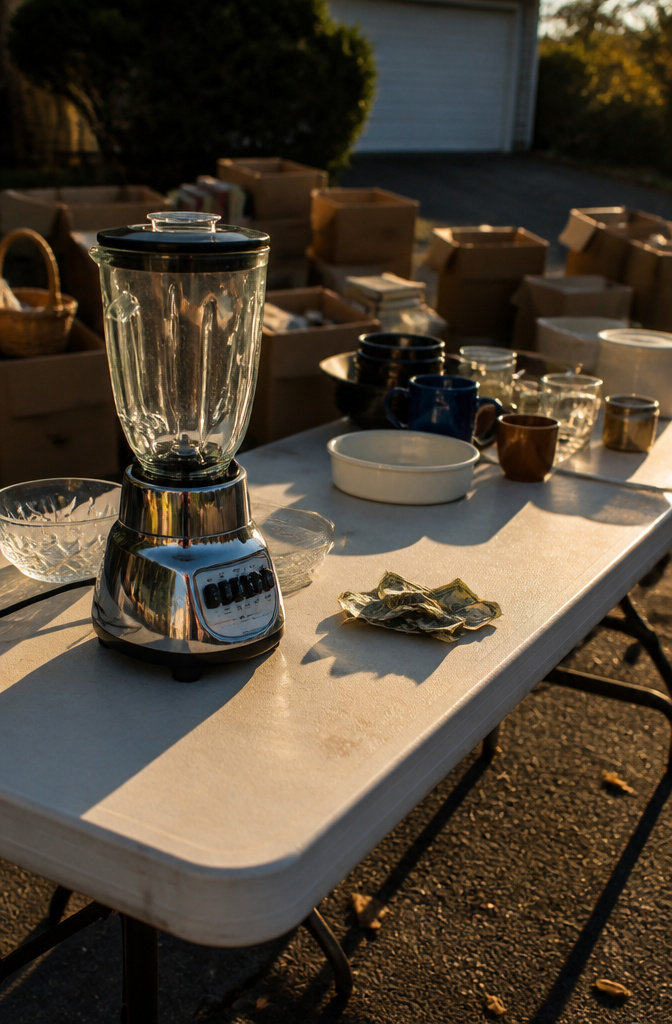
The first offer always lands at a quarter of the sticker price, sometimes less. A blender marked at two dollars draws an opening bid of fifty cents, delivered with a smile that expects gratitude for showing up at all. The arithmetic of these moments is simple enough: thirty seconds of haggling to save seventy-five cents, repeated across a morning until your dignity is the only thing still sitting on the table unpaid for.
What broke the habit for me was not the money but the ratio. A woman once walked away from a ceramic planter over a single dollar, leaving me with the object and the afternoon I had spent pricing it, moving it, dusting it. The dollar she saved cost me an hour I could have spent actually clearing the room. That is the math garage-sale guides never print: the seller’s labor priced at pennies, the buyer’s time treated as infinite, and both parties pretending the transaction is friendly.
By noon the space is still cluttered, the cash box holds twelve dollars, and the remaining inventory has been judged twice by every person on the street. The dignity of holding a price feels foolish when the alternative is hauling it all back inside unsold.
Rain on the Only Free Weekend

A suburban cul-de-sac looks peaceful, but 4,967,500 items sell weekly nationwide at garage sales, and almost none of them are at the end of a street nobody drives down. I learned that the hard way. The year I tried it, the forecast called for drizzle all Saturday morning, and by noon the street was empty. Two cars slowed, neither stopped. The neighbor three doors down, on the main cut-through, had a steady stream. Location in a garage sale is not a small advantage; it is the whole game. Weather works the same way. Heavy rain or sweltering heat empties the street no matter where you are, and the items you stored all season sit untouched while you watch the sky. I waited for a stable weekend, lost it to a surprise storm, and spent Sunday hauling tables back inside. That was the last time I gambled a free weekend on a driveway full of hope.
What I Do With It Now

The Saturday ritual got replaced by three moves that take less time and pay back better. Thrift-store donation is the fastest: load the car, drop the bags, claim the tax deduction. That deduction usually beats the quarters and singles a garage sale brings in, and the floor space clears that same morning. For anything with real resale value, Facebook Marketplace or eBay moves it within a week without the dawn setup or the haggling. The peace of not watching strangers finger your dishes is worth more than the extra dollars a sale might squeeze out. Local Buy Nothing groups handle the rest: post a photo, set it on the porch, it disappears. No signs, no cash box, no hauling leftovers back to the garage. The money is sometimes less, but the weekend is yours again, and the room stays empty.
Signs and Tape and Receipts
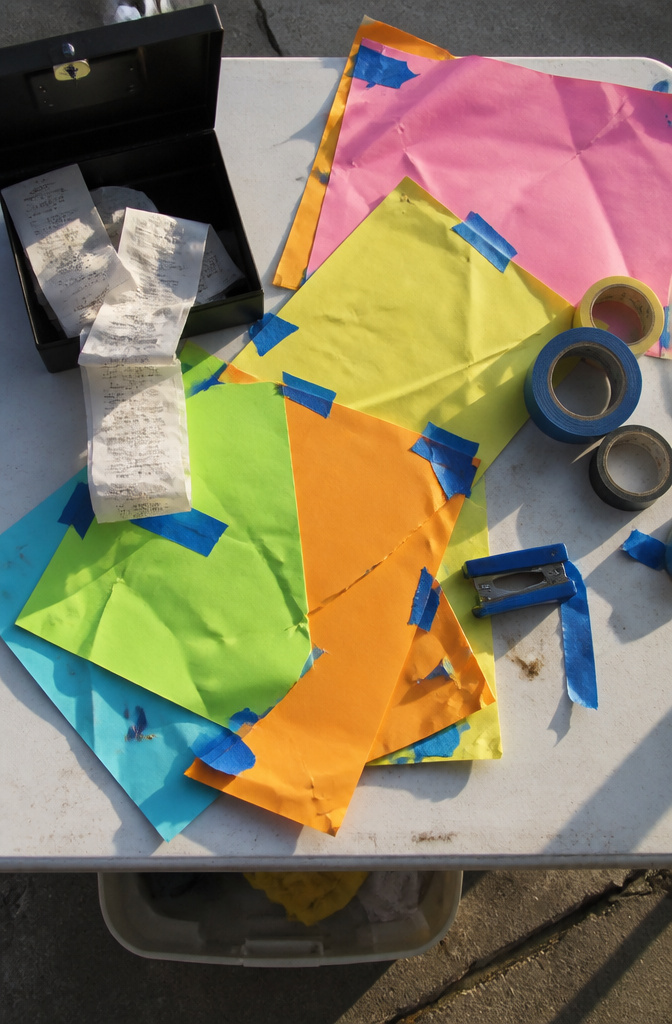
The supplies run up faster than the prices you write on them. Sturdy yard signs cost more than the flimsy ones that blow over by noon, so you either buy twice or watch drivers miss your turn. Tape, markers, price stickers, and the folding table you suddenly need add another layer before a single item sells. Some towns require a permit now, which means a trip to town hall and a fee that never gets counted in the profit column. Then there is the cash box problem: you need small bills and coins, which means a drive to the bank and gas out of your own tank. By the time the weekend closes and you count what is left, that $100 average drops to something closer to $4 an hour, and the signs you bought are already curled in the garage for next time, if there is one.
The Man Who Would Not Leave
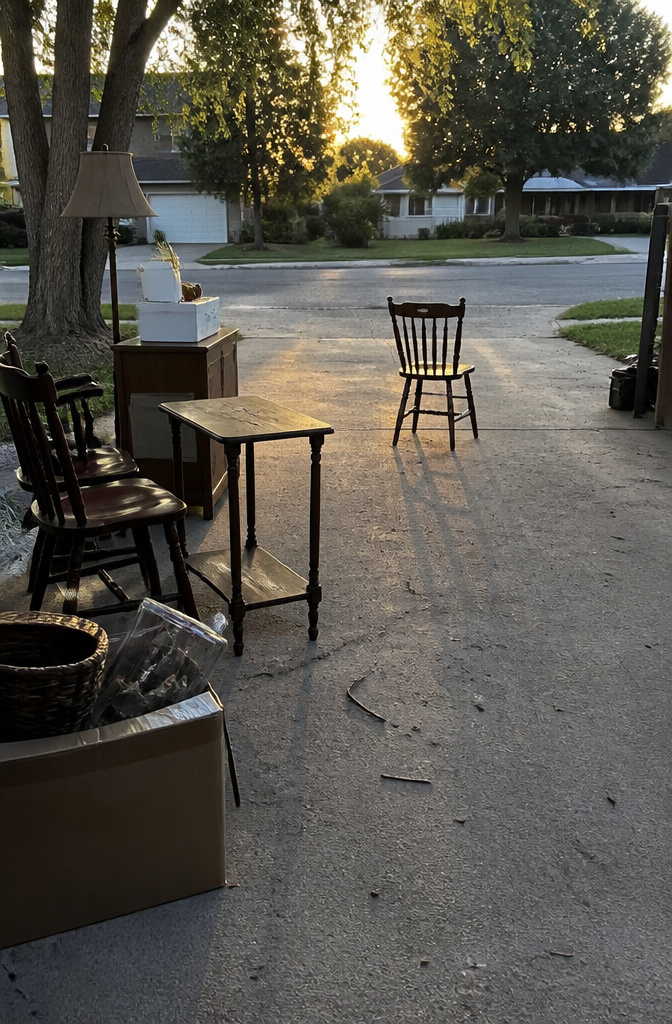
The early crowd shows up before you’ve finished dragging the card table out. They circle the driveway while you still have boxes labeled NOT FOR SALE stacked in the garage, and they do not take hints. By ten o’clock the regular shoppers arrive, which is fine. They touch everything, ask if the lamp works without a bulb in it, carry your ceramic cat around for twenty minutes and set it on the ground by the garden hose. That part is expected. What the hours do to you is harder to count.
I stopped doing garage sales alone after one Saturday that ran long. The last visitor came at four, when I was down to two folding chairs and a blender with no base. He wanted the chairs for fifty cents total, then wanted to know what else I had inside, then wanted to know if I lived alone. A garage sale puts you in your own driveway with cash in a shoebox and no door to close between you and whoever decides to stay. The math already stings, four dollars an hour or less once you price the signs and the morning you spent sorting. The emotional cost sits separate from that, watching someone handle the things you once cared about, or standing in your yard after sunset with a stranger who will not leave until you say yes to a price that insults you both.
Hauling It All Back In
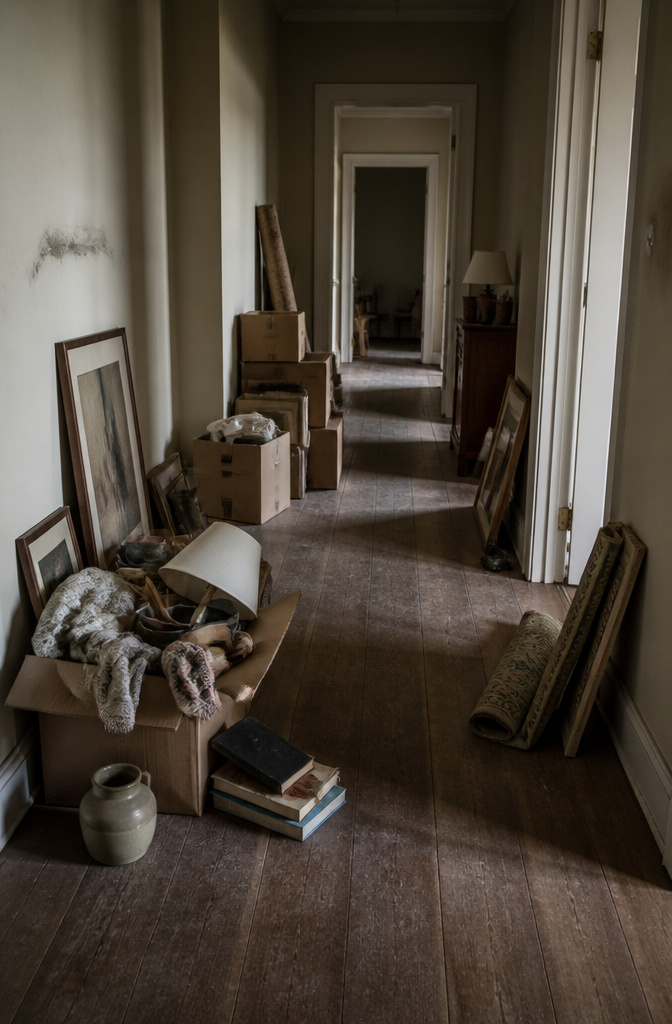
The boxes that came back inside Sunday evening sat in the hallway for three days before I admitted what had happened. About two-thirds of what I hauled out never found a price low enough to tempt anyone. The ceramic cat, the blender, the stack of barely-worn jeans I once paid real money for, all came back through the same garage door they’d left through.
That is the moment garage sales stop being entertainment and start being a storage problem in a new form. The sources describe this as defeating the purpose of decluttering, and they are right. You set out to empty space, and by Sunday night you have created a different inventory to manage, one now tagged with failure. The thrift store would have taken it Friday morning. Instead I spent a weekend proving nobody wanted it at any price, and now I get to store it again while deciding whether to try eBay, donate, or simply let it sit until the next mistaken idea.
Small-home living does not forgive this. The items accumulate in corners. The garage sale that was supposed to clear the dining room now colonizes the hallway. That is the reckoning: not the money you made, but the Sunday evening realization that the stuff is still yours, only now with sun damage and price stickers half-peeled off.
No Room to Store Another Season

A garage sale needs staging space that most apartments simply do not have. The pile starts in a corner of the living room, then spreads. Before long, the dining table disappears under folded clothes and kitchen gadgets, and two weeks of normal life get swallowed whole. In a house, you might spread boxes across a basement floor or line the garage walls without tripping over them. Renters rarely have that buffer. My last sale occupied the only open wall in my bedroom, which meant I climbed over a laundry basket of priced items every morning for ten days. The physical layout of a one-bedroom or studio makes the prep phase feel like a roommate who refuses to leave. You are not just selling things; you are temporarily storing them in the only rooms you actually live in. The space cost is invisible until you are eating dinner on the couch because the table holds someone else’s future five-dollar purchase.
What the Numbers Actually Say

165,000 garage sales happen in the U.S. each week, and they move just under five million items. That sounds like a bustling marketplace until you spread it across every seller’s Saturday morning.
| Garage sale average | What that means for one seller | |
|---|---|---|
| Items sold per week, total | 4,967,500 | A fraction of a fraction |
| Your cut of that traffic | Split 165,000 ways | Roughly 30 items sold if you’re average |
| Typical earnings | $500–$700 for a full household sale | Before costs |
| Hours invested | 40–50 (sorting, pricing, sitting, packing up) | Two weekend days plus evenings |
| Effective hourly rate | About $10–$14 | Less than most side gigs, taxed as inconvenience |
The table does not include the storage months, the signs, or the haggling. Those are free, apparently.
The Weekend I Gave It Away Instead
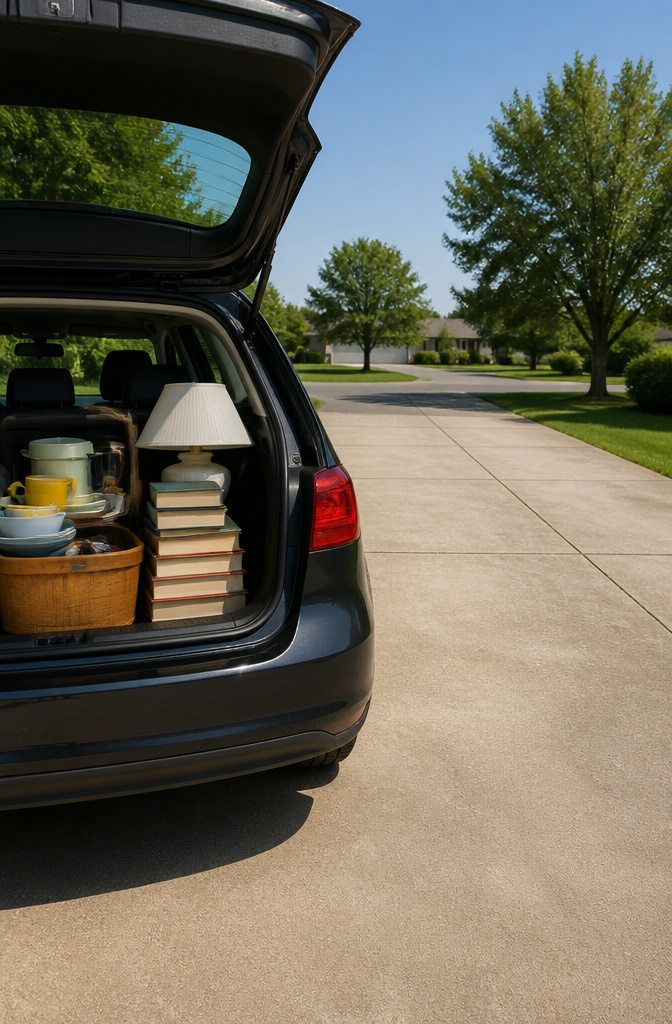
The last Saturday I tried to sell anything, three folding tables sat in the driveway from 7 a.m. to 1 p.m. and moved a coffee maker, two scratched DVDs, and a lamp with a frayed cord. I made $11 and spent the next evening hauling eighty percent of it back to the spare room. That Sunday, I loaded the rest into the trunk and drove to a donation drop-off. The attendant handed me a receipt before I had the back seat empty. The whole exchange took four minutes.
By the time I was home, the spare room already looked different. The corner where the lamp had lived for two years was just… floor. I could vacuum it. I stood there longer than the task warranted, because the space felt like a room again, not a staging area for some future transaction I kept postponing.
The $11 garage sale had eaten a weekend, required price stickers, and left me negotiating with a man who wanted the coffee maker for fifty cents because the carafe had a chip. The donation run cost me nothing but the drive and gave me the same result: the objects gone, the space returned. I have not set out a single price tag since.
When a Garage Sale Still Makes Sense

Some garage sales still pull their weight, and it pays to know the difference before you haul everything to the curb. Kids’ outgrown baby and toddler clothes move fast in a way adult clutter never does, especially if your street gets steady foot traffic or your neighborhood runs a coordinated event. Those community-wide sales draw serious buyers who map their morning around the route, which beats hoping a stray driver notices your cardboard sign. Bigger-ticket items, though, are better off on Craigslist or eBay; the same snowshoes that drew a $10 offer in your driveway might pull something closer to their value online, without the Sunday haggle. The honest limit is this: if your pile is mostly common household goods and you have the hours to spare, a sale can clear the room and put cash in hand the same afternoon. But the pickings get sparse fast if you have already held one that season, and the prep, pricing, and zombie recovery day afterward are real costs to count.
How I Clear a Room Now

- The night before, everything goes into labeled bags by category: clothes, housewares, books, electronics. One bag for anything that needs a battery test or wipe-down. Sorting happens fast because the decision is already made; nothing sits in a maybe pile.
- Mornings start with the first photo in natural light, not the listing. A bedsheet hung on a closet door beats a cluttered background every time. The app gets the description while the item is in hand: dimensions from a tape measure, condition noted honestly, price set at half what I paid or less.
- Cross-posting takes twelve minutes per batch. Same photos, slightly tweaked titles for each platform. "Vintage ceramic planter" on one, "Small blue flower pot" on another. The broader phrasing catches searches I would not predict.
- Pickups happen on my porch, not theirs. A plastic bin by the door holds sold items; buyers text when they arrive, I do not answer the door. Cash goes in a jar, digital payments hit my account, and nothing requires me home on a Saturday.
Frequently Asked Questions
Why should I not have a garage sale?
The average garage sale earns about $100 across an entire weekend, which works out to roughly $4 an hour once you count setup, sitting time, and packing unsold items back inside. That rate drops even lower after you buy signs, place ads, and make a bank run for small bills. Most sellers also watch two-thirds of their stuff come back through the door unsold, turning a decluttering plan into a storage problem with price stickers attached.
What are the alternatives to garage sales?
Thrift-store donation clears space the same morning and usually beats cash earnings once you factor in the tax deduction. Facebook Marketplace or eBay handles anything with real resale value without the dawn setup or face-to-face haggling. Local Buy Nothing groups work for the rest: post a photo, set it on the porch, and it disappears. All three skip the signs, the cash box, and the Sunday evening haul back to the garage.