
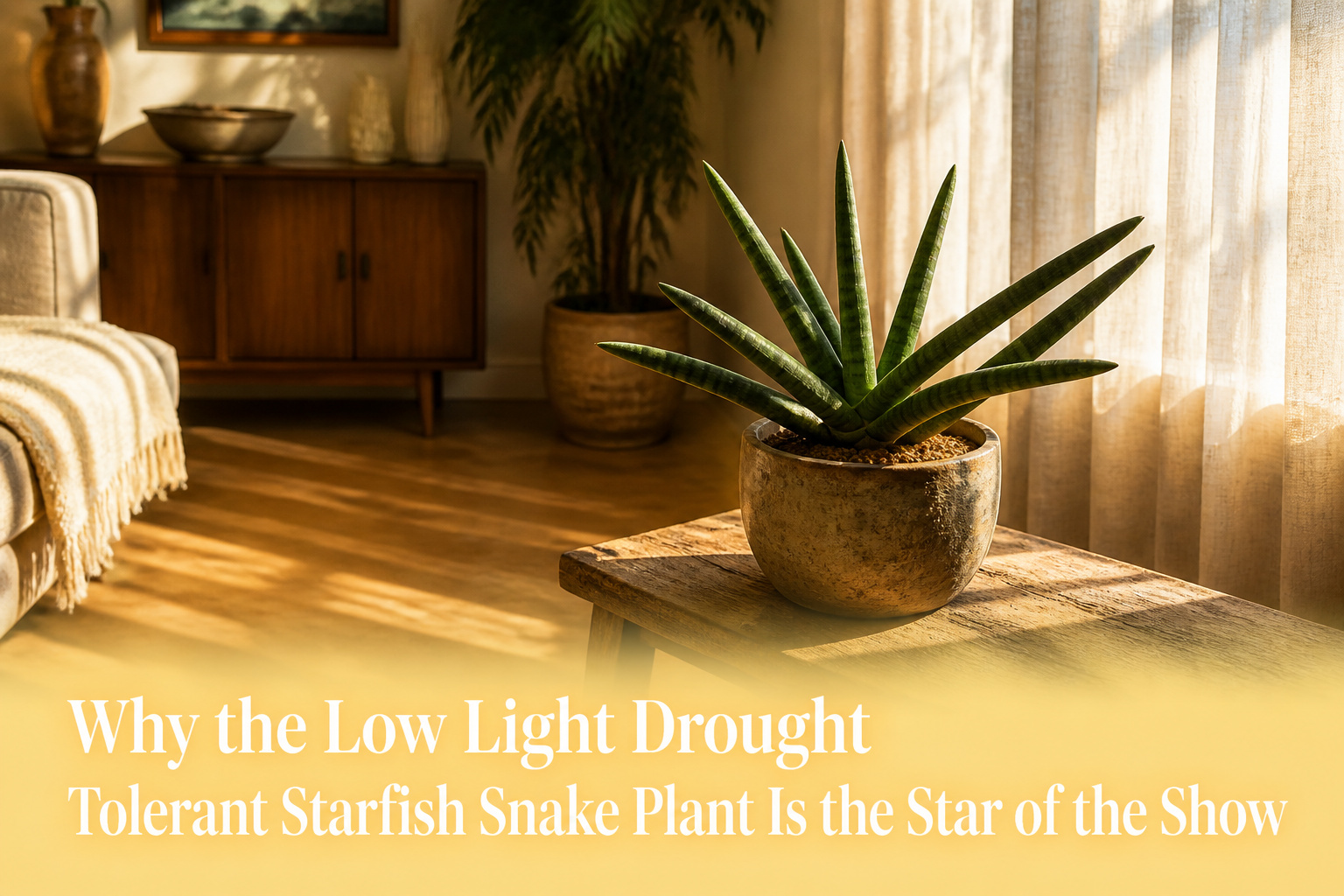
The starfish snake plant is a compact, fan-shaped cultivar of Dracaena cylindrica with thick cylindrical leaves radiating from a central point like arms. It tolerates low light and drought, but that tolerance is a trap: the same plant will sit pale and stalled for eight months in a dim corner, then push out new growth within weeks of a brighter spot. Give it light just back from a sunny window, let the soil dry completely between waterings, and it stays sculptural and alive with almost no intervention.
Light Requirements

Bright, indirect light is where the starfish snake plant actually wants to live, even though it will survive in a dim corner. That gap between surviving and thriving is the first thing most owners miss. I have watched a friend’s Boncel sit unchanged for eight months in a north-facing bathroom, pale and stalled, then push out two new arms within weeks of moving to a spot just back from a sunny window.
Direct sun will scorch those cylindrical leaves. Sudden intense light browns the edges and leaves the plant looking fried. A gradual shift to a brighter spot is the safer move if you are relocating one that has been sitting in the dark.
The darker-leaved varieties handle low light better than the brighter or variegated ones, though the starfish form with its compact, fan-shaped arms stays tighter and more colorful with better exposure. In low light it stretches and reaches, losing the neat radial shape that gives it its name. If you want the sculptural look that drew you to this plant in the first place, give it the light it is quietly asking for.
Watering Needs

The starfish snake plant stores water in its cylindrical leaves, roots, and underground rhizomes, so it can handle longer dry spells than flat-leaved varieties. Let the soil dry completely between waterings, then soak until water runs from the drain holes and stop. In most homes, this means watering every 2–4 weeks, though a south-facing summer windowsill dries the pot twice as fast as a north-facing winter room. I lift the pot to check: noticeably lighter than when wet means it is time.
Overwatering causes root rot and is the most common way these plants die. Soft, browning, collapsing leaves signal soggy roots, and the damage often starts from the bottom up. In winter, when growth slows, monthly watering or even less is usually enough. Never let the leaf tips sit in standing water.
Underwatering shows differently. Deep wrinkles or shriveling in the cylindrical leaves mean the plant has gone too long without a drink. A thorough soak restores plumpness if the roots are still healthy. Healthy leaves stay firm and thick, so that texture is your best guide.
Soil Type

A standard houseplant mix holds moisture too long for a starfish snake plant. The thick, water-storing roots need a cactus or succulent blend with added perlite or coarse sand so water moves through fast and exits the pot.
I mix roughly half regular potting soil with half cactus mix, then toss in a couple handfuls of perlite for insurance. Some growers line the bottom of the pot with orchid bark before adding the mix, which buys extra drainage if your container runs deep. A working drainage hole is non-negotiable, even with gritty soil. Without one, the mix turns soggy and the roots sit wet.
That fast-draining structure is what makes the 2–4 week watering schedule possible. The mix dries out between drinks instead of staying damp and inviting rot. Skip the perlite or sand, and you will be watering by calendar while guessing whether the center of the pot is still soaked.
Temperature Range

The starfish snake plant stays comfortable anywhere between 65°F and 80°F, which happens to be the same range most apartments and older homes settle into without any help. A hard floor sits at 50°F; anything below that risks real damage, so keeping it off a windowsill in January matters more than fussing over the thermostat.
This tolerance for ordinary indoor conditions is part of why the plant works so well for renters and first-time owners who do not have climate control systems or who live in buildings with spotty heating. Drafts from a cold window or a blast from a radiator vent are the two biggest stressors to watch for, so placement a few feet back from either one usually solves the problem. No misting, no humidifier, no seasonal migration around the apartment required.
Humidity

The starfish snake plant does not ask you to manage humidity at all. Average indoor air, which usually sits somewhere between 30 and 50 percent, is already the sweet spot. That means no misting and no humidifier sitting on your dresser, humming through the night and adding one more device to your mental load.
Some snake plant advice still suggests the occasional spritz to knock dust off the leaves, but the plant itself does not need that moisture. Its leaves are built for dry conditions, and extra humidity around them can actually invite trouble. Fungal issues crop up when the air stays too damp, which is the opposite of what this plant evolved for.
For renters and first-time owners already juggling a budget and a weekend project list, this matters. You are not buying another gadget, not filling a reservoir every morning, not watching a meter. You set the plant down in its spot and the humidity takes care of itself.
Toxicity

Saponins in the leaves make the starfish snake plant mildly toxic to pets and humans if ingested. The ASPCA lists Sansevieria, which includes this plant, as toxic to cats and dogs. Chewing a leaf typically brings on drooling, vomiting, and diarrhea; nausea and stomach irritation are the usual human symptoms. In a small rental where the only open shelf sits at knee height and a cat treats every surface as a runway, that placement is a gamble. A hanging planter or a shelf above arm’s reach removes most of the risk without requiring a different plant. For a pet that already got into it, the ASPCA Animal Poison Control Center in the US runs at 888-426-4435.
Propagation

The starfish snake plant spreads through offsets, or pups, that emerge from thick underground rhizomes hugging the parent plant’s base. Separating these is the surest way to propagate, and it is how most people end up with a second plant free.
Wait until the pup has rooted firmly, then unpot the whole cluster and tease the rhizomes apart by hand or slice cleanly with a sharp knife. Each pup already carries its own root system, so it establishes fast and grows into a true genetic clone of the parent. Leaf cuttings from those cylindrical spears can technically root, but they are slow and tend to rot before they take; division of pups is the practical method for anyone who wants a living plant rather than a science experiment. Once separated, pot each pup in its own container and give it the same bright, indirect light and sparse watering the parent tolerated. The backup plant also serves as insurance against a mature plant lost to overwatering or a dropped pot, a cheap way to keep the collection growing.
Growth Rate and Mature Size

A starfish snake plant tops out around 3 feet indoors, maybe stretching to 5 feet if it lands in bright, consistent light and you wait long enough. That "wait long enough" is the operative part. Growth runs slow to moderate, with most of the action happening in spring and summer and nearly none in winter.
The compact, upright leaves stay densely packed, so the footprint stays reasonable, usually 1–2 feet across even when mature. For a renter working with a narrow windowsill or a first-time owner who does not want to repot every spring, this pace is a feature, not a flaw. The plant will not surprise you by hitting the ceiling between lease renewals. You can place it where it fits now and trust it to still fit two years from now, which matters more than the inches per year it actually adds.
Air Purification

The starfish snake plant pulls more weight after dark than most houseplants. While others stop releasing oxygen overnight, this one keeps at it, converting carbon dioxide around the clock. That trait matters more than I expected when I first read through the research. NASA’s study on indoor pollutants found that snake plants filter formaldehyde and benzene from the air, two chemicals that off-gas from pressed-wood furniture, vinyl flooring, and synthetic fabrics. The starfish form, with its thick cylindrical leaves, offers the same filtration in a more compact footprint than the taller varieties.
A bedroom or home office with limited ventilation is where this pays off most. I would not call it a replacement for an air purifier with a HEPA filter, but for a renter who cannot modify ductwork or a first-time owner watching the budget, it is a living supplement that asks almost nothing in return. The catch, which sources do not always front-load, is that the plant is toxic to cats and dogs if chewed. Keep it on a shelf or in a room pets do not enter.
Common Problems

The starfish snake plant stores water in its leaves, roots, and underground rhizomes, so it forgives a missed drink far more easily than it forgives a soaked pot. Yellowing, soft leaves that turn mushy from the bottom up mean the roots are sitting wet. Let the soil dry out completely between waterings, and if the base smells musty, pull the plant, cut away any black or mushy roots, and repot in fresh, well-draining soil.
Wrinkled or shriveling leaves with dry brown tips tell the opposite story: the plant has drawn down its reserves too long. A thorough soak usually plumps the leaves back up if the roots are still healthy. The cylindrical leaves bruise and split easily at their pointed tips, so tuck the pot somewhere it will not get knocked by passing feet. That damage never heals, and a split tip stays split.
Repotting

A starfish snake plant grows slowly enough that repotting only becomes necessary every two to three years, or once the roots start pressing against the pot walls and the clusters of pups around the base crowd the container. Spring is the usual window for the job, especially with a younger plant that is still finding its size. The new pot should be just one size up, roughly two inches larger in diameter, with drainage holes drilled through the bottom; without an exit for excess water, the roots sit in moisture that this drought-tolerant species cannot handle. Well-draining succulent soil is the mix to reach for, not a standard potting blend that holds water too long. If the plant has already reached the size you want, keep the same pot, refresh the soil, and trim some roots to hold the growth in check rather than letting it stretch.
Names and What They Mean

Dracaena cylindrica var. patula ‘Boncel’ is the current scientific name for what most of us still call the starfish snake plant. The reclassification happened in 2017 when botanists moved Sansevieria species into the Dracaena genus, so older labels and care guides often list it as Sansevieria cylindrica ‘Boncel’ instead. The variety name ‘Boncel’ marks this specific compact, fan-shaped form.
The common names carry more personality than the Latin. Mother-in-Law’s Tongue and Viper’s Bowstring Hemp both come from the stiff, sword-like leaves, though those names attach more broadly to snake plants in general. The "viper’s bowstring" part references actual historical use: the fibers from these rigid leaves were once used to make bowstrings. Starfish snake plant, spear orchid, and the plain ‘Boncel’ are the names you’re likelier to see on nursery tags today.
For a renter building a plant collection that moves with you, the naming chaos matters practically. Searching under the old Sansevieria name still turns up more care threads and marketplace listings than the Dracaena one does. I check both when I’m hunting for a specific cultivar, and I label my own pots with both names so I don’t lose track years later.
Frequently Asked Questions
What are the light requirements for a starfish snake plant?
Bright, indirect light is where it actually wants to live, even though it will survive in a dim corner. Direct sun will scorch those cylindrical leaves, so move it gradually if you are relocating one from a darker spot. The darker-leaved varieties handle low light better than brighter or variegated ones, though the starfish form stays tighter and more colorful with better exposure.
How often should I water my starfish snake plant?
Let the soil dry completely between waterings, then soak until water runs from the drain holes and stop. In most homes, this means watering every 2–4 weeks, though a south-facing summer windowsill dries the pot twice as fast as a north-facing winter room. In winter, when growth slows, monthly watering or even less is usually enough.
Is the starfish snake plant toxic to pets?
Yes, saponins in the leaves make it mildly toxic to pets and humans if ingested. The ASPCA lists Sansevieria, which includes this plant, as toxic to cats and dogs. Chewing a leaf typically brings on drooling, vomiting, and diarrhea; for a pet that already got into it, the ASPCA Animal Poison Control Center in the US runs at 888-426-4435.
How do I propagate a starfish snake plant?
The surest way is through offsets, or pups, that emerge from thick underground rhizomes hugging the parent plant’s base. Wait until the pup has rooted firmly, then unpot the whole cluster and tease the rhizomes apart by hand or slice cleanly with a sharp knife. Each pup already carries its own root system, so it establishes fast and grows into a true genetic clone of the parent.