Some plants simply refuse to share space. Knowing what not to grow together saves you from stunted harvests, wasted beds, and the kind of garden failures that only make sense once someone names the pairing. Ten feet between tomatoes and potatoes is the difference between two healthy crops and one season of blight; the same fungus tears through both nightshades fast enough to wipe them out before August ends.
Tomatoes and Potatoes

Tomatoes and potatoes share more than a family tree. Both belong to the nightshade family, which means they draw on the same nutrients and attract the same pests. Plant them side by side and you double the strain on your soil without doubling the reward.
The bigger risk is blight. The same fungus, Phytophthora infestans, tears through both crops in cool, wet weather, discoloring leaves and rotting the plants from the ground up. Once it starts, it moves fast enough to wipe out your tomatoes and your potatoes in a single season.
Keep the rows at least 10 feet apart, and more space is better if your yard allows it. That distance slows the spread enough that one infected plant does not guarantee total loss. Some resistant cultivars exist for both vegetables, but blight usually finds a way in by late summer. The 10-foot rule is the ounce of prevention that actually works.
Onions and Peas
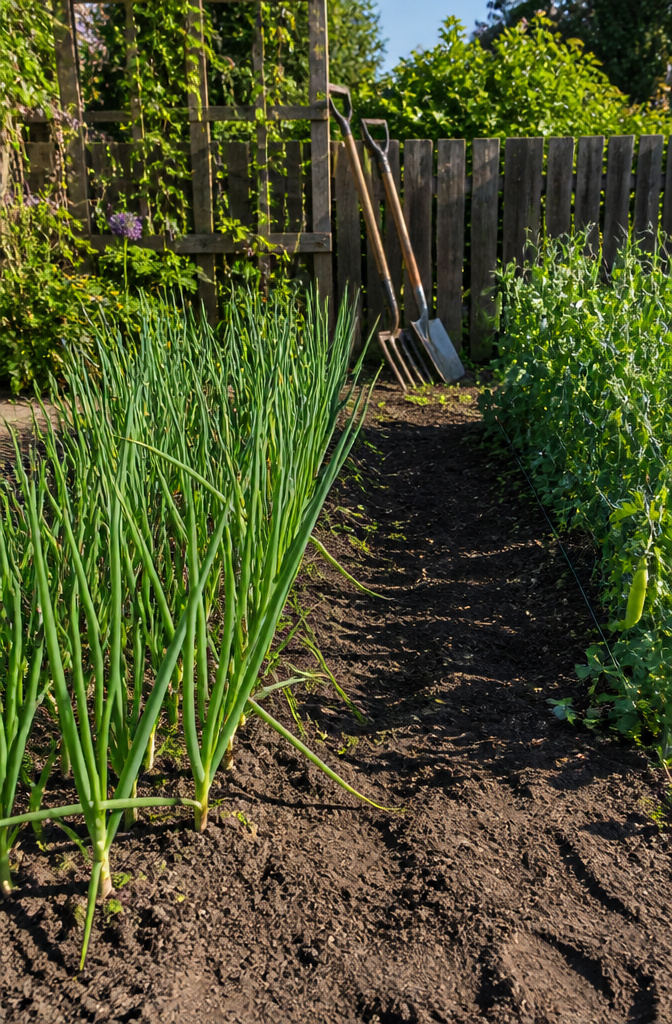
Onions carry allelopathic chemicals that leach into the soil around their roots and actively stunt pea growth. Peas are legumes, which means they partner with bacteria to pull nitrogen from the air and feed the soil around them. That benefit collapses when onions interfere with the process. The chemical disruption affects both the plant itself and what you eventually harvest: pods stay small or fail to form at all, and the vines grow short and weak.
This applies to the whole allium family, so garlic and chives belong on the same keep-away list. The effect is strong enough that crop rotation matters too. After pulling onions or garlic, plant something other than peas or beans in that bed the following year. The residue lingers. I learned this the hard way one spring when my snap peas came up stunted next to last fall’s onion row, and the neighboring bed, planted a foot farther off, grew twice as tall. Space or time: you need one of them between these two crops.
Cabbage and Strawberries

Cabbage loopers, the green caterpillars that hatch from brown moths, will chew through both cabbage and strawberries if the plants sit close together. The leaves end up as skeletons with only the ribs left behind. Strawberries also send out runners that sprout new rosettes far from the original plant, so even without the pest pressure they tend to overtake a shared bed. I keep strawberries in their own raised bed or containers now, and I plant cabbage at the opposite end of the garden. The distance breaks up what would otherwise be a concentrated feeding zone for the same pest, and it keeps the runners from tangling into brassica roots that are already competing for similar nutrients.
Carrots and Dill

Both carrots and dill sit in the Umbellifer family, recognizable by those lacy, umbrella-shaped flower clusters they send up in summer. That family tie is exactly why they spell trouble for each other in a vegetable bed.
The cross-pollination risk runs both ways. Let their flowers mingle and you end up with weird-tasting dill and carrots that never develop the straight, sweet root you planted for. Some gardeners notice stunted or misshapen roots where dill has crept too close, a result of growth-inhibiting compounds the herb releases into the soil.
Then there is the carrot fly. Dill draws it. The pest’s larvae tunnel through carrot roots underground, ruining the crop before you ever lift it. Keeping these two on opposite ends of the garden, or in separate beds entirely, is the safer play.
Cucumbers and Basil

Cucumbers and basil both want the same summer real estate, but sharing a bed costs the cucumber more than it gains. Basil is an aromatic herb, and those oils that make the leaves smell sharp do not stay polite to their neighbors. Plant them close enough and the basil can actually stunt cucumber development, slowing the vine down when it should be hitting its stride. The same aromatics may even flavor the cucumber itself, giving a water-crisp vegetable a warm, spicy note that sounds interesting until you bite in.
The fix is simple: keep basil in the herb patch and let cucumbers sprawl elsewhere. Both still get full sun and steady heat, just not from the same square of soil. Aromatic herbs reduce cucumber yields, so the space you save by combining them is space you lose in actual fruit. Give each crop its own territory and the summer harvest looks a lot more like you planned it.
Fennel and Lettuce
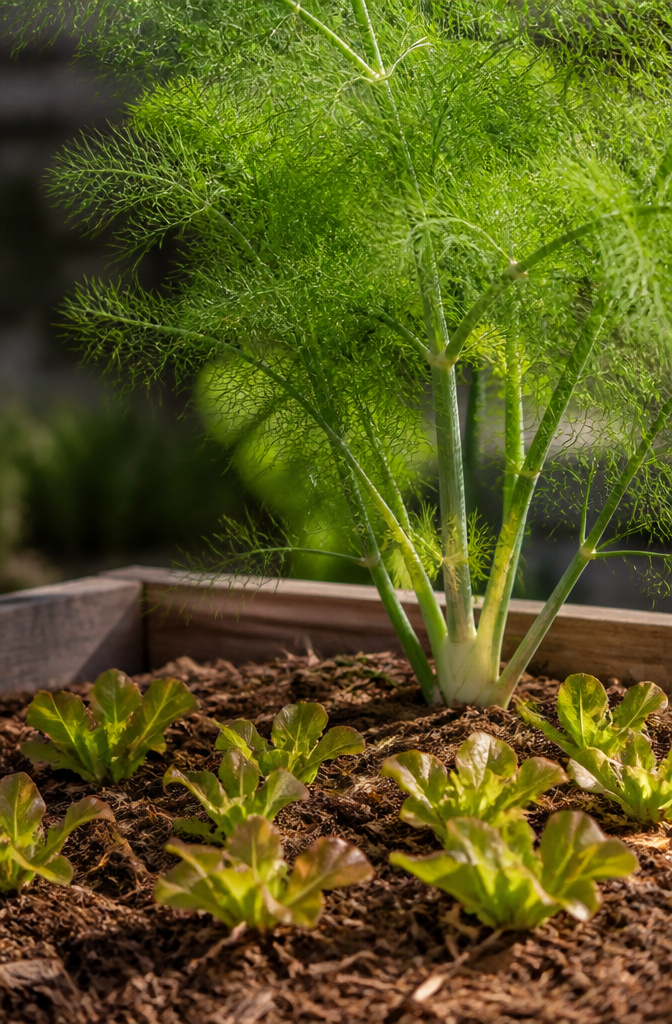
Fennel secretes compounds that can significantly stunt lettuce growth, so keep them in separate beds or containers if you want either to thrive. The allelopathic effect is broad enough that fennel interferes with beans, tomatoes, peppers, and cilantro too, which is why most gardeners treat it as a lone operator. I have seen the same recommendation enough times that I now plan a dedicated corner for it before I order seed, not after.
A container works well for renters who need to rearrange a patio layout or take their garden with them at move-out. The flowers still attract beneficial insects, and the grilled bulb is worth the extra planning. Just do not let that pretty foliage fool you into tucking it among the lettuce starts.
Asparagus and Onions

Onions release allelopathic chemicals through their root zone that can stunt asparagus crown establishment and limit long-term bed productivity. Asparagus and onions should never share the same soil, even in rotation, because the damage persists in the root environment where the perennial crowns must sit for fifteen to twenty years.
The mismatch runs deeper than a single bad season. Asparagus is a permanent investment; once those crowns go in, that bed is committed. Annual onions, meanwhile, cycle through in a single season but leave behind residual chemistry that interferes with the tender feeder roots asparagus sends out each spring. You get one shot at establishing a productive asparagus bed, and onion residue in the soil works against every year after.
If you are planning both crops, separate them by the full span of your garden rather than by a row or two. The allelopathic effect travels through shared soil, not through the air, so physical distance is your only real protection. Keep alliums, including garlic and shallots, entirely out of the asparagus rotation history too; the chemistry is similar across the family and the risk to crown development is the same.
Beans and Onions

Garlic and onions release compounds from their roots that actively stunt bean and pea growth. Garlic does this most dramatically, slowing bean development enough that the harvest drops noticeably. The damage runs deeper than simple competition for space or water.
Beans and peas are legumes, which means they partner with soil bacteria to pull nitrogen from the air and feed it back into the ground. Onion-family plants interfere with that nitrogen-fixing relationship. The alliums’ root chemistry disrupts the bacteria colonies, so the legumes perform poorly even in soil that looks fertile on paper.
Both bush beans and pole beans suffer, and the effect extends to peas as well. Shallots, scallions, chives, and leeks carry the same risk, though garlic and standard onions are the worst offenders. The fix is straightforward: keep the beds separate. A few leeks near beans might slide by, but full rows of alliums and legumes should sit in different parts of the garden entirely. When you rotate crops next season, plant something other than beans or peas where onions or garlic grew this year.
Corn and Tomatoes

Corn and tomatoes share more than a spot on the summer table. They share pests, diseases, and an appetite for the same nutrients that makes them poor neighbors in the ground.
The corn earworm, also called the tomato fruit worm, bores into both corn ears and tomato fruits, leaving tunnels that open the door to molds, fungi, and bacteria. Where one plant suffers, the other invites the same damage. Both are also heavy feeders that pull hard from the same soil reserves, and corn’s tall stalks will steal the light tomatoes need once the season advances.
Keep them at least a full bed apart, or better, put corn with beans, peas, or squash. The upright stalks give vining vegetables a natural trellis, and beans fix nitrogen back into the soil corn depletes. Tomatoes do best with companions that do not double their pest load or shadow their leaves.
Garlic and Beans
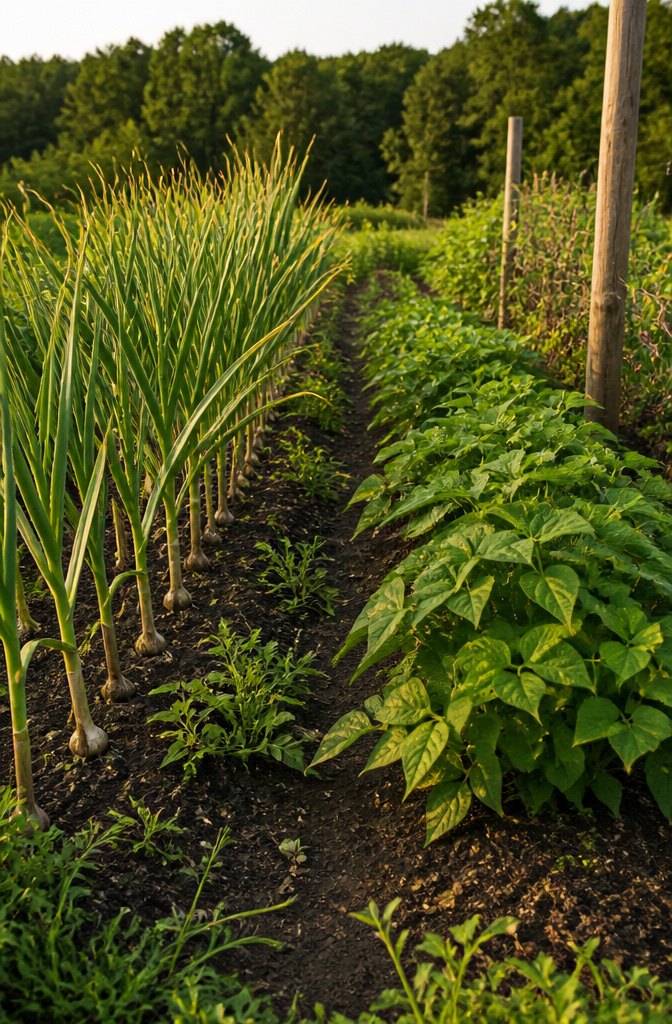
Garlic and beans make one of the more lopsided pairings in a vegetable bed. The sulfur compounds garlic releases through its roots and into the surrounding soil actively interfere with legume root development. Beans and peas rely on a partnership with nitrogen-fixing bacteria to form the nodules that feed both the plant and, eventually, the soil. Garlic’s chemistry disrupts that process, and the result is stunted plants that produce few or no pods.
I learned this pairing the hard way one spring when I tucked bush beans into a bed that had held garlic the previous fall. The beans germinated, then sat there: yellow-tinged, short, and eventually overrun by aphids that healthier plants would have shrugged off. The nitrogen fixation those roots should have managed never got going.
The fix is distance, and time. Keep alliums, garlic especially, well away from any legume row. When you rotate beds, do not follow garlic or onions with beans or peas. Give that soil a season with a different crop, something that does not need the bacterial partnership legumes depend on. Corn works, or leafy greens. The bacteria will recover, and your beans will grow like beans again.
Peppers and Fennel
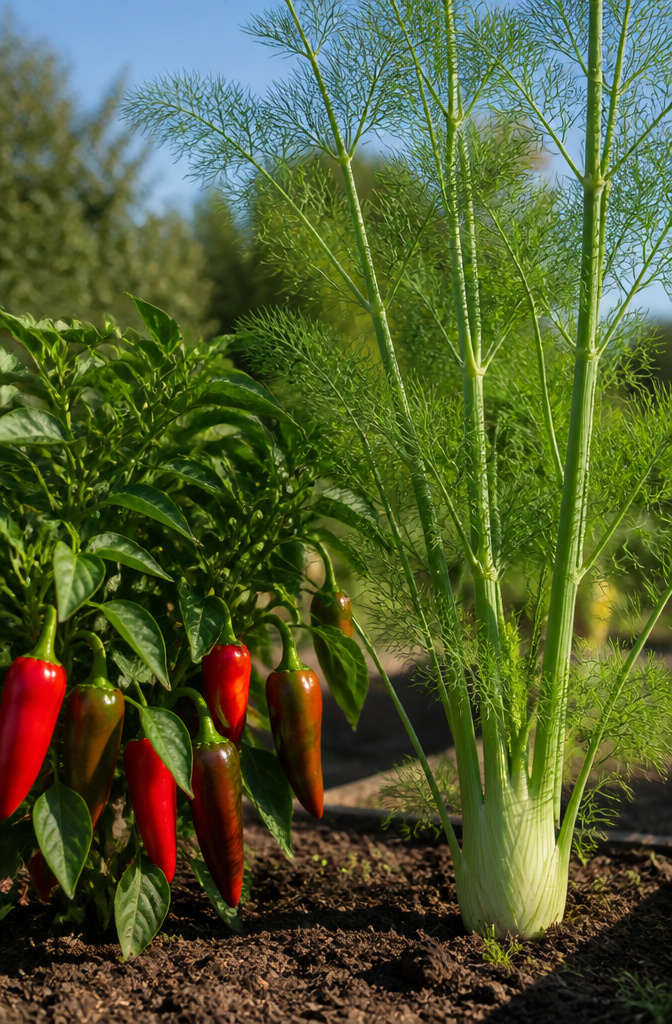
Fennel’s allelopathic chemistry reaches into the nightshade family with real consequences for pepper plants. The same compounds that make fennel a poor neighbor for tomatoes and beans inhibit fruit set and overall vigor in peppers, not just seedling growth. One source frames this as nutrient competition, another as direct chemical suppression; both agree the pairing ends badly. I treat fennel as a container plant for that reason, or I site it at the far end of a bed where its root exudates won’t drift toward pepper roots. The licorice-flavored bulbs are worth growing, but not at the cost of a summer’s pepper harvest. If space is tight, fennel loses that tradeoff every time.
Broccoli and Strawberries

Brassicas and strawberries share more pest pressure than most gardeners expect. Cabbage loopers, the caterpillars that chew through cabbage leaves, will happily devour strawberry plants too, so broccoli and strawberries should sit in separate beds to avoid concentrating the damage. The conflict runs deeper than insects. Broccoli and other brassicas pull heavily from the soil, and in typical garden conditions they leave little nutrition behind for the shallow-rooted strawberries that follow. Some brassicas also release compounds that inhibit neighboring growth, a chemical turf war strawberries are not built to win. The same double threat, pest overlap and soil chemistry strain, makes cabbage-strawberry pairings just as risky. If space is tight, enrich the soil aggressively and still expect to feed both crops heavily, or simply split them across the yard.
Eggplant and Fennel

Fennel earns its reputation as the garden’s lone wolf. The plant releases allelopathic compounds that actively suppress neighboring vegetables, and eggplant, as a fellow nightshade, catches the worst of it. Keep fennel in its own bed or a container if you want healthy eggplant yields. The inhibitory chemicals stunt root development and reduce overall plant vigor, which means smaller fruit and weaker plants even when everything else looks right, sun, water, soil.
I learned this pairing the hard way after planting fennel along the same row as my eggplant one season. The fennel thrived. The eggplant limped through July with yellowed lower leaves and never set more than a few undersized fruit. Moving the fennel to a pot the following year fixed the problem without any other change.
Eggplant otherwise plays well with others. Peas and beans add nitrogen to the soil that eggplant appreciates, though trellised legumes need placement that won’t shade a sun-hungry nightshade. Tarragon and thyme make useful herb neighbors. Spinach even benefits from the shelter of eggplant’s broad leaves. Just that one exception: fennel, which has no friends in the vegetable bed.
Radishes and Hyssop

Radishes and hyssop share a quiet feud that can wreck a spring planting before you notice what went wrong. The herb’s strong aromatic oils seep into the soil and interfere with radish root development, often pushing the plant to bolt early. What starts as a tidy row of plump, quick-growing roots turns hollow and pithy weeks ahead of schedule.
I learned this pairing the hard way after tucking hyssop along the same bed edge where I’d sown French Breakfast. The radishes leafed out fine, but every root split or ran to flower before it sized up. Gardeners pass the warning down hand to hand, and my own batch confirmed it: keep these two at opposite ends of the plot.
Better neighbors for radishes are dill, mint, or chervil, with marigolds, parsnips, and beans filling out the rotation. Those pairings leave the root alone to do what it does best, which is bulk up in roughly three to four weeks and get out of the ground before summer heat arrives.
Melons and Potatoes

Melons and potatoes both demand more from soil than most vegetables, and planting them together splits the difference so neither wins. Potatoes are heavy feeders that pull hard on nitrogen and potassium through the season; melons need that same fertility later, once vines run and fruit sets. The potato hauls nutrients early, the melon arrives hungry, and both end up smaller than they should.
Water timing works against them too. Potatoes want steady, moderate moisture until foliage yellows, then a dry-down to cure skins. Melons ramp up water right when fruit swells, the same weeks potatoes should be tapering off. One of them gets the wrong drink at the wrong stage, and the stressed plant invites problems.
The bigger risk is shared disease pressure. Potatoes carry pests and soil-borne trouble that move straight to melon vines. Late blight, the same Phytophthora that wipes out tomatoes, also threatens potatoes; any cool, wet spell lets it tear through both crops if they are near enough to share splash and spores. Ten feet of separation is the practical minimum, and more space buys real insurance. The two do not belong in the same row, the same bed, or even the same corner of the yard if you have the room to split them.
Lavender and Warm-Weather Vegetables

Lavender and warm-weather vegetables make a pairing that looks sensible on paper until you actually try it. Both love sun, so tucking lavender beside tomatoes or peppers seems natural. The problem is everything below the surface.
Lavender wants poor, sandy or gravelly soil with sharp drainage and a lean diet. Tomatoes, peppers, and eggplants need regular fertilizer and steady water, especially once fruit sets. That watering rhythm rots lavender roots, and the humid microclimate around thirsty vegetables invites the fungal problems this Mediterranean herb hates. Soil chemistry splits them too; lavender prefers slightly alkaline ground while cucumbers and melons lean toward acidic conditions. One bed cannot serve both without one side suffering.
House Beautiful puts the mismatch plainly:
Lavender prefers poor, low-nutrient soils, such as sandy or gravelly types, while vegetables such as tomatoes need tons of water, especially when fruiting, and regular fertilizer to keep producing.
What this means for your layout: keep lavender in a raised bed, a rock garden strip, or containers where you control the drainage and can let it dry out between drinks. Your vegetables get the richer, moister soil they need somewhere else. The pollinators will still find both, and neither plant pays the price for your convenience.
Mint and Most Other Plants
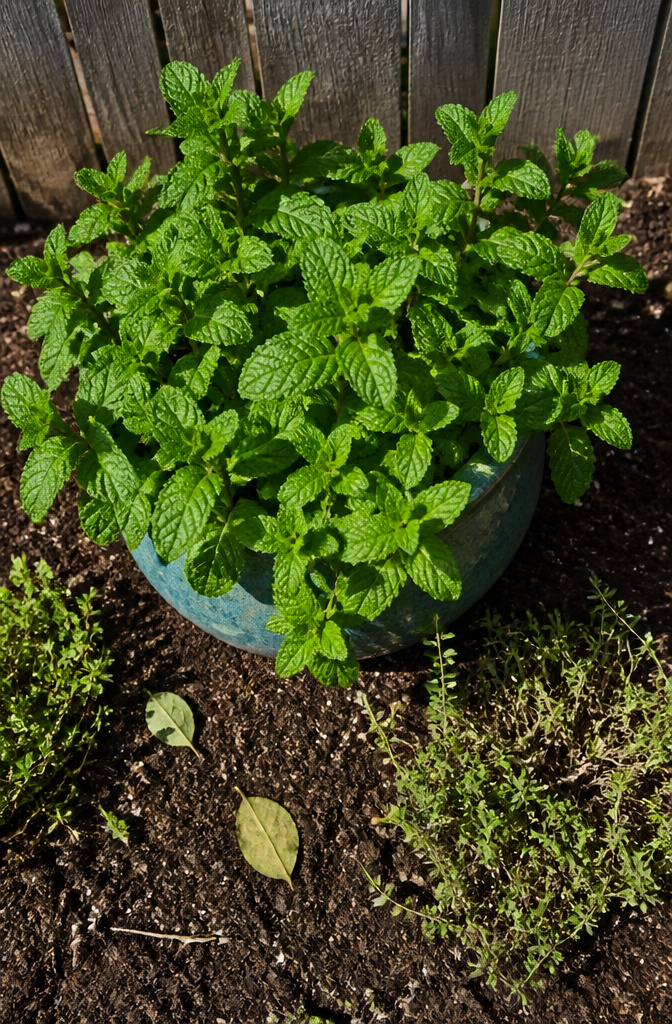
Mint spreads by underground rhizomes that travel fast and root wherever they touch soil, so plant it in a container or buried pot if you want it anywhere near a vegetable bed. Left in open ground, those roots form dense mats that choke out neighboring herbs and vegetables from below while the foliage above steals light and water. I learned this the hard way after watching a single peppermint plug colonize half a raised bed in one season, sending shoots up through the soil six inches from where I’d originally planted it. The runners don’t respect bed edges or path boundaries; they simply keep expanding until something stops them. A physical barrier, buried at least several inches deep, slows the invasion but rarely contains it fully. Most gardeners eventually dig the whole plant out and start over in a pot on the patio, which is the only setup that truly keeps mint from becoming a weed you planted on purpose.
Mustard and Beets

Mustard and beets are one pairing where the chemistry in the soil matters more than what you see above ground. Mustard family plants release natural compounds that act as biofumigants, altering the soil environment in ways that hit root crops especially hard. Beets form their entire edible portion underground, so any shift in soil chemistry during germination or early growth shows up as stunted roots or patchy stands rather than just slower leaf growth.
The effect is not competition for nutrients or light, which you could fix with wider spacing. It is a direct chemical interaction: mustard residues change the soil biology that young beet roots depend on. That makes this pairing riskier than most incompatible plantings, because the problem lingers even after you pull the mustard out.
If you are rotating crops in a small plot, leave a season or a solid block of space between any mustard family crop and your beet planting. The same beds can work for both plants, just not in the same season back to back. Most sources treat this as a hard no for adjacent rows, and after seeing how sensitive beet germination is to soil conditions, I treat it that way too.
Okra and Potatoes
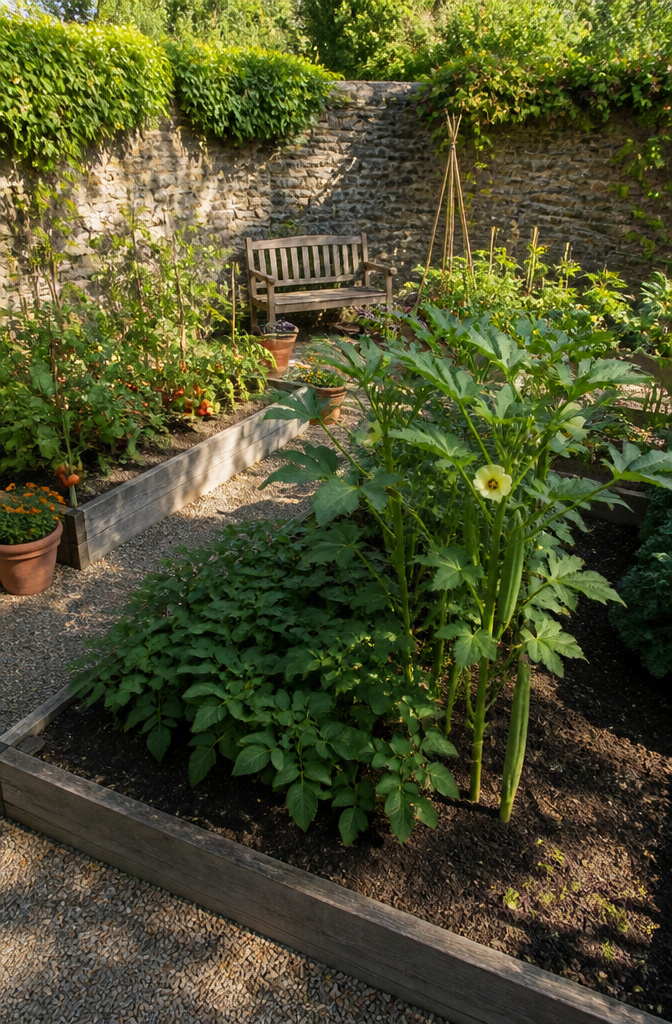
Okra and potatoes fight the same battles on two fronts at once. The okra I planted two summers back hit six feet by August, and anything east of that row spent the afternoon in shadow. Potatoes need steady sun on the foliage to push energy down into tubers; shade from tall neighbors leaves you with small, knobby harvests that should have sized up weeks earlier.
The pest overlap is worse. Both plants draw nematodes and verticillium wilt from the same soil pool, so an infestation that starts in either patch does not stay local. The sources that track this pair also flag nutrient competition, since both are heavy feeders on the same nitrogen and potassium schedule. I split mine by a full bed width now, and if space is tight, I drop one for the season rather than let them share a row.
Brussels Sprouts and Strawberries
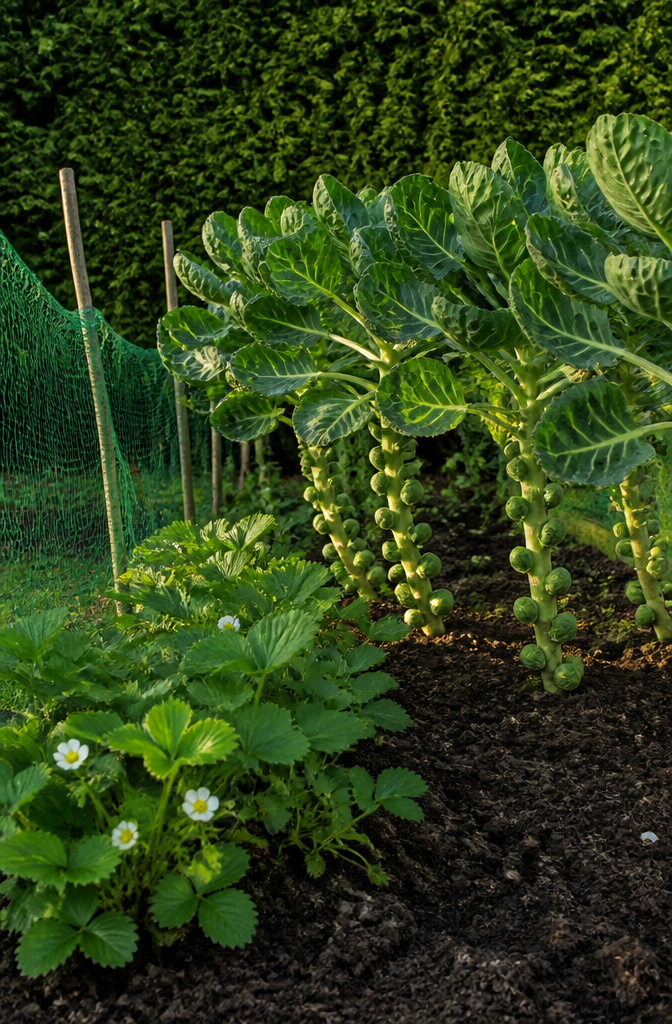
Brussels sprouts and strawberries repeat the brassica-berry pest pattern with their own soil-level twist. Clubroot, a fungal disease that deforms brassica roots and stunts the plant, lingers in soil for years. Strawberry root weevil larvae chew through berry roots underground, weakening the plant and opening entry points for secondary infections. When these two share a bed, the damage compounds: weevil tunnels give clubroot spores easier passage into strawberry tissue, and the weakened strawberry roots release compounds that may encourage brassica pathogens to persist longer in the soil. Keep them at least four feet apart, and rotate brassicas out of any bed that held strawberries within two seasons. The nutrient competition is real too, since both are heavy feeders that pull the same nitrogen and calcium profiles from the top six inches of soil. I learned this pairing the hard way after watching a row of sprouts yellow while the neighboring strawberries collapsed mid-summer, both beds needing a full season off before anything would thrive there again.
Frequently Asked Questions
What vegetables should not be planted together?
Several common pairings cause problems in vegetable gardens. Tomatoes and potatoes share blight susceptibility. Onions and garlic stunt beans, peas, and asparagus with root chemicals. Fennel suppresses peppers, eggplant, lettuce, and most neighbors through allelopathy. Cucumbers and basil compete badly enough to reduce yields. Brassicas like cabbage and broccoli attract the same pests as strawberries and should stay separated. Carrots and dill cross-pollinate and share the carrot fly pest.
Why shouldn’t tomatoes and potatoes be planted together?
Both belong to the nightshade family and fall to the same blight fungus, Phytophthora infestans, which spreads fast in cool, wet weather and can wipe out both crops in one season. They also pull the same nutrients from soil, so pairing them doubles the strain without doubling production. Keep the rows at least 10 feet apart to slow disease spread.
What is allelopathy?
Allelopathy is the release of chemicals by one plant that suppress the growth of another. Onions, garlic, fennel, and mustard all do this through their roots or residues. The effect can stunt seedlings, reduce fruit set, or linger in soil long enough to damage the next season’s crop even after the offending plant is gone.
How far apart should incompatible plants be?
Distance depends on the pairing. Tomatoes and potatoes need at least 10 feet to slow blight spread, and more is better. Melons and potatoes should hit that same 10-foot minimum. Brussels sprouts and strawberries need 4 feet at least. For chemical interference like onions against asparagus or beans, full bed separation works best, since root exudates travel through shared soil rather than air.
What are the benefits of companion planting?
Smart pairings can improve growth, repel pests, and boost yields. Beans and peas fix nitrogen that heavy feeders like corn or eggplant later use. Tall corn gives climbing beans a natural trellis. The right neighbors also break up pest and disease concentration so one outbreak does not take out multiple crops at once.