
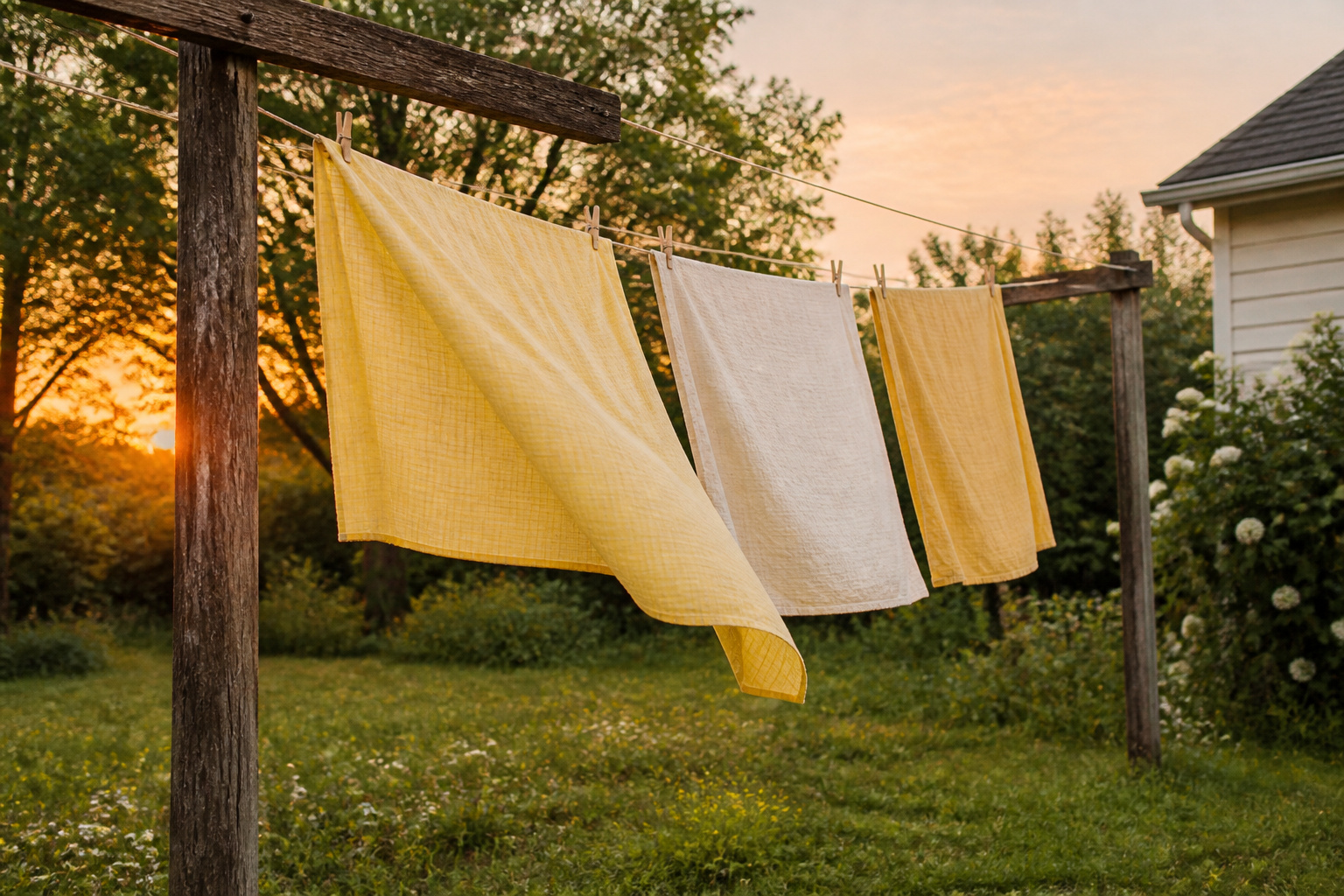
A clothesline is simply a cord stretched between two points where wet laundry hangs until air and sunlight finish the job. The catch is that most American households still pay to do this work with a machine that costs them nearly $280 a year in electricity alone. At 3,000 watts per load, the dryer is the most energy-hungry appliance most people own, and it beats fabric into lint while it runs.
What a Clothesline Actually Saves on the Electric Bill
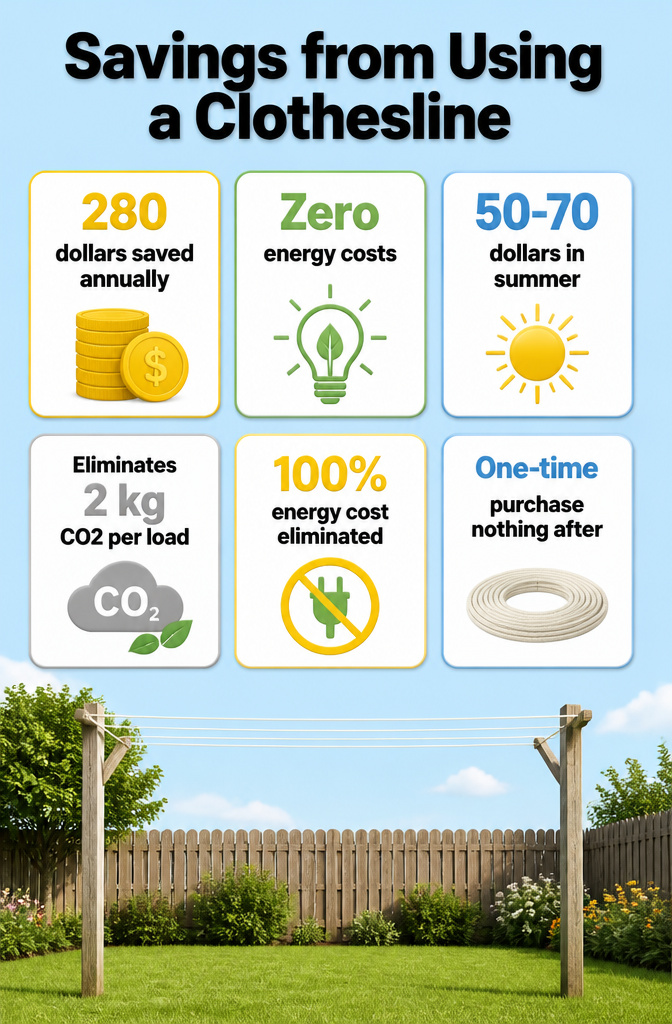
A typical dryer pulls 3,000 watts in just 15 minutes of use, and the average American household runs about 400 loads of laundry per year. Those quarter-hour bursts add up to roughly 5 kilowatt-hours per load, or about 2,000 kWh annually if every load goes through the machine. At the national average rate of around 14 cents per kWh, that is nearly $280 a year spent on hot air.
Line drying eliminates 100% of that energy cost. The math is not subtle: zero watts multiplied by any number of loads still equals zero. Over a single summer, a household that moves even half its laundry outdoors could knock $50 to $70 off the electric bill without changing anything else about the routine. The savings are front-loaded in warm months, when sunshine is free and the dryer fights against already-hot air.
Powered clothes dryers use more energy than any other household appliance, and the operational cost far outweighs the price of the machine itself over time. A clothesline, by contrast, asks for the purchase price once and nothing after.
Air drying saves money. It also has no greenhouse gas emissions (versus 2 kg CO2eq of greenhouse gas emissions from the average mechanical clothes dryer per load).
That 2 kg per load, multiplied across 400 loads, is the weight of a small car in carbon you simply do not release. For the reader watching both the budget and the backyard air, the line pays back in the first season.
The Wear a Dryer Puts on Fabric Over Time
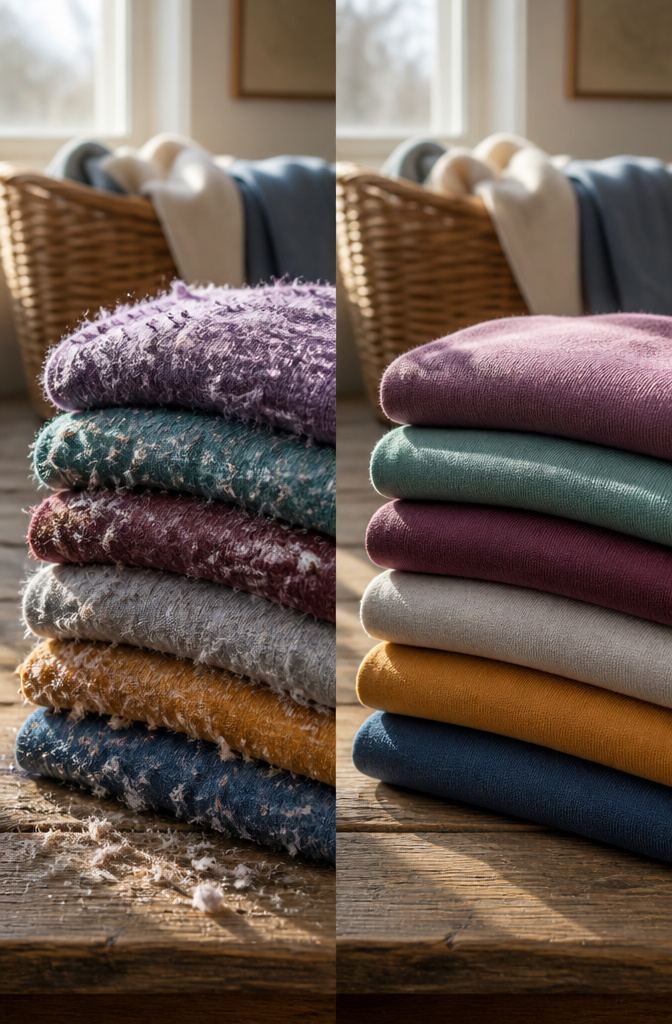
A dryer subjects clothes to twice the tumbling of a washer alone, and that extra hour of being heated, slammed, and scrubbed against other garments takes a toll. The mechanical action stresses seams and snags zippers, while the friction breaks fibers down into the lint you peel from the trap. That gray or pink fuzz was once the fabric of your shirt or towel, and the loss shows up as pilling, thinning, and that worn-in look that arrives years too early.
Line drying removes that violence entirely. Clothes hang still, gravity pulls water downward gently, and the structure of the fabric stays intact. Delicate items that would felt and degrade in the drum keep their shape and their months of useful life. Energy Star recommends air-drying specifically because it helps clothes last longer, and the difference is visible in the lint trap alone: what collects by the load in a dryer simply does not appear on a line.
The Smell Line-Dried Clothes Actually Carry
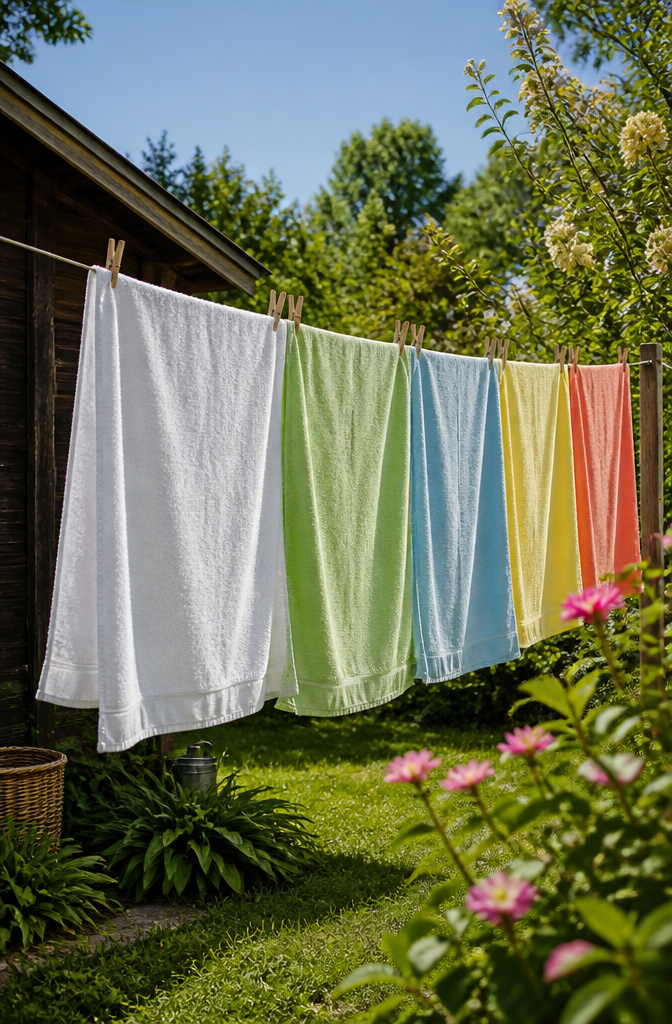
Sun and wind leave a scent that dryer sheets spend millions trying to copy with chemical fragrance, and they never quite get there. What you actually smell on line-dried cotton is a mix of photochemistry and plant chemistry. UV radiation from sunlight breaks apart organic molecules left after washing, and moving air carries away the volatile fragments. Along with it comes whatever the breeze picked up passing through grass, leaves, or after a rain, all of it temporary and unbottled.
Dryer sheets and fabric softeners work differently. They deposit a deliberate residue, fatty acids or silicones coated with synthetic perfumes designed to cling through heat and static. The smell hangs around for days because it is designed to, not because it faded and left something clean behind. Some of those same residues can irritate skin or build up in fabric over time, which is why a line-dried towel eventually smells like nothing but itself, while a softened one smells like the product until the perfume finally overwhelms the base note.
The difference is the gap between an imitation and the thing itself. One is manufactured to last; the other lasts only as long as the weather that made it.
How Sunlight Sanitizes What Washing Leaves Behind
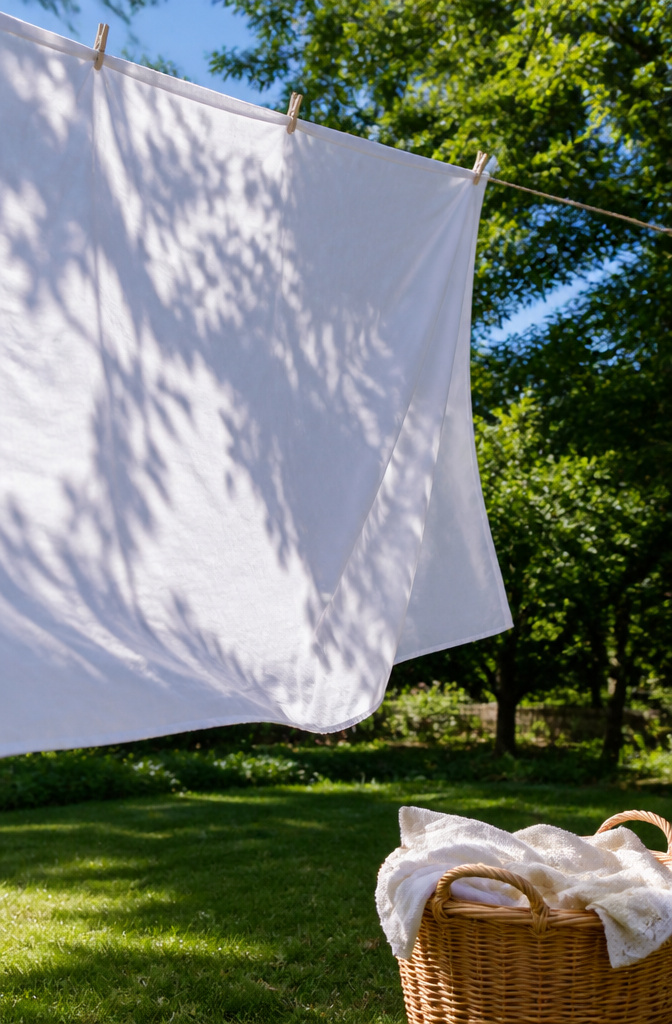
UV light breaks down the genetic material of bacteria and viruses left on fabric after a wash cycle. A hot dryer does some of this too, but the sun handles it without the mechanical beating that wears fibers thin. The catch is direct exposure matters: dappled shade or an overcast afternoon cuts the effect sharply, and some pathogens survive it altogether. Stains from bodily fluids, in particular, respond well; sources describe cloth diapers hung in bright Ozark sunlight fading to near-nothing, where washing alone had left marks. That is the practical limit, though. Sunlight sanitizes surface-level contaminants, not ground-in soil or chemical residues, and it does nothing for the musty smell of damp clothes left too long in humid air. I treat the line as a second rinse, not a replacement for soap and water. For everyday shirts and towels, the UV boost is genuine enough that I skip the dryer heat and the wear that comes with it.
The Carbon Load of Running a Dryer for a Year

A typical American household runs about 400 loads of laundry a year, and each load through an electric dryer releases roughly 4.4 pounds of carbon dioxide. That stacks up to 1,760 pounds of CO2 annually, just from drying clothes. To put that in perspective, it is about the same emissions as burning 90 gallons of gasoline in a typical car. Energy Star does not even rate clothes dryers because the efficiency spread between models is so narrow; the agency simply recommends air-drying whenever possible.
Line drying is one of the simpler ways to pull that number down. The U.S. Department of Energy lists it as a straightforward alternative, and unlike replacing a furnace or buying an electric vehicle, it costs little and asks nothing of the grid. A clothesline runs on wind and sun, produces zero emissions per load, and keeps that 1,760 pounds of CO2 out of the atmosphere entirely. For anyone already hanging a few loads in summer, extending the habit through fall and spring takes the biggest single chunk of laundry-related emissions to zero without much thought.
Hanging Laundry as Movement You Already Need

A full load of wet towels and jeans runs about fifteen pounds from the laundry room to the line, and the body notices it. Arms lift and extend to pin each piece, shoulders rotate to reach the far strands, calves and ankles adjust on grass or concrete that is rarely perfectly level. The basket gets lighter as the line fills, then the sequence reverses: crouch to unpin, gather, fold against the hip or carry back inside. The whole routine takes maybe ten minutes per load, spread across two trips with a gap of hours in between.
That gap matters more than the weight. The sitting that fills most homebound hours breaks into two distinct chunks, each one bridged by a short walk and a few minutes of standing work. No workout clothes required, no subscription, no tracking app. The movement arrives as a side effect of a chore that already needed doing, which is the only reason most of us will repeat it often enough for the body to register the difference. A dryer asks nothing of you but a button. The clothesline asks you to carry the basket outside twice, and that small obligation turns out to be the point.
Why Shrinkage Happens Less on the Line
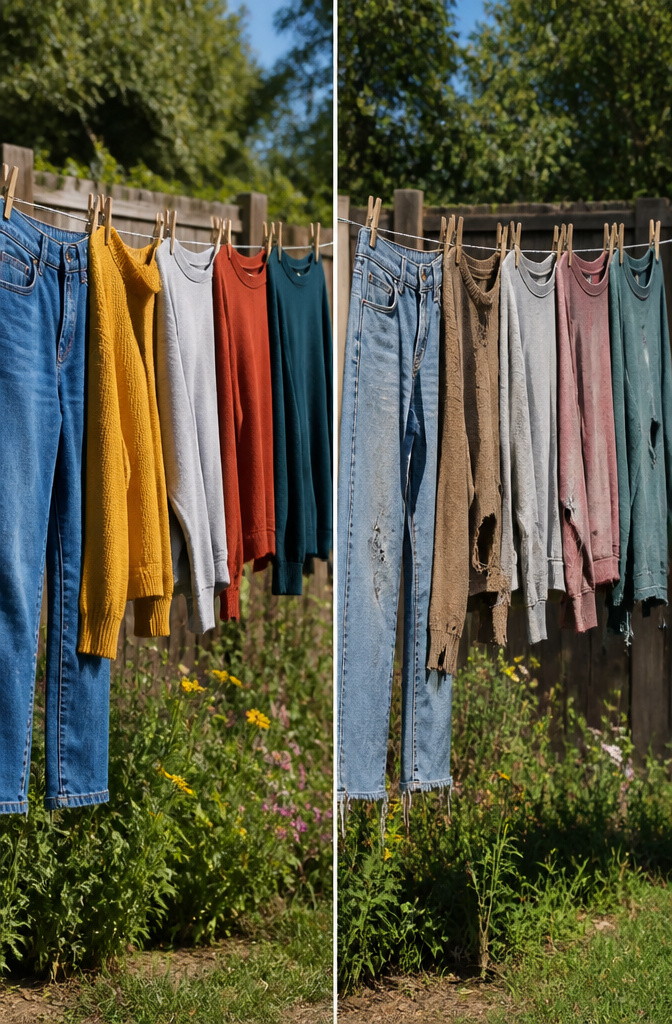
Cotton, wool, and anything with a loose weave are the fabrics that fight back against dryer heat. The tumbling and sustained high temperature pull fibers tighter than they were woven, and once that happens the fit you bought is gone. Line drying removes that thermal stress entirely; the fabric relaxes in ambient air instead of being baked into a smaller shape. Over months this adds up to jeans that still button at the waist and sweaters that reach the wrist instead of the elbow. Clothing manufacturers already recommend air-drying for some fabrics, and the reason is exactly this preservation of cut and dimension. The dryer saves minutes today. The line saves the garment’s tomorrow.
Getting Rid of Static Without Dryer Sheets
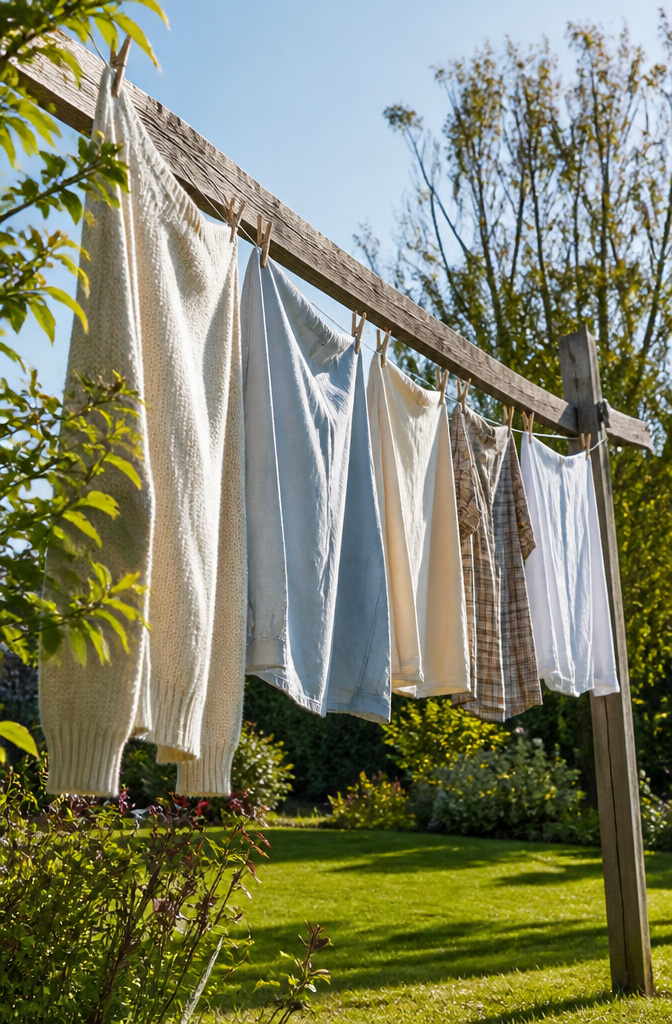
Dryers strip humidity from fabric and then rub every surface against something else at speed. That combination is what builds the charge, and a dryer sheet only masks it with a thin coating of softener. Line-dried clothes carry less static because the air around them holds some moisture, and because nothing tumbles them against a drum or other garments. The cling fades without a product.
I stopped buying dryer sheets once I noticed the pattern. A shirt that came off the line in August could be folded straight from the basket; the same shirt from the dryer in January would crackle and grab. For anyone running a load mainly to kill static, the clothesline removes the reason to buy them.
The Quiet Effect of a Simple Outdoor Task

The repetitive motion of pinning up a shirt, smoothing it flat, reaching for the next piece — this is a break that costs nothing and takes maybe ten minutes. Some people build the task into their day deliberately, timing it after the coffee finishes or before the afternoon sun shifts. The screen stays inside, the rush pauses, and the only demand is that you match the sock pairs before the breeze picks up.
A woman in one of the threads I read hangs laundry to guarantee her kids time outside every sunny day. Another mentions she does her best thinking out there, alone with the clothespins while the birds go about their business. The low stakes are the point. Nothing breaks if a towel folds wrong on the line; nobody needs an answer in the next thirty seconds. The task just asks you to move slowly and notice whether the clouds are building.
That simplicity seems to be why people stick with it even when the dryer works fine. The sunshine and the breeze do their part, but the quiet — the actual standing still — is what they describe coming back for.
Setting Up a Line That Holds Tension

- Two posts set in concrete keep a line taut better than trees, since a cord pulled tight around bark can girdle the trunk and branches throw shade right where you need sun. Recycled fence posts work if you have them; otherwise pressure-treated 4x4s or metal T-posts are the standard starting point.
- Hang the line 5 to 6 feet high so wet sheets do not graze the ground but you are not reaching overhead to pin a sock. That height also lets gravity help you pull the line tight as you work.
- For cord, plastic- or vinyl-jacketed metal wire resists stretch and weather longer than cotton, though cotton composts when it finally frays. Either way, sag is the enemy: cotton relaxes over months, and even synthetics give a little under a full load of jeans.
- A turnbuckle or mini-winch threaded into one end lets you take up slack without restringing the whole line. I would not skip this, unless you enjoy retying knots every spring.
- A retractable line or a pulley system saves steps if your posts sit far apart, but the core setup stays the same. Two solid anchors, cord pulled drum-tight, height you can reach without a stool.
Drying Indoors When the Weather Turns
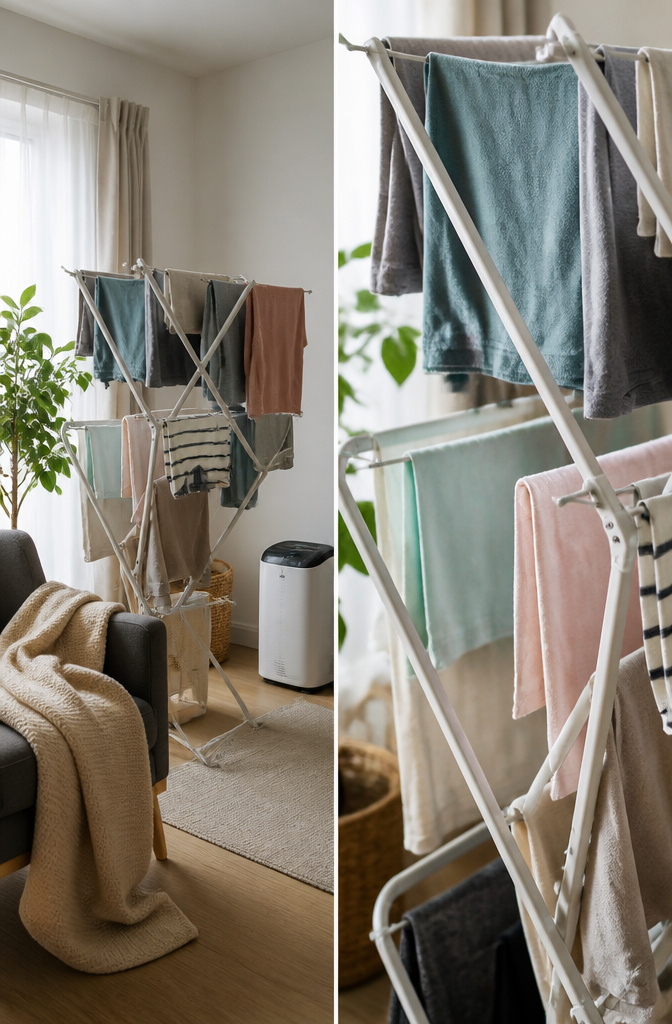
A foldable drying rack carried me through two winters in a third-floor apartment with no outdoor space. The IKEA model I bought then still opens in my hallway on wet days, and it holds enough laundry for a couple to get through a wash cycle without draping socks over every chair back.
Retractable clotheslines work if you have a basement or a spare wall. You pull the line out when the load is ready, clip shirts or towels, and wind it back once everything is dry. The trick is giving each item room to breathe; crowding the line adds hours and invites that musty smell you are trying to avoid.
Indoor drying runs slower than outdoor, with no sun or wind to move moisture along. The real limit is humidity. Evaporation from wet clothes raises the moisture level in the air, which feels fine in cold, dry months but turns a small room swampy when it is already warm. If you notice condensation on windows or a faint mildew edge, a fan or a dehumidifier becomes necessary, not optional. Fungi grow where humidity sits, and that is a health problem you do not want to trade for saved quarters.
For small loads, a shower rod or the back of a door handles the overflow. Just keep fabrics off wood finishes, and do not leave them there so long they imprint the grain.
Where HOAs Can and Cannot Stop You

Some homeowners associations still ban clotheslines on claims that they look unsightly or drag down property values, and a few have even called them a strangulation risk for children. The data behind that last one is thin; I found two reported child deaths from clothesline accidents in my reading, which puts the risk below that of bicycle helmets.
The pushback has produced a "Right to Dry" movement strong enough to override those bans in several states. Florida, California, and Oregon all have laws on the books that stop HOAs, condos, and apartment communities from prohibiting line drying outright. Other states give residents a right to dry that does not override an existing contract, so the protection varies.
Before you sink posts for a permanent outdoor line, pull your HOA covenant or lease and check what it actually says about exterior structures. A retractable line mounted on a single bracket, or a freestanding frame you can wheel away, sometimes sidesteps the wording entirely even where no state law protects you.
Frequently Asked Questions
Why should I use a clothesline?
A clothesline cuts your electric dryer cost to zero, which for an average household running 400 loads a year means keeping nearly $280 in your pocket. The sun and wind also treat fabric more gently than a heated drum, so your clothes hold their shape and fibers longer. You get the fresh scent of actual outdoor air instead of bottled fragrance, and you avoid pumping roughly 1,760 pounds of CO2 into the atmosphere annually.
What are the benefits of line drying?
Line drying saves the full energy cost of a dryer, eliminates about 4.4 pounds of CO2 per load, and spares your clothes the mechanical beating that turns into lint in the trap. Sunlight breaks down bacteria and viruses left after washing, and gravity pulls water through fibers without shrinking or stressing seams. The smell you end up with comes from photochemistry and passing breezes, not from fatty residues coating the fabric.
How do I set up a clothesline?
Sink two posts in concrete, set them 5 to 6 feet high so sheets clear the ground without overhead reaching, and pull cord or vinyl-jacketed wire drum-tight between them. Add a turnbuckle or mini-winch on one end to take up slack as the line stretches. Trees work in a pinch, but bark can be damaged and branches block the sun you need.
Can I use a clothesline in winter?
Yes, though evaporation slows way down without sun and wind, so a full load can sit for hours. Indoor drying racks or retractable lines in a basement work better when temperatures drop and precipitation is likely. In small rooms you will need a fan or dehumidifier, since wet laundry raises humidity enough to invite mildew if the air stays damp.