
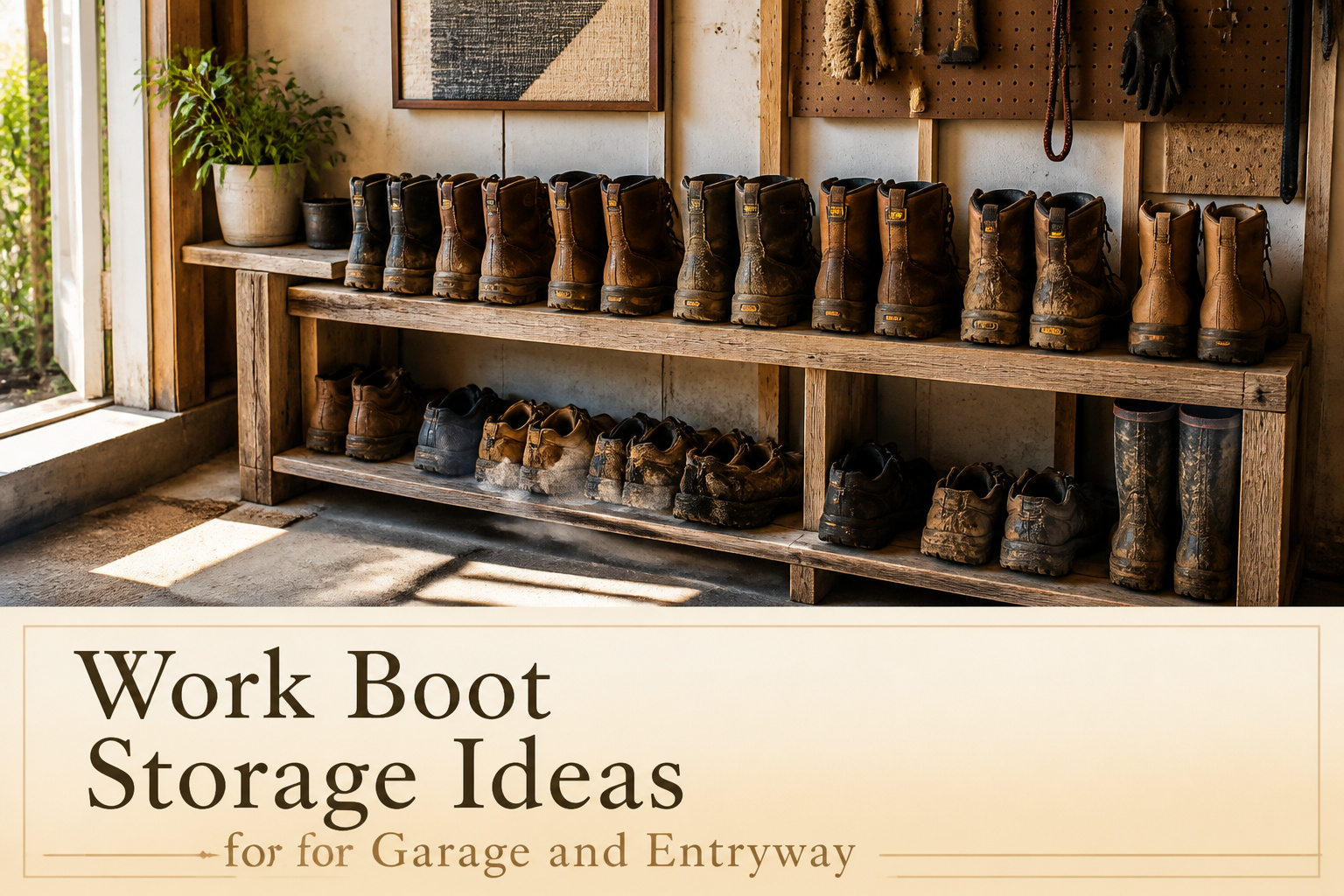
Work boot storage is the system that keeps steel-toe boots, loggers, and mud-caked pairs upright, dry, and out of the morning traffic path. The catch is that most off-the-shelf racks treat every trade the same, so a lug-soled logger either wedges in at an angle or hangs over the edge entirely. A weekend build from 1-by pine and pegboard scraps, with shelf heights set to the inch, solves this for less than retail and leaves no dead space above short pairs.
Wall-Mounted Shelves
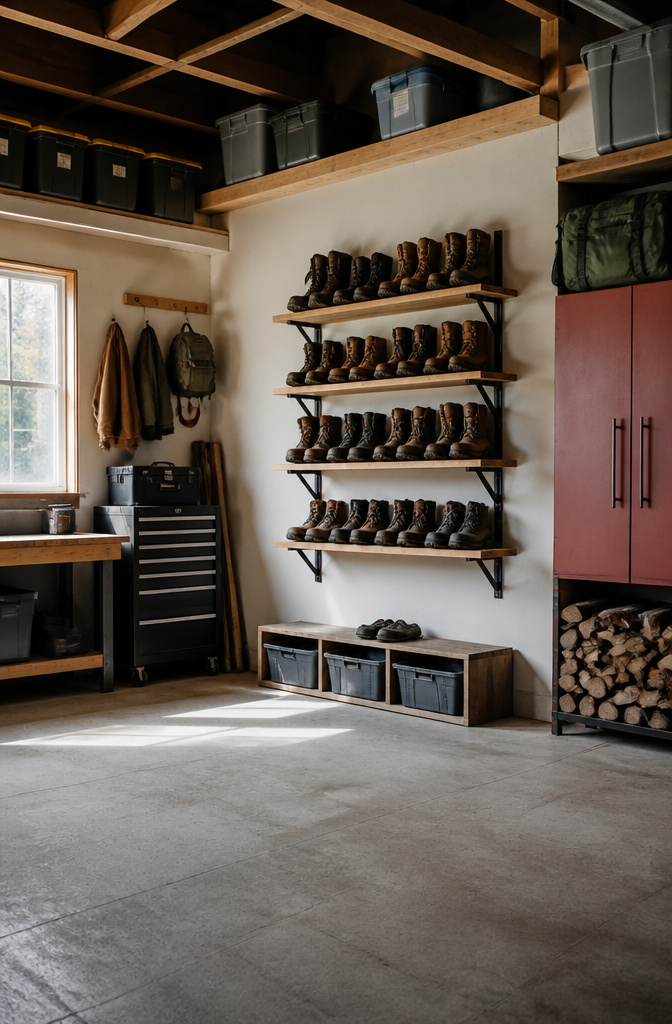
Wall-mounted shelves turn the empty vertical space in a garage or mudroom into storage for the pairs you are not wearing this month. Heavy-duty brackets and shelving rated for garage use hold the weight of steel-toe boots, snow boots, and the backup set of hikers without sagging over time. A shelf mounted above the daily traffic zone keeps off-season pairs visible but out of the way so they do not clutter the floor or the bench you use every morning. If the collection runs larger, a few bins on those same shelves corral laces and spare insoles before they scatter.
Built-In Open Storage
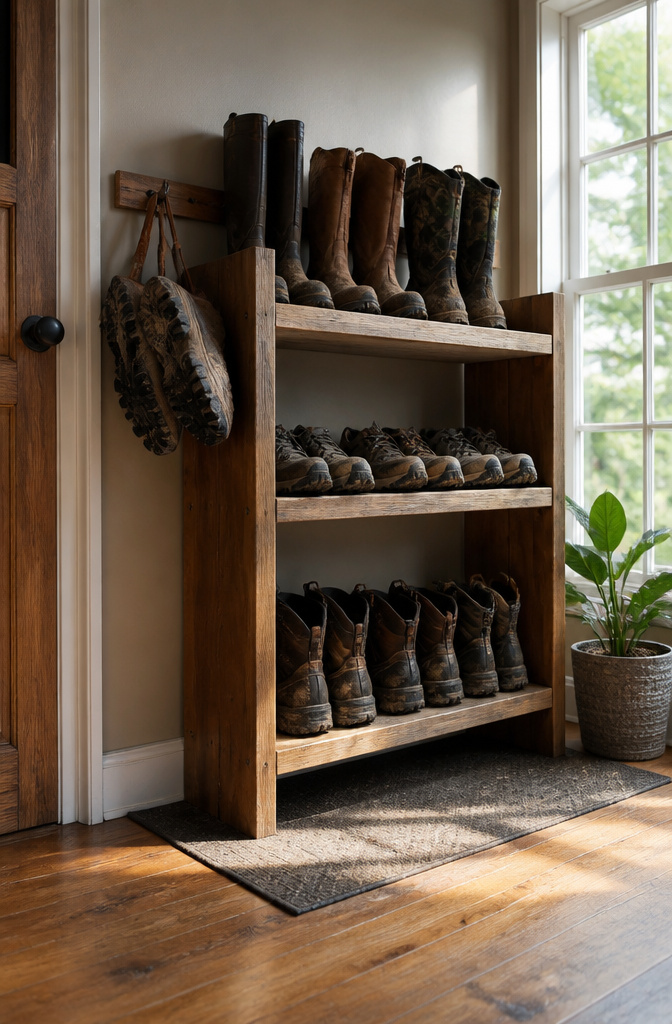
Open racks with a shelf up top, a mid-level rack, and a hook strip along the side let you sort boots by height without losing anything in a cabinet. My husband’s 8-inch loggers stand on the lowest rack where the toe box clears the frame, while his ankle-height hikers fit on the middle shelf that sits a foot above. The hooks handle muddy slip-ons by their pull tabs, keeping wet soles off the wood entirely.
Sole width is where mixed storage actually wins. A fixed cubby meant for sneakers wedges a lug-soled work boot at an angle; an open rack with variable spacing does not. The shelf above holds gloves and insoles, so the whole morning load stays in one station. Nothing hides behind a door, which means you see the crack in a sole before it becomes a problem.
Built-In Cabinets and Custom Lockers
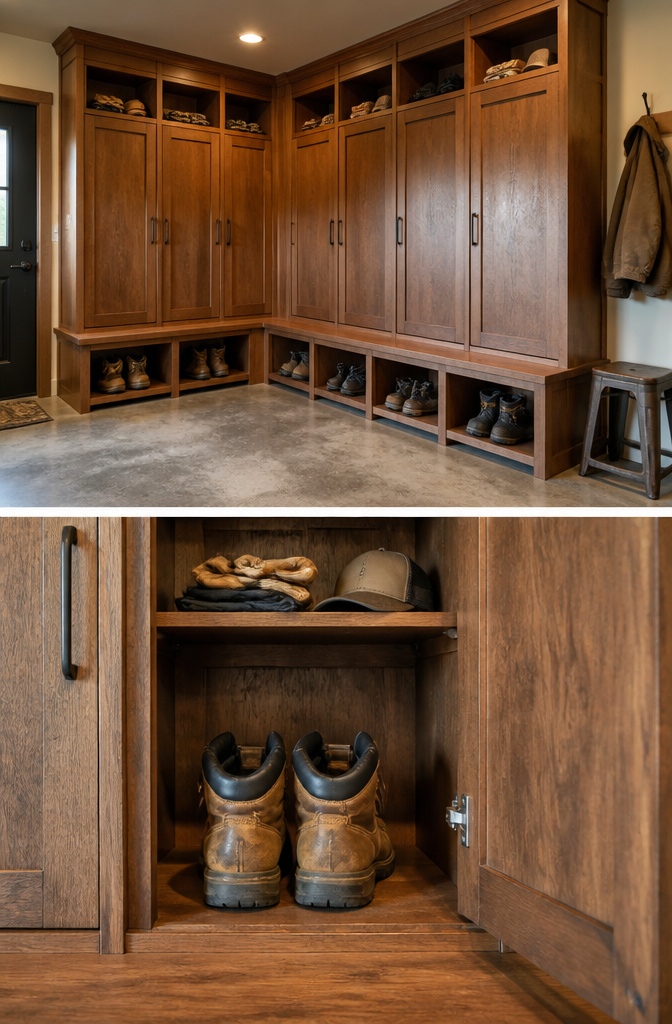
Built-in cabinets and custom lockers keep work boots out of sight while giving each person in the house a dedicated zone for footwear, bags, and coats. That separation matters more than it sounds like it would. Mud-caked boots sitting in an open rack by the door become the thing someone trips over at 6 a.m., and the argument starts before coffee. A door that closes on the problem is cheaper than resentment.
The catch is that concealed storage traps air. Without a gap at the toe or a vent cut into the cabinet back, the smell of yesterday’s work boots concentrates until opening the door becomes its own event. A half-inch gap at the base of each locker cubby, or a louvered panel, lets air cycle through without leaving the boots on display. Built-in benches with hidden storage beneath the seat solve the same visibility problem, though they ventilate less easily unless the design accounts for it.
Custom work runs higher than off-the-shelf shelving, but the household peace dividend is hard to price.
Bench With Shoe Storage
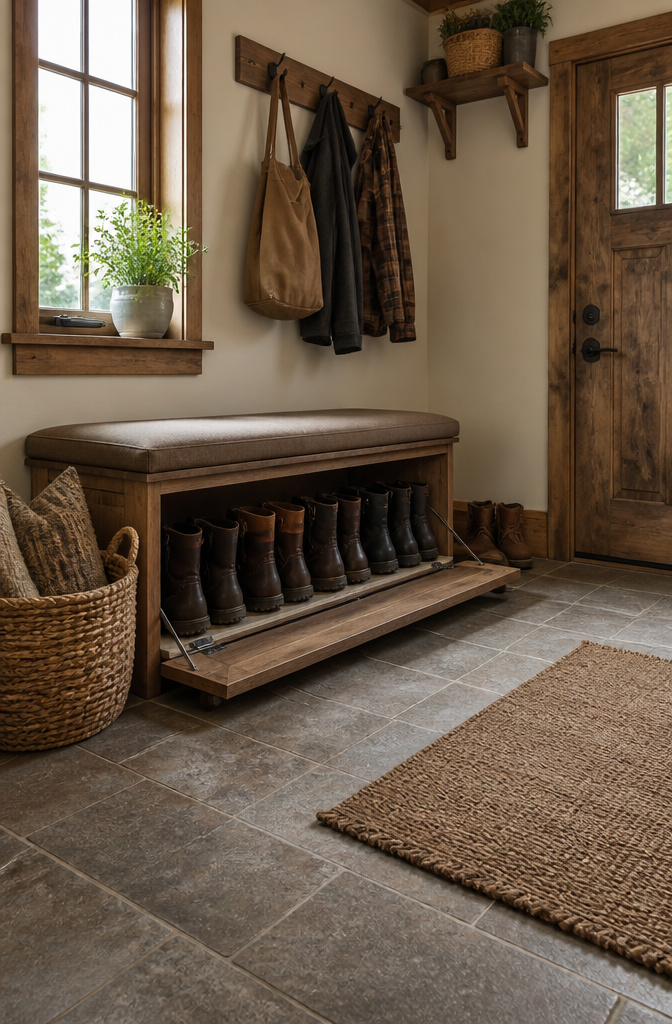
A bench with hidden storage underneath handles two jobs at once: somewhere to sit while you wrestle a pair of size 12 steel toes on or off, and a place for those boots to disappear afterward. The seating part is straightforward, but the storage depth is what makes or breaks it for work boots. You need at least 18 inches of interior depth front to back to fit most men’s work boots without angling them like puzzle pieces; anything less and you’re back to leaving them in the open. Height matters too, though less than you’d think. Most steel toes stand about 8 to 10 inches tall, so a compartment with 12 inches of vertical clearance gives you room to drop them in without lining them up like museum pieces. The built-in approach works whether this lands in a garage corner or an entryway mudroom. Entryways get the softer treatment, a cushion on top and maybe a pair of pillows against the wall. Garages stay harder, plywood or sealed MDF that won’t warp from tracked-in snow and road salt. Either way, the lid needs a slow-close hinge if you value your fingers, and ventilation gaps along the back keep the compartment from turning into a locker-room smell trap.
Boot Tray
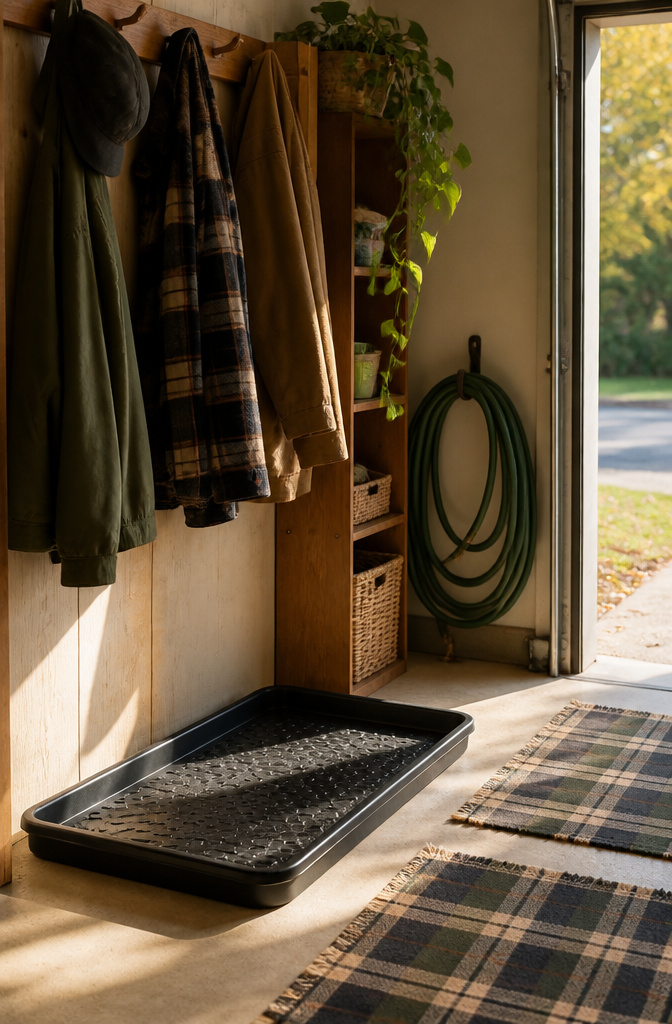
A boot tray is the simplest move for wet work boots that are still shedding mud or snow. The rubber or plastic base catches what drips and flakes off instead of letting it settle into garage concrete or entry flooring, and the whole thing lifts and hoses off when the mess builds up. Look for a material that holds up against road salt and motor oil, because both will chew through lightweight trays within a season or two. Recycled rubber and heavy-duty polypropylene are the usual survivors here.
The real advantage is portability. The tray sits by the door during a rainy week, then slides under a bench or into a cabinet once the boots dry out and move to their regular spot. One tray tends to collect a pile if multiple pairs land there, so doubling up is worth the space if more than one person is coming through with wet feet.
Storage Baskets and Plastic Crates
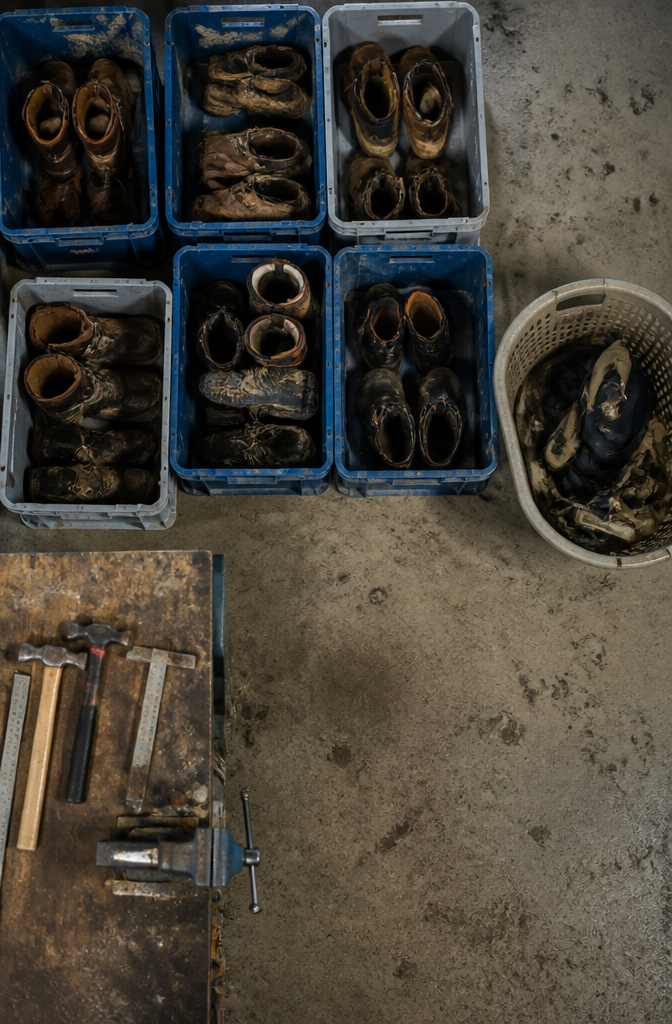
A large plastic crate keeps several pairs of heavy-duty work boots in one spot without the sides bowing out the way fabric does. Stackability matters more than you would expect: two matching crates locked together double your floor space upward, and the lip on a standard milk crate lets you label the front with masking tape so you know whose mud-lugged pair is whose.
Open-weave baskets look better in the laundry room, but they fail fast with work boots. Mud flakes through the gaps, and the wicker or wire catches on deep tread in a way that makes you kick the thing across the garage just to get free. Solid plastic sides contain the mess; hose the crate out in summer and it dries in ten minutes.
Moveability is the quiet advantage. A full crate of boots weighs enough that you will not shift it daily, but when the garage floods or you need that corner for the snowblower, sliding it six feet beats lifting individual pairs off a shelf. For renters especially, nothing in this system is fixed to the wall or the floor, so it travels to the next house intact.
Rolling Clothing and Shoe Rack
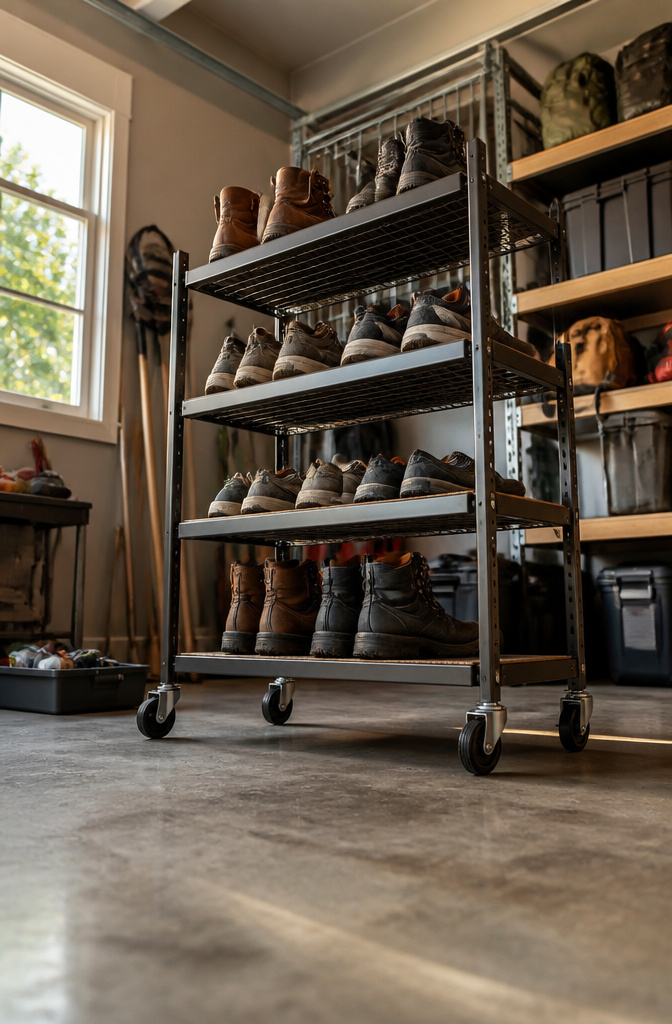
A rolling clothing and shoe rack earns its floor space by going where the mess is. Wheels matter more than people expect on rough garage concrete, and cheap casters seize up with grit or flatten under a loaded rack. Look for polyurethane wheels rated for at least 75 pounds each if you want the cart to actually roll when it is full of steel-toe boots and muddy gear.
Height adjustment handles the real problem most storage skips: a tall work boot needs 12 to 16 inches of vertical clearance to stand upright without creasing the shaft, while a low hiker sits fine on a 6-inch shelf and wastes the rest. Adjustable shelves let you split the difference in one unit, setting the top tier for boots and dropping a lower one for sneakers or slip-ons. Tall boots collapse and crack at the ankle when they lean, so keeping them upright is not just neatness, it is whether the boot lasts two seasons or five.
The tradeoff is footprint. A mobile rack needs aisle space to roll, and a crowded garage turns mobility into a liability if you are bumping past car doors. Fixed storage wins in tight bays; the rolling rack works when your layout changes seasonally or you are parking two vehicles in different spots.
Boot Rack and Adjustable Storage
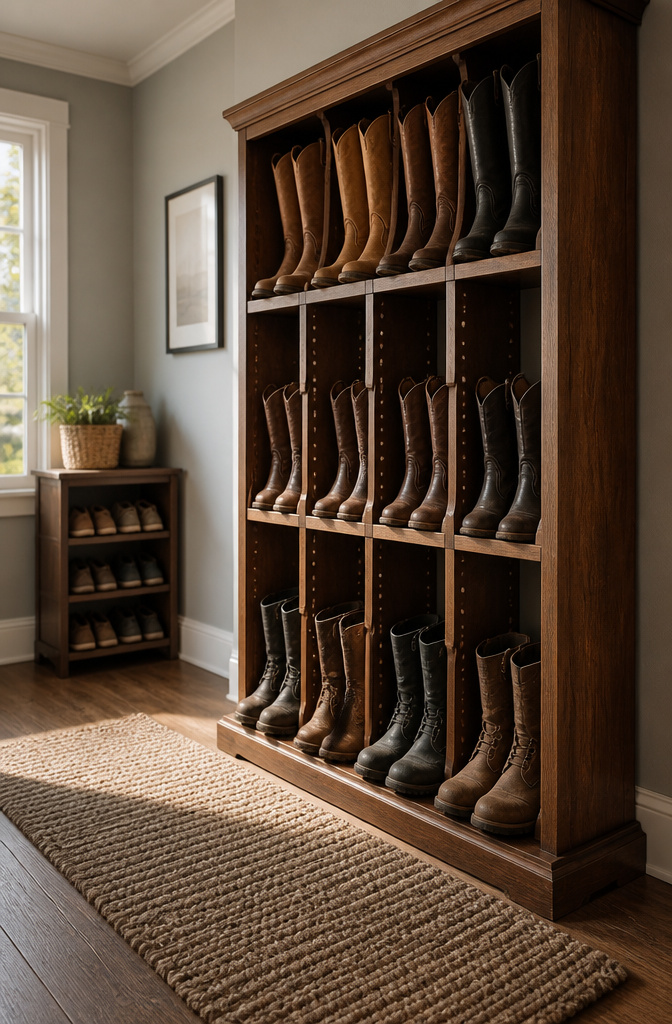
Unlined leather boots that spend months slumped against a wall will crease at the ankle and soften across the toe box until they lose the structure that keeps water out. A boot rack solves this by holding the shaft upright, but only if the slots match what you own.
Logger boots with their eight-inch laced shafts and raised heels need a rack with taller, wider openings than the average shoe organizer offers. Chelsea work boots sit lower and pull on without laces, so they slip easily into standard boot slots and stay centered without fuss. The adjustable designs, like the Shoe Shrine system, let you widen or narrow each compartment to fit whichever style you are storing that season, which matters if you rotate between both.
What sells these racks is the shape retention, not the floor space. A boot held vertical dries faster after muddy use and keeps the sole from curling where it meets the upper. That difference shows up in year three, when the stored pair still seals around the ankle and the pair that lived in a pile needs an insole just to feel right.
The tradeoff is height: anything that holds a logger boot upright runs twenty-four inches or more, so it competes with shelving instead of sliding underneath. For a garage with standard nine-foot ceilings, that is usually fine. For a front entryway with a coat closet, wall-mounted may eat less usable room than floor-standing.
Sports Shoes With Sports Equipment
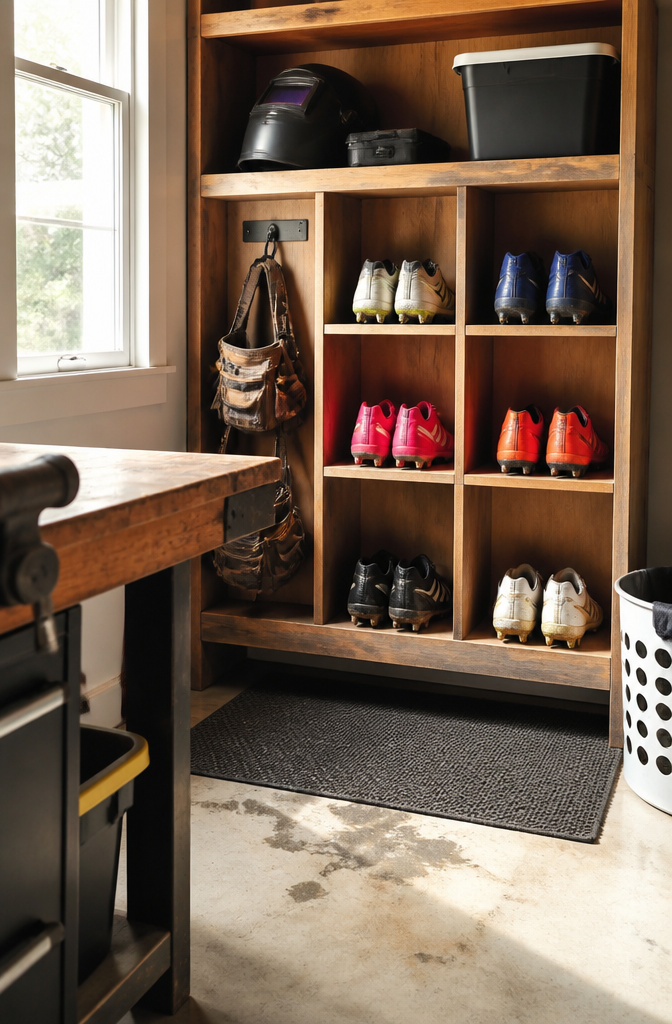
The boots you grab at 5:45 a.m. should already be standing next to what they work with. A shelf, hook, or cubby assigned to each trade or task means the welding helmet lands beside the steel-toes that go under it, and the framing hammer rests above the work boots that climb ladders. Pairing boots with their gear saves the ten minutes spent hunting through a pile where last season’s running shoes and the leaf blower share space.
Morning friction comes from mismatched storage, not lack of space. Tools and sports equipment end up layered on the same shelf as daily shoes when nothing has a fixed address, and that visual noise costs more than square footage. The real payoff is functional: a cubby for the soccer cleats and shin guards, a hook for the work boots and tool belt, each pairing ready before coffee finishes brewing.
Sort by Season
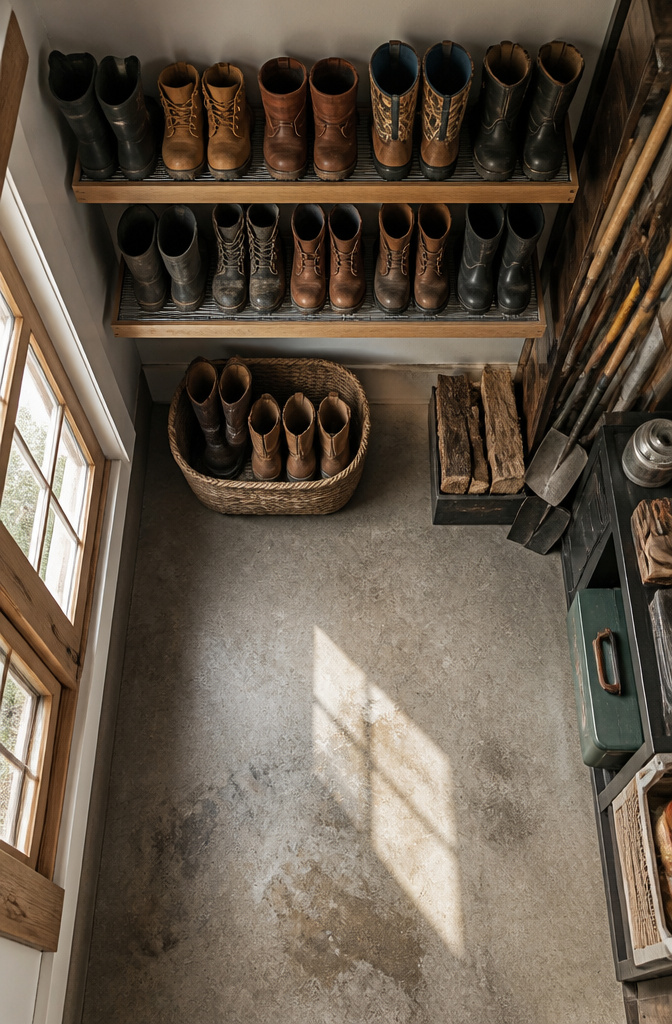
Work boots that sit idle half the year still need a plan. In my garage, the pairs I reach for in wet months end up buried under the dry-weather set unless I separate them deliberately. Heavy-duty garage shelves mounted on the wall handle the off-season load, particularly boots that only see mud or snow for a few months. The vertical space keeps them visible but out of the way.
Even mild climates split into wet and dry stretches, and that distinction matters more than summer versus winter. A storage basket or plastic crate holds the active-season pairs in one moveable spot, so retrieving them stays simple when the weather turns. The one label that prevents confusion: mark each container or shelf edge with the season you actually use them, not the calendar name. "Wet" and "dry" cut closer to real life than "spring" or "fall," especially where winters barely dip below fifty degrees. Label by function, not by month, and you will not second-guess where a pair belongs.
Unused Spaces Around the Garage
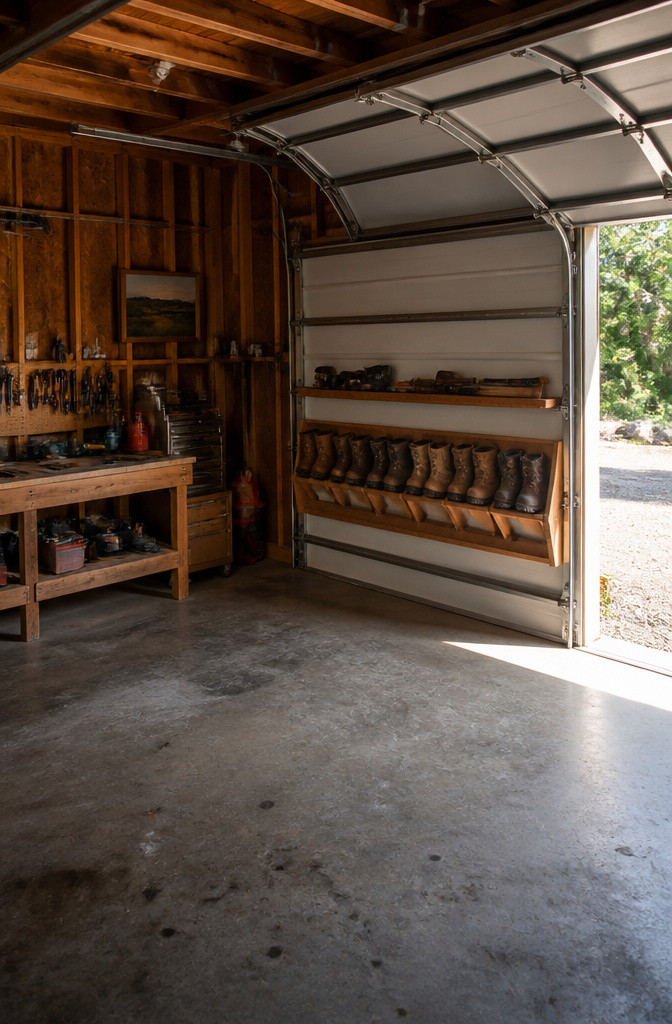
The space behind a garage door is usually dead air, but a shallow rack mounted there keeps boots off the floor without blocking the door swing. The gap needed is small: most residential doors leave three to four inches of clearance at the top track, enough for a slanted shelf that lets pairs sit heel-to-toe. Between wall studs, the recess is typically three and a half inches deep, which sounds useless until you add a simple frame and door to turn it into a shallow cabinet. I’ve seen this done with scrap plywood and basic hinges; the boots sit sideways, toes pointing out, and the whole thing disappears when you close the frame.
Above the water heater or furnace is trickier. Heat rises, and the clearance manufacturers specify isn’t negotiable. Leave at least six inches above any gas appliance, and never enclose the vent pipe or pressure relief valve. That usually means the boot shelf stops short of the centerline, built as two side wings rather than one continuous surface. Metal beats wood in that zone; it won’t degrade from the occasional temperature spike, and if a boot drips melted snow, cleanup is simpler.
Custom Storage That Fits the Work
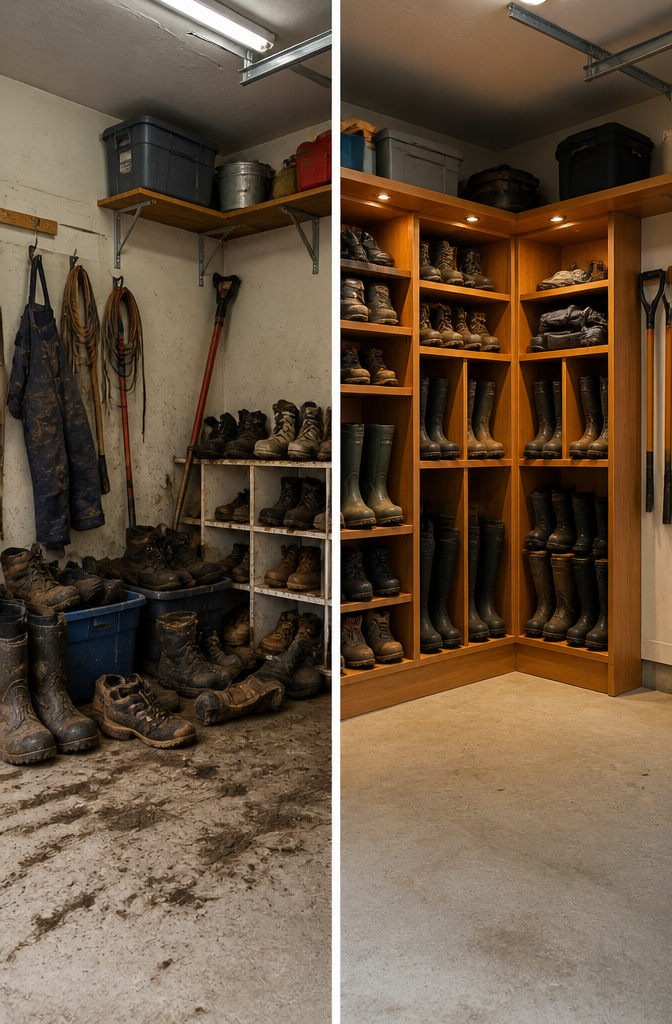
A welder’s boots crusted with slag need something different from a plumber’s mud-caked waders, yet most store-bought racks treat every trade the same. That mismatch is why custom storage that actually fits the work outperforms anything shipped flat-pack. Without dedicated spots sized to the boot, tools and sports gear end up piled on the same shelves, and the whole garage turns into visual noise that slows your morning exit.
I noticed this most when I measured my own pairs against the slots in a standard organizer. The tall muck boots hung over; the low-cut hikers swam in space meant for eight-inchers. A weekend build from 1-by pine and pegboard scraps let me set shelf heights to the inch and add a slatted tray below for caked-on debris to fall through. It cost less than the retail unit I almost bought, and it left no dead space above the short pairs. The key is building to the actual collection, not to an average that fits nobody’s.
What Organization Actually Saves
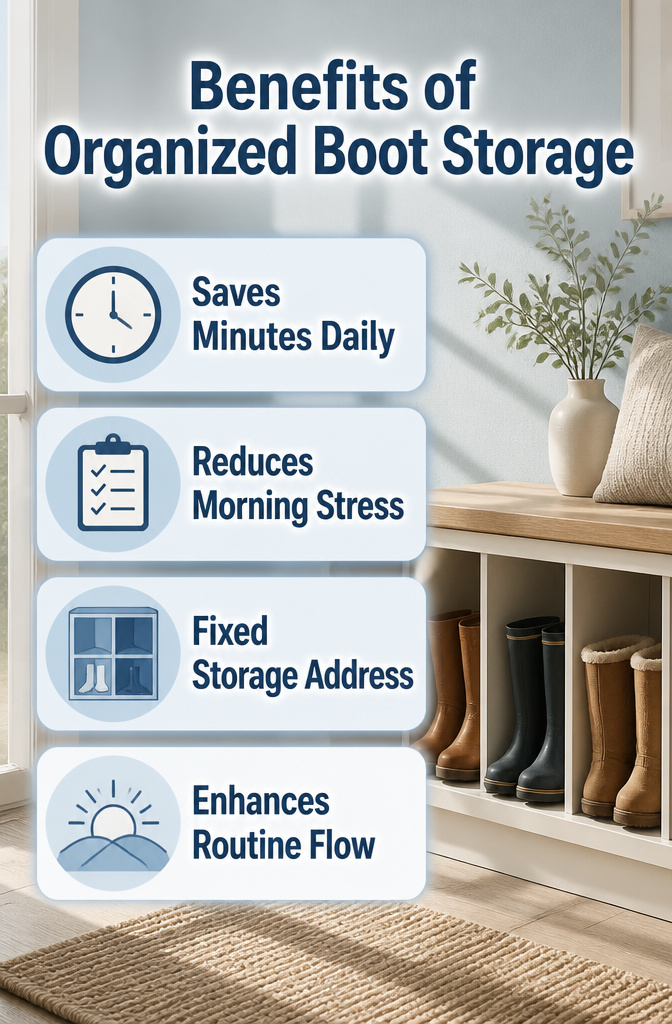
A planned storage system buys back the minutes that disappear between the alarm and the door. In a household where more than one person leaves early, the right pair has to surface without thought, because half-awake searching burns time you do not have. I have watched my own mornings collapse over a single missing boot, the left one kicked under a bench, the right still damp from yesterday and parked somewhere else entirely. That friction repeats daily. It costs more than the clock shows; it starts the day with resistance, with blame, with the stress of hunting while coffee goes cold. A system that assigns each pair a fixed address removes the decision. The boots live there, they dry there, they wait there. You grab and go. The payoff is not dramatic. It is simply a morning that starts quieter, with one less thing to solve before you have even solved coffee.
Moving Storage Where It Is Needed
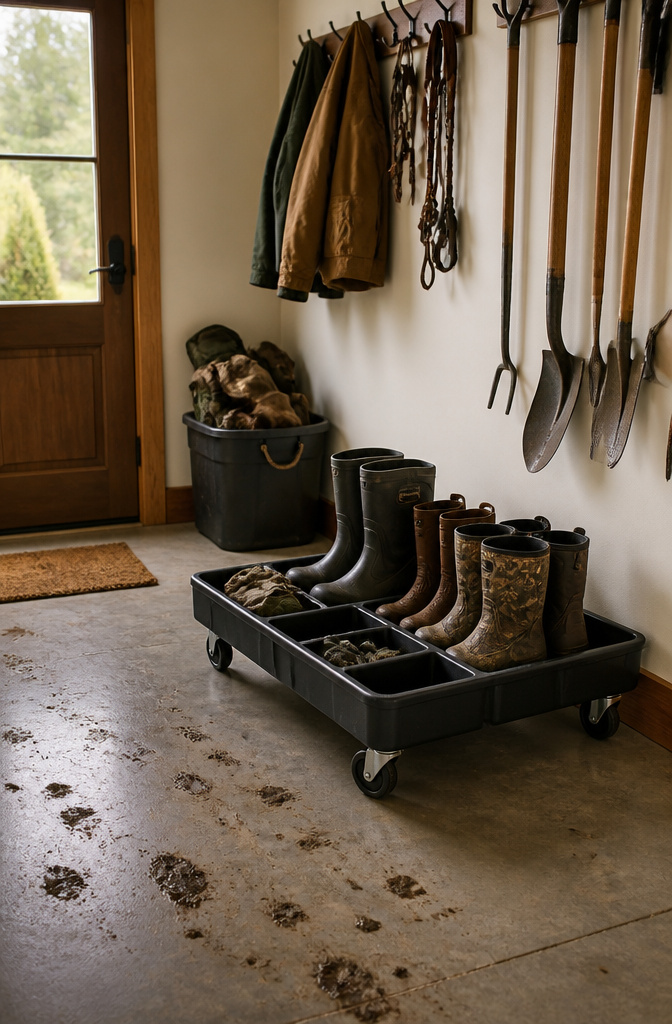
Fixed boot racks and built-in cubbies look tidy until the job site changes or the rain shifts from the back door to the garage. A tray that slides under a workbench, a rack on locking casters, or a shallow cart between the truck and the entry puts wet boots where they actually land. Mobility beats capacity when you are tracking mud across three doors in a season. I have watched friends build elaborate wall systems that held every pair they owned, then watched them stack boots on the floor anyway because the garage felt too far from the kitchen. Wheels solve that last ten feet. A rolling tray tucks under a shelf when empty and rolls to the hose for rinsing. Cost stays low because the frame is simple tubing or a plastic utility cart, nothing finished. The trade is stability: a loaded cart needs a brake, and a shallow tray tips if you stack too high. Keep the height under two feet and the footprint narrow enough to clear a car door.
Frequently Asked Questions
What are some good ideas for storing work boots?
Wall-mounted shelves, built-in open racks, cabinets with ventilation gaps, benches with hidden compartments, boot trays, plastic crates, rolling racks, and upright boot racks all work well. The right choice depends on whether you need the boots visible for daily use or tucked away, and whether they are often wet and muddy when they come off.