
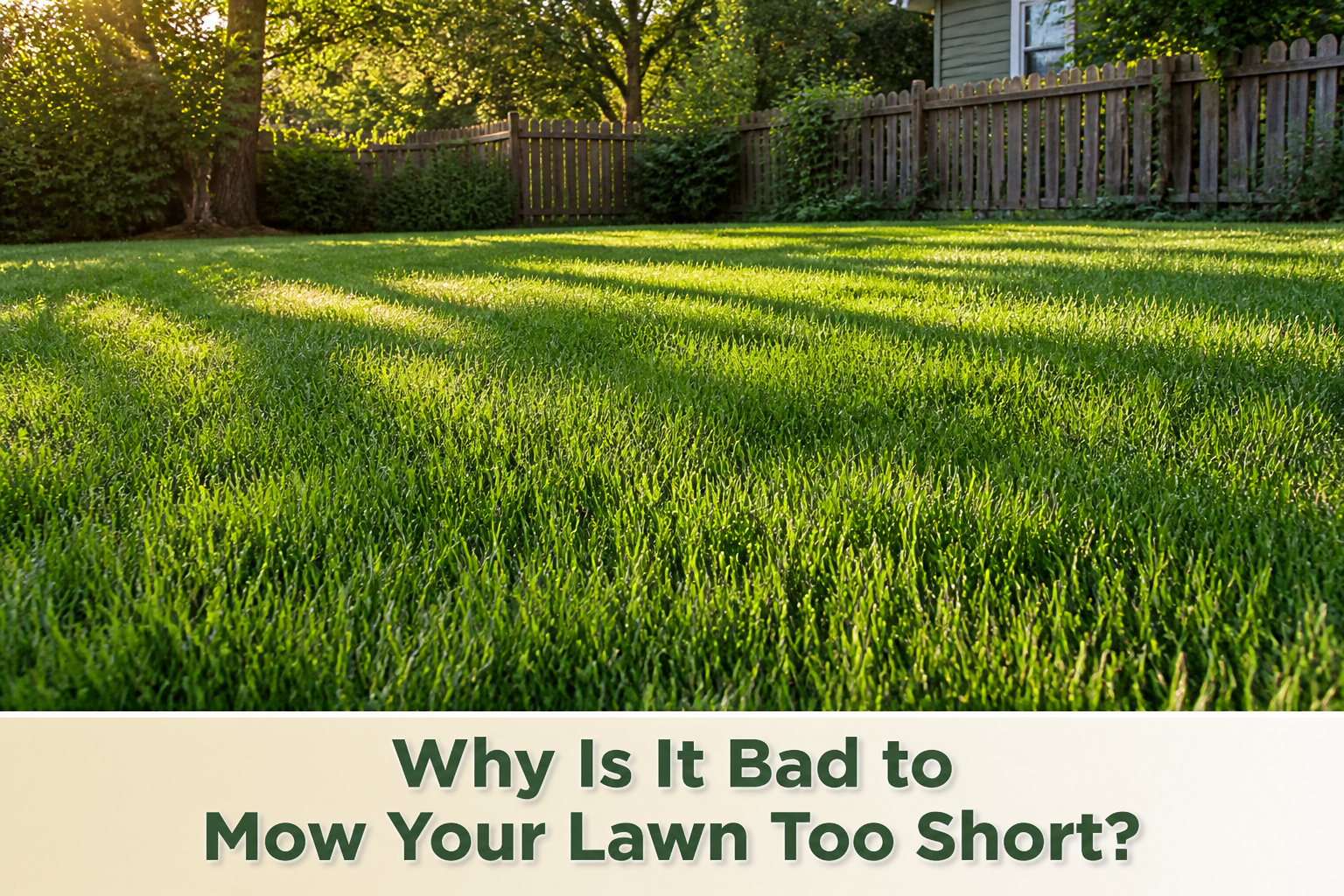
Mowing your lawn below two and a half to three inches for cool-season grass, or three to four inches for warm-season types, starves the plant by removing the leaf surface it needs for photosynthesis. The roots weaken, and weeds, disease, and brown patches follow. In Pennsylvania’s July heat, that extra half inch of blade height can mean the difference between green turf and a stressed, thinning lawn.
Why Mowing Too Short Damages Your Lawn

Mowing too short stresses grass and opens the door to weeds, disease, and dead patches. The reason comes down to how grass feeds itself.
Grass blades are leaves, and leaves run on photosynthesis. Cut off too much of the blade and you strip away the surface area that catches sunlight and converts it to energy for the roots. Without that fuel, the root system weakens, and a weak lawn is an open invitation for problems to move in.
The height matters because different grasses need different leaf area to keep that cycle running. Cool-season grasses should stay at 2½ to 3 inches, while warm-season types do better at 3 to 4 inches. Drop below those ranges and you remove more than the one-third of the blade that sources say is the safe limit per mowing. The grass simply cannot recover enough leaf surface before the next cut to keep the roots fed.
Declining Lawn Health

The first thing you notice is the color shift. Grass that used to hold a steady green starts looking tired, almost gray, even though you’re still watering on schedule and the fertilizer bag isn’t empty. I used to blame the heat alone for that washed-out look until I understood what the blade length was actually doing.
Grass feeds itself through its leaves. The blades catch sunlight and run photosynthesis, which sends energy down to the root crown and keeps the whole plant thick and upright. Cut those blades too short and you’ve cut the plant’s food supply. The crown weakens first, then the roots stop pushing deep, and by late July the turf is thin enough that you can see soil between the stems. In Pennsylvania’s July and August heat waves, that decline accelerates because short grass can’t shade its own root zone. The soil bakes, moisture evaporates faster than the roots can drink, and the plant burns through its stored reserves trying to recover. Letting the grass grow even half an inch taller gives the blades enough surface to keep photosynthesis running and the crown cool enough to survive the stretch.
Increased Weed Growth

Bare soil and thin turf are open invitations for weeds, and crabgrass, dandelions, and clover are usually the first to RSVP. These invaders tolerate low cutting heights far better than turfgrass does, which is why a scalped lawn often turns into a weed farm while the grass itself struggles to recover.
The mechanics are straightforward: a thick lawn at the proper height blocks sunlight from reaching the soil, and weed seeds need that light to sprout. Most turfgrasses should be kept around three to three-and-a-half inches during summer weather, which means letting the lawn grow a bit over four inches between mowings and removing only the top third of the blade. At that height, the grass shades its own soil and crowds out invaders before they get a foothold.
Weeds also exploit the recovery period. When grass is busy growing back from a scalping, it lacks the strength to fend off competition, and the weeds grow more aggressively for it. The clover that took over the sparse patches in one account I read started as a few innocent-looking clusters and proliferated fast. Letting the lawn stay tall enough to stay dense is the simplest weed prevention there is, and it costs nothing but a slightly higher mower deck.
Insect Infestations

Chinch bugs and sod webworms find stressed grass almost irresistible. The shorter you cut, the less leaf blade survives to feed the roots through photosynthesis, and that energy debt matters when insects start feeding. A lawn with some height keeps enough reserves to replace chewed tissue. A scalped lawn barely recovers before the next wave of damage hits.
Thin turf from repeated short mowing exposes something else too: the soil surface itself. Soil-dwelling pests, including white grubs, gain direct access without the buffer of dense thatch and root mass. The grass that should be crowding them out is too sparse to compete. Brown spots and spongy areas underfoot often trace back to this combination, weak plants plus exposed ground, not just the bugs alone.
The fix is straightforward. Letting the grass grow taller strengthens the root system depth along with it, and denser turf leaves insects fewer entry points. A sharp mower blade helps too, clean cuts heal faster than ragged tears that attract more problems. Most homeowners I read about who fight recurring summer infestations around King of Prussia and similar areas started with the mower set too low. Raising it turned out to be cheaper than treating the lawn twice a season.
Brown Patches
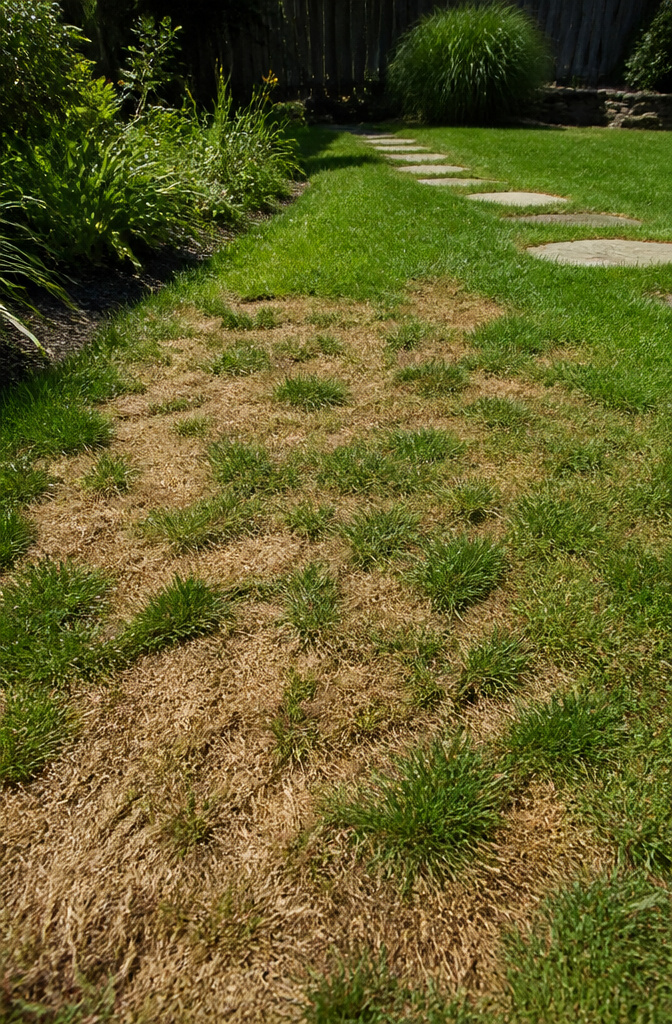
The brown patches that spread after a close cut are not ordinary summer stress. Scalping exposes the grass crown, the growing point where blades meet root, to direct sun and rapid moisture loss. That tissue does not regenerate quickly; the plant has to rebuild from stored energy instead of active growth.
Sun-exposed slopes and uneven spots show damage first, since blades ride lower over bumps and dips. I used to chase these patches with fertilizer, thinking I was helping recovery along. The opposite happens: pushing growth on a shocked crown deepens the stress and can burn surrounding grass that was still healthy.
Even with steady watering and a raised blade, recovery drags. Depending on how short the cut went, the lawn needs about three weeks to fill back in. During that stretch the ground sits thin and open, which is exactly when opportunistic weeds and wind-blown seed move in. The real cost of one low mow is a month of playing defense against problems that would never have found a foothold in taller turf.
Fungal Diseases

Short blades leave the soil surface exposed and still, which cuts air circulation at the ground line. That stagnant, humid pocket is exactly where brown patch and dollar spot spores settle in. Stressed grass has less energy to wall them off, so infection spreads fast once it lands.
I learned this the hard way one July after taking my Kentucky bluegrass down to two inches, thinking I could buy myself an extra week between cuts. Within ten days I had straw-colored rings widening across the front yard. The grass had been too weakened by the shock of the cut to fight back. Taller blades shade the soil, move air, and give the plant enough leaf surface to keep its defenses up. Clemson specialists note that mowing below the recommended height for your grass type directly increases how severe those disease outbreaks get. The fix is mechanical, not chemical: raise the deck, let the lawn recover its height, and the fungus loses the conditions it needs.
Increased Water Needs

Grass cut too short loses its built-in shade. The blades that should block midday sun and slow wind across the soil get sheared away, and what is left behind bakes faster and dries out between waterings. I noticed this pattern after a July heat wave turned my own lawn crispy despite running the sprinkler on schedule; the soil in the shorter patches was dusty an inch down while a neighbor’s slightly longer turf still held moisture at the same depth.
Letting grass grow to at least three inches between mowings gives the blades enough height to cast shadow over the crown and root zone. That shade drops evaporation, keeps the roots cooler, and means the same watering schedule keeps the lawn green rather than stressed. Cut short, the grass also has less leaf surface to absorb light and feed the root system, so the roots stay shallow and less able to reach whatever moisture remains. The result is a cycle of more frequent watering, higher bills, and grass that still wilts sooner than it should. In southeastern Pennsylvania summers, that stress shows up fast; the difference of half an inch in cutting height can mean green turf or brown.
Uneven Grass Growth

A lawn that was level in May can look like a topographic map by July if the mower deck sits low enough. The high spots get shaved to the soil while the dips keep a little green, and the uneven cut grows into uneven growth because the scalped crowns recover at different speeds.
Each grass blade carries its growing point, the crown, near the base. Cut above it and the plant keeps building tissue; cut through it and that shoot has to start over from a side tiller or seed. On a bumpy lawn the blade passes lower in some spots than others, so some crowns survive intact and others are destroyed. The survivors green up fast while the damaged patches lag behind, and the result is the patchy, two-tone look that reads as neglect even when you mow every Saturday.
Mixed lawns make this worse. Most yards in the rental market are a grab bag of whatever survived the last tenant, and different species carry their crowns at slightly different heights. A cut that nicks the Kentucky bluegrass crowns may sail safely over the tall fescue, or the reverse. The species with intact crowns outcompete the rest for light and soil nutrients, and the lawn ends up with odd thickets and bare corridors that do not match the slope at all.
Raising the deck and mowing often enough to follow the one-third rule, never removing more than a third of the blade length at once, keeps the crown above the blade and the growth rate even across the yard.
Optimal Height by Grass Type
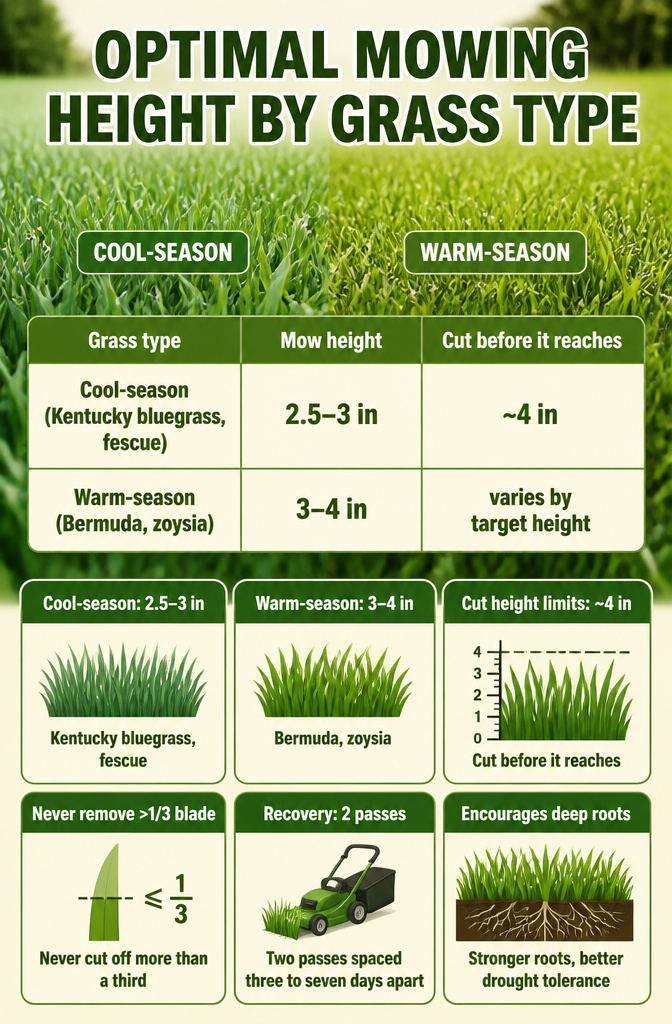
Cool-season grasses like Kentucky bluegrass and fescue stay healthiest at 2.5 to 3 inches, while warm-season types such as Bermuda and zoysia do better at 3 to 4 inches. The one-third rule matters for both: never cut off more than a third of the blade in a single mowing. Letting cool-season turf grow to about 4 inches before cutting keeps you inside that limit, and the same math applies if warm-season grass has been left uncut; you may need two passes spaced three to seven days apart to bring it back down without shock.
| Grass type | Mow height | Cut before it reaches |
|---|---|---|
| Cool-season (Kentucky bluegrass, fescue) | 2.5–3 in | ~4 in |
| Warm-season (Bermuda, zoysia) | 3–4 in | varies by target height |
Taller blades shade the soil, build deeper roots, and handle dry spells better than a buzz cut ever will.
How Often to Mow

Weekly mowing works during spring and early summer when grass is pushing growth hardest, but the calendar is a rough guide at best. What actually matters is the one-third rule: cut off no more than the top third of the blade at any pass. For turfgrass kept around three to three-and-a-half inches in summer, that means waiting until it hits a bit over four inches before the mower comes out. Let it grow to that height, then take it down to the recommended length. Skip a week during heat or drought stress, because the grass is barely growing anyway and the extra blade length helps roots hold moisture. If a lawn has been neglected and grown shaggy, two cuts spaced three to seven days apart bring it back to size without scalping. In fall, when growth slows, the schedule loosens naturally.
Recovery After Cutting Too Short

- Stop cutting and let the grass grow. Most lawns need about three weeks to recover fully after being cut too short, so the first move is to leave the mower in the garage and give the blades time to rebuild their height.
- Raise the mower deck before the next cut. Once the grass has grown back, set the height so you never remove more than a third of the blade length in a single pass. That one adjustment keeps the cycle from repeating.
- Water deeply rather than lightly. A longer drink encourages roots to push downward, which helps the lawn recover from the shock of being scalped.
- Mow during cooler hours, morning or evening, especially in summer heat. The grass is already stressed; cutting in midday sun adds unnecessary pressure.
- Sharpen the blades before you mow again. Dull blades tear rather than slice, and torn tips lose moisture faster, which is the last thing a recovering lawn needs.
Mowing Wet Grass and Other Mistakes

Wet grass clumps under the deck because the blades slip on waterlogged tissue instead of slicing cleanly. The mower tears the grass open, and those ragged wounds dry into brown tips that look like disease but are really just mechanical damage. Meanwhile the tires press soft soil into ruts that linger for weeks.
A dull blade does the same tearing even on dry grass, which is why mid-season sharpening matters more than most people think. The grass bleeds less, heals faster, and holds its color through July when the neighbor’s lawn starts to bronze.
Mowing at midday compounds every other error. The turf is already stressed from heat and light, so a low cut hits it at its most vulnerable hour. The sources disagree slightly on exact height, with some recommending three to three-and-a-half inches in summer and others suggesting two to two-and-a-half. Either way, the rule of thumb holds: wait until the lawn is roughly a third taller than your target, then cut only the top third. That timing matters more than chasing a precise number.
Frequently Asked Questions
How often should I mow my lawn?
Once a week works during spring and early summer, but the real guide is the one-third rule: let the grass grow about a third taller than your target height, then cut off only the top third. For grass kept at three to three-and-a-half inches, that means mowing when it hits a bit over four inches. Skip a week during heat or drought stress so the extra blade length can protect the roots.
Can mowing too short really kill the grass?
Yes, repeated scalping damages the crown, the growing point where blades meet roots, and can cause long-term harm. A single close cut weakens the plant; do it regularly and the grass loses its ability to recover, especially under summer heat or insect pressure. Recovery takes about three weeks even after one bad cut.
What is the optimal height for grass?
Cool-season grasses like Kentucky bluegrass and fescue stay healthiest at 2.5 to 3 inches, while warm-season types such as Bermuda and zoysia do better at 3 to 4 inches. Let cool-season turf grow to about 4 inches before cutting so you stay within the one-third rule, and adjust timing for warm-season grass based on your target height.