I’ve learned that floating your sofa just 18 inches from the wall creates instant breathing room, and normal-size furniture actually makes spaces feel larger than tiny pieces ever could. I always pick an 8×10 rug minimum; those sad little 5×7 ones just chop your floor into pieces. High curtains stretched 6 inches above the window frame fake extra height effectively. I match my wall color to the natural light (cool tones for dim rooms, warm for sunny ones) and hang one big mirror opposite the biggest window to bounce daylight around. Layered lighting beats one harsh overhead bulb every time, and bare counters provide functional space. Much more can be applied to achieve these results.
Float Your Furniture to Open Up Movement Paths
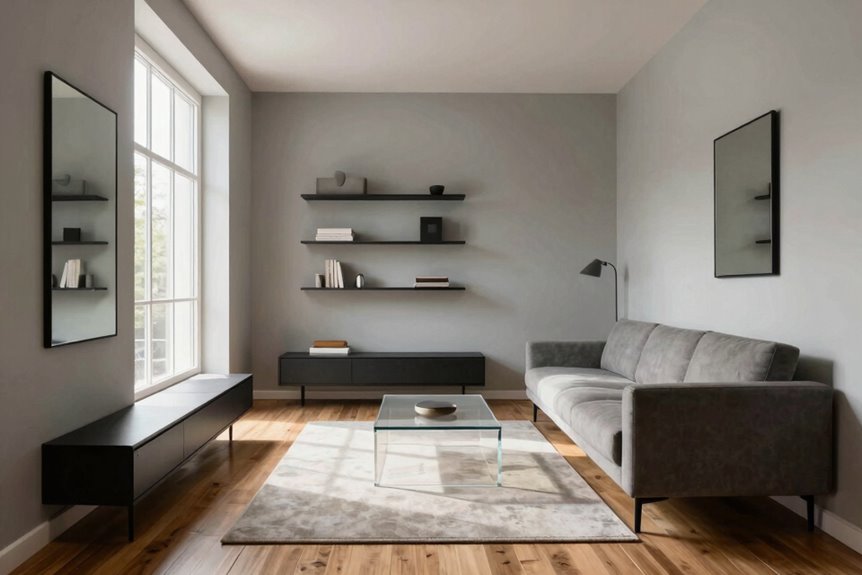
Push your sofa away from the wall. It may feel counterintuitive, but this furniture placement trick actually works. When you float furniture, you create movement paths that make your room feel bigger, not smaller.
Leave at least 18 to 24 inches behind your seating so people can walk without squeezing. That open floor space lets your eye travel further, expanding the room visually. Slide a slim console behind your sofa; it anchors the piece and improves room flow without bulk.
A rug underneath ties the zone together so nothing looks lost mid-room. You’ll stop bumping knees on coffee tables. Your space will feel more open, and your room will function better for how you actually live in it.
Pick Normal-Size Furniture (Skip the Small Stuff)
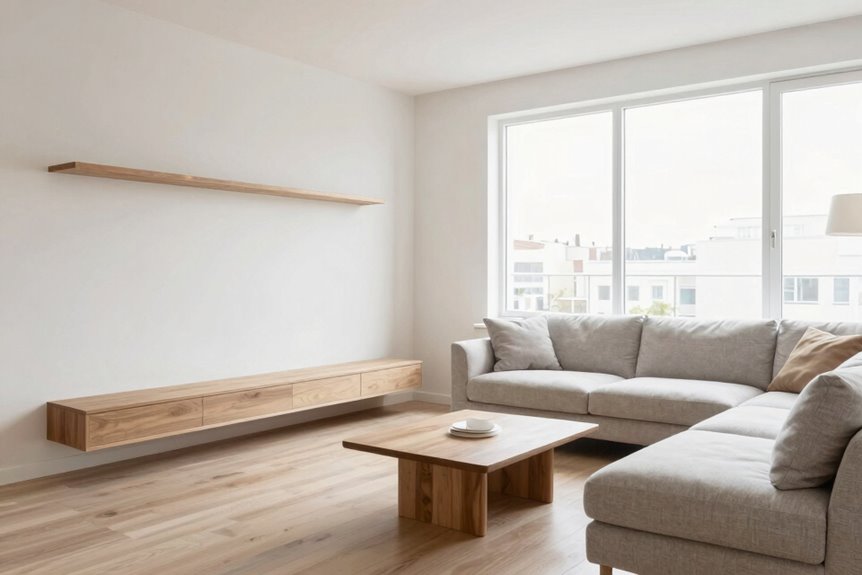
Why do we always think smaller furniture is the answer? Cramming tiny pieces into small spaces actually backfires by creating visual clutter and making everything feel cramped. Normal-size furniture anchors your room and gives it purpose.
Here’s what I’ve discovered about furniture scale:
| Tiny Choice | Smarter Swap |
|---|---|
| 60-inch loveseat | 84-inch sofa |
| Mini coffee table | Full-size ottoman |
| Narrow side chair | Proper armchair |
| Small bookshelf | Tall, slim cabinet |
| Multiple tiny tables | One substantial piece |
When I chose fewer, larger items for my own place, the room felt bigger immediately. The space breathed. Balance matters; your sofa shouldn’t swallow the wall, but it shouldn’t look like dollhouse furniture either. Your small spaces deserve pieces that feel like home, not a waiting room.
Get a Bigger Rug: Yes, Really
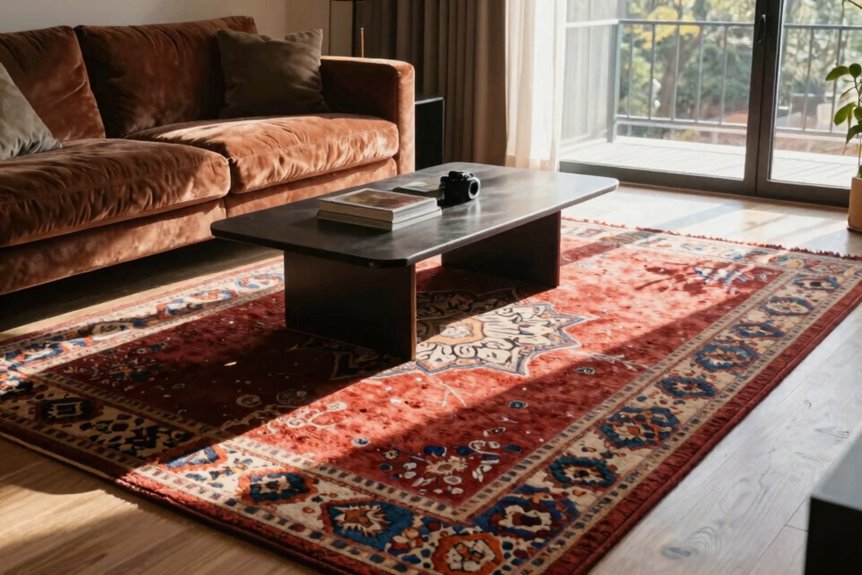
The same logic applies when you look down. Rug scale changes everything about perceived room size. I used to buy 5×7 rugs and watch them float uselessly in my living room like tiny islands.
Rug scale changes everything about perceived room size. Those tiny 5×7 rugs float uselessly like islands. Go bigger, anchor your furniture, and let the room breathe.
Now I go bigger. An oversized rug, at least 8×10 or sometimes 9×12, lets me anchor seating properly. My sofa front legs sit on it. My chairs too. Suddenly the room breathes.
Leave visible floor margins about 18 inches around edges. This keeps that wall-to-wall carpet feel away and supports open flow between spaces.
One rug wins. Multiple small rugs chop your room into disconnected zones. When your furniture connects visually instead of drifting apart, the space functions better.
Hang Curtains High to Stretch the Ceiling
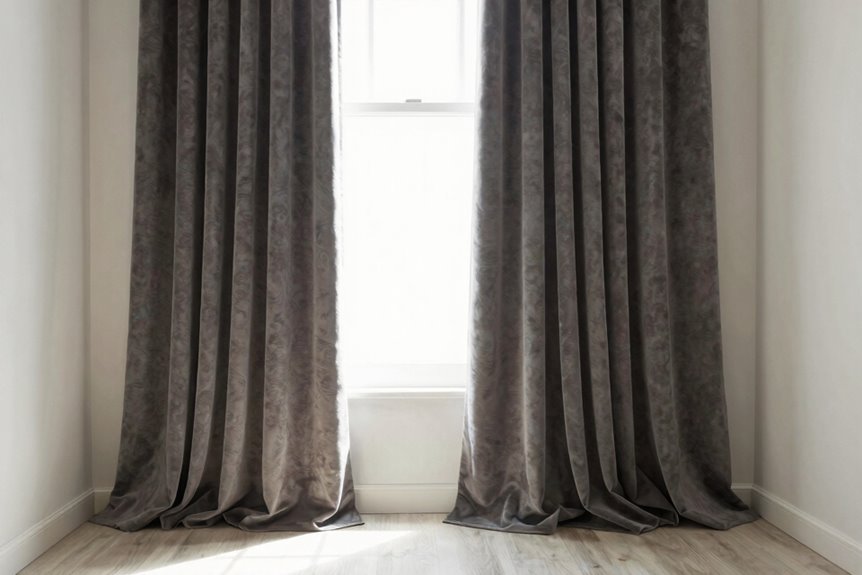
Some rooms feel grander the moment you walk in because of a simple window treatment trick: hanging curtains high transforms your ceiling height without touching a single wall. Mount your rod 6 to 12 inches above the window frame, about two-thirds up toward the crown molding. Then extend it 5 to 10 inches past each side. When you draw them back, you’ve revealed extra glass and amplified your visual height dramatically. Choose panels that kiss the floor; anything shorter chops your walls in half. Lightweight linens that filter natural light softly rather than blocking it entirely work best. Your cramped space suddenly feels more expansive. Your friends will notice something’s different, though they won’t pinpoint why.
Choose Wall Colors That Match Your Natural Light

How do you pick a paint color that actually makes your room feel bigger? The key is matching your wall color to your natural light.
| Natural Light | Wall Color Strategy | Example |
|---|---|---|
| Low light | Go darker with cool undertones | Emily’s farmhouse blue/teal |
| Medium light | Warm mid-tones, cohesive palettes | Soft sage with green undertones |
| Bright light | Light colors with high luminance | Pale cream, not sterile white |
| Too much light | Adjust intensity, avoid dead taupe | Muted coral with pink undertones |
| All levels | Test swatches at different times | Your perfect match changes hourly |
Painting everything white is a common mistake. Your room’s natural light determines how colors actually appear. Pay attention to undertones, build cohesive palettes, and your space will reflect your intentions.
Go Big on One Statement Art Piece
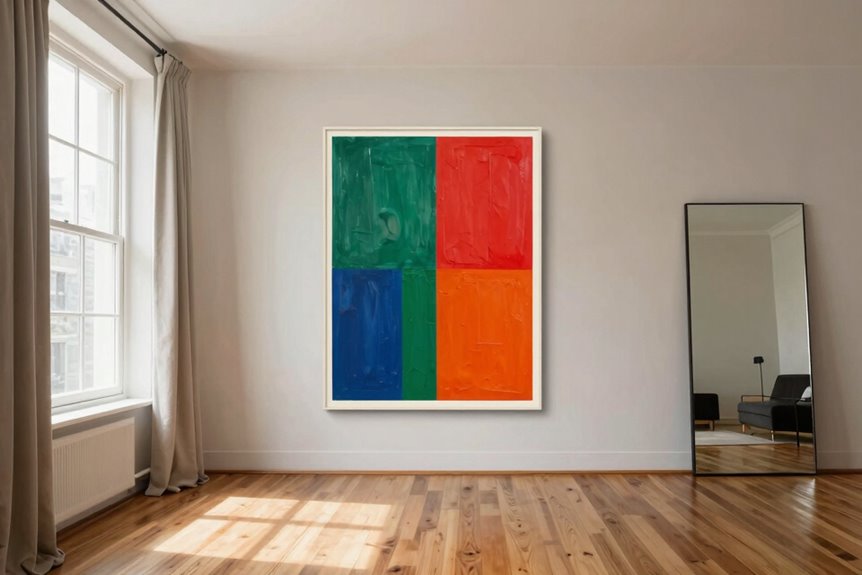
I used to believe filling every wall with tiny frames was the way to go until my living room started feeling like a cluttered bulletin board. One oversized art piece works better as a visual anchor.
Pick a single focal artwork, roughly 36 by 48 inches or larger. Hang it where you’ll spot it from your couch, your chair, everywhere. Let negative space breathe around it; think 12 to 18 inches of bare wall on each side. This prevents visual fragmentation and builds room cohesion instantly.
Choose bold colors or strong contrasts. My deep blue abstract pulls the eye outward, making my 10-by-12-foot space feel expansive rather than cramped. Pair it with minimal other decor. One commanding piece beats a dozen tiny prints.
Hang Mirrors Where They’ll Double Your Space
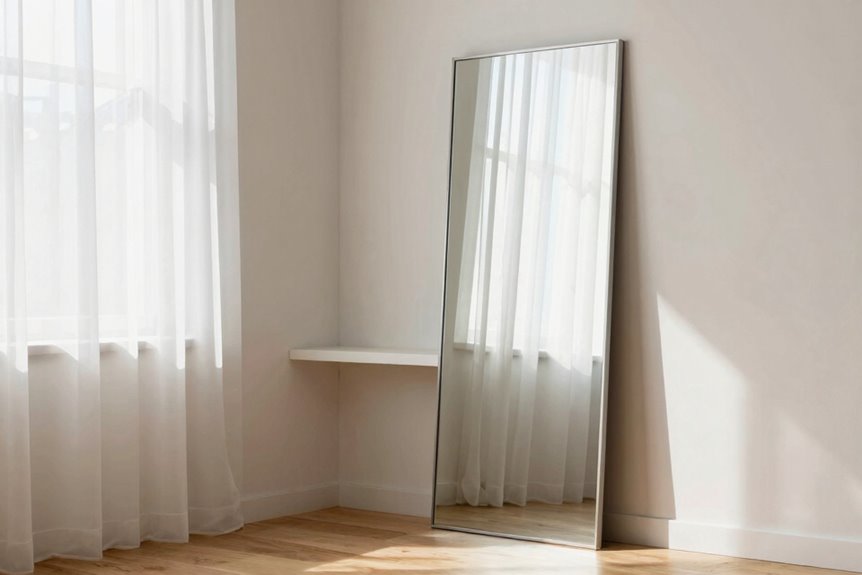
I swear by strategic mirror placement when I’m trying to make a tiny room feel less like a shoebox. I’ll hang a 36-by-48-inch mirror directly across from my biggest window, and suddenly sunlight ricochets everywhere like a hyperactive golden retriever. It’s the cheapest light reflection maximization trick I know. No electrician required, just a stud finder and the nerve to drill holes in your wall.
Strategic Mirror Placement
When I’m staring down a cramped living room that feels more like a closet than a home, mirrors become my hidden asset. No renovation is required.
Smart mirror placement transforms tight spots into inviting retreats where you’ll actually want to linger. I hang one large mirror, or cluster a few smaller ones, directly opposite any window. The reflected light pours across walls, creating visual expansion that tricks your eye into seeing double the perceived space.
Above my sofa, I position a 24-by-36-inch mirror at eye level. It captures seating areas and pushes room depth backward, like a secret hallway you never knew existed. In narrow entryways, a six-foot standing mirror tucked behind a console table visually extends the floor plan. Wall-to-wall installation doubles width entirely.
Avoid clutter that breaks sight lines. Clean surfaces keep the effect working. Your space belongs to you again.
Light Reflection Maximization
Because light behaves like a bouncy ball in a small room, I chase it with mirrors. Placing a large mirror directly across from your biggest window doubles the natural light streaming in. One window effectively functions as two through smart light reflection.
When arranging a tight living room, prop a 36-by-48-inch frameless mirror against the wall instead of hanging it. This trick adds visual depth without hammering holes. For serious space perception shifts, try a floor-to-ceiling panel on one narrow wall. Your room won’t actually grow, but your eyes will perceive it as larger. Avoid placing mirrors where reflected light will create glare during daytime hours.
Declutter Surfaces for Visual Breathing Room
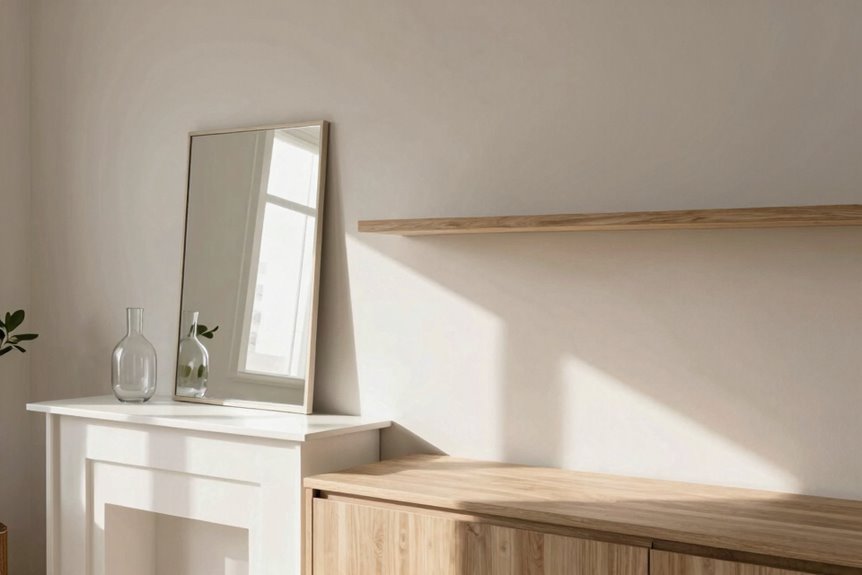
I clear my countertops every single morning, and it instantly makes my tiny kitchen feel twice as spacious. That thirty-second ritual works better than any “miracle” gadget I’ve tried. For the stuff I actually need within reach, I stash it in a $25 Yamazaki slim storage rack that slides into a sliver of wall space just 3.5 inches deep. Items stay out of sight but remain grab-and-go easy. If you want that airy, open feeling in your space, hidden storage serves a practical purpose. It gives your clutter a proper home so your eyes and your feet get visual relief.
Clear Countertops Daily
Where does your eye land first when you walk into a cramped kitchen? The cluttered countertops are likely the first thing you notice. Clearing my countertops every single evening has transformed how my tiny galley kitchen feels. This daily decluttering ritual creates instant visual breathing room. When I remove the toaster, mail pile, and that mysterious jar of half-used spices, I reveal precious negative space. Your eye needs somewhere to rest, and bare surfaces provide that. My 8-foot-wide kitchen suddenly feels closer to 10 feet; that’s perceived width in action. Minimal counters bounce light around better too, making everything brighter. I stash appliances in cabinets below. Five minutes of clearing beats hours of weekend cleaning, and you’ll wake up to a space that welcomes you in.
Hidden Storage Solutions
Three clever hiding spots in my living room now swallow everything that used to clutter my surfaces. My storage ottoman holds blankets and remotes. My entryway bench hides shoes. My console table with hidden compartments tucks away mail and keys. This hidden storage keeps my sightlines open, and suddenly my 10-by-12-foot space feels larger.
I learned decluttering isn’t just tossing stuff; it’s giving everything a designated home out of view. I mounted slim shelves seven feet high, drawing eyes upward and off my floor. Multi-purpose pieces became my secret weapon, with one item doing two jobs so I own less.
Every Sunday, I scan surfaces and ask whether items belong there. Removing nonessentials takes five minutes but transforms how spacious my home feels. You can do this too.
Layer Lighting to Expand Every Corner
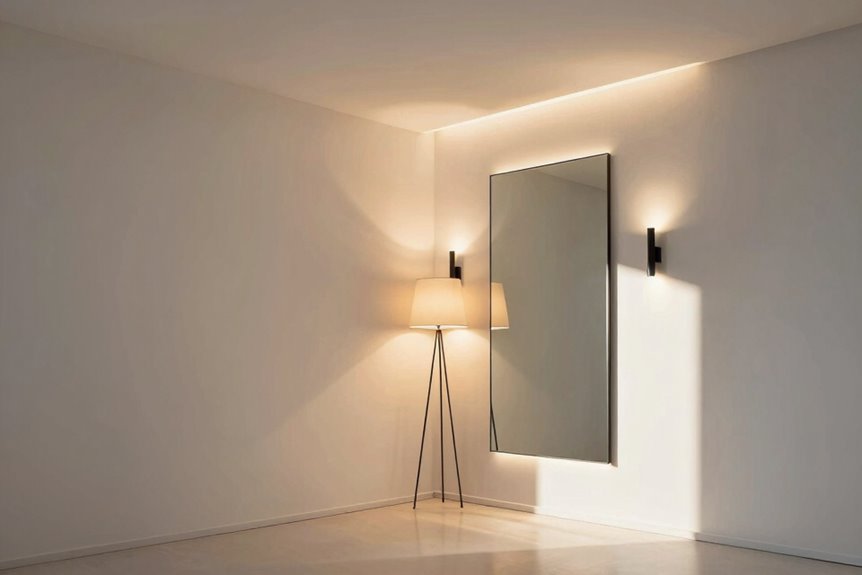
If you have ever walked into a room where one harsh ceiling light does all the work, you know exactly why your cozy corner still feels like a cave. I learned this the hard way in my 400-square-foot apartment, where shadows swallowed half the room.
Layered lighting changed everything. I started with a floor lamp tucked beside my reading chair, added a 12-inch table lamp on my side table, and mounted battery-powered sconces near my bookshelf. My small space suddenly had volume.
A smart lighting plan doesn’t blast brightness; it spreads it. I place warm 2700K bulbs in darker nooks, softening those heavy corners that used to feel like walls closing in. The even glow visually expands every boundary, making my ceiling feel higher and my walls farther apart.
Keep Furniture, Rugs, and Walls in Balance
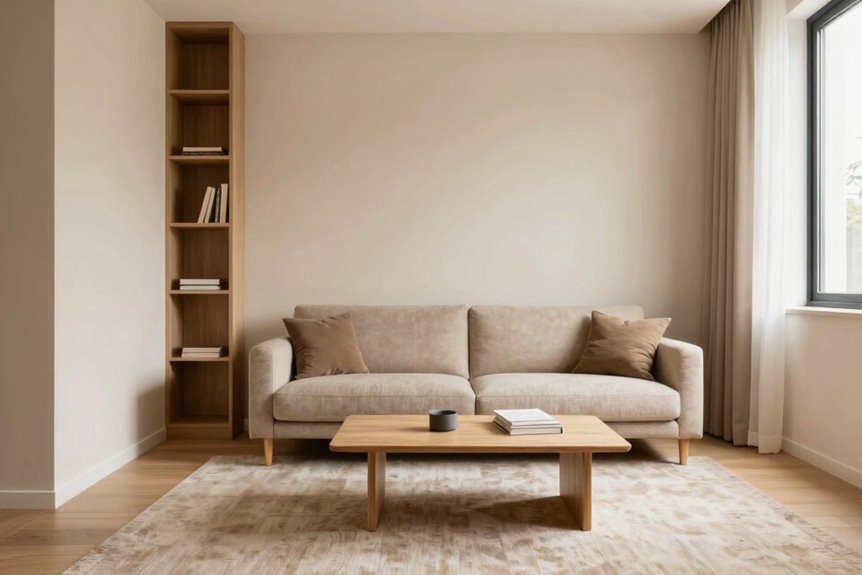
I’ve learned that balancing furniture scale and rug placement can create the illusion of more space. Instead of cramming in tiny pieces that look lost, I’ll pick one substantial sofa, around 84 inches, and let it anchor the room as a confident statement. Then I’ll layer a generously sized rug underneath, leaving visible floor around the edges, so the whole arrangement feels grounded rather than swallowed whole.
Furniture Scale Balance
Scale is your hidden advantage in a small room. I used to cram in tiny pieces, thinking they’d help. That approach doesn’t work. Now I pick normal-sized items that actually anchor seating, like an 84-inch sofa instead of a puny 72-inch one. It feels intentional, not apologetic.
A larger rug works magic too. A bigger rug defines your conversation zone and keeps those awkward tight margins away. It gives your furniture room to breathe.
I always aim for a proportionate layout where furniture, rug, and walls work together visually. I pull the sofa slightly off the wall. This creates visual balance and depth.
Top it with one big mirror or bold art piece. One anchor, not clutter. Your small space suddenly feels like yours and like home.
Rug Wall Harmony
A rug that’s too small is like a postage stamp on an envelope; it just looks lost. Scale matters when creating harmony in a tight space.
I always aim for a rug large enough that my sofa and chairs sit mostly on it, with breathing room around the edges. This trick extends my floor visually and makes the whole room feel expansive. I balance my furniture’s heft against the rug’s presence, choosing pieces that complement rather than compete with it.
Color ties everything together. When I match my rug’s undertone to my walls, the space reads as one continuous field. I position rugs to carve out zones while keeping paths clear. This cohesion converts cramped spaces into inviting rooms.