I always start by measuring twice.
A 72-inch sofa beats a sprawling sectional when you’re dodging walls just to reach the kitchen.
I float furniture away from corners, use vertical storage like tall open shelving, and bounce daylight around with a chunky mirror opposite windows.
Peel-and-stick wallpaper transforms walls without risking your deposit, while plug-in sconces layer light without drilling.
Snake plants thrive in dim corners, and I build gradually, starting with core pieces that travel well to my next space.
Each choice directly shapes your entire room.
Start With a Layout That Fits Your Apartment
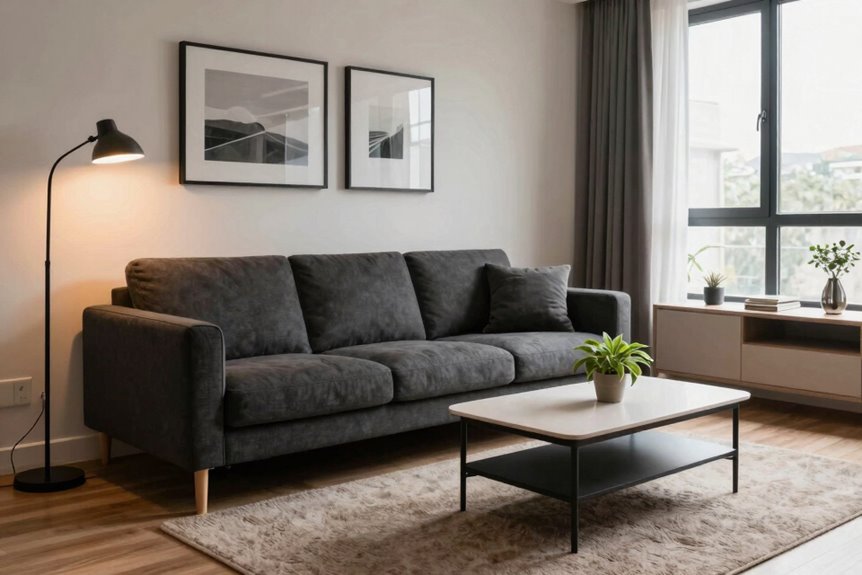
How do you make a tiny living room feel welcoming? Start with a layout that works with your space instead of against it. Float a sectional in the corner, pulled away from the walls, so traffic flows naturally and friends gather close.
Add tall open shelving with clean right-angle geometry; it stores your belongings without consuming visual space. Above the sofa, build a gallery wall with six black-and-white frames, three across the top and three below, anchoring the room with structure. A chunky mirror positioned opposite your window reflects daylight throughout the space. For surfaces, keep a low coffee table and place smaller tables underneath, ready to slide out when needed.
Choose a Sofa That Scales to Your Living Room
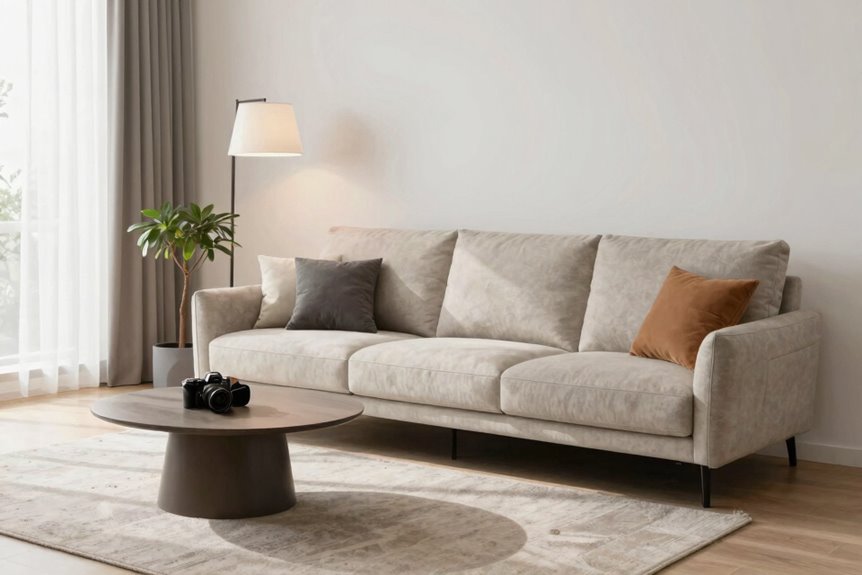
Where do you even begin with a sofa? I start with a tape measure and the reality of my living room walls.
Sofa sizing isn’t about finding the biggest piece you can squeeze through the door. It’s about breathing room. I measure my available length, then subtract 30 inches for walking space on each end. In my tiny first apartment, I learned that a 72-inch apartment sofa beats an 84-inch behemoth that blocks the hallway.
For tight spaces, a compact sofa or corner-hugging sectional works well. I check seat depth too; 22 inches lets me curl up without drowning.
Scale considerations for your space:
| Your Space | Sofa Strategy |
|---|---|
| Under 150 sq ft | Compact sofa, 68-72 inches |
| 150-250 sq ft | Standard sofa, 72-84 inches |
| Corner available | Small sectional, L-shape |
| Narrow room | Low-profile, 36-inch depth |
I visualize my coffee table and rug placement before buying. Nothing feels worse than shin-bumping furniture in your own home.
Source Furniture That Travels to Your Next Apartment
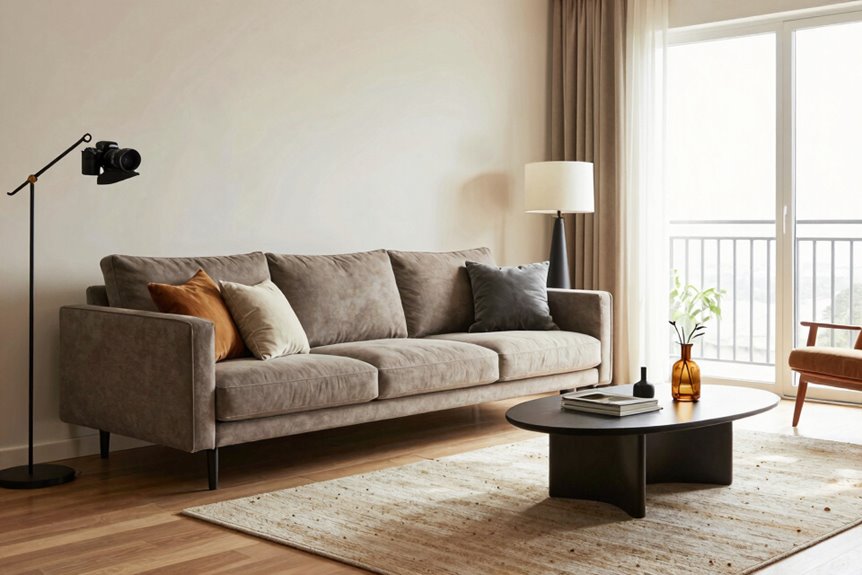
I stopped buying “apartment-only” junk after watching a buddy’s particle-board dresser crumble during his third move in two years. I’ve learned to choose pieces that feel like home now and welcome me later.
I stopped buying apartment-only junk after watching particle-board furniture crumble one move too many.
My coffee table is a solid 36-inch walnut rectangle. Simple, timeless, heavy enough to endure. I’ve dragged it across three states. Neutral colors don’t fight your next space; they blend in.
I’m obsessed with my bar cart on brass casters. It holds bottles today, plants tomorrow, bathroom essentials next year. Wheels mean freedom.
I skip anything requiring permanent mounting. Give me a leaning mirror, a rug that anchors any sofa, nightstands I can lift alone. I want furniture that says “stay awhile” but packs fast when the lease ends.
Decorate Apartment Walls Without Sacrificing Your Deposit
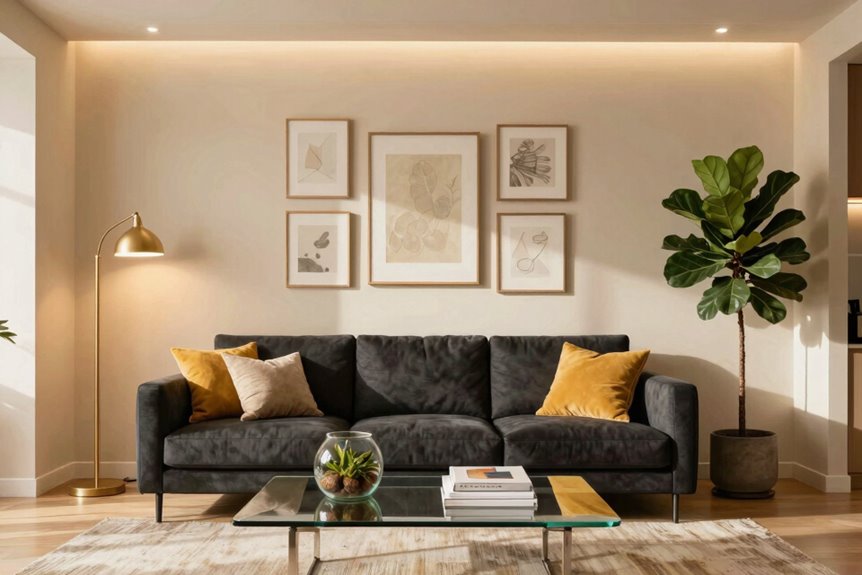
I’ve found that peel-and-stick wallpaper transforms boring beige walls into something that actually feels like mine, and I can peel it right off when I move. For my gallery wall, I skip the hammer and use 3M Command Strips rated for five pounds each. No holes, no stress, no angry landlord. Both tricks let me build a space I love without risking a single dollar of my deposit.
Peel-and-Stick Wallpaper
How do you add real personality to bare rental walls without risking your deposit? I discovered peel-and-stick wallpaper last year, and it’s transformed how I think about temporary spaces.
Removable wallpaper lets me experiment without fear. I covered one accent wall in my living room with a soft terracotta pattern. It’s warm, inviting, and totally reversible. When my lease ends, I’ll simply peel it off. No patching, no painting, no complications.
What matters most:
- Choose varieties with erasable adhesive. Test a corner first.
- Measure twice; most rolls cover 28-30 square feet.
- Smooth bubbles with a plastic scraper, not your fingers.
- Pair with textured decor for layered depth.
This isn’t about hiding flaws. It’s about claiming space that feels genuinely yours, even temporarily.
Gallery Wall Arrangements
Peel-and-stick wallpaper handles the big blank spaces, but what about the stuff you actually want to look at every day?
I build my gallery wall above the sofa to anchor my seating area. I arrange three black-and-white frames on top, three on bottom. Clean symmetry creates a cohesive look. Large matte, skinny black frames tie everything together. Consistent spacing of about two inches between each piece maintains visual harmony.
I skip the hammer and drill. Command strips and adhesive hooks preserve your security deposit. No drywall holes, no landlord drama.
Want something simpler? Two coordinating canvas prints work great instead of six frames.
I add open shelving nearby for plants or candles. My wall displays what matters to me, and I retain my full security deposit. You can create a personalized space without permanent changes to your rental.
Anchor Your Living Room With One Statement Rug
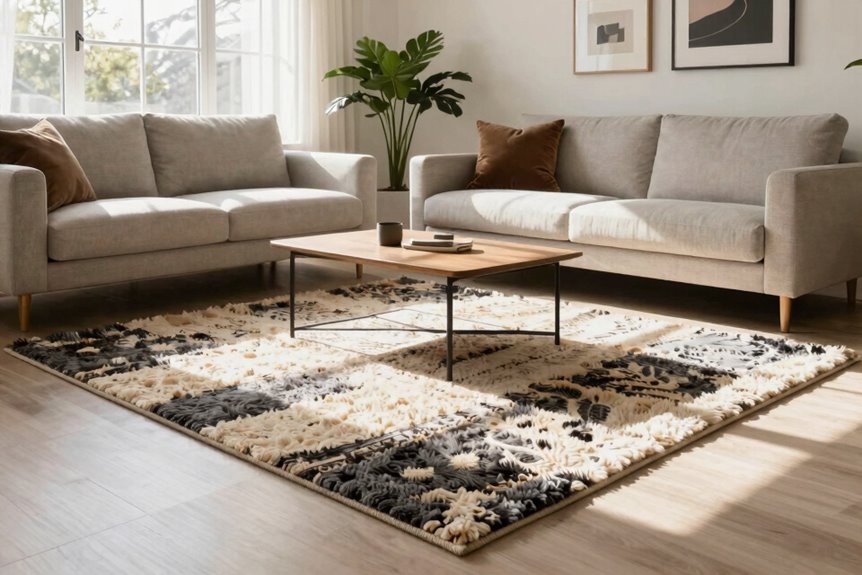
I always start with rug size because nothing throws off a room faster than a postage-stamp rug floating in the middle. You’ll want at least an 8-by-10-foot rug so your sofa’s front legs can rest on it, creating that cozy, pulled-together feel. For colors and patterns, I pick something that complements my couch without screaming for attention. It functions as the quiet element that allows other furnishings to stand out.
Rug Size Selection
Where do you even start with rugs when your living room feels like a puzzle with missing pieces? Bare floors that seem to swallow your seating area whole require a strategic approach.
Finding the right rug size involves these key considerations:
- A large statement rug, usually 8×10 feet or bigger, anchors your seating area and creates one cohesive zone where everyone gathers
- Extend the rug under your sofa’s front legs plus at least two other key pieces so nothing floats awkwardly
- In spacious layouts, a 9×12 foot rug unifies your sofa, coffee table, and chairs into one inviting island
- For tighter spaces, a 5×8 or 6×9 rug works well with furniture sitting on or near the edges
Don’t skip the rug pad. It prevents slipping and adds cushion underfoot.
Color Pattern Impact
Your statement rug sets the whole color palette. I pick tones that play nice with my sofa, then build outward. Neutrals keep things flexible; a bold crimson or navy creates instant drama. Texture matters too. A chunky wool weave or flatwoven jute adds depth you can actually feel underfoot.
I always check that my rug’s pattern talks to my throw pillows, not shouts over them. Since I’m renting, I grab low-pile polypropylene or washable wool blends. Spills happen. Life happens. The right rug pulls every piece of furniture into one cozy, intentional conversation.
Layer Lighting for Morning to Evening Use
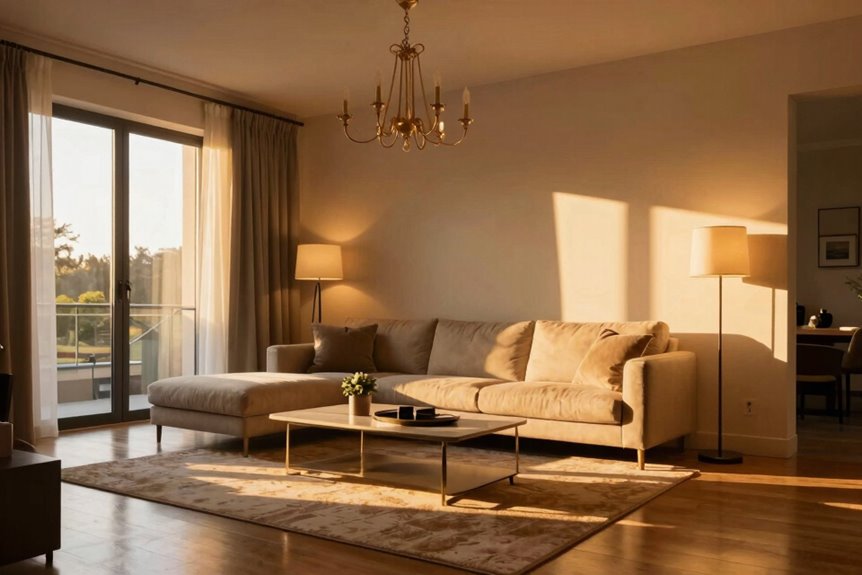
How do you keep a living room feeling right from sunrise to bedtime? Layering your lights prevents you from being stuck with one harsh overhead bulb.
My approach:
- I start with wall lighting. Plug-in sconces about 60 inches high add height without drilling into landlord territory.
- I mix in table and floor lamps for task and accent layers, creating pools of light where we actually sit.
- I position a leaning mirror opposite windows to bounce morning sun deeper into the room.
- I choose dimmable bulbs around 2700K so we can shift from bright morning energy to warm evening coziness.
I angle everything to eliminate weird shadows on faces during conversations. Your space adapts with you throughout the day, matching the mood you need at each hour.
Choose Storage That Looks Like Furniture
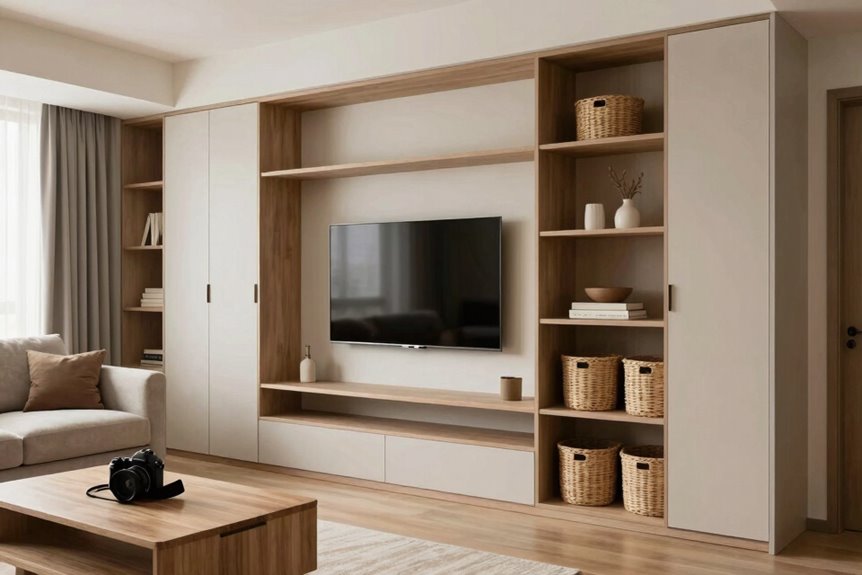
Why let your stuff boss you around. Furniture-like storage keeps my living room feeling like *mine*, not a warehouse.
I swap clunky bins for open shelving or consoles with hidden cabinets. My tall bookshelf, just 12 inches deep, hugs the wall and stores my vinyl collection without swallowing floor space. The airy vertical lines make my tiny apartment feel less cramped.
I use a storage ottoman. I sit down, kick up my feet, and lift the lid to stash throw blankets. No one realizes it’s hiding clutter.
I’ll mount my TV and pare down the entertainment unit, freeing up precious square footage. Multi-functional pieces like my nesting end tables shift around when I rearrange. Modular cubbies grow with me. Multi-functional storage lets you live comfortably in your space.
Conceal Cords and Everyday Clutter
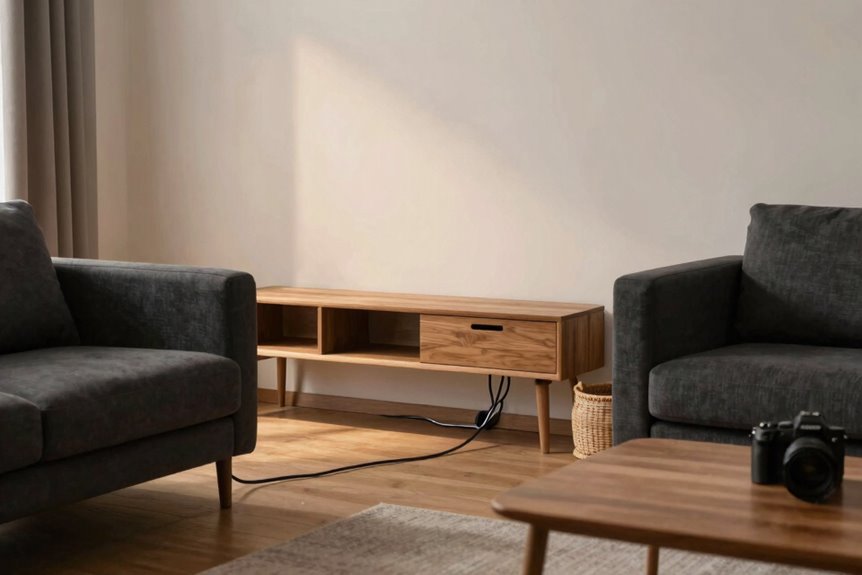
Once my furniture is doing double duty, I still face the little enemies of calm: cords and clutter. Good cord management transforms my space from chaotic to collected, and I’ve learned a few tricks that actually work.
The little enemies of calm: cords and clutter. Good cord management transforms my space from chaotic to collected.
Here’s how I keep the cable chaos in check:
- I route power strips along furniture backs with cable management trays or adhesive cord clips, keeping outlets reachable but invisible
- I feed cables through grommeted openings in my TV stand so nothing dangles like electronic spaghetti
- I wrap extra length with Velcro ties or slide cables into reusable fabric sleeves. No more tangles behind my couch
- I match fabric cord concealers to my wall color for anything that must run along baseboards
Going wireless with Bluetooth speakers reduces visible cables. My living room now functions as the calm, welcoming space I want to share with friends.
Select Low-Maintenance Plants for Apartment Light
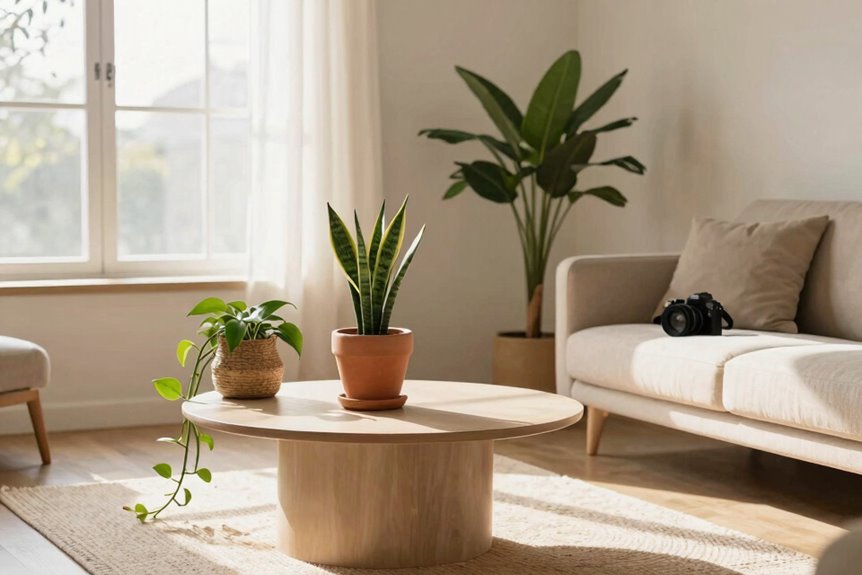
Where do I even begin with plants when my apartment windows face another building and I’m still recovering from killing three succulents. Low-maintenance indoor plants actually exist for people like us.
Snake plants, pothos, and ZZ plants tolerate dim corners and forgive missed waterings. I place mine on shelves near windows where light bounces indirectly, avoiding harsh sun that scorches leaves. Self-watering pots or a simple Sunday schedule keeps roots healthy without drowning them.
I group three together on my coffee table, creating a mini jungle that purifies air and sparks conversation. Compact rubber plants or tall parlor palms fit tight spaces beautifully. A quick monthly wipe removes dust so leaves breathe. Start with one plant and add more as you gain confidence; greenery belongs in your home.
Furnish Your Apartment Gradually, Piece by Piece
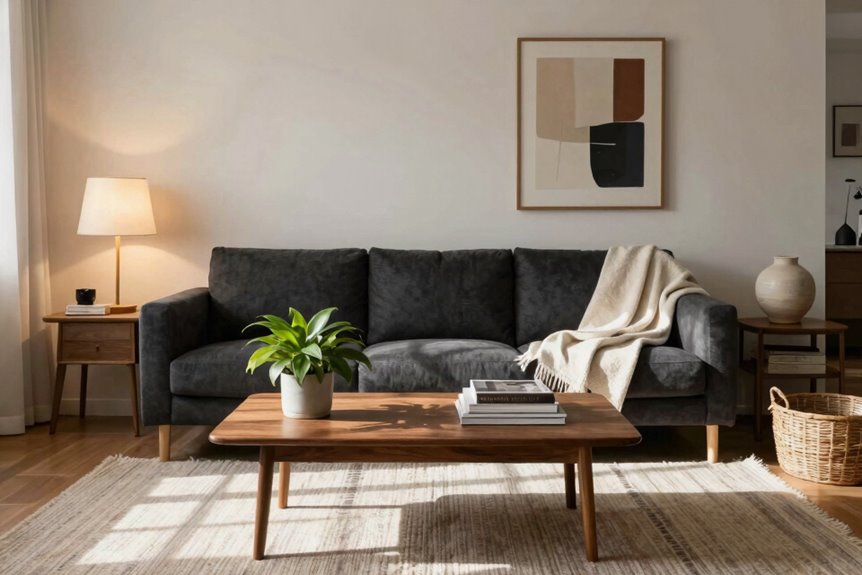
How do you fill an empty room without draining your savings or buying junk you’ll ditch in a year? I’ve learned to furnish my living space gradually, and it’s transformed how I feel at home.
I start with a plan. Core pieces come first: my sofa, coffee table, and a warm lamp. Then I add touches over time. I’m picky about choosing versatile items that’ll travel with me, like my neutral 5×7 rug and modular storage cubes.
- I budget in stages, capping around $3,000 total for priority buys
- I hunt secondhand finds and sales, so I’m never stuck with huge upfront costs
- I grab multitaskers like my bar cart, which stores books and displays plants
- I anchor the wall behind my couch with a leaning mirror, leaving room to grow
Piece by piece, I’m building a home that reflects my taste and lifestyle.