
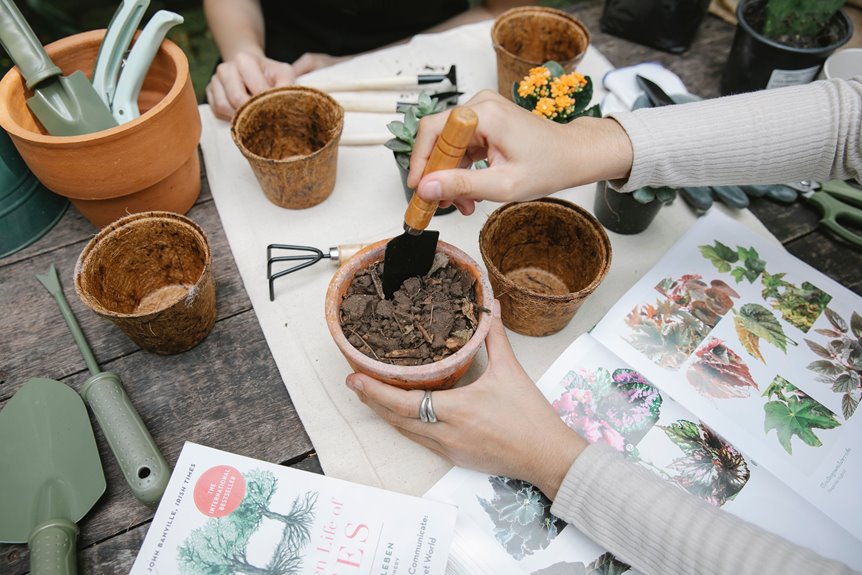
I started my apartment garden by checking light first. Sharp shadows meant my south-facing wall was bright enough for herbs.
I grabbed a 12-inch fabric pocket planter, picked up 4-inch basil and tomato seedlings from my neighborhood nursery, and matched pots with drainage holes to each plant’s root size.
My AeroGarden sits right on the counter with roots dangling in nutrient water, growing lettuce without any soil mess.
I water when my finger feels dry soil, prune leggy stems above a node at an angle, and harvest basil by snipping the top third before flowers appear.
Whether you’ve got a windowsill with six hours of fuzzy light or a tiny balcony rail for vines to climb, there’s a setup that fits your space and schedule.
The specifics that follow will help you maintain healthy plants.
Check Your Apartment Space and Light Before You Buy
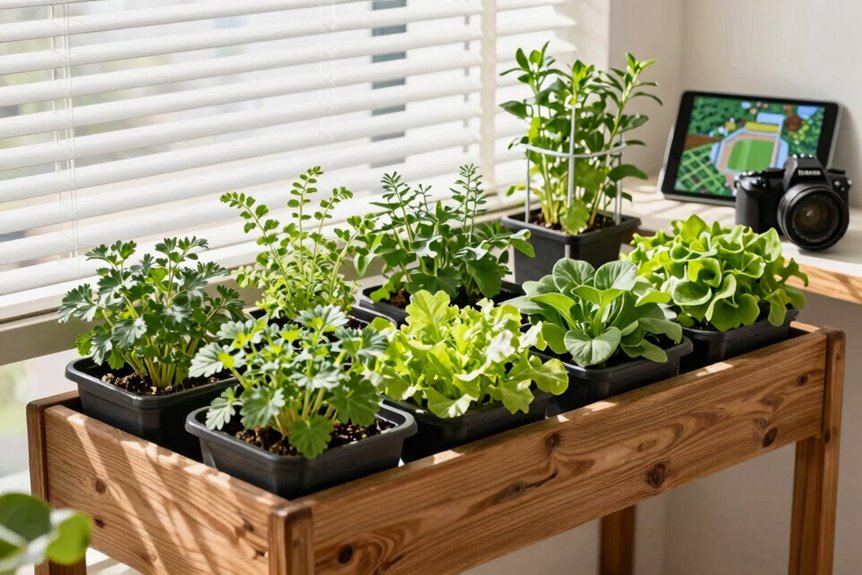
Where exactly will your plants live? Jumping in without checking your space leads to wilted disappointment.
Most indoor plants crave six to eight hours of sunlight daily. South-facing windows blast the brightest light. North-facing ones are much weaker, like a dim hallway bulb.
South-facing windows blast bright light; north-facing ones weaken to a dim hallway bulb—most plants need six to eight hours daily.
Before buying anything, evaluate lighting suitability in each potential spot. Hold your hand up; sharp shadows mean strong light, fuzzy edges mean it’s feeble. In tricky spaces, test each specimen in different spots for about a week until it perks up.
If your window situation feels lacking, supplement with automated grow lights. Your plants will thrive, and your little urban sanctuary will flourish.
Start With Seedlings From a Trusted Nursery
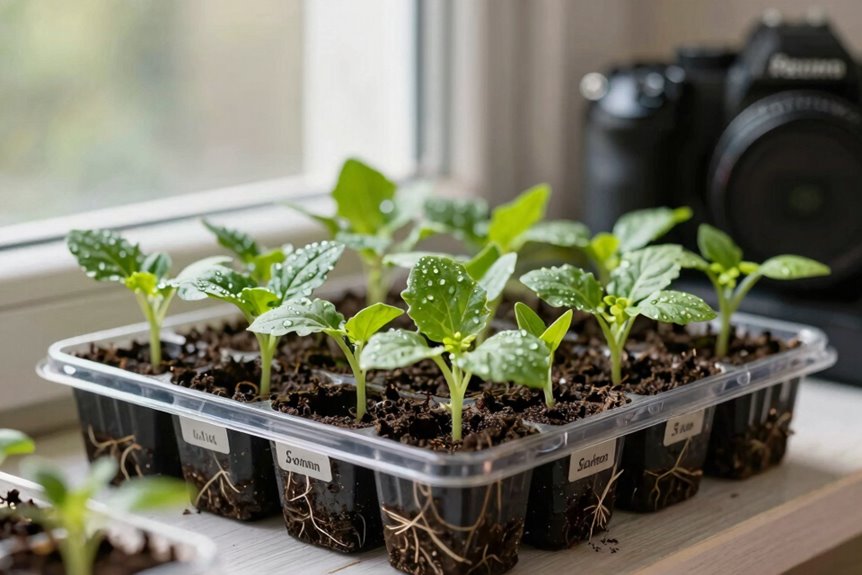
Now that I’ve figured out my light situation, I’m ready to pick my plants. I’m starting with seedlings rather than seeds.
I head to a trusted nursery in my neighborhood, where I can run my fingers through sturdy leaves and spot any sneaky pests myself. The staff there understands apartment gardening. They point me toward seedlings already adapted to indoor conditions and my exact light levels. Starting from seed is possible, but it’s difficult for beginners. Here, I snag a 4-inch basil and a compact cherry tomato. The nursery folks know my zip code, my windows, my experience level. They’ve got my back, and suddenly I’m not gardening alone.
Choose Containers and Soil That Drain Well
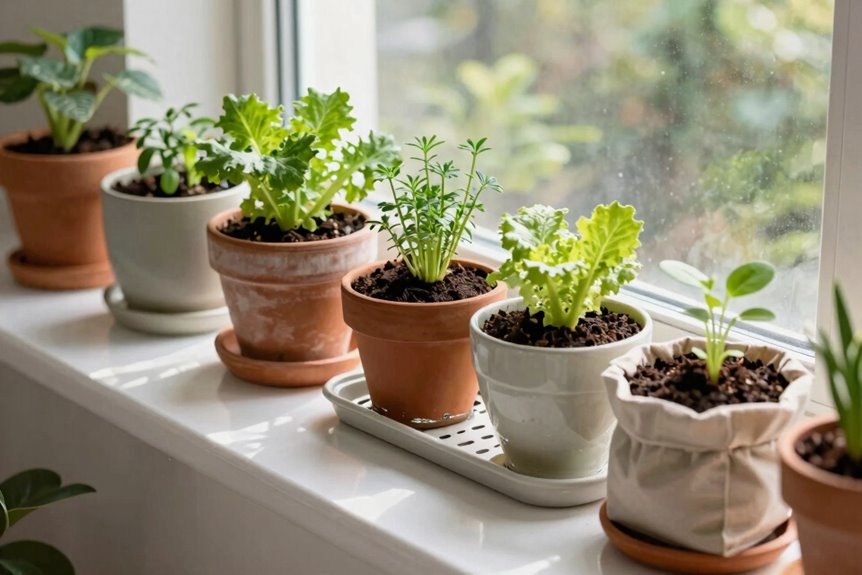
Why does a plant’s container matter so much? It’s your plant’s home, and like any home, it needs the right foundation. Drainage prevents root rot and fungal issues that kill plants.
A plant’s container is its home—without proper drainage, that home becomes a death trap of root rot and fungal disease.
I pick containers with holes in the bottom. Terra cotta breathes. Fabric pots work too. Skip anything that traps water like a bathtub. I match pot size to roots; bigger isn’t always better. A tiny succulent in a giant pot will sit in wet soil and rot.
For soil, I grab quality potting mix. All-Purpose Indoor Mix handles most plants. Cactus Mix for succulents. Orchid Mix for tropicals. Growing tomatoes? I use rapid-growth blend, sometimes with slow-release fertilizer.
I always add drainage trays. No one wants water stains on the floor.
Pick Apartment-Friendly Plants for Your Lifestyle

I’ll match my plants to how much time I’ve got. Easy growers like basil or cherry tomatoes won’t suffer if I forget them for a day. I’m also keeping my curious cat in mind, avoiding lilies or pothos that could cause a vet visit. Think of it like finding a roommate who fits your lifestyle, not one who demands constant attention you can’t provide.
Match Plants to Commitment
Where do you begin when every plant seems to need something different? Matching plants to your commitment level prevents guilt when life gets busy. Start by checking your light availability. Most apartments offer 6–8 hours of sun, but if yours doesn’t, grab an LED grow light.
| Your Vibe | Best Plants | Watering Style |
|---|---|---|
| Forgetful friend | Snake plant, ZZ, jade | Every 2-3 weeks, barely |
| Weekend nurturer | Basil, mint, parsley | Twice weekly, steady |
| Daily plant parent | Cherry tomatoes, hoya | Regular sips, watch closely |
Choose plants that fit your real life, not your fantasy one. This approach comes from killing enough ferns to learn what actually works.
Choose Low-Maintenance Options
So what actually makes a plant “low-maintenance”? It’s simple: forgiving nature. Snake plants, pothos, ZZ, and spider plants practically thrive on neglect. They handle dim corners and missed waterings without drama, making them perfect apartment plants for busy lives.
For indoor gardening with flavor, grow rosemary, thyme, oregano, parsley, and chives. These herbs don’t demand constant fuss; they just need occasional watering and decent light.
Skip temperamental tropical flowers. Instead, use quality indoor potting mix, never garden soil, and self-watering containers that extend the time between check-ins by several days.
Start small with three plants. Learn their rhythms and watch how they respond to your specific light and schedule. Once you’ve developed confidence with these basics, expand your collection. Indoor gardening becomes manageable when you’re building skills rather than overcommitting to more plants than you can maintain.
Prioritize Pet-Safe Selections
Why risk a midnight vet visit when I can choose smarter? Pet-safe apartment gardening means I’m protecting my furry housemate while still getting my green fix. I stick to non-toxic container plants like spider plants and certain herbs, then double-check everything before buying.
| Safe Bet | Danger Zone | My Solution |
|---|---|---|
| Spider plant | Lilies | Wall-mounted planter |
| Cat grass | Sago palm | 18-inch shelf height |
| Basil | Pothos (if chewer) | Hanging macramé holder |
I avoid lilies and sago palms entirely because they’re toxic. For pothos, I elevate it or skip it if my cat chews plants. Weekly, I scan leaves for tooth marks. Apartment gardening works for everyone, pets included, when you plan defensively.
Water, Feed, and Prune Based on Plant Signals
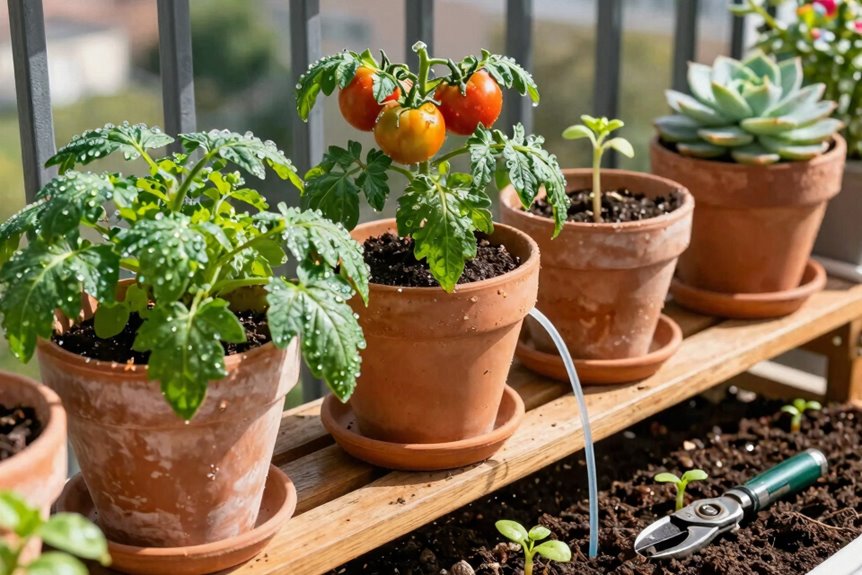
I water my cacti only once or twice a month by letting the soil dry completely before soaking it again. Tomatoes and leafy greens need more frequent checks; they droop visibly when soil feels dusty on top, so I check them every couple days with my finger. Once you recognize these plant signals, you can prune effectively by snipping off brown, dead tissue. Never remove more than a quarter of the plant’s foliage at once, as excessive pruning stresses the plant and slows recovery.
Watering Schedule Basics
Because your plants can’t exactly tap you on the shoulder when they’re thirsty, you’ll need to learn their silent signals. Watering indoor plants changes with the seasons. Plants consume water faster in spring and summer, then require significantly less in fall and winter.
Check moisture levels weekly by poking your finger about an inch into the soil or using a moisture meter. Each plant’s needs differ based on its light, soil, and pot size. Water thoroughly until you see drips hitting the tray below. Drainage holes are essential. Allow soil to dry out between waterings when your plant prefers that approach. A simple plastic tray protects your floors and security deposit from water damage.
Watch for drooping leaves or dusty dry soil versus yellowing and squishy stems. These visible signs will guide your watering decisions.
Reading Plant Signals
Now that you’ve got a handle on when to water, let’s talk about what your plants are actually telling you. I check my plants every morning for plant signals. Wilting leaves or droopiness mean they’re thirsty. I stick my finger straight into the soil to test soil moisture. If the top inch feels dry and crumbly, it’s watering time. Still damp? I wait. I’ve drowned too many plants being overly generous.
Yellowing or browning edges indicate nutrient deficiency. I use a balanced, water-soluble fertilizer like Miracle-Gro during spring and summer, but I follow the label exactly. More isn’t better. Leggy, stretched-out growth tells me they need pinching back near the node for bushier, happier plants. They’re constantly communicating their needs through visible changes.
Pruning for Health
The right pair of pruning shears makes all the difference when your plants start looking scraggly. I grab my Fiskars Micro-Tip Pruning Snips and get to work.
First, I remove anything dead, brown, or damaged. Clean tools matter. I wipe mine with rubbing alcohol between cuts so diseases don’t hop from stem to stem.
For leggy growth, I cut at an angle right above a node. That’s where new branches sprout, making your plant bushier and fuller. I never snip more than one-quarter of the plant at once; too much stress shocks them.
My basil and mint love regular haircuts. The more I prune, the more leaves they push out.
Don’t toss those healthy cuttings. I stick them in water or soil and watch roots emerge. Propagating cuttings this way expands your collection without additional cost while maintaining your apartment jungle.
Harvest Herbs and Vegetables to Keep Growth Going
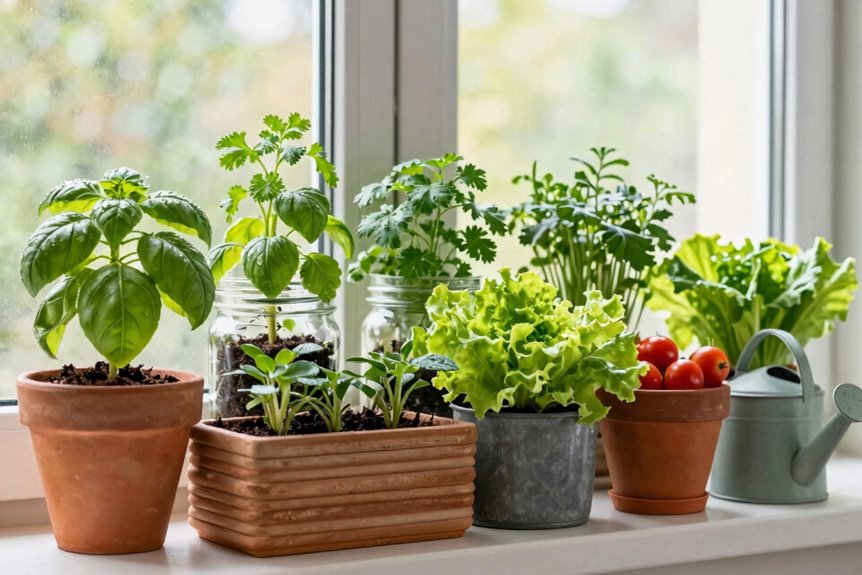
Why let your basil grow tall and spindly when a quick snip can turn it into a bushy, flavor-packed plant? I harvest my herbs weekly once they’re palm-sized, pinching stems just above leaf pairs. This pruning trick redirects energy sideways, not skyward. For tomatoes and peppers, I wait until they’re fully colored and slightly soft, then pluck gently to keep vines producing.
| Plant | When to Harvest | My Weekly Task |
|---|---|---|
| Basil | 6 inches tall, before flowering | Snip top third, pinch flowers |
| Cherry tomatoes | Deep red, slightly yielding | Twist and lift, check neighbors |
| Mint | 4+ inch stems | Cut stems, not leaves, for bushiness |
| Lettuce | Outer leaves 3-4 inches | Pick bottom up, let center grow |
After each harvest, I prune away anything yellow or crispy. Consistency sustains ongoing production. Regular harvesting cycles create dependable yields throughout the growing season.
Try Vertical Gardens and Hydroponics for Tight Spaces
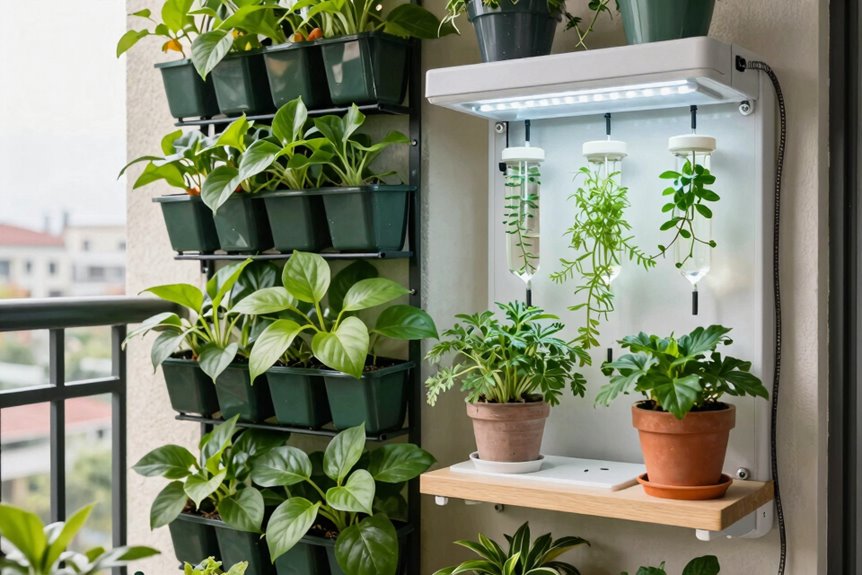
Where does a stubborn tomato vine go when it’s out of floor space? Up, of course. Vertical gardening transforms bare walls into thriving green spaces. Wall-mounted pots, macrame hangers, and repurposed shelves stack plants skyward, squeezing dozens of specimens into tight spaces no wider than a bookshelf.
I started with a three-tier fabric pocket planter, roughly 12 inches wide, and trained ivy and dipladenia upward along my balcony railing. The vines caught morning sun I’d never utilized before.
For soil-free simplicity, I tried countertop hydroponics. My compact AeroGarden sprouted basil and lettuce in weeks, with roots dangling in nutrient-rich water like translucent spaghetti. No mess, no guesswork.
Begin small with a vertical kit or mini hydroponic unit. Scale up once your thumb turns greener. Your walls are waiting.