

I picture a digital photo frame as a small, stubborn tablet, usually 7 to 10 inches, that’s forgotten everything except showing off your photos. Inside, there’s a display panel, playback software that crops and rotates images automatically, and either onboard memory or cloud storage. Wi-Fi lets you email pictures, use an app, or sync albums from Google Photos. Without Wi-Fi, you’re swapping USB drives or SD cards like it’s 2005. Either way, your snapshots land on that glowing screen. The method you choose depends on your connectivity needs and how frequently you want to update your displayed images.
How Do Digital Photo Frames Actually Work?
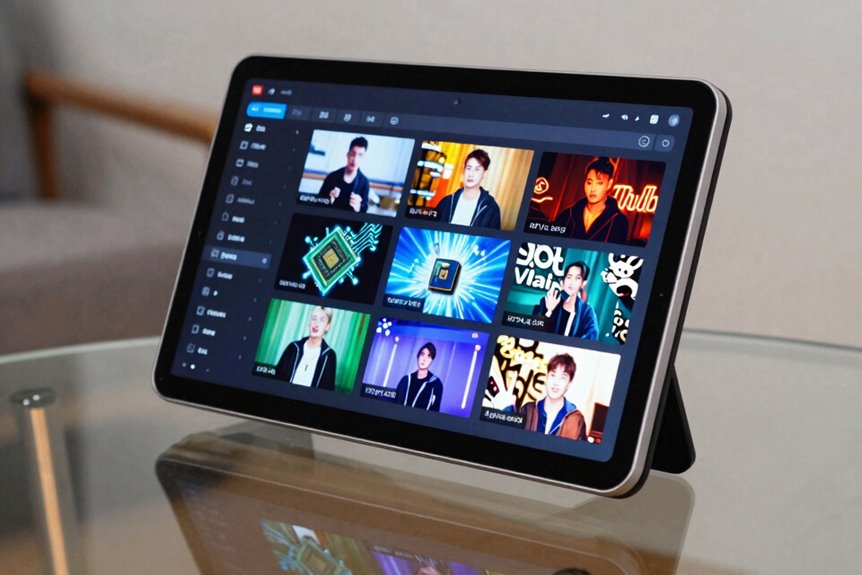
Ever wonder how that sleek little screen on your grandma’s shelf keeps showing fresh family photos without anyone plugging anything in?
A digital photo frame runs on five core parts working together. The display panel, usually 7 to 10 inches like a small tablet, shows your pictures using playback software that crops and rotates them automatically. Storage happens through onboard storage (built-in memory) or cloud storage online. Wi-Fi connectivity enables remote sharing, automatic firmware updates, and management through apps or web upload portals. Transfer methods vary by model. Some use USB or SD cards, while connected frames receive photos through email addresses or mobile apps. Cloud-enabled frames like Aura skip onboard storage entirely, pulling unlimited photos straight from their servers.
How Do Photos Get From Your Phone to the Screen?
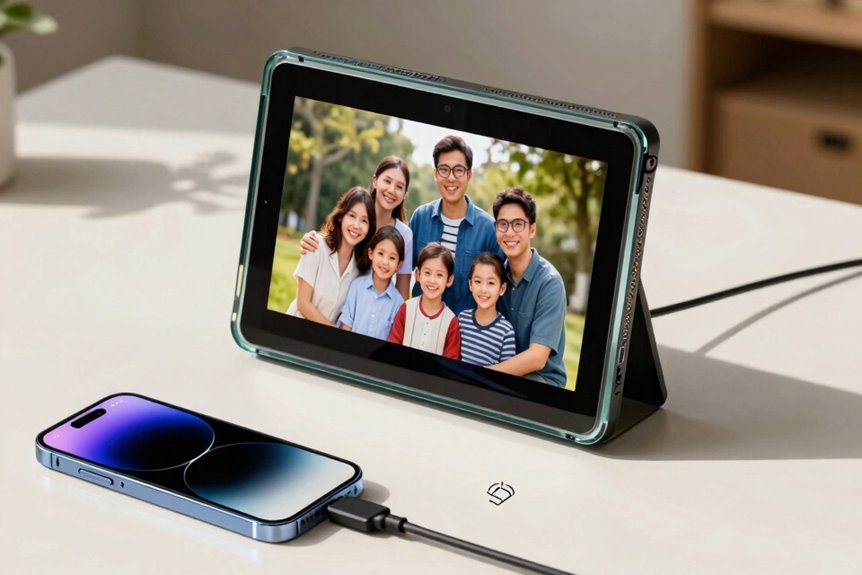
So where do your snapshots actually travel when you beam them to Grandma’s frame? Your digital photo frame connects through Wi-Fi, creating an invisible bridge between your phone and that glowing screen.
Your photo transfer follows several pathways. You can email it straight to the frame’s special address, and it lands in about sixty seconds. You can use an app to upload the photo by tapping “send” while your coffee’s still hot. Some frames even pull from cloud-linked albums, drawing fresh pictures from Google Photos or iCloud automatically.
The photo transfer moves through the internet, the frame stores it in memory, adjusts sizing, and displays it on screen. That sunset you caught is now visible to Grandma from across her living room.
Every Way to Send Photos to Your Digital Frame
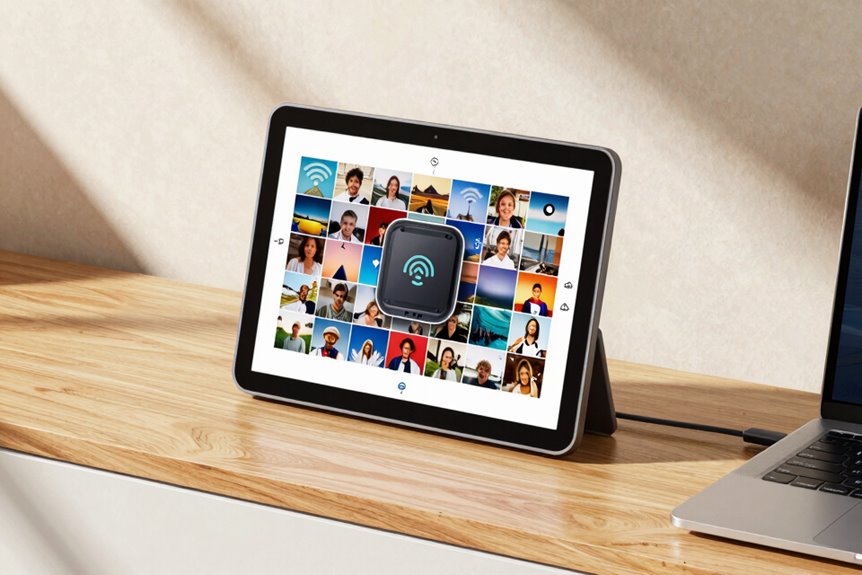
I’ll walk you through the main ways to get your pictures onto that screen. You’ve got two main paths here: Wi-Fi tricks that beam photos through the air, and old-school local methods where you’re plugging stuff in directly. Both approaches have distinct advantages depending on your setup.
Wi-Fi Upload Methods
Wi-Fi upload methods turn your digital frame into a living photo album that updates itself from anywhere. These are the ways photo uploads reach your screen:
- Cloud syncing pulls albums straight from Google Photos or Apple iCloud, refreshing automatically
- Email delivery sends pictures as attachments that pop up in under a minute
- Web uploader lets you drag-and-drop batches from any browser
- Mobile app pushes shots from your pocket to frame storage instantly, even across time zones
Your frame becomes a shared window where family contributes from everywhere. No cables, no waiting. Photos appear as soon as they’re uploaded.
Local Storage Options
Even the smartest Wi-Fi frame sometimes needs a direct line to your photos. Local storage provides this capability.
The flexibility of using a USB drive or SD card during internet outages is valuable. Non-Wi-Fi frames rely entirely on these physical options without cloud connectivity, allowing instant offline display of your favorite memories.
Some frames offer onboard memory, while others let you expand with microSD cards for extra space. Aura’s newer models skip local storage entirely, pushing everything through their app instead. Most frames still accept USB drives for direct file transfer.
When visiting locations without Wi-Fi access or when you prefer keeping things simple, these direct methods ensure your slideshow continues without interruption.
Does Your Digital Photo Frame Need Wi-Fi?
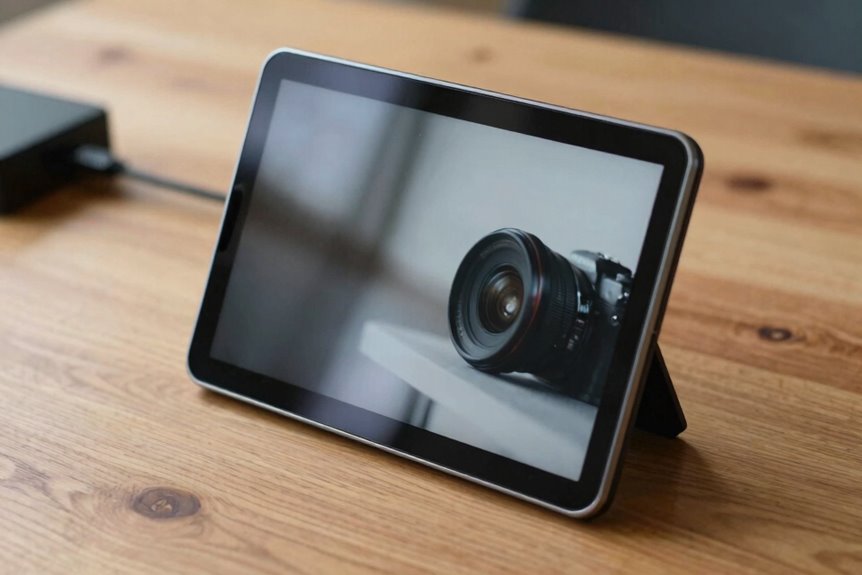
I ask myself if Wi-Fi changes how I share photos with loved ones. It makes a significant difference. Wi-Fi frames let Grandma see new pictures pop up automatically, while non-Wi-Fi ones require me to use a USB stick and walk over. If I want remote sharing without the hassle of family tech support calls, Wi-Fi is the better choice.
Wi-Fi Versus Local
Deciding between a Wi-Fi and a local-only digital photo frame starts with a simple question: how do I want my photos to get there.
- Wi-Fi frames grab images from anywhere: cloud storage, apps, email. No physical transfer required.
- Local storage via USB/SD requires physically plugging in a device.
- Wi-Fi frames receive automatic updates and multi-device sharing for multiple users.
- Non-Wi-Fi models cannot be updated remotely and lack multi-device capabilities.
Wi-Fi frames cost more upfront, but they eliminate disputes over who last accessed the frame. For my grandma across town, remote sharing eliminates the need to drive 45 minutes with a thumb drive.
Remote Sharing Benefits
Once you’ve picked a frame with Wi-Fi, remote sharing becomes practical: you can beam photos to it from your couch, your desk, or that cramped airplane seat with the broken armrest. Remote sharing keeps you connected to family without waiting for physical mail delivery.
Your frame app lets you send invitations to cousins across three time zones. They upload moments to your shared online albums, and your digital frames refresh automatically without any manual effort. Cloud storage backs everything up, though some services charge modest subscription fees.
USB-only frames require a different approach: you drive to the location, plug in the device, and hope you brought the correct cable. Wi-Fi frames function as a connected family hub instead.
Can Your Frame Pull Photos From Facebook or Google Photos?
Wondering whether you can skip the USB stick and pull your favorite shots straight from the cloud. Modern digital photo frames make this easy through cloud syncing.
Most frames today connect to your online life. Here’s how to stay connected:
- Link your accounts. Connect your frame to Facebook and Google Photos for instant access.
- Set up linked web albums. Photos from albums flow automatically with no manual transfers needed.
- Enjoy remote management. Update slideshows from anywhere, even across the country.
- Let it sync offline. Cloud-enabled frames store favorites locally, so pictures keep playing if Wi-Fi hiccups.
Some brands, like Aura, excel here. Others need USB sticks. Check before buying, as this “premium” feature varies wildly, and subscriptions sometimes apply.
Which Should You Buy: A Cloud Frame or a Simple Card Model?
Most of us stare at the same three photos on our fridge until the edges curl. When picking a first digital frame, you face a real choice.
Choose a cloud frame if you want connection. You’ll get remote uploading from anywhere, syncing across Grandma’s frame three states away, and fresh photos that rotate through your day. Watch for subscriptions though; those monthly fees accumulate quickly.
A simple USB/SD model keeps storage local, runs offline slideshow loops indefinitely, and never requires Wi-Fi passwords. Insert a card, plug it in, and you’re done.
The decision comes down to this: if you want family sharing and web albums, choose cloud. If you want an affordable, private, and straightforward option, stick with card models.