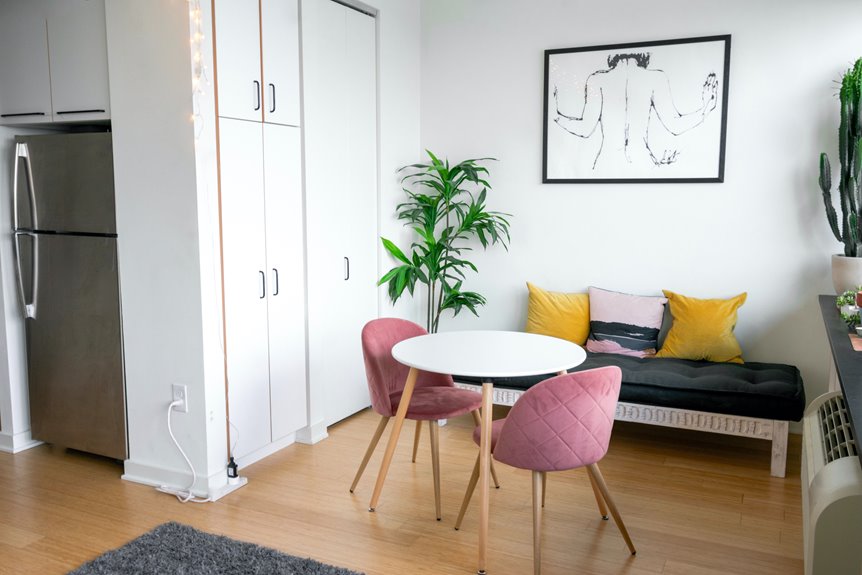
I once decorated my entire living room for under $400 by treating my apartment like a puzzle rather than a blank check. Start by auditing what you already own. Those storage bins and lamps hiding in closets can save you serious cash. Sketch a simple floor plan with measurements (I use ¼ inch to 1 foot scale) to avoid buying furniture that blocks doorways. Hunt secondhand gems on Facebook Marketplace; a $50 Craigslist sofa with fresh paint becomes your anchor piece. DIY the budget drains: swap IKEA cabinet tops, layer peel-and-stick wallpaper, and mount floating shelves to free your floors. Build in phases, starting with foundation first and accents last. This approach makes every dollar stretch further.
Audit What You Own Before Spending
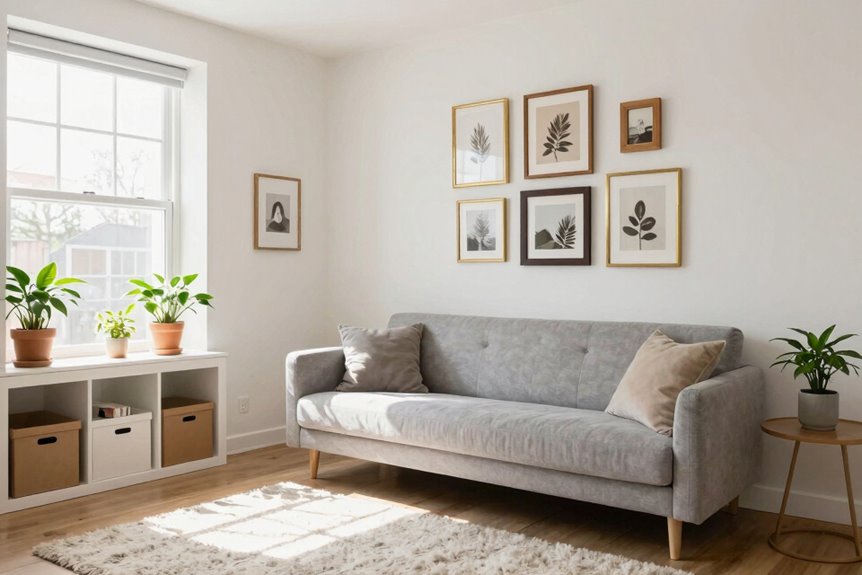
That jumble of boxes in your closet contains your best budget hack. Grab your phone and take inventory of every storage bin, hand-me-down lamp, and wonky chair from your cousin. You’re decluttering and mining for items you can reuse.
Draw a simple floor plan. Measure your walls, even roughly. This becomes your zoning map showing where you’ll actually live, sleep, and store items. Without it, you’ll buy blind.
Split your list into needs versus wants. Shelter comes before style. A bed is necessary; a velvet sofa is not.
Cross-check family garages and your haul against your list. When you shop, you’ll walk in knowing exactly what fits your space and your wallet.
Map Your Apartment Layout First
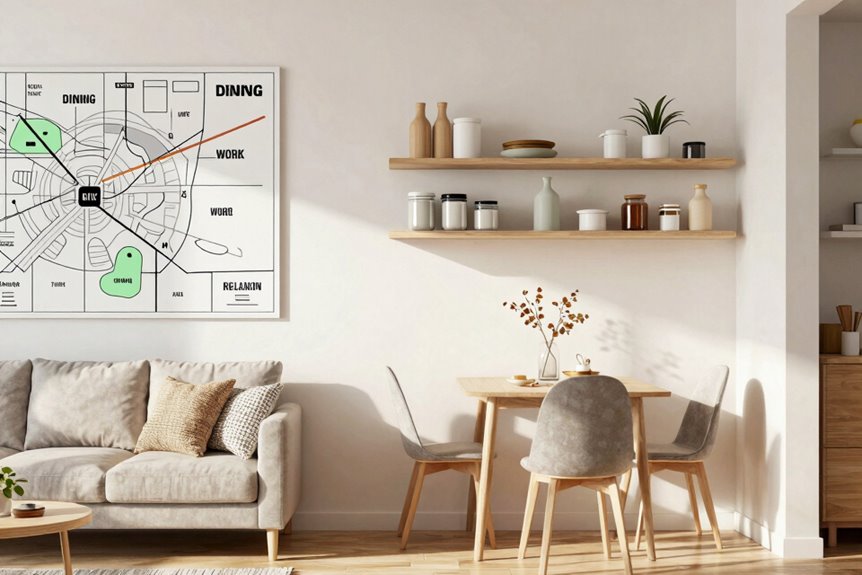
Before I bought a single thing, I grabbed a tape measure and sketched every room, noting where doors swung open and windows let in light. This helped me map clear zones for sleeping, eating, and relaxing without blocking walkways. You’ll save money and avoid costly mistakes by testing layouts on paper or free apps like RoomSketcher before committing to furniture that won’t fit through your door.
Measure Your Space
My first step in any apartment makeover starts with a tape measure in hand and a blank sheet of paper spread across my kitchen table. I begin measuring each wall, doorway, and window, then sketch a simple floor plan that captures the exact dimensions of my space.
I mark fixed features like radiators and outlets so nothing surprises me later. Using a scale of ¼ inch to 1 foot keeps my layout accurate and prevents guessing whether that five-foot loveseat will actually fit.
I double-check all entryways, stairwells, and elevator doors. Accurate measurements prevent the common problem of delivery drivers struggling with furniture that won’t make the turn.
Once my map feels accurate, I finally start dreaming about furniture.
Plan Traffic Flow
How do I keep my apartment from feeling like an obstacle course? I map my layout first. Space planning saves me from shoving a giant couch through my door twice.
I grab a tape measure and sketch my living room zones: sleeping, lounging, storage. Then I check traffic flow:
- I leave 3 feet around my sofa so guests don’t belly-rub past dinner guests
- I face my seating toward the fireplace, not the bathroom door (no awkward eye contact)
- I tuck a storage ottoman by the window as a seat by day and blanket vault by night
- I let a jute rug edge tell feet “walk here, not through my lap”
Smart furniture placement means my multi-use console holds wine glasses and my laptop. My apartment finally breathes, and yours can function the same way with intentional layout decisions.
Define Activity Zones
I measure twice because nothing kills a vibe like furniture blocking the bathroom door. My living zone needs breathing room; my sleeping zone craves quiet boundaries.
I invest in multifunctional furniture: a storage ottoman that swallows blankets, an extendable table that hosts two or twelve friends. Vertical storage becomes my covert tool. Floating shelves draw the eye up, freeing precious floor space for dancing or just walking without shin bruises.
Each zone gets its own color lighting scheme: warm amber for lounging, crisp white for my tiny desk corner. My studio transforms into a functional living space through these deliberate choices.
Score Major Pieces Secondhand
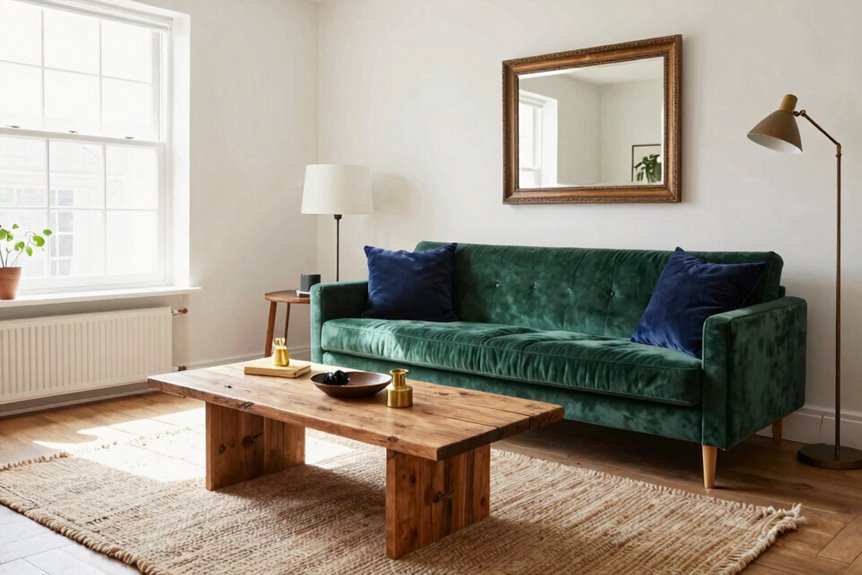
I’ve found my best apartment pieces hiding in plain sight on Facebook Marketplace and at dusty thrift store corners. Last month I scored a solid wood dresser for $40 just by checking measurements first. Keep a tape measure in your car and a list of what you actually need, because that fuzzy orange armchair feels less charming when it blocks your doorway. Hunt for big neutral bases like sofas and tables secondhand, then refresh them up with cheap paint swaps or new knobs. Your budget stretches further while your space looks polished.
Thrift Store Treasures
I always hunt secondhand furniture first. That scratched coffee table can be transformed with sandpaper and stain into something that reflects your personal style.
- That rush when you spot the perfect piece hiding behind a broken toaster
- The pride of saying “Thanks, I found it” when guests compliment your $15 mirror
- Late nights painting while your favorite playlist plays
- Walking into a room that finally feels like home
Pair your thrifted base pieces with affordable decor like throw pillows and frames. Your wallet stays full, and your space feels genuinely yours.
Marketplace Gems
There’s nothing quite like spotting a perfect velvet sofa on Facebook Marketplace for $80 and realizing it’s yours if you move fast. I’ve scored my best pieces this way: moody armchairs, solid wood dressers, even a brass bar cart that now holds my plants.
I hunt thrifted furniture like treasure, checking listings daily before coffee. It’s how I built my space without debt.
Budget-friendly substitutions matter when you’re renting small. That rummage sale trunk serves as my coffee table and blanket storage.
I mix price points without apology. My splurge lamp sits on a free curb-find desk I refreshed with upcycling, sanded, stained, done in a weekend.
Secondhand decor isn’t settling. It’s smart, sustainable, and yours alone. Start with one big piece and you’ll discover why thrifting works.
DIY the Details That Drain Your Wallet
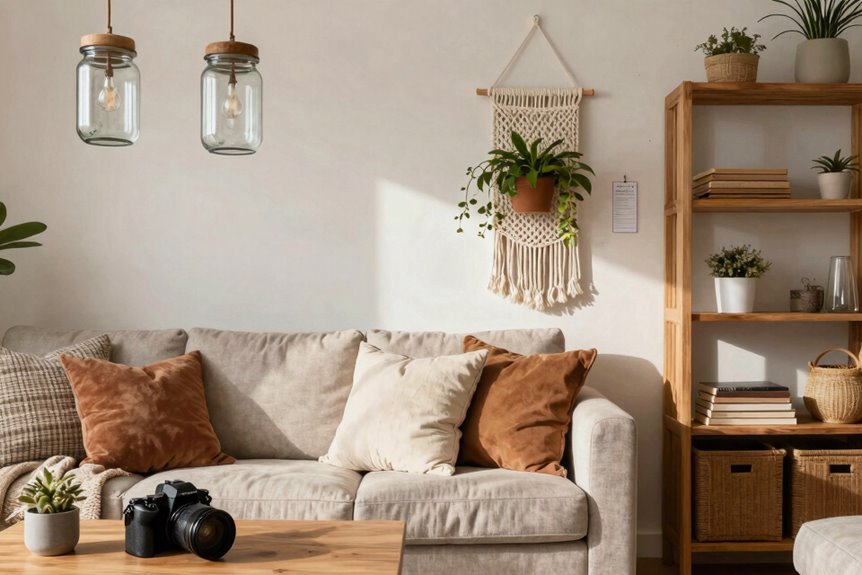
Although those “small” decor upgrades can quietly devour your budget, I can help you outsmart them with DIY fixes that cost significantly less than you’d expect.
Small decor upgrades can quietly devour your budget, but DIY fixes outsmart them every time.
I’ve transformed tired IKEA shoe cabinets by swapping tops for stained wood planks. They suddenly look custom.
Here’s how I make every dollar stretch:
- I hunt thrift treasures and give them new life with paint or stain
- I embrace upcycling because that wobbly bench deserves a comeback
- I choose multi-purpose pieces like storage ottomans that work twice as hard
- I layer budget-friendly peel-and-stick wallpaper for instant warmth without commitment
Mix DIY projects with strategic secondhand finds, and you’ll build a space that reflects your personal style while staying within budget.
Use Vertical Space Before Buying More
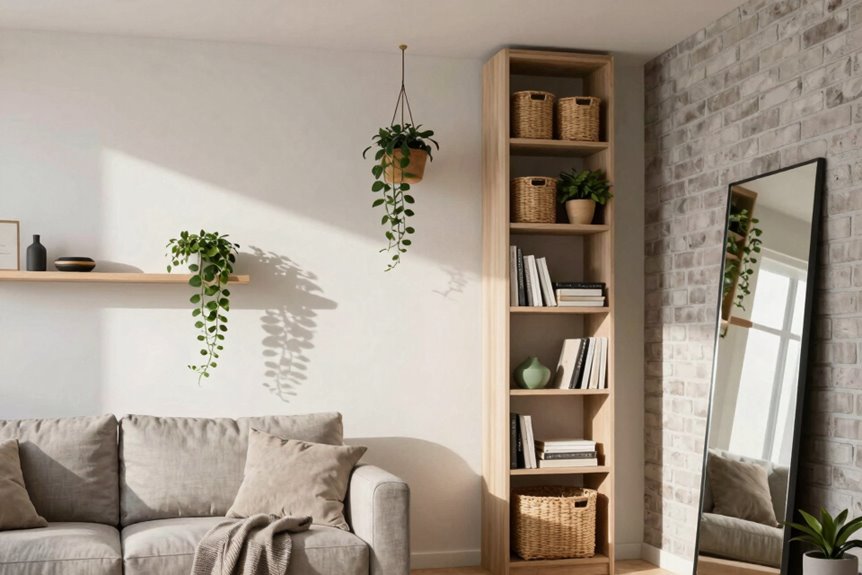
Where do you look when your floor feels cramped? I look up. That’s where vertical space hides, waiting to rescue your small space living situation.
I started with wall-mounted shelves above my couch, just two feet wide and fifteen inches deep. Instant storage without stealing floor space. Floating units became my secret weapon: a slim ledge by the door catches keys, a narrow shelf above the toilet holds candles. Total cost: under forty bucks.
Vertical storage isn’t fancy. It’s smart. I hung trailing pothos from ceiling hooks, creating a green curtain that breathes life upward. My tall bookcase draws eyes skyward, making my eight-foot ceiling feel cathedral-tall.
Before you buy that bulky side table, ask whether a wall solution would work instead. Your floor and your wallet will benefit.
Layer Textiles Over Rental Furniture
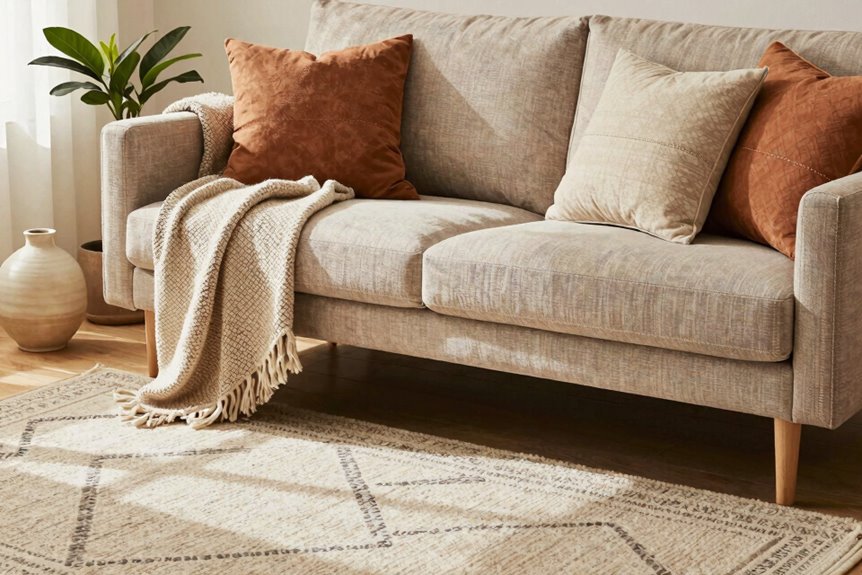
How do you make a beige rental couch feel like home? I layer textiles until it feels like mine.
Start with a neutral base: cream curtains or a sand-colored rug. Then I pile on warmth. I mix linen throws with chunky knits. I swap pillow covers when seasons change. This seasonal rotation keeps my space alive without spending much.
I stick to removable textiles so my landlord stays happy. Peel-and-stick wallpaper behind the sofa requires no holes. Curtain clips work instead of drilling.
What transforms rental furniture into sanctuary:
- A velvet throw for movie nights
- Woven rugs that muffle footsteps
- Pillow covers in colors that feel like you
- Soft curtains that frame windows like embraces
Layer textiles deliberately. Your apartment becomes home without needing permission.
Build Your Budget Decor in Phases
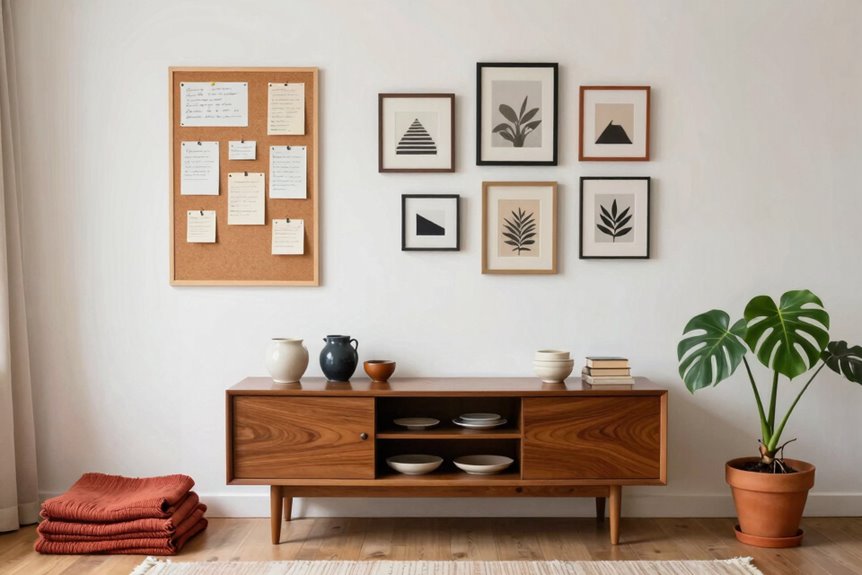
Textiles soften the edges, but they can’t carry the whole room. I learned that the hard way when I blew my entire budget on throw pillows and had nowhere to sit.
Textiles soften the edges, but they can’t carry the whole room.
I break my budget into phases. Phase one means foundation pieces, my Craigslist sofa, a thrift dining table, solid storage. These anchor the space.
I keep a detailed shopping list with SKU numbers before I shop. No wandering, no impulse buys.
Phase two brings multi-use items that grow with me. Phase three includes decorative accents I DIY or snag on sale.
I track every dollar across phases, adjusting before I move forward. This rhythm lets me build a home that reflects my actual needs and priorities rather than whatever I purchased first.