
I’ve learned that transforming your home with plants starts with reading your light. North-facing corners love snake plants, while south-facing spots crave succulents. I always begin beginners with foolproof ZZ plants and pothos, then mix tall fiddle-leaf figs with trailing vines for visual drama. I cluster three plants at staggered heights, perch them on 12-inch pedestals, and tuck humidity-lovers like ferns near showers. Weekly rotations and monthly leaf-wiping keep them thriving, though realistic faux options work well when travel calls. The following sections show you exactly how to style each room.
Match Plants to Your Light Conditions First
How do you pick the right plant without killing it two weeks later? Start by knowing your light conditions.
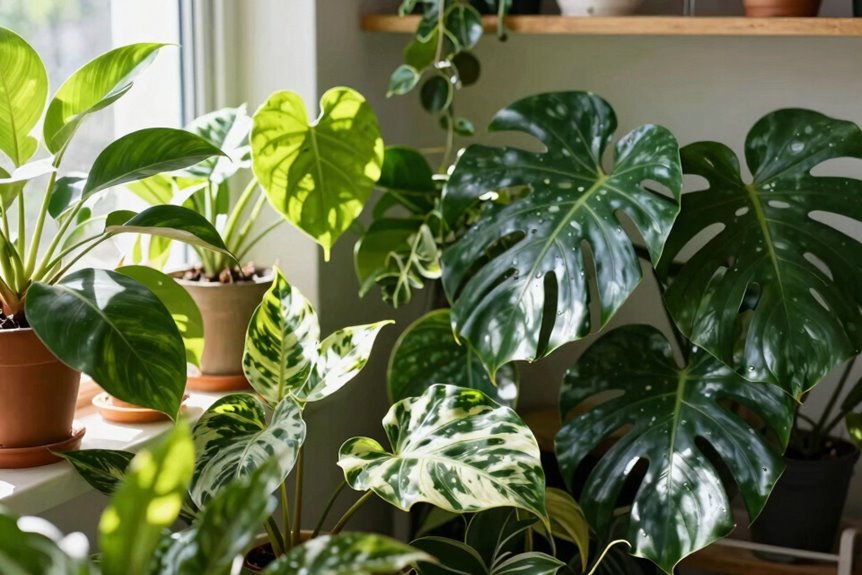
Stand in your room and observe where sunbeams actually land. That north-facing corner with gentle, shadowy glow is low light, perfect for a snake plant or ZZ plant that thrives without bright rays. Your east-facing windowsill catches soft morning rays; that’s indirect light, where pothos and philodendrons stretch happily. That blazing south-facing spot where afternoon sun practically sizzles is direct sunlight territory, ideal for succulents and cacti that crave solar intensity.
Measure your space too, imagining how wide your fiddle leaf fig might spread in two years. Check your humidity next; that dry radiator air won’t suit a prayer plant’s tropical needs. When you match these conditions, your plant survival rate improves significantly.
Start With Foolproof Houseplants for Beginners
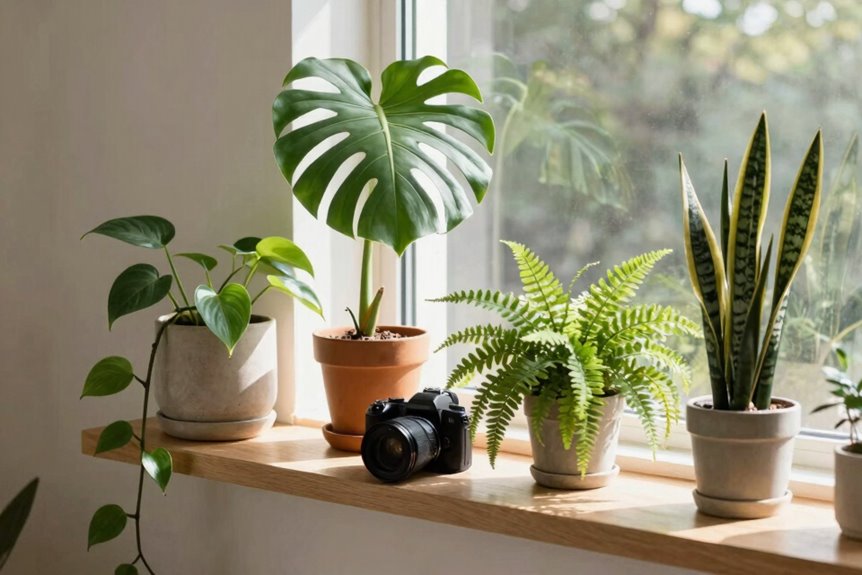
I always tell friends to grab a hardy ZZ plant or snake plant first. They’re practically unkillable and only need water every couple of weeks. Stick with two or three of these tolerant varieties until you get the hang of checking soil moisture with your finger. Once you’ve kept them alive for a few months, you’ll feel confident enough to branch out into fancier options without the anxiety.
Pick Low-Maintenance Varieties
The best guard against a crispy, leaf-littered graveyard of good intentions sits right there at the garden center: plants that practically thrive on neglect. I always steer friends toward low-maintenance, forgiving indoor plants that won’t punish a forgotten watering.
Snake plants stand tall through weeks of drought. ZZ plants shrug off dim corners. Pothos trails gracefully even when I neglect them. Spider plants and philodendrons bounce back from my beginner blunders like nothing happened.
These champions tolerate average home temperatures, moderate light, and my inconsistent schedule. They don’t demand misting rituals or perfect humidity. I choose varieties that keep growing despite my occasional mistakes, because plants that survive neglect reduce the frustration of caring for houseplants. Start with these options, and you’ll have thriving plants within months.
Start With Small Collection
Why plunge into a jungle-sized collection when you’re still learning the ropes? I started with a small collection of just three houseplants, and it’s the smartest move I made. I grabbed beginner-friendly options: a snake plant, a pothos, and a ZZ plant. These are virtually fail-proof species.
I picked spots with bright, indirect light, checked humidity needs, and avoided constant fussing. No overwatering, no panic-pruning. Each thrived with minimal attention.
Building this small collection let me learn each plant’s rhythms without overwhelm. I researched light requirements beforehand, placed them where they’d actually grow, and watched my confidence develop alongside new growth. You’ll develop your skills by starting small too.
Gradually Expand Selection
Once my trio of survivors pushed out new leaves, I couldn’t resist adding more. That’s when I learned to gradually expand my indoor plants collection instead of going wild at the nursery.
I stick to beginner-friendly choices first. Here’s what works:
- Grab a ZZ plant or snake plant. They forgive you when you forget water.
- Check your windows: pothos handles low light; spider plants want brighter spots.
- Practice wiping leaves and repotting before buying trickier plants.
- Add one new plant monthly, not five, so you don’t drown in care tasks.
I research each plant’s needs before purchasing. Does it crave humidity? Hate drafts? Matching plants to my space keeps them alive. Start small, build confidence, and soon you’ll curate a thriving green family that fits your life.
Pick Containers That Match Your Decor Style
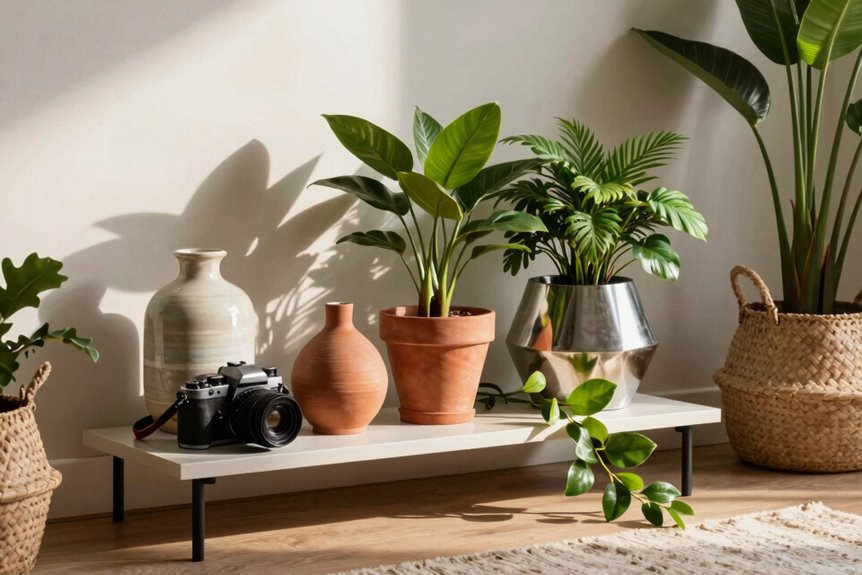
How do your plants look in that space? Let’s make sure your planters feel like home too.
I hunt flea markets and thrift shops for vintage containers. Mine’s a chipped terra-cotta beauty from a Saturday stroll. When your decor style shines through every planter, the whole room breathes together.
Build a cohesive vignette this way:
| Your Vibe | Where to Score |
|---|---|
| Boho bliss | Woven seagrass baskets, 8-inch diameter |
| Industrial edge | Galvanized metal buckets from hardware stores |
| Eclectic collector | Mismatched ceramics in unified sage tones |
I DIY a concrete planter when I can’t find the right blue-gray to match my throw pillows. It’s easier than baking brownies. Coordinate one small detail, such as brass feet echoing your lamp base, and your space feels intentional rather than random.
Mix Tall, Short, and Wide-Leaved Plants
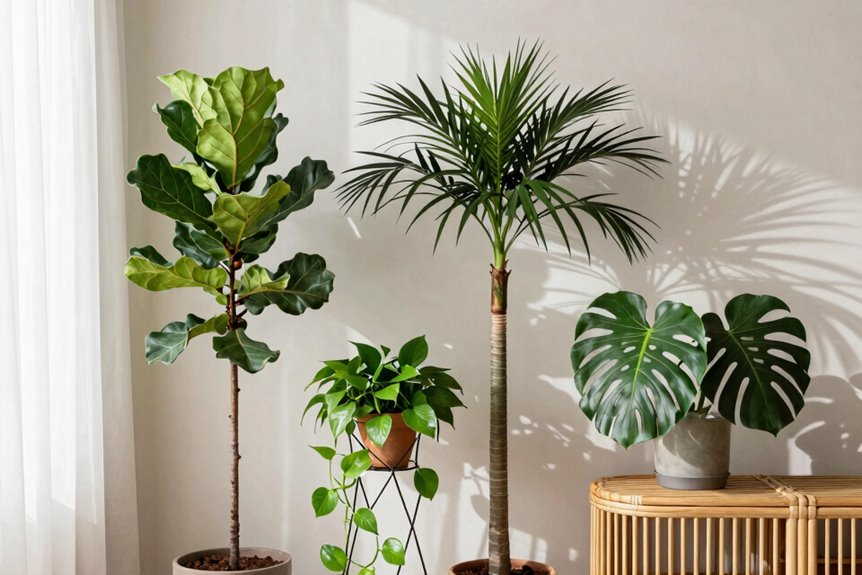
Three plant heights transform a flat shelf into a living sculpture. Mixing plants with different statures creates rooms that feel alive and welcoming, like you’re stepping into a shared secret garden.
Here’s how I build my arrangements:
- I place tall upright specimens in corners to draw eyes upward
- I tuck shorter plants at shelf edges to anchor the display
- I weave in wide-leaved varieties for bold visual mass
- I pair trailing plants with tall ones for cascading fullness
This height variation prevents flat, boring setups and guides your gaze naturally through the space. I frame my seating area with a tall palm, then flank it with compact foliage for balance. Brighter spots get your tall and wide-leaved plants, while shady nooks welcome shorter, shade-tolerant friends.
Turn Furniture Into Plant Stands at Any Height
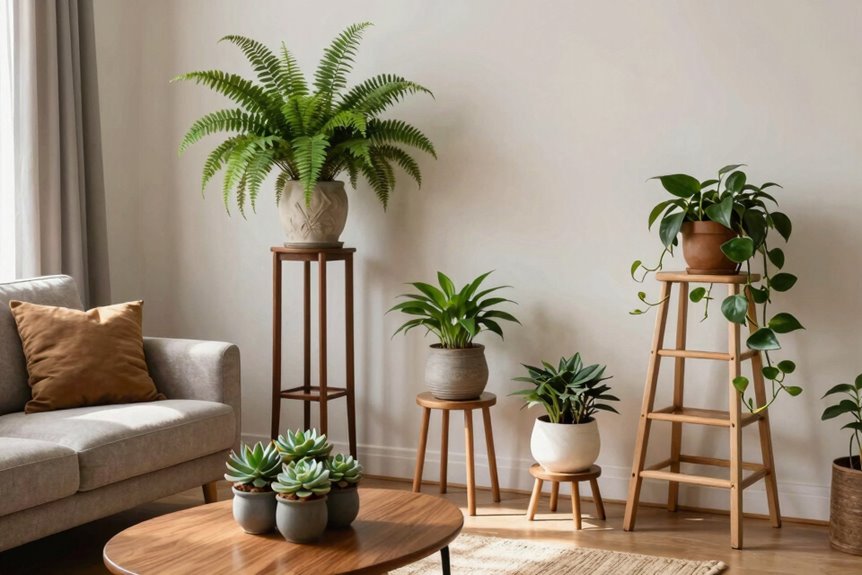
Why let your coffee table sit empty when it could double as a stage for something spectacular? Turning everyday furniture into plant stands instantly adds vertical drama without buying extra stuff.
Your coffee table isn’t just a surface—it’s a stage waiting for its next star.
Try this: place a tall snake plant on a stack of books atop your side table. This creates height variation that draws the eye upward. Pairing a low-profile sofa with a towering fiddle-leaf fig creates contrast that makes both pieces pop.
Mix it up. Upright plants on consoles, trailing pothos on shelves, compact succulents on nightstands. Your furniture styling feels layered and lived-in, not cluttered.
Coordinate pots with your pieces. Wicker works for rustic vibes, sleek ceramics for modern lines. Rotating plants weekly keeps that vertical drama fresh. Your space transforms without overwhelming your floors.
Group Plants in Odd Numbers for More Impact
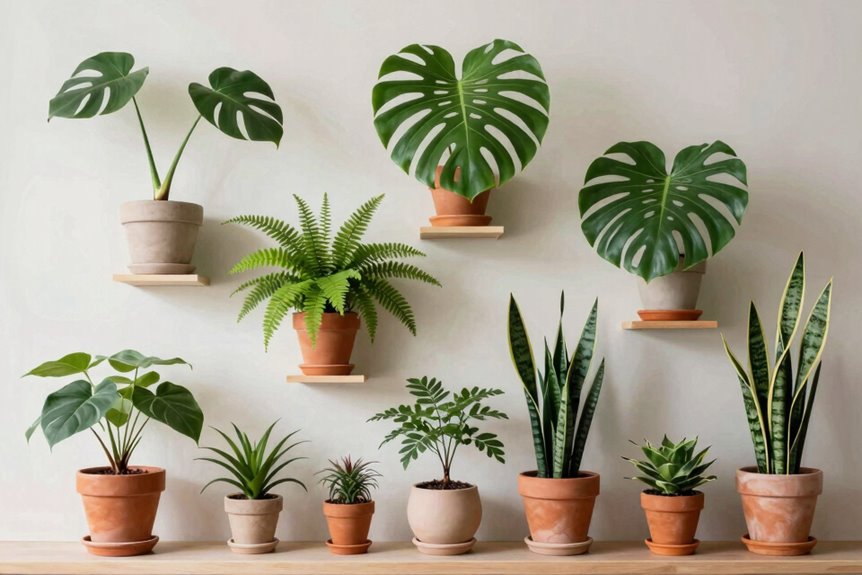
Once you’ve got your furniture doubling as plant stands, the next trick is figuring out how to arrange those plants so they actually look good together. Odd numbers are effective for creating visual impact that feels organic, not forced like symmetrical pairs sometimes do.
Here’s how to make it work:
- Start with a trio on your console: one tall, one medium, one trailing
- Space them about 6-8 inches apart so each plant breathes
- Mix leaf shapes and heights for depth that draws your eye around
- Add two more plants later to build a five-piece arrangement with richer layers
Research backs this up. Our brains find odd-numbered groupings more dynamic because they create visual tension that symmetrical arrangements lack. A small plant grouping with varied heights and textures creates a more engaging display.
Fill Empty Corners With Statement Plants

Empty corners are like awkward silences in a room, and they need something bold to fill the space. A six-foot bird of paradise or a sculptural fiddle-leaf fig transforms dead space into a living focal point. The key is picking the right height and heft so your plant anchors the corner without overwhelming it.
Corner Selection Tips
Where do you usually toss that random chair nobody sits on? Corners become graveyards for forgotten furniture. Let’s reclaim that space.
Your corner deserves plants that command attention. A tall bird of paradise or fiddle leaf fig creates an instant focal point. The vertical draw softens harsh angles and welcomes you into the room.
Make corners work:
- Cluster three plants at staggered heights, think 3-foot, 4-foot, and 5-foot, for lush fullness without crowding
- Position near east-facing windows to blur the line between indoors and out
- Rest pots on 12-inch pedestals to lift greenery toward eye level
- Stick to two tones. Deep greens and warm terracotta work with wood furniture
Your corner is waiting for this change.
Plant Size Guide
How do you know which plant won’t look like a sad stick in your corner? I measure my space first. Tall ceilings? I grab a Bird of Paradise or fiddle-leaf fig, both hit six feet easy and command attention. Smaller nook? A snake plant in a tall, slim pot stretches upward without hogging floor space.
I layer for depth. My tall statement piece anchors the corner, then I add a trailing pothos on a nearby stand. Pedestals create height variance, turning dead space into a mini gallery.
Quick guide:
| Space Type | My Go-To Plant |
|---|---|
| Large open corner | Bird of Paradise |
| Bright, airy spot | Fiddle-leaf fig |
| Tight vertical space | Snake plant (tall pot) |
| Layered display | Pair tall + trailing |
| Low ceiling | Narrow silhouette species |
Balance matters. Taper heights so nothing blocks light or feels cramped.
Choose Humidity-Loving Plants for Bathrooms
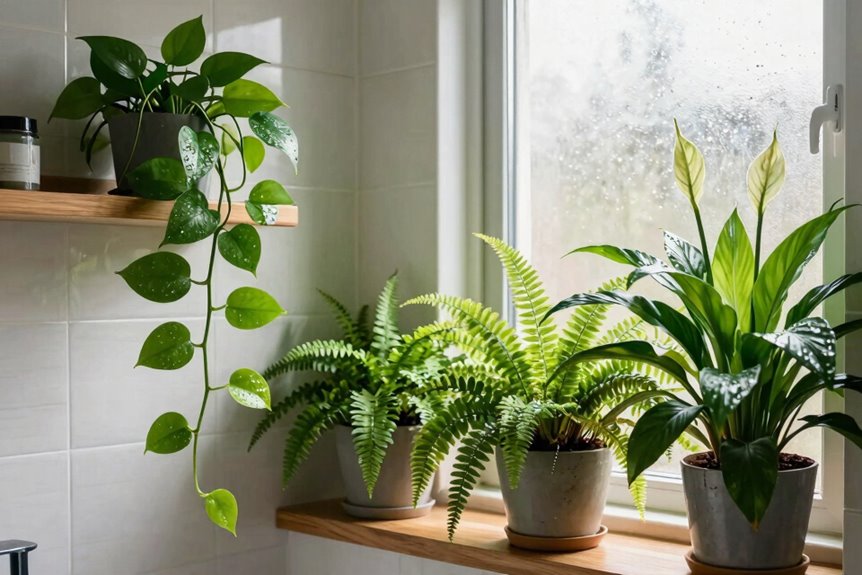
Since bathrooms get steamy every time you shower, they’re basically built-in greenhouses for the right plants. Choosing humidity-loving plants transforms these spaces into lush interiors worth spending time in.
Your daily shower creates a steamy paradise—treat yourself to a bathroom that feels like a living greenhouse.
Here’s what works beautifully:
- Ferns love moist air and indirect light, perfect for that shelf above your sink
- Calathea thrives in steamy corners with their striking patterned leaves
- Orchids add elegant blooms near your shower, soaking up ambient moisture
- Begonias tolerate humidity while bringing cheerful color to windowless spots
Position bathroom plants around the tub and shower where they catch maximum steam. You’ll want consistently moist soil and good drainage; no soggy roots allowed. Skip the misting routine for now, as care habits come next. These green companions make every morning feel like a spa escape.
Keep Plants Thriving With Easy Care Habits
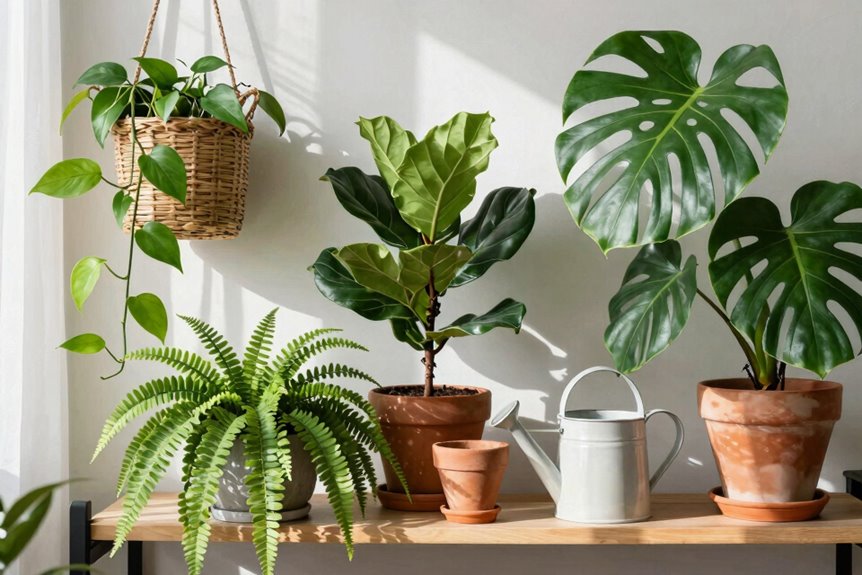
You’ve picked the perfect spot for your humidity-loving ferns and orchids, but now comes the real test: keeping them alive without turning plant care into a second job.
I started with forgiving indoor plants: ZZ plants, pothos, and snake plants that practically thrive on neglect. These easy-care options forgive missed waterings and still boost your air quality. I water only when soil feels dry two inches down; soggy roots kill faster than thirst ever could.
Cluster your plants in groups of three or five. This creates lush focal points and lets leaves breathe. I rotate mine weekly so growth stays even, not lopsided toward the window. Wipe dust monthly with a damp cloth. Those pores need light to photosynthesize.
Match plants to your light reality. Dim corners need a 20-watt grow bulb to provide adequate light for photosynthesis. Your green sanctuary awaits.
Know When Realistic Faux Plants Make Sense
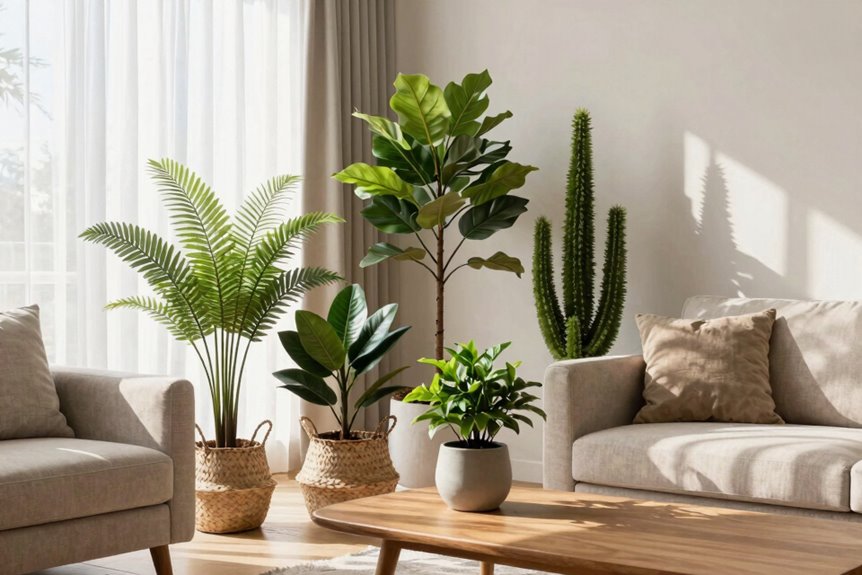
I get it. Sometimes I kill even the “easy” plants, so realistic faux options save me from guilt and dried-up leaves. If you’re always traveling or sneezing around pollen, these fake plants keep your space green without maintenance. Modern options, like those 28-inch fiddle leaf figs from Nearly Natural, look shockingly real on a sunny shelf. Just rotate them so UV rays don’t bleach their plastic finish.
High-Maintenance Plant Alternatives
Although I love filling my home with living greenery, I’ve learned that some spots just aren’t cut out for the real deal. Faux plants offer low-maintenance beauty without the guilt of crispy leaves.
When choosing faux plants, consider these factors:
- Examine leaf texture and color variation up close. The best ones mimic real specimens with subtle shading and veining.
- Swap finicky tropicals needing constant humidity for durable alternatives that won’t wilt when you travel.
- Select UV-resistant varieties for sunny windowsills to prevent plastic fade.
- Pair realistic stems with ceramic planters on elevated stands for arrangements that fool even plant-savvy friends.
Prioritize shapes resembling easy-care options like pothos or philodendrons. The durability means you’ll enjoy lasting greenery without the watering schedule.
Travel-Friendly Decor Solutions
Some spaces simply refuse to cooperate with living things, and I’ve stopped fighting them. Realistic faux plants have become my solution for travel-friendly decor that doesn’t demand a plant-sitter.
Low-maintenance doesn’t mean cheap-looking. I choose compact faux plants under 12 inches, think snake plants or succulents, that tuck into carry-ons without crushing. They weigh ounces, not pounds.
Pair them with unglazed ceramic pots, no drainage needed, and you’ve got instant cohesion. I always check for UV-resistant materials; nothing looks as obviously artificial as sun-bleached plastic glaring from a windowsill.
The result: I return from trips to find my “plants” exactly as I left them. Green, perky, and indifferent to my watering neglect. No maintenance required while traveling, and no dead plants to greet me upon return.
Allergy-Sensitive Home Options
Why suffer through sneezes just to keep a fern alive? Faux plants let me enjoy greenery without the wheeze. Here’s how I make allergy-sensitive spaces feel welcoming:
- I choose ultra-realistic faux plants with dense, textured leaves. No plasticky shine that screams “fake.”
- I tuck faux plants in humid bathrooms and stuffy entryways where real ones grow mold.
- I mix in low-pollen live options like snake plants when I crave something breathing.
- I pair everything with washable ceramic pots and wipeable surfaces for a truly hypoallergenic setup.
A home that feels alive shouldn’t make your eyes water. Smart plant choices mean nobody gets left out of the green-thumb club, not even sensitive noses like ours.