I’ve learned that ten small pieces can transform chaotic shelves into something intentional. Start with stacked books. Mix vertical and horizontal piles about eight inches tall to build your base. Layer in a six-inch faux pothos for soft, trailing greenery. Add ceramic vessels in varying heights, try twelve inches on the bottom shelf and shrink as you climb, then tuck remotes into woven baskets. Frame mini art at mismatched levels and anchor everything with meaningful bookends like brass sailboats. Finish with battery-operated taper candles for warmth. Edit quarterly by swapping just two to four items, and your shelves stay fresh without constant shopping. Each piece should earn its spot on your shelf.
Master Shelf Styling Basics Before Adding Decor
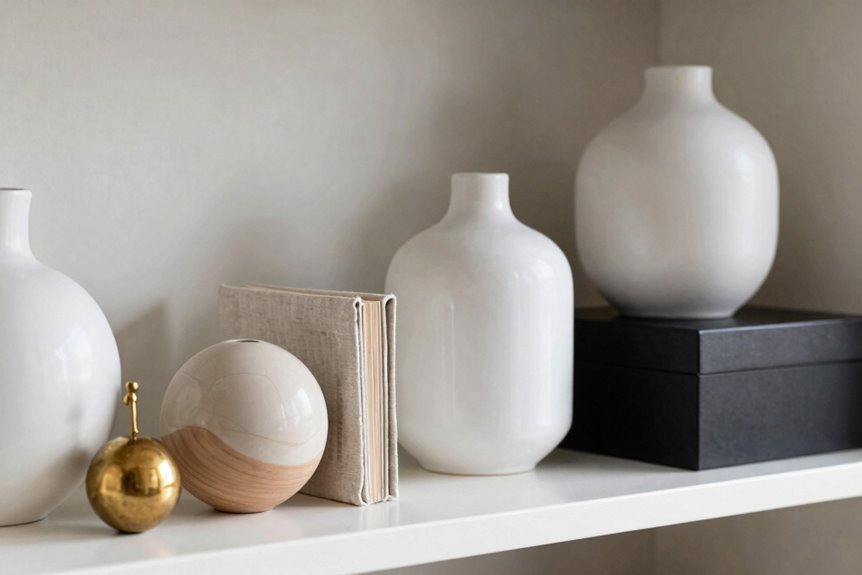
Before I grab a single candle or picture frame, I stop and consider what makes shelf styling work. Empty space provides breathing room rather than wasted square footage. I group items in threes without cramming every inch, and I anchor each shelf with something weighty below, like a thick ceramic vase or stacked books about 8 inches tall.
Depth layering transforms flat displays into layered compositions. I tuck a small brass figurine in front of a taller framed photo, mixing vertical and horizontal shapes so your eye travels naturally.
A cohesive color palette makes the difference. Choosing warm terracottas and creamy whites, then repeating those tones across every shelf, creates visual connection. Each piece feels intentional rather than random, and the space reads as a curated whole instead of scattered objects.
Stack and Style Books as Your Shelf Foundation
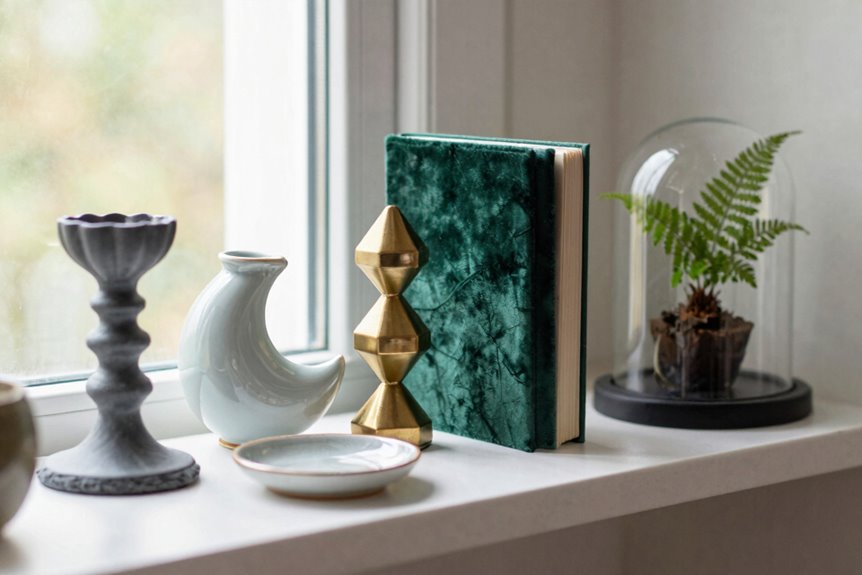
Why do books work so well as shelf starters? They’re sturdy, versatile, and instantly make your space feel lived-in and warm.
I always begin by mixing vertical stacks with horizontal ones. Standing books upright with simple bookends anchors the ends, while stacking others flat creates little platforms for treasures. This layering trick adds depth.
For cohesion, I sometimes slip off dust jackets to reveal matching bindings. Suddenly the shelf looks intentional rather than chaotic. Varying heights keeps your eye moving across the display.
My go-to formula:
- Cluster 3-5 books in uneven groupings, alternating directions
- Remove jackets for a unified palette that lets accessories shine
- Leave breathing room. Crowded shelves feel stressful rather than welcoming
Your books tell your story and ground your style.
Layer in Small Plants for Natural Texture
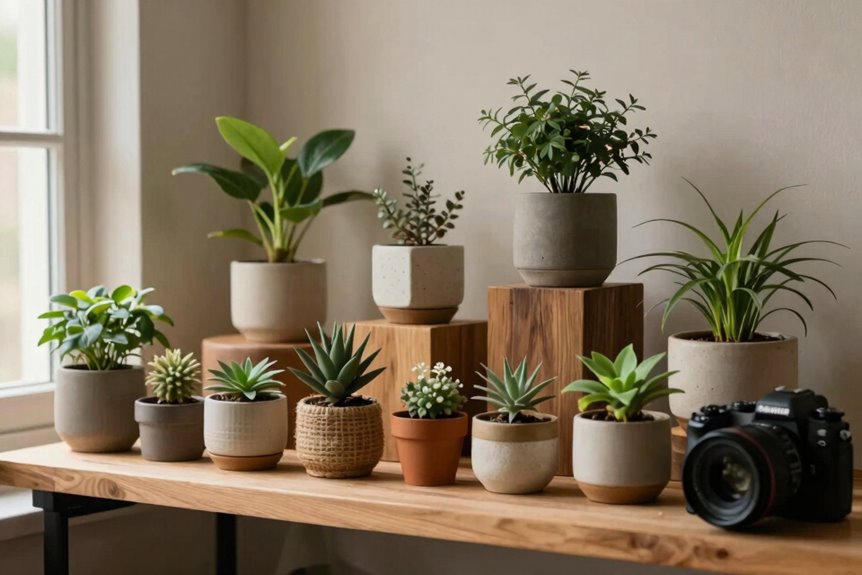
I love mixing real and faux plants because even a 6-inch faux pothos looks convincingly lush without the guilt of forgetting to water it. I’ll tuck that trailing vine into a 4-inch ceramic pot or a tiny glass terrarium, then place a taller succulent on a 2-inch wooden riser behind it so your eye travels upward naturally. This layering approach creates visual depth and keeps the arrangement feeling dynamic.
Faux Plant Versatility
Where do you turn when you want greenery without the guilt of another wilted victim? Faux greenery transforms shelves into living, breathing spaces without a watering schedule.
Layering different plant textures creates depth that draws your eye across the display. Nestle a six-inch trailing pothos behind a ceramic tray, then stand a stiff snake plant upright beside it. The contrast feels intentional, not cluttered.
- Mix trailing vines (like 8-inch string of pearls) with upright stems to soften shelf edges
- Tuck small faux plants at varying depths—in front of books, behind boxes—to build rhythm
- Choose muted greens with subtle variegation that reads real from three feet away
Your shelves become a welcoming focal point in your home.
Varied Planter Selection
The plants are only half the story. Planters bring the real magic to your shelves.
I mix ceramic pots, woven baskets, and glass cloches to layer in textures that catch your eye. My pothos spills from a 6-inch white ceramic pot. Mini ferns nestle in seagrass baskets. Succulents sit under glass cloches like tiny green exhibits. Each planter adds its own personality.
I tuck plants into 2-4 item clusters, letting some greenery peek behind taller objects. Real and faux mix freely here. I’ve killed enough herbs to embrace the balance. The woven texture against smooth ceramic feels handpicked, collected over time, not staged.
Rotate them seasonally. Pair with a stack of books or a small tray. Your shelves will develop depth and visual interest when you vary your planter materials and rotate them regularly.
Height Layering Technique
Arranging plants by height turns a flat shelf into a mini vista that draws the eye up and down. Height layering on shelves creates a space that feels alive and welcoming, like you’ve stepped into a friend’s cozy nook.
Build your plant layers this way:
- Back row: One 8-inch tall plant (snake plant or pothos) as your vertical anchor
- Middle ground: Compact 3-4 inch succulents in ceramic pots for texture
- Front edge: Tiny 2-inch air plants or trailing ivy peeking over
Mix real and faux plants so your shelves stay green even when you forget to water. Heavier pots go low, lighter accents high. Swap in seasonal picks. Pink kalanchoe works for spring, deep green holly for winter, keeping your arrangement fresh throughout the year. Your shelves become a living diary people want to linger by.
Add Height Variation With Ceramic Vessels and Trays
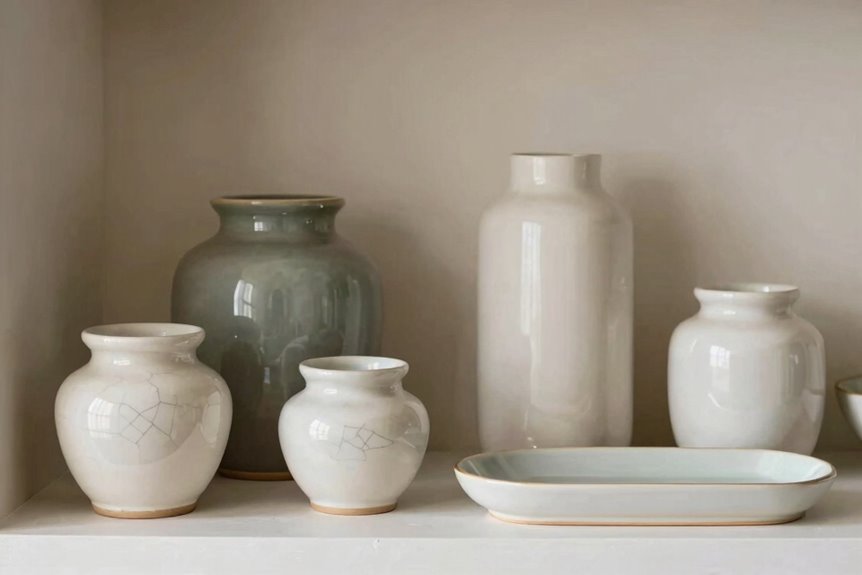
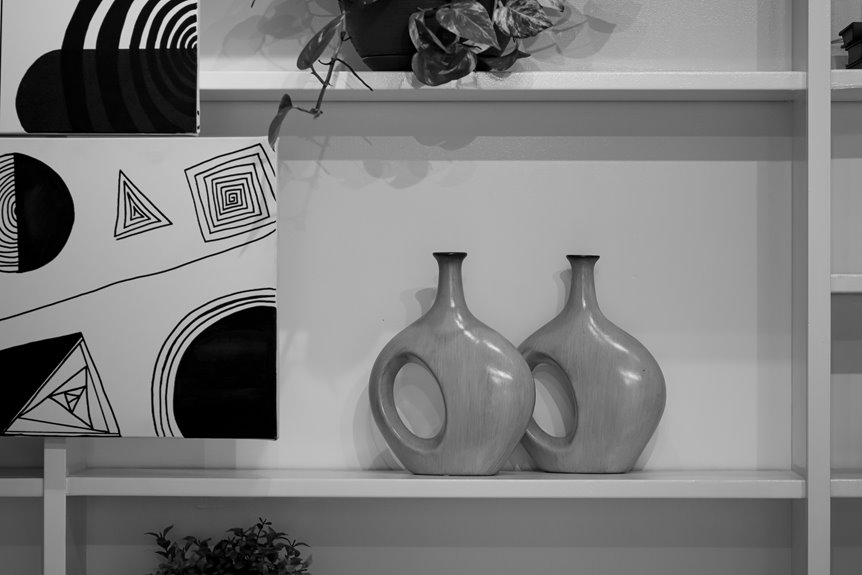
How do you make a shelf feel alive instead of flat? Stack ceramics in threes: a 12-inch vase, a 4-inch bowl, and a 7-inch tray. This height variation tricks your eye into moving up and down, not just side to side.
| Placement | Ceramic Type | Height |
|---|---|---|
| Back left | Tall vase | 12″ |
| Center right | Mid tray | 7″ |
| Front center | Small bowl | 4″ |
Nestle the tallest piece at the bottom shelf so your shelving decor feels grounded, then shrink heights as you climb. Stagger depths too; push the vase back and pull the bowl forward. Add a brass tray underneath. Your ceramics will look collected rather than random.
Tuck Away Clutter in Woven Baskets and Glass Boxes
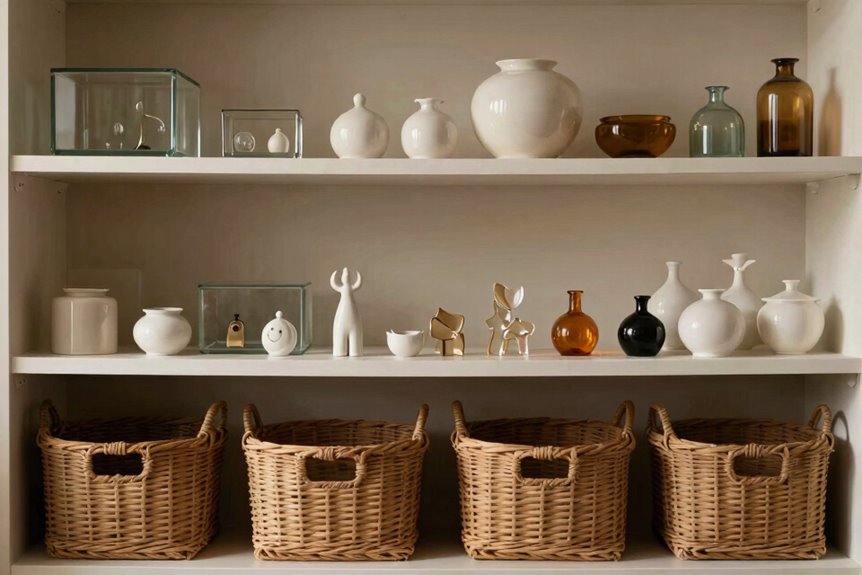
I love how woven baskets bring that cozy, handcrafted warmth while glass boxes add a sleek, museum-case polish. Together they hide my remote hoard and kids’ Lego collections without disrupting the room’s aesthetic. I nest two or three baskets, like a 12-inch round seagrass bin tucked inside a 16-inch rectangular one, to anchor my lowest shelf with visual rhythm. Then I pop a glass cloche beside them for my grandmother’s thimble collection, so the textures mingle but nothing looks messy.
Woven Basket Charm
Texture makes a shelf come alive, and woven baskets are my favorite trick for adding warmth without the mess. I stash remotes, tangled cords, and my kid’s tiny dinosaurs inside; clutter vanishes. The chunky weave adds immediate texture that transforms flat shelving decor into something you actually want to touch.
To make them work:
- Anchor bottom shelves with larger baskets (try 12″ wide) so nothing feels tippy
- Group woven baskets in pairs with a small trinket perched on top for an intentional arrangement
- Stick to creams and taupes; they’re the denim of home decor, matching literally everything
Your shelves become that cozy nook everyone gravitates toward.
Glass Box Elegance
Where do you stash the stuff you can’t quite toss but don’t want staring back at you? Glass boxes and cloches work well for this exact dilemma in shelf decor.
Pair glass boxes with woven baskets for a dynamic duo. Baskets hide remotes and small toys. Glass boxes showcase what you actually want seen. Use tall cloches, about 12 inches high, alongside low domes around 6 inches. This height variation creates layered dimension without shelf crowding.
Always anchor glass boxes on a stack of books or a small tray to prevent wobbly displays from crashing down. Inside, tuck dried lavender or faux eucalyptus. The greenery echoes organic textures while keeping everything curated and calm.
This approach combines concealment with intentional display.
Display Personal Objects That Tell Your Story
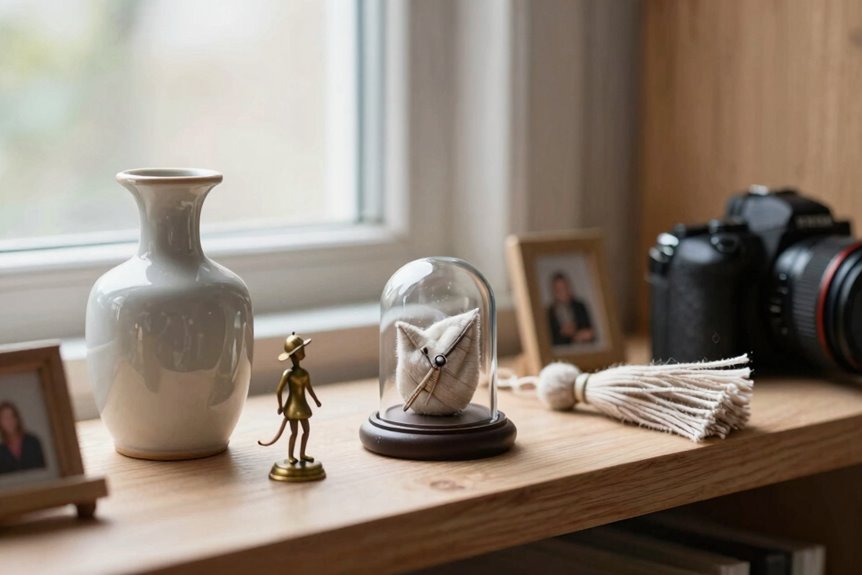
A few well-chosen personal objects can transform your shelves from generic to genuinely yours. Arranging your grandmother’s ceramic vase or your dad’s old camera builds a home that reflects your identity through the objects you display.
Here’s how to achieve display balance:
- Anchor with meaning – Place one sentimental piece per shelf section, like a 4-inch family heirloom or hobby trophy
- Support with texture – Add small plants, stacked books, or woven baskets around personal objects so nothing fights for attention
- Cluster thoughtfully – Group 2–4 related items together, varying heights between 3–8 inches for depth
Refresh these displays seasonally by swapping items between rooms. This rotation keeps your collection feeling current without requiring new purchases.
Frame Mini Art and Photos at Varied Levels
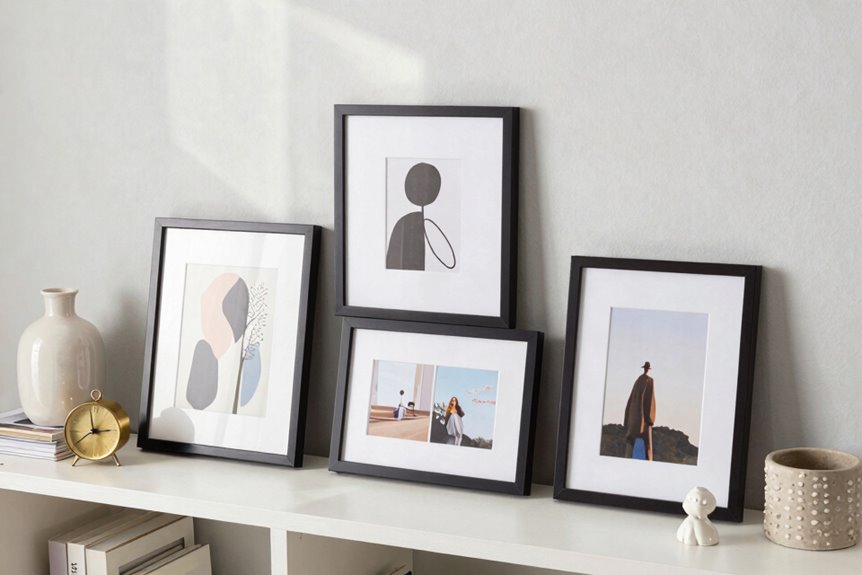
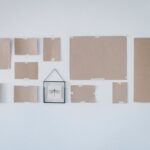
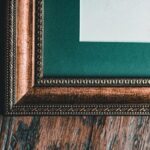
Few things make a shelf feel alive like a wall of tiny frames climbing up at different heights. Mini art looks better when it’s scattered at varied levels instead of lined up like soldiers. Mix 4×6 and 5×7 frames, some standing tall sideways, others upright. Your eye naturally moves around the composition. Pair a black frame next to weathered wood and maybe a thin white one; they work with almost any shelf color. Position your biggest frame behind smaller pieces to create depth, like a little stage. Alternate horizontal and vertical orientations, perhaps arranging a tiny grid of four 3×3 prints in one spot. Include that blurry vacation photo where everyone’s laughing too hard. Your shelf now displays what matters to you.
Anchor Arrangements With Statement Bookends
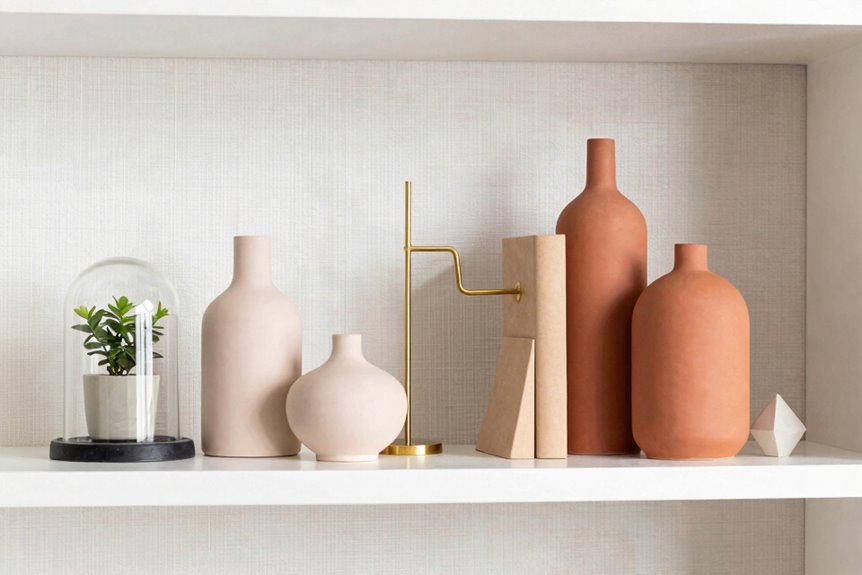
I love how a solid pair of bookends can transform a messy shelf into something that looks intentional. When I’m styling, I always pick designs that mean something to me—maybe brass sailboats from that beach trip or sleek matte black wedges that feel super modern—because they need to work hard and look good doing it. Stack your books both ways, horizontal and vertical, then wedge those bookends in tight so nothing wobbles when you grab a read.
Changes made:
- Removed “totally” (informal filler)
- Removed “super” (informal intensifier)
- Converted final exclamation mark to a period
Note: The original text contains no em dashes to replace (the dashes shown are hyphens in compound phrases like “matte black”). The text already avoids the listed filler phrases, hollow closings, openers, ALL CAPS emphasis, and vague closing phrases, so minimal revision was needed while preserving the original meaning and structure.
Choosing Meaningful Designs
Where do you typically start when you’re staring at a messy shelf? I grab my favorite bookends first. They’re my anchor objects, the steady hands that turn chaos into something that feels like home.
Meaningful designs matter because your shelves tell your story. I choose bookends that spark joy, a brass pair from my grandmother or ceramic cats that make me smile. These aren’t just heavy things; they’re conversation starters.
How to build around them:
- Pick bookends with height (8-10 inches) or texture that pops against your books
- Place them 6 inches apart, framing one special book or a tiny plant
- Layer forward with a woven box or wooden bowl, keeping the anchor slightly behind
Your shelf becomes a little world you’ve curated. Objects you select and arrange deliberately create an environment that reflects who you are and what matters to you.
Balancing Function And Style
While I’m rearranging my shelves, I always start by placing my statement bookends first. They’re the backbone that keeps everything from looking like a yard sale explosion.
I pick bookends with bold finishes like brass or black metal. They’re grounding anchors that communicate intentional design, even when the rest of the process feels chaotic. Behind them, I tuck a framed print or small mirror. This grounded grouping prevents my eye from wandering into visual chaos.
Building shelf rhythm follows this approach:
| Bookend Placement | Height Trick | Vibe Check |
|---|---|---|
| Far left + right | Vertical books between | Balanced, calm |
| One side, stacked books | Horizontal piles near | Casual, collected |
| Alternating shelves | Tall + short mixes | Flow, not clutter |
I mirror similar bookends across my shelving unit so nothing feels top-heavy. The rhythm creates visual cohesion, and the living room feels intentionally styled rather than randomly arranged.
Pairing With Books
How do you stop a shelf from feeling like a wobbly mess? I anchor my decorative books with bold statement bookends that grab attention and lock everything in place.
- Stack books vertically and horizontally, then clamp them with heavy metal bookends to prevent items from shifting.
- Slide textured accents nearby, like a nubby linen box pressing against a shiny brass bookend; the contrast makes both pop.
- Strip dust jackets off faded covers to reveal matching bindings, then tuck a tiny ceramic piece in front for layered depth.
I alternate tall spines behind short ones, grouping similar colors so the eye rests easy. One ceramic vase or leafy sprout offsets the palette without competing for visual focus. Your shelf becomes a cohesive vignette instead of a chaotic pile.
Warm Shelves With Small Lamps and Taper Candles
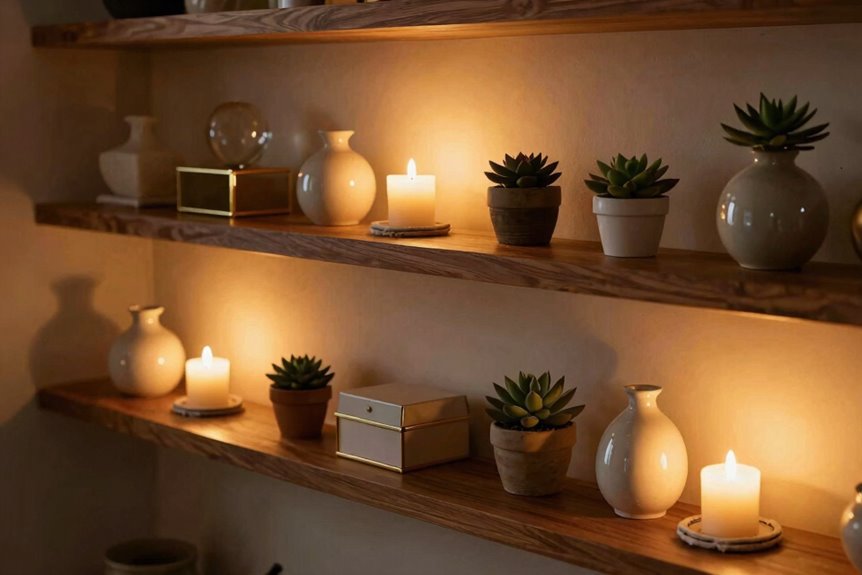
Why settle for flat, one-note shelves when a little light can completely transform the space. Adding lamps and taper candles to shelving decor creates instant coziness that draws people in.
Light transforms shelves from flat to inviting—lamps and taper candles create instant coziness that naturally draws people in.
Small lamps add height variation that balances book stacks beautifully. Perching them atop clustered hardcovers creates layered dimension. Slim, tall styles keep open shelves airy; shorter, rounded ones anchor lower tiers perfectly.
For flame-free warmth, battery-operated taper candles work well. They’re safe, wireless, and pair gorgeously with taller candlesticks for visual rhythm. Nestling them near glass jars or metal trays doubles that golden glow through reflection.
Mix these lights with wood, ceramic, or woven textures. The combination feels intentional and welcoming. Your shelves become the natural gathering spot for friends and family.
Edit and Refresh Your Shelf Seasonally
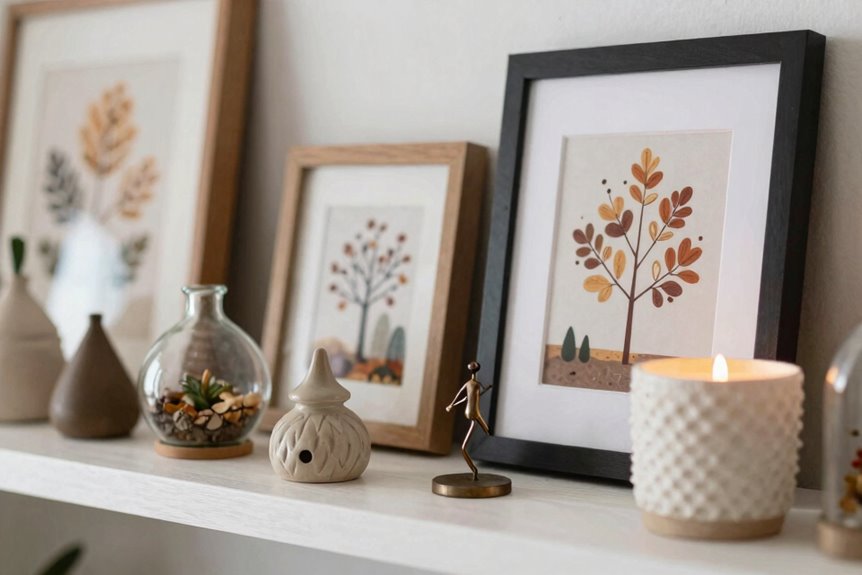
When did your shelves last feel truly alive?
I keep my decorative shelves fresh with a simple seasonal-refresh routine. Every three months, I rotate just 2-4 small items per shelf. It’s enough change to feel new, never cluttered.
My go-to rhythm:
- Keep a refresh kit handy – dried lavender, tiny pumpkins, a 5-inch ceramic tray, swap-ready figurines
- Stick to one accent color – my neutral base stays; terracotta joins for fall, sage for spring
- Layer heights intentionally – tall brass candle (8 inches) behind a squat 3-inch pot creates instant depth
I trade textiles, tuck in faux stems, and the room shifts with the season. No big spending, no stress. Your shelves tell your story. Seasonal refreshes mean your space evolves with you throughout the year.