
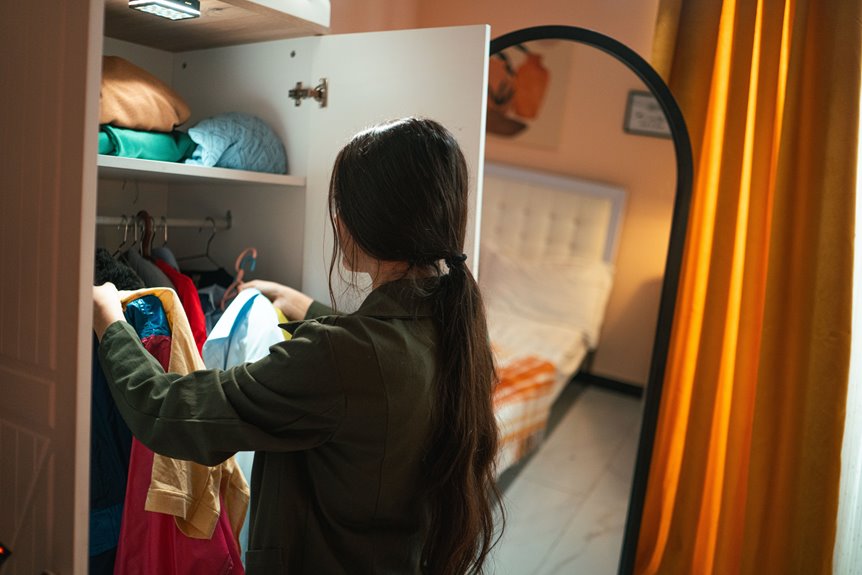
I start every small bedroom overhaul by grabbing a trash bag and facing the truth: I’ve got too much stuff and not enough square footage. I ruthlessly question each item—do I actually use this? do I even like it?—then donate anything that doesn’t fit my current life. Next, I measure everything with a 25-foot tape, marking my bed’s footprint with painter’s tape on the floor to test wall-hugger versus floater placement before committing. I choose a storage bed with built-in drawers or lift-up frame, plus slim legs that keep the room breathing. I mount shelves 12 inches below the ceiling and hang over-door organizers for shoes and cleaning supplies, snagging vertical real estate my feet never touch. My nightstand sits within 24 inches of my pillow, hiding cords in a back charging station and corralling lip balm and glasses in fabric-lined bins. Surfaces stay clear, always. I stash winter coats and extra duvets in 12-inch under-bed bins, reserving accessible spots for daily items only. Every third Saturday, I spend 20 minutes purging crusty lip balms and “maybe” jeans, keeping clutter from creeping back. These steps work when customized for your specific space constraints.
Declutter First: Decide What Belongs in Your Small Bedroom
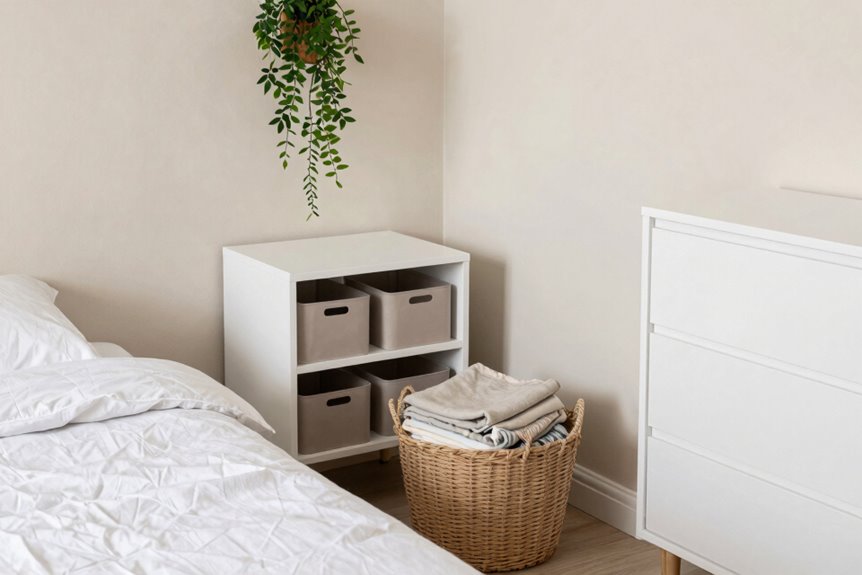
Before I even think about buying a single storage bin, I grab a trash bag and face the truth: I’ve got too much stuff and not enough room to breathe. That’s when I declutter. I hold each shirt, book, and random knickknack and ask: “Do I use this? Do I love this?” If it’s a no, it goes. I donate clothes that fit fine but feel like someone else’s style. No guilt, just liberation. Every item needs a real home in my bedroom. No home? Then it gets relocated, stored in my 12-inch closet bins, or banished entirely. I reassess monthly because clutter creeps back like that one aunt at Thanksgiving. Starting fresh removes the mental burden of excess possessions.
Measure Your Space and Lock In Your Bed Placement
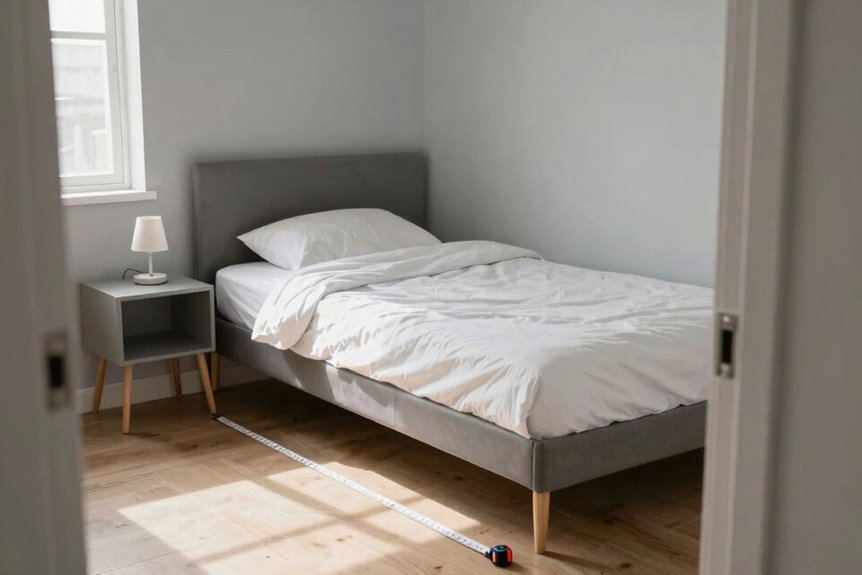
I grab my trusty 25-foot tape measure, the one with the bright yellow button that retracts with a satisfying snap, and start mapping every inch of my bedroom, including that pesky door swing that nearly whacked me last Tuesday. Before I buy anything, I mark my bed’s footprint on the floor with painter’s tape, testing whether pushing it against the wall opens up precious walking space or if floating it creates a cozy reading nook I can actually use. Once I’ve locked in where my bed anchors the room, those numbers prevent costly mistakes like a dresser that won’t clear the window by a humiliating two inches.
Bed Placement Strategy
Every small bedroom starts with one big decision: where the bed goes. Locking in your bed placement strategy early anchors everything else, much like choosing the campfire spot before pitching tents.
I grab my tape measure first. I map where I’ll actually walk, noting windows and outlets so I’m not stretching cords across the room like a tripwire obstacle course. Then I choose: wall-hugger or floater. Pushing against a wall maximizes floor space and opens traffic flow. Floating creates zones; sleep here, dress there.
I opt for a low-profile headboard to keep things visually airy; nothing heavy looming overhead while I sleep. Finally, I step back and reassess. Does my queen feel cramped. Sometimes downgrading to a double preserves breathing room and storage access.
Space Measurement Basics
Start by getting your tape measure. This tool is essential for mapping every inch: door swings, window spots, outlet locations. Walk the room, pretending to stumble to the bathroom at 2 AM to identify potential obstacles.
Bed placement anchors everything. Push yours against the wall to maximize floor space, or float it to create reading nooks. Decide early on placement to avoid changes later.
Your tape measure should also catch ceiling height and doorway widths. That dresser you want means nothing if it cannot squeeze through the hall. Bedroom organization requires proportionate pieces, not oversized furniture. Measure twice, buy once. Your future self will appreciate not tripping over furniture at midnight.
Choose a Storage Bed Frame With Built-In or Under-Bed Options
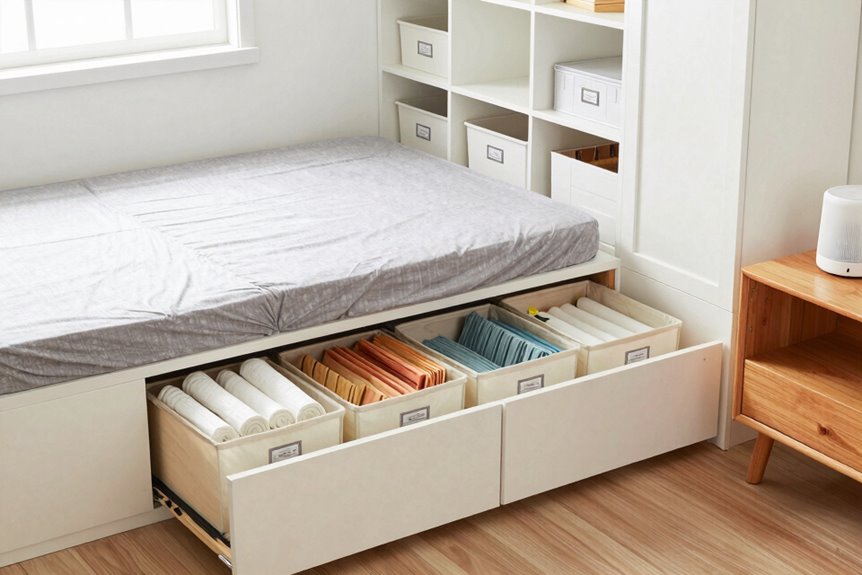
I swapped my old metal frame for a storage bed with two 30-inch drawers underneath. My bulky winter comforter now stores out of sight. When choosing a storage bed, look for slim, light-colored legs and clean edges so the room still feels open rather than like a furniture warehouse. Skip the decorative headboard shelves. They collect dust and random items.
Utilize Hidden Space
Because a small bedroom leaves you zero room to waste, the biggest storage win is hiding right where you sleep. Under-bed storage is transformative when you choose wisely.
- Pick built-in drawers or a lift-up frame to stash off-season sweaters and extra blankets.
- Keep it mostly empty on parquet or a low-pile rug so you can actually reach things without obstruction.
- Skip the suitcases. They create visual clutter when you’re trying to relax.
If built-in isn’t in your budget, wicker baskets slide right under and keep that calm, hotel-room feeling intact. Once you clear your surfaces, the rest of your organization will follow naturally.
Select Functional Frames
Few pieces reshape a cramped bedroom quite like the bed you pick. A smart storage bed frame with built-in drawers or under-bed compartments maximizes functionality. You can store off-season sweaters and extra linens right where you sleep instead of shoving bins into distant closets.
Look for frames with clean lines and lighter footprints, as bulky headboards swallow precious space. Some designs include headboard shelves for books or phones, keeping surfaces clear. If drawers feel cramped, choose frames with lift mechanisms. Hydraulic lifts let you access everything without crawling.
No built-in storage? Slide a storage ottoman at the foot of the bed. This provides seating plus hidden organization. Your bedroom stays breathable, and everything you need sits within arm’s reach.
Maintain Visual Calm
Storage beds look smart, but the real win is how they make your room feel. When you stash seasonal clothes and extra linens underneath, you’re not just saving floor space. You’re creating visual breathing room.
Here’s what works:
- Pick built-in drawers or sleek wicker bins (avoid crinkly plastic that whispers “cheap”).
- Reserve that hidden zone for folded flannel sheets, not your dusty gym bag. Clutter attracts more clutter.
- Pair with a simple, light-colored headboard and clean lines; anything fussy fights the serenity you’re building.
Think hotel simplicity: parquet peeking beneath, a low-pile rug, and enough open floor to pace barefoot. This approach reduces visual noise and creates a restful sleeping environment.
Maximize Vertical Space With Wall-Mounted and Over-Door Storage
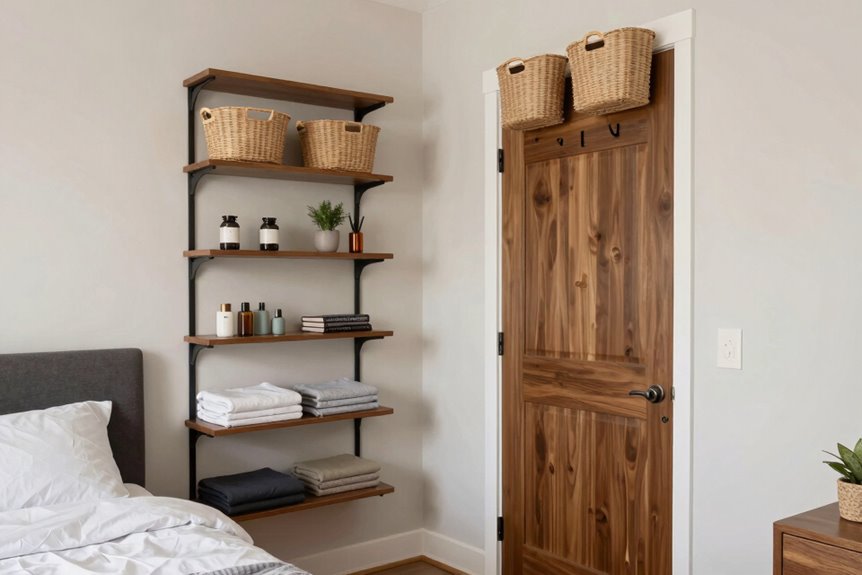
Look up, really crane your neck, and you’ll spot the most underused real estate in your entire bedroom. I mount wall shelves about 12 inches below my ceiling for books and baskets, instantly freeing my floor for actual living. Over-door organizers transform my closet and bathroom doors into storage powerhouses. I stash shoes, accessories, and cleaning supplies without sacrificing a single inch of surface space. Floor-to-ceiling wardrobes reach eight feet tall and hold everything season after season. I hang wall rails for bags and robes so items don’t tumble when I move my dresser. For serious vertical storage, modular systems like BOAXEL offer configurable options. You arrange shelves, rods, and baskets exactly as needed, expanding upward rather than outward. Your room maintains its original footprint while your storage capacity doubles.
Pick Nightstands With Drawers to Hide Daily Clutter
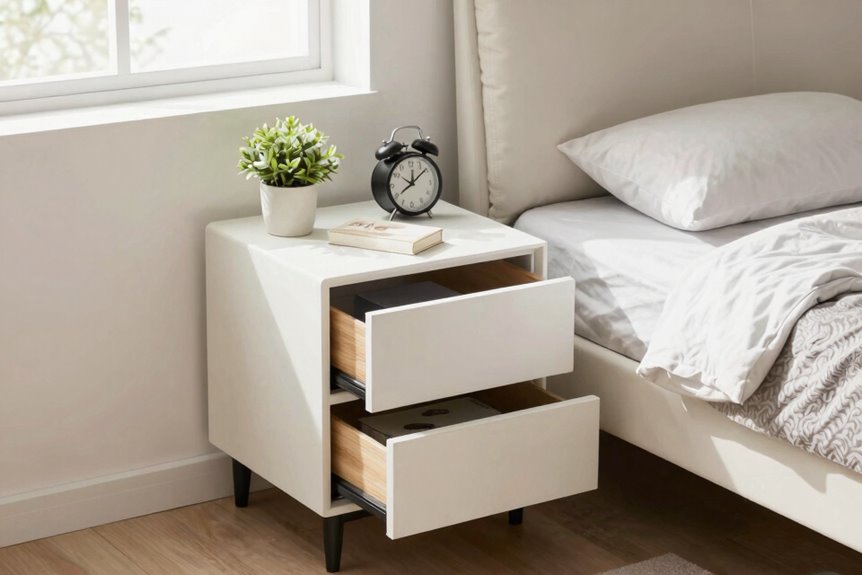
A nightstand without drawers is just a tiny table waiting to collect my water glass, three half-read books, and that weird pile of receipts I keep meaning to sort. Drawers aren’t fancy extras; they’re essential for keeping a bedroom organized.
Here’s what works for me:
- Pick a nightstand with at least one deep drawer (16 inches wide) for stashing chargers, lip balm, and midnight snacks
- Add small fabric bins inside to stop my phone cord from mating with my earplugs
- Place it within arm’s reach of my pillow so I don’t knock everything over grabbing my alarm
Nightstand organization means my lamp and current book stay topside while the messy stuff hides below. I peek inside monthly and toss what I’ve outgrown. Your bedroom will feel more restful when your clutter is stored out of sight.
Keep Surfaces Clear by Giving Every Item a Permanent Home
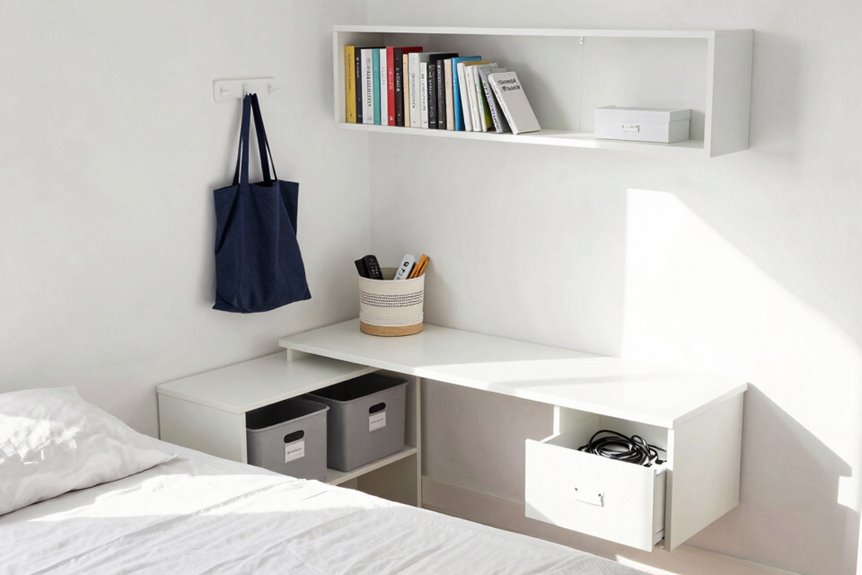
Once I’ve stuffed my nightstand drawers, the real test begins: keeping the top from becoming a junkyard. I give every item a permanent home so nothing lingers without purpose. Small bins divide my drawer space. Lip balm goes here, phone charger goes there. No more rummaging at midnight. I install storage solutions that eliminate the drop-and-run temptation. My storage-rich nightstand with hidden compartments swallows essentials whole, leaving surfaces breathing. I conduct weekly surface checks, catching clutter before it settles like dust. This rhythm reduces visual distractions and mental load.
| Item | Permanent Home | Surface Status |
|---|---|---|
| Phone | Drawer charging station | Clear |
| Glasses | Fabric-lined bin | Clear |
| Book | Shelf, not nightstand | Clear |
| Lotion | Side compartment | Clear |
| Loose change | Mini tray inside | Clear |
Store Daily Essentials Within Arm’s Reach
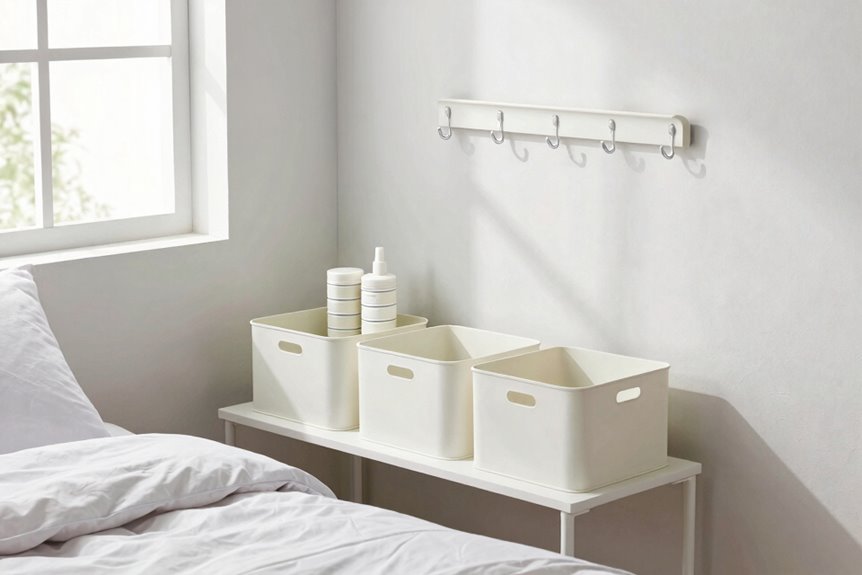
My nightstand doubles as a command center, keeping my world within a 24-inch radius. When daily essentials live close by, mornings feel calmer and evenings wind down smoother. No more hunting through closet space for my lip balm or charger.
Here’s what keeps me organized:
- A charging station tucked at the back corrals my phone, Kindle, and AirPods. Cords vanish behind it.
- Labeled drawer dividers separate hair ties, hand cream, and sleep masks so I grab without thinking.
- A storage ottoman at my bed’s foot holds my current book and tomorrow’s outfit, reachable but invisible.
I keep surfaces clear by storing only what I touch daily. Everything else belongs elsewhere.
Reserve Hidden Storage for Bulky, Rarely Used Items
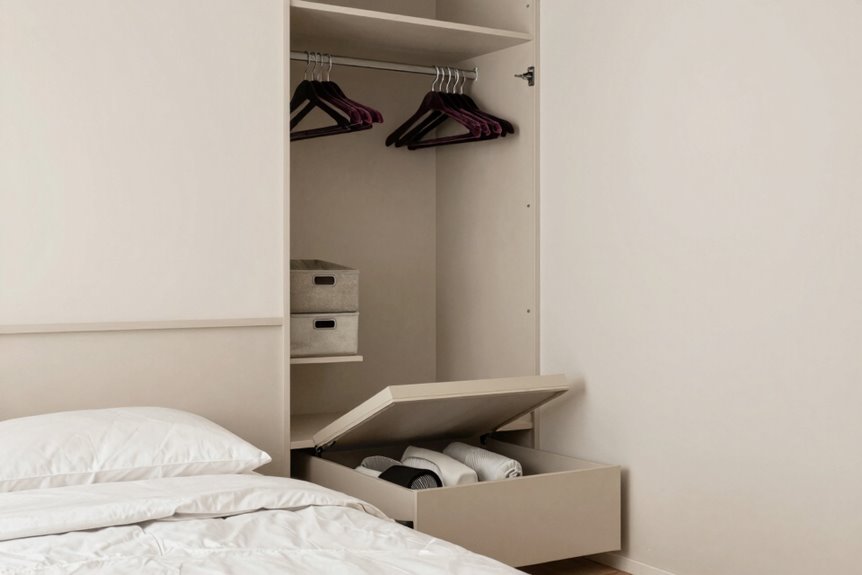
I stash my winter coats and extra pillows in a 12-inch tall under-bed bin from IKEA, freeing up my closet for stuff I actually grab every morning. It’s tempting to cram daily essentials into those hidden spots, but fighting with a heavy lid at 7 AM creates unnecessary friction during your morning routine. Keep your nightly routine smooth by reserving closed storage for the bulky, rarely-used items that would otherwise clutter your visible surfaces.
Closed Storage Priorities
A small bedroom’s worst enemy isn’t the lack of space; it’s the visual noise of stuff you barely touch. Hiding the bulky, rarely used items transforms how peaceful my room feels. I reserve my closet capacity for suitcases, spare duvets, and extra pillows. Things I need but don’t want to see daily belong behind closed doors.
Here’s what I’ve prioritized:
- Suitcases — They hog floor space and gather dust. I shove them onto that top shelf I can’t reach without a stool.
- Seasonal bedding — Extra duvets and pillows get vacuum-sealed and stacked behind closed doors.
- Off-season clothes — I rotate these into deep bins, keeping my everyday hangers uncluttered.
I check these zones every few months. If I haven’t touched something, it leaves. Removing unused items frees my visible spaces for what actually belongs in my daily life.
Accessible Daily Solutions
Once the big stuff’s out of sight, you’re left with the things you actually touch every day, and these deserve prime real estate. I stash my suitcase and spare comforter in the deep storage ottoman at my bed’s foot, but my nightly essentials live up front where I can grab them blind at 11 p.m.
For small bedrooms, this division matters. I keep my glasses, lip balm, and phone charger in a wall-mounted organizer without needing a nightstand. My charging strip hides behind a slim floating shelf, with cables threaded through a 2-inch hole I drilled myself. Daily items get open baskets; buried boxes are for “maybe next season” stuff. The 3 a.m. fumble for medication becomes unnecessary with this setup.
Use Your Closet Door and Bedroom Entry for Bonus Storage
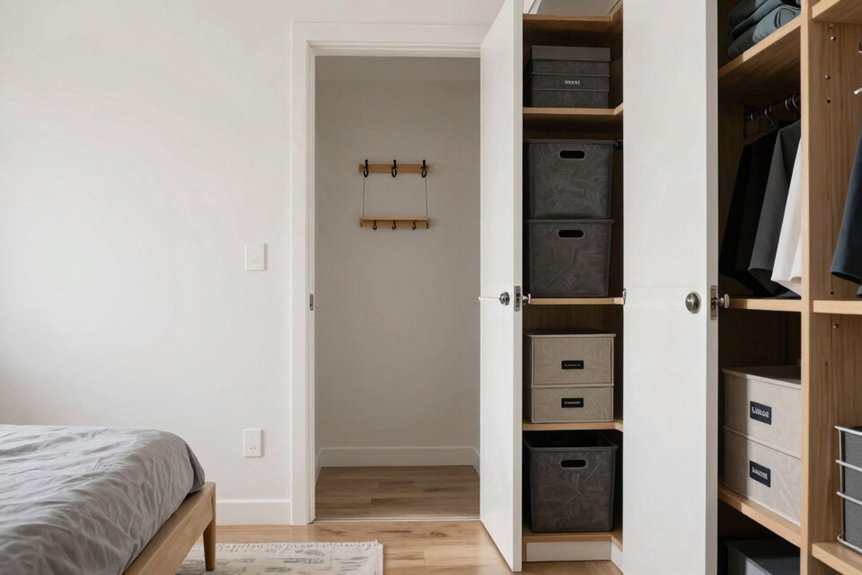
Where can you squeeze more storage when your bedroom’s already bursting at the seams? Your closet door and entry provide practical solutions you’ve likely overlooked.
Here’s how to turn dead space into functional storage:
- Hang an over-the-door organizer with clear pockets. Mine holds toiletries, scarves, and hair ties that used to get lost.
- Mount slim hooks or a 4-inch rack by the door for coats and bags. This keeps your floor clear of clutter.
- Slide a 12-inch shoe rack behind the door. It’s vertical, narrow, and maximizes limited space.
Add labeled baskets on closet shelves and keep a small catch-all for masks and cords. These solutions work.
Schedule Monthly Mini-Declutters to Maintain the System
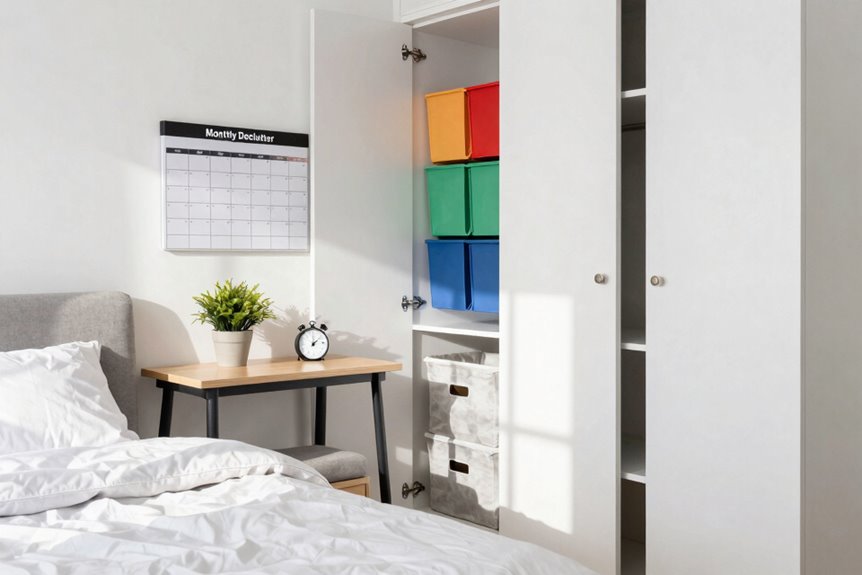
Even when I’ve squeezed every inch of storage from my closet door and entry, the clutter somehow creeps back, like that one sock that always escapes the laundry basket. That’s why I lock in a monthly-declutter ritual.
I pick one Saturday morning, set a 20-minute timer, and attack a single zone. The 3-pile method keeps me honest: keep, donate, relocate. If that candle still smells like regret, out it goes.
| Zone | Time Limit | Typical Catch |
|---|---|---|
| Nightstand | 15 min | Crusty lip balms, dead earbuds |
| Closet shelf | 20 min | “Maybe” jeans, lonely hangers |
| Dresser top | 15 min | Expired samples, loose change |
I jot what I purge, so next month’s mission shrinks. Tracking what leaves helps you identify your patterns and adjust zones that need more frequent attention.