
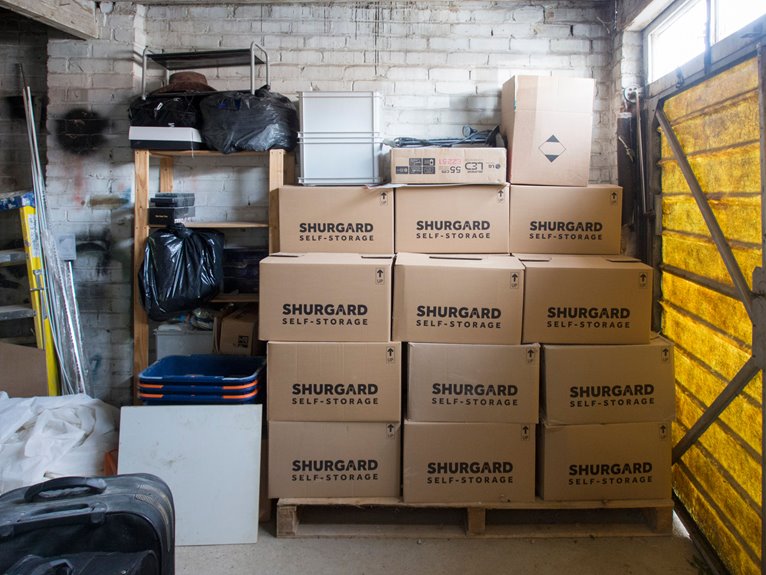
I manage my self-storage facility in five clear steps that keep everything running smoothly. First, I use software like SiteLink or storEDGE to automate rentals, payments, and gate codes. This eliminates manual payment processing and reduces administrative errors. Second, I organize units by size with bold Building-Row-Unit numbering, placing popular 10x10s near entrances so move-ins take minutes rather than hours. Third, I stick to a preventive maintenance calendar: monthly door inspections, quarterly full sweeps, and pest control around the perimeter. Fourth, I train my team to handle payment disputes calmly and fix access failures fast, logging every incident. This documentation prevents repeat problems and protects against liability. Finally, I watch occupancy daily and adjust prices dynamically, letting tenant feedback guide my upgrades. These practices directly increase revenue and reduce tenant turnover.
Implement Self Storage Management Software to Automate Rentals and Payments

Running a storage facility with paper ledgers and spreadsheets creates operational chaos. Critical information gets lost, processes slow down, and errors multiply.
Self-storage software automates the entire rental process. Customers can sign up at 2 AM without staff involvement. Lease management becomes straightforward; no more searching through filing cabinets. Invoicing automation and payments automation accelerate cash flow significantly. You’ll see real-time revenue and occupancy visibility on one dashboard, providing complete operational oversight. Payment processing integrates seamlessly into your workflow. Access control integration combined with automated tenant communications eliminates manual notification steps. Owners who implement these systems operate more efficiently and maintain better financial control.
Organize Your Unit Layout and Numbering System for Fast Move-Ins
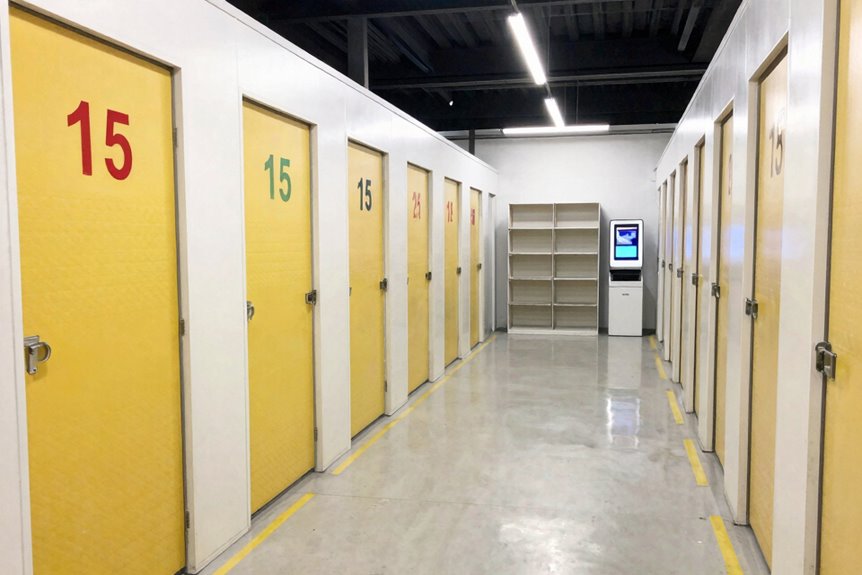
Why do move-in days always feel like a scavenger hunt? Tired families wander my facility, squinting at doors, looking for their units. I fixed this problem by reorganizing my entire layout.
Here’s how I did it:
- Map by logic, not luck — I group units by size and accessibility, placing 10x10s (my most popular) near entrances for quick access.
- Number with purpose — My unit numbering system reads floor-zone-unit (Building A-Row 2-Unit 15). This eliminates guesswork and backtracking.
- Sign big and bold — Facility signage uses high-contrast colors that remain visible even when a truck blocks the view.
Smart aisle planning cuts search time in half. I audit weekly for vacancy accuracy, ensuring my location strategy keeps facility turnover smooth. This capacity optimization reduces friction during move-ins.
Create a Preventive Maintenance Schedule That Catches Issues Early
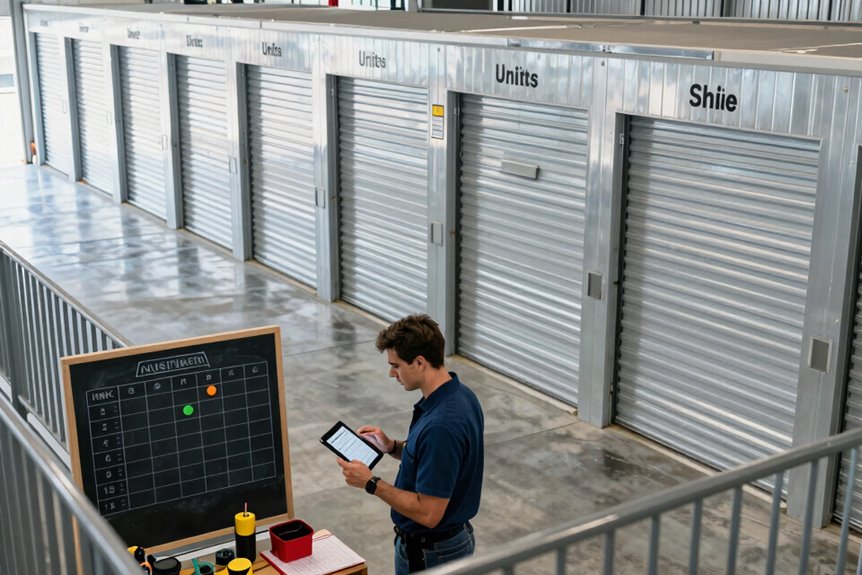
How much money did I waste last year on emergency repairs? Too much. That’s why I’m sharing my preventive maintenance system with you.
Self-storage maintenance isn’t glamorous, but it saves thousands. I schedule monthly facility inspections for high-risk zones and quarterly sweeps everywhere else. My maintenance scheduling lives in our PMS, tracking every HVAC check and pest control visit.
Here’s my rhythm:
| Task | Frequency | Owner |
|---|---|---|
| Pest control perimeter sweep | Monthly | External vendor |
| Door and lock inspections | Monthly | Maintenance lead |
| HVAC checks & filter swap | Quarterly | HVAC contractor |
| Roof debris & gutter clearing | Quarterly | Facilities team |
Condition monitoring means catching a worn door roller before it snaps. Issue remediation happens fast when you’ve got clear task owners and deadlines. Clean, climate-stable units reduce tenant turnover and lower vacancy costs.
Train Staff to Resolve Payment Disputes and Access Control Failures
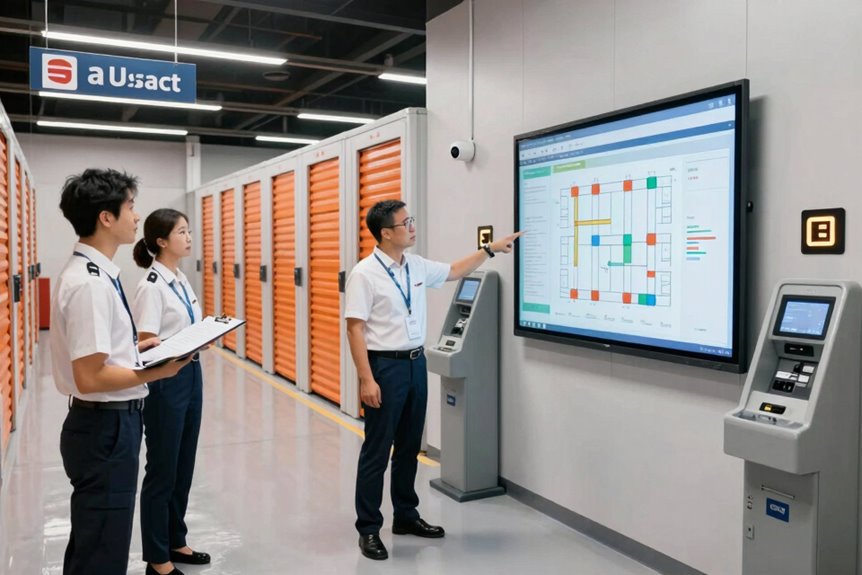
Maintenance keeps the doors working, but your people keep the business running.
At my self-storage facility, staff training transforms tense moments into trust-building wins. Let’s explore:
- Master the basics first. I teach my team payment dispute triggers: failed auto-pays, partial checks, and late fees. Clear explanations of due amounts calm frustrated tenants fast.
- Script the sticky stuff. Access control failures panic folks. My people verify identity with photo ID, restore gate codes, then log everything into our PMS. Incident documentation saves us later.
- Know when to pass it up. An escalation path to me or my supervisor keeps dispute resolution moving. No one gets ghosted.
We role-play monthly. This is awkward but effective. Tracking repeat issues sharpens our payment processing and customer service guidelines, so tenants experience consistent, reliable service.
Adjust Pricing and Services Using Customer Feedback and Occupancy Data
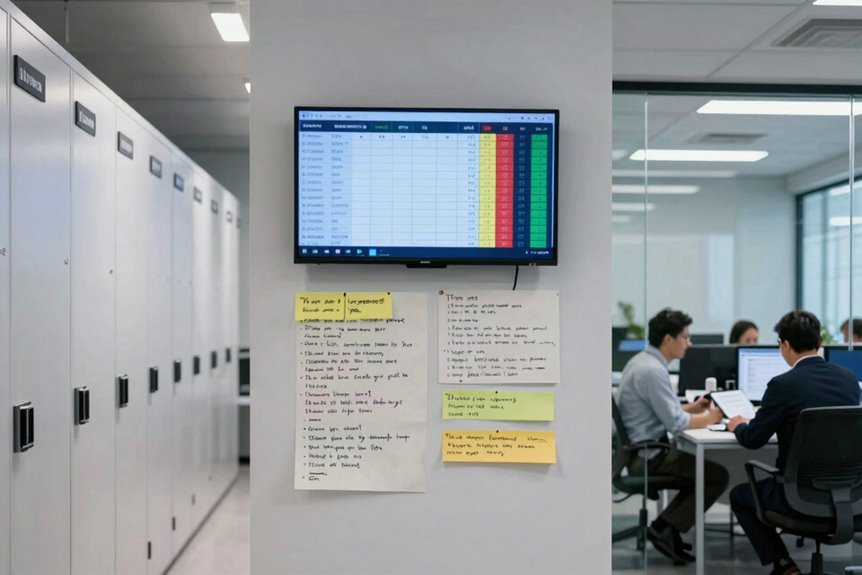
Where exactly does your money sit when half your units go empty. Occupancy data should be reviewed daily to identify problems before they escalate. Dynamic pricing allows you to increase rates when demand spikes or decrease them when you notice high vacancy. Customer feedback informs storage facility pricing decisions. Listen when tenants indicate that your climate control justifies premium pricing. Revenue management requires monitoring market trends and competitor rates, then adjusting promotions and lease terms accordingly. Smart tenant retention involves offering flexible agreements during slow seasons, not just at lease renewal. Your Property Management System contains valuable data; correlate every pricing adjustment with actual tenant responses. Sustainable profit develops when cost recovery aligns with service upgrades that renters actually use.