I map my wall first by measuring height, width, and furniture placement, then choose one strategy that fits. An oversized canvas covering two-thirds of my sofa’s width creates instant drama without gallery-wall headaches. Vertical stacks above low credenzas draw eyes upward. Swap-ready frames with two-inch spacing let me refresh art anytime. Tapestries add warmth I can actually touch. Sconces at eye level frame pieces like museum lighting. A 65-by-22-inch mirror leaned against the wall doubles my space visually. Board-and-batten transforms empty stretches into architecture. Peel-and-stick murals cover ten feet without a single nail hole. Each solution starts with knowing my wall’s real estate. More strategies follow.
Size and Space: Map Your Wall Before Choosing Decor
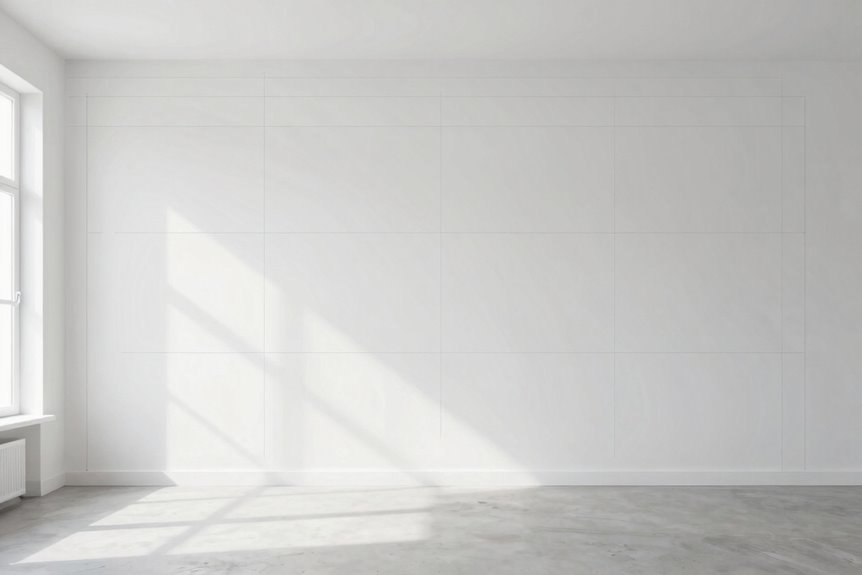
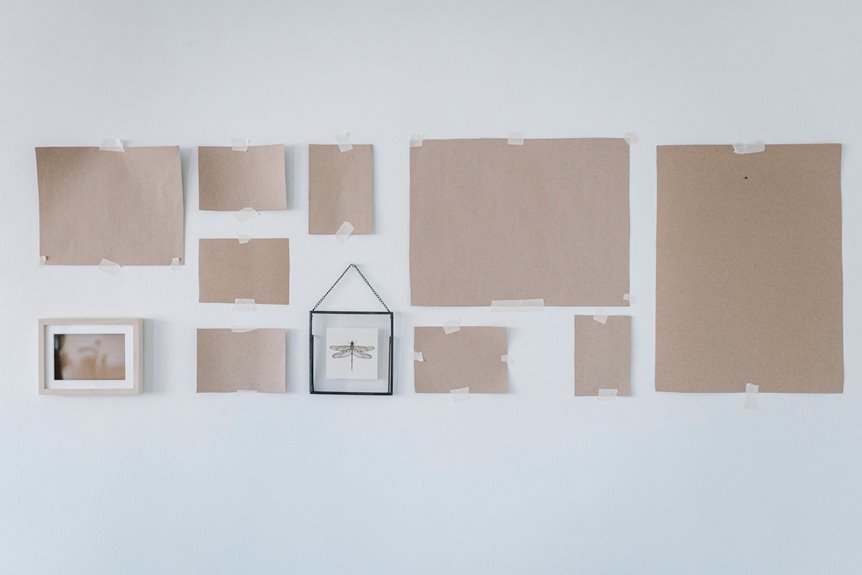
Where do I even begin with a wall that feels more like a small field than a blank canvas? I grab my measuring tape and start wall mapping. I jot down the height and width, marking where furniture sits. For oversized art, I want it filling 60 to 75 percent of my space; otherwise it looks like a postage stamp on a barn door. Above my sofa, I aim for art that’s two-thirds to three-quarters its width. Tight budget? I stretch fabric over a DIY canvas frame for the same visual impact at lower cost. On my extra-long hallway, I plan a gallery layout spanning the full width but leave six inches of breathing room on each edge. Mix one big piece with two smaller sidekicks to establish visual hierarchy without clutter.
Hang One Oversized Piece for Instant Large Wall Impact
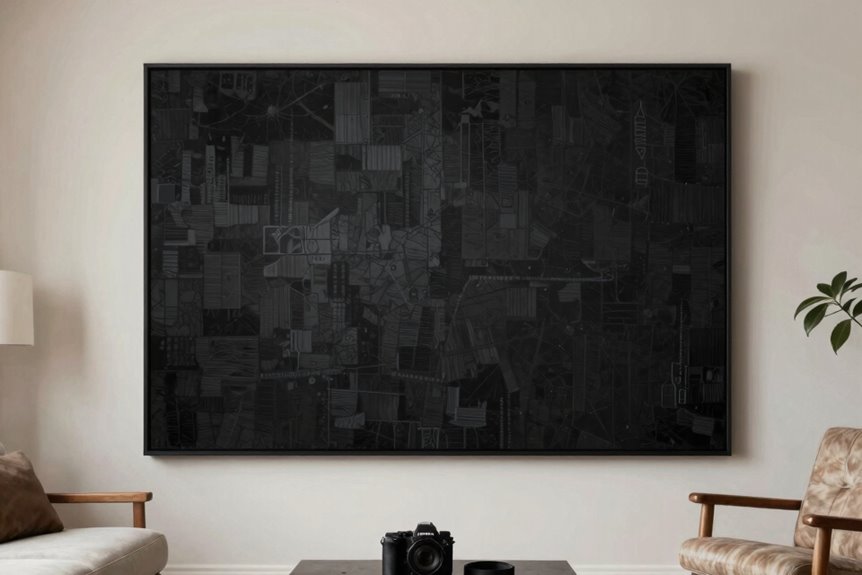
Why overthink it when one knockout piece can do all the demanding work? A single oversized piece covering 60–75% of your wall space creates instant drama without the headache of arranging multiple frames.
One bold piece covers 60–75% of your wall and delivers instant drama—no gallery wall required.
Your oversized piece becomes the natural focal point everyone notices first. When hanging above a sofa or console, aim for artwork about two-thirds to three-quarters the furniture width. These proportions feel harmonious rather than accidental.
Worried about cost? Stretch your own canvas using drop cloths and wooden frames from hardware stores. You can also lean unframed pieces against the wall for a relaxed, gallery-adjacent vibe that skips nail holes entirely.
Add sconces on either side and your wall gains depth. One bold choice, zero clutter, maximum impact.
Stack Vertical Art Above a Low Credenza for Balance
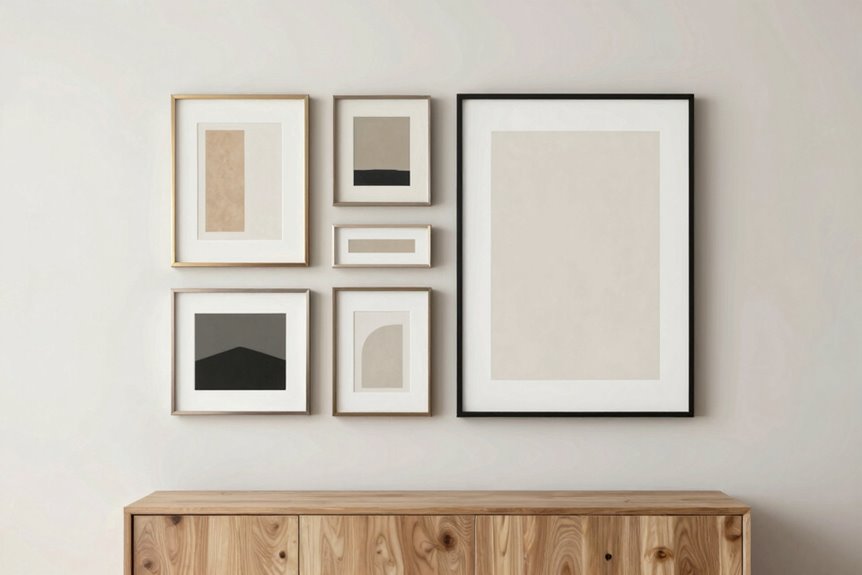
How do you fill a towering wall without blocking the view across your room? Stack vertical art above a low credenza for instant balance.
Start with a large framed print, maybe a vintage Hollywood Bowl poster, as your top focal point. It draws the eye upward and gives your wall decor a clear visual center. Then shift that credenza toward the wall’s center and add a vertical wall sconce to make your pieces glow.
Want more symmetry? Tuck a smaller repeat print above the furniture, or place a shelving unit on the opposite side. This keeps sightlines open while maintaining a grounded feeling.
A neutral palette allows your kids’ colorful creations to stand out elsewhere without the space feeling chaotic. Your room stays breathable and balanced.
Build an Expandable Gallery Wall With Swap-Ready Frames
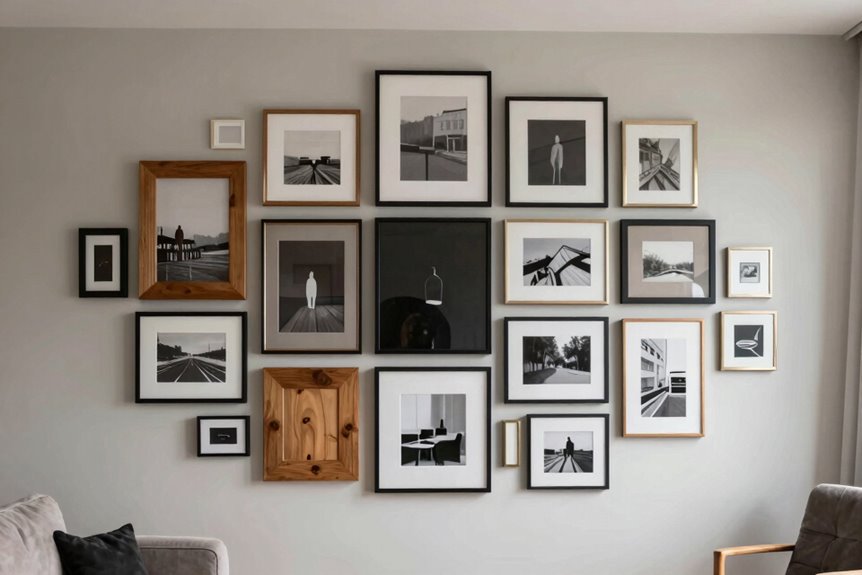
I love using swap-ready frames because they let me change my wall art without filling new holes every time I get bored. Systems like Gallery System’s Art Hanging Track or simple Command Picture Ledges hold frames up to 24 inches wide, so I can slide pieces in and out whenever I want. It’s like having a museum wall that grows with you, except you can rearrange it as often as you’d like.
Frame Flexibility
Instead of committing to one fixed arrangement, I like building gallery walls that grow with me. Swap-ready frames make this easy; I don’t need a hammer every time I find art that speaks to me.
- Picture rows of identical black frames, each matted in crisp white, waiting patiently like seats at a dinner party.
- Imagine sliding a fresh print into a 16×20 frame while your morning coffee steams.
- Visualize a wall that breathes, expanding outward in a modular layout when inspiration strikes.
I stick to standard sizes from stores like IKEA or Target. Same frame, same mat, endless possibilities. My gallery wall stays cohesive even when my taste wanders. I snap photos before changes so my modular layout stays balanced. My wall changes as my interests do.
Swap-Ready Systems
Frame flexibility sets the stage, but swap-ready systems turn that stage into something that grows with you. I build my gallery wall with swap-ready frames in a consistent style, maybe thin black metal or natural wood, mixing 8×10, 11×14, and 16×20 inch sizes. I map a grid with 2 to 3 inches between frames, like leaving breathing room between friends at a dinner table. Flexible mounting makes this work: I use gallery rails or clips so pieces lift off without drywall damage.
| Element | How It Helps |
|---|---|
| Consistent frames | Keeps the crew cohesive |
| Varied sizes | Adds visual rhythm |
| 2–3 inch spacing | Balances the whole wall |
| Flexible mounting | Lets you swap without scars |
I stick to neutral walls and a tight color story: creams, dusty blues, warm grays. New art integrates seamlessly with this foundation.
Add Warmth With Tapestries, Yarn Art, or Woven Hangings
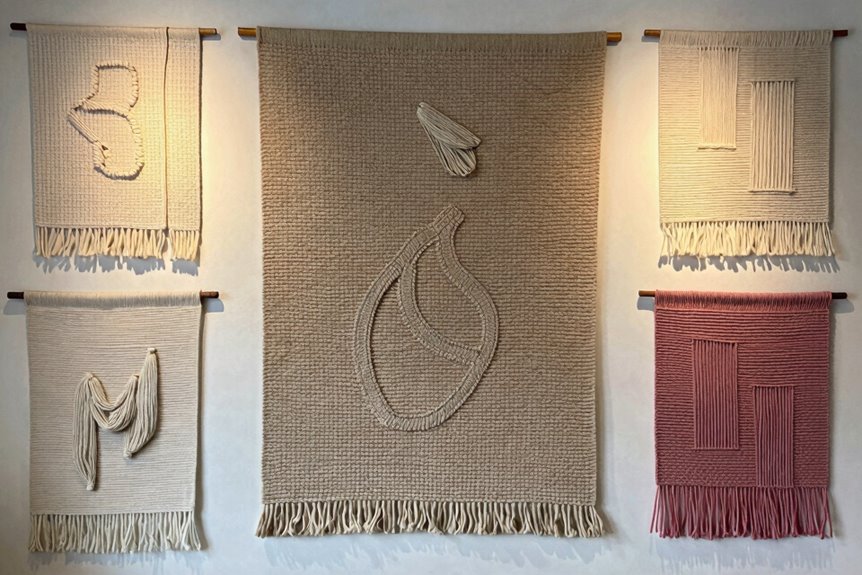
Why stare at a cold, empty wall when you can wrap it in something soft? Tapestries and woven hangings transform sterile spaces into places where people actually want to linger.
Here’s what texture does for your room:
- A chunky macramé piece catches afternoon light and casts dancing shadows
- A hand-loomed wall hanging muffles echoing footsteps during game night
- A vintage tapestry adds instant history, like your grandmother’s cozy living room
Hang these behind your sofa and near reading chairs where the texture invites touch. Choose colors that already live in your rug or throw pillows. Nothing matchy, just friendly. Mix one large woven hanging with smaller yarn pieces so you can swap things around when the mood strikes.
Install Floating Shelves for Curated Books and Objects
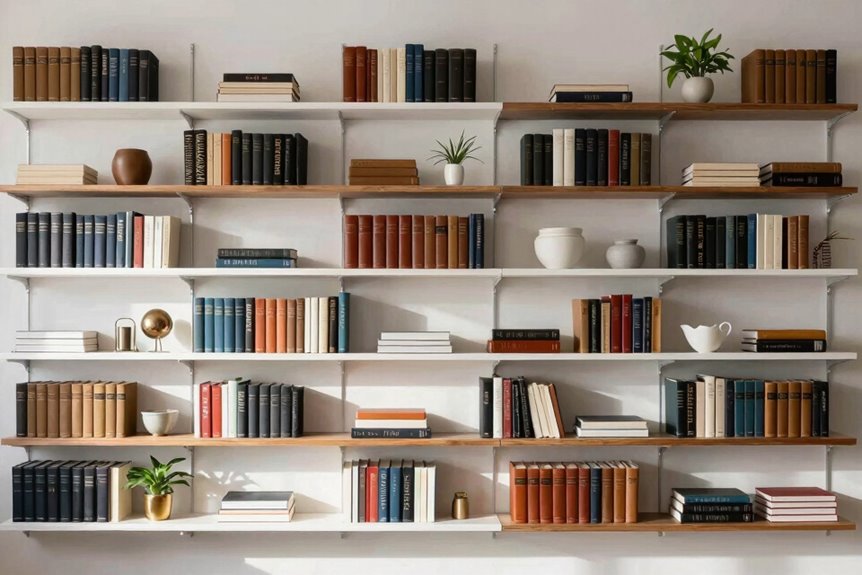
Three floating shelves can turn your blank wall into a curated display that grows with you. Dog-eared paperbacks, a tiny succulent, that weird ceramic cat you found at a flea market. Floating shelves give you wall decor without hogging floor space. Keep shelves about 12 inches deep; anything more and you’re bumping elbows at dinner. Built-in ledges feel fancy and permanent, but bracket-mounted works fine too. Room & Board makes modular setups you can rearrange when your style changes. Renting? A slim console behind your sofa fakes the look without drilling holes. Your stuff deserves a proper display.
Light Your Large Wall With Sconces for Depth and Drama
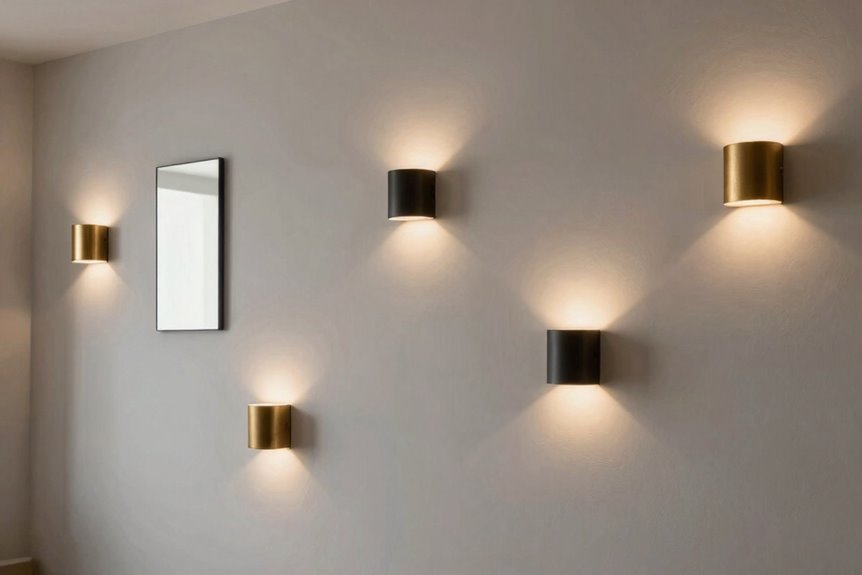
I love how a pair of sconces can completely transform a big wall from blank to breathtaking. When you flank a large painting or mirror with matching fixtures about 66 inches from the floor, roughly eye level, you create a gorgeous horizontal line that balances everything out, especially if your ceilings soar or your windows stretch forever. Sconces function as elegant accents that cast warm, shadowy depth instead of harsh glare.
Sconce Pairing Power
How do you stop a gorgeous painting from looking like a postage stamp on a giant wall? Flank it with sconces. The right lighting transforms everything.
When you nail the pairing:
- Twin beams graze the canvas, making brushstrokes pop like 3D relief maps
- Warm pools spill sideways, wrapping the room in a golden embrace
- Shadows stretch and settle, giving your wall actual depth instead of flat emptiness
Align sconces with the artwork’s vertical center at eye level, about 60 inches up. Symmetry matters here. Think of it like framing a face with earrings; lopsided looks off.
Dimmable LEDs save you from glare headaches on glass frames. Bright spotlighting feels like an interrogation room. Soft side lighting creates the cozy glow you want to come home to.
Ambient Layering Trick
Sconces do their best work when layered rather than used alone. Wall sconces on a large wall build real depth, not just brightness. Flank a central canvas with matching sconces about 60 inches high, which is eye level for most people, and the light spreads evenly without concentrating in one spot. Upward beams catch the texture on paneled walls; downward pools highlight each frame in an art ledger. Dimmers are essential. Tuesday night requires bright light for reading; Saturday calls for a softer glow that makes prints look museum-quality. Adding a floor lamp nearby pulls the sofa into the room’s layout, and the whole space feels connected through layered ambient lighting.
Hang a Full-Length Mirror to Visually Expand Your Wall
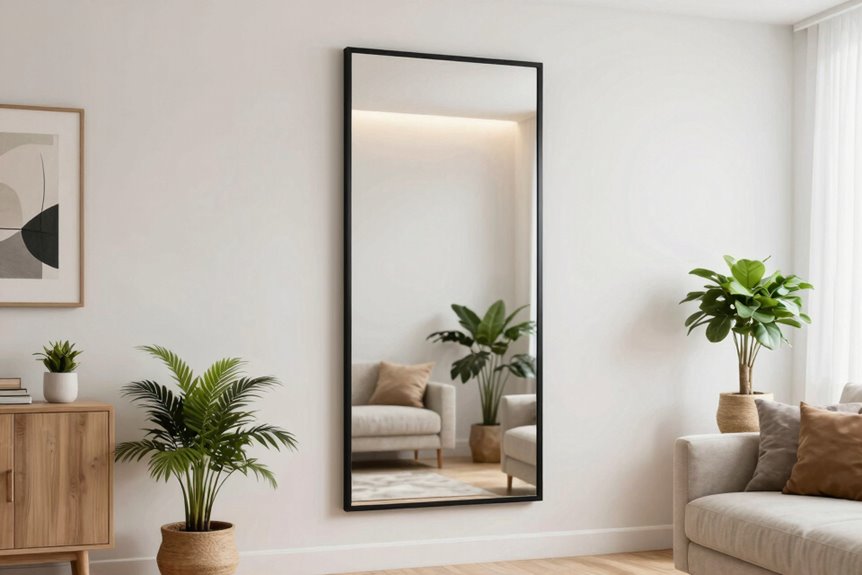
One tried-and-true move I’ve used in my own living room is propping a 65-by-22-inch full-length mirror against the wall. This wall decor trick works like magic for space expansion. The mirror catches morning light and throws it deep into corners that used to feel gloomy.
When you add a mirror, these effects occur:
- Light bounces off every surface, making your space feel sun-drenched and open
- Your furniture suddenly has a twin, creating depth that tricks the eye
- The room breathes easier, as if you’ve knocked down a wall without the mess
I’ve leaned mine for easy rearranging, but hanging works too. Pair yours with a nearby lamp or small print to double the glow. A mirror positioned strategically will brighten dark wall spaces and increase the perceived square footage of your room.
Add Character With Board-and-Batten or Molded Panels
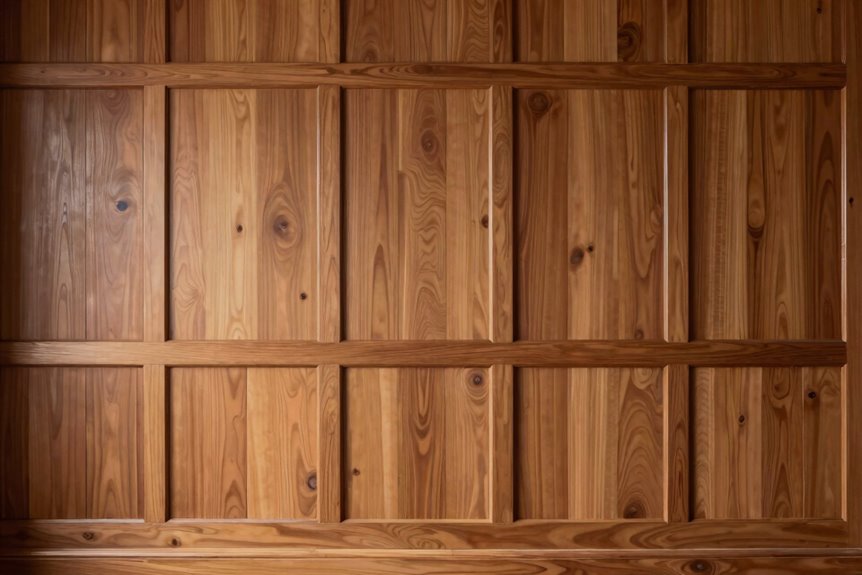
Why stare at a blank wall when you can give it bones? I installed board-and-batten in my own pass-through hallway, and suddenly the space felt like mine. The room became a place worth staying in.
This wall treatment transforms empty stretches into architectural moments. I position panels behind sofas to frame seating, or run vertical strips to draw eyes upward. Square panel designs play nicely with bold upholstery. You can DIY-paint them on Saturday or hire a pro for seamless durability.
| What You Feel | What Guests Sense |
|---|---|
| Pride running your hand across crisp edges | “Someone lives here intentionally” |
| Cozy depth when lights hit textured grooves | Warmth, not emptiness |
| Belonging in a space that reflects you | Invitation to settle in |
Paint panels saturated teal or soft linen. Either option shifts perceived scale. Add sconces; uplights dance across ridges, making this wall treatment the room’s focal point.
Apply Murals or Textured Wallpaper for Bold Large Wall Statements
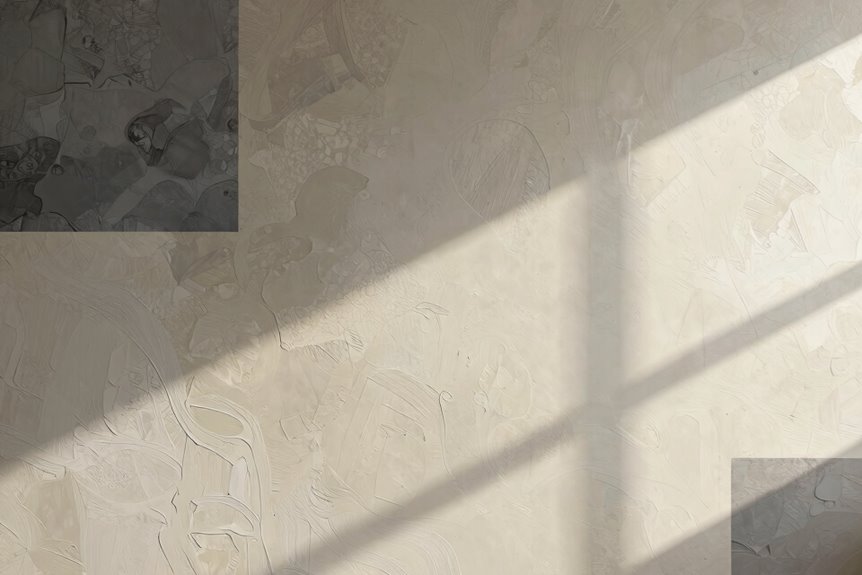
I’ll kick things off with a mural if I want instant drama. No need to measure seventeen tiny frames or rent a stud finder I can’t operate. Peel-and-stick papers like Spoonflower’s removable panels go up in an afternoon, and I can remove them whenever I’m bored without filling a single nail hole. The trick is matching the wallpaper’s scale to my room: I keep bold patterns to 10–12 foot ceilings so they don’t overwhelm the space, and I always test a 2-foot swatch near my sofa to see how the colors play with my lamp light at 7 p.m. That “moody forest green” can turn muddy when the sun dips.
Visual Impact Potential
How do you make a giant wall stop feeling like an empty parking lot. Transform it with a mural or textured wallpaper so it becomes one stunning statement instead of a scattered mess of tiny frames.
Picture this:
- A soft linen-textured wallpaper catching morning light, casting shadows that shift like gentle waves
- A hand-painted jungle mural wrapping behind your couch, making your living room feel like a hidden retreat
- Thick plaster texture in warm cream, inviting everyone to lean closer and touch
A mural on your large wall instantly sets mood. Choose muted tones for calm or vivid patterns for energy. Texture adds depth you’d never get with flat paint, completing your space and signaling to guests that they’ve entered a thoughtfully designed room.
Installation Practicalities
Before you unroll that first panel, measure your wall twice. Getting the scale right means your mural enhances the room rather than overwhelming it.
For installation, you have options. Peel-and-stick wallpaper works well for beginners; no glue, no mess, just smoothing bubbles with a plastic scraper. Complex murals with seamless edges require professional installation, which is a worthwhile investment.
Texture adds dimension you can feel. Foam brick, grasscloth, or hand-painted designs transform flat surfaces into tactile experiences. Removable jungle murals work particularly well in rentals, defining spaces like reading nooks without damaging drywall.
Always check that repeat pattern against your furniture placement. You want harmony, not visual competition.
Style Coordination Tips
When I’m staring down a bare wall that’s bigger than my first apartment, I reach for murals or textured wallpaper because they solve the “too much empty space” problem without hunting down a dozen matching frames.
A mural gives you one jaw-dropping moment instead of ten tiny ones. To make it feel like home:
- Match the color palette to your couch and rug so nothing fights for attention.
- Add lighting, such as a warm sconce washing over fern fronds at dusk.
- Let the wall breathe with neutrals nearby, like oatmeal curtains.
Skip clashing patterns. Walking into your space should feel welcoming, not disorienting. A cohesive approach creates an environment where you actually feel settled.