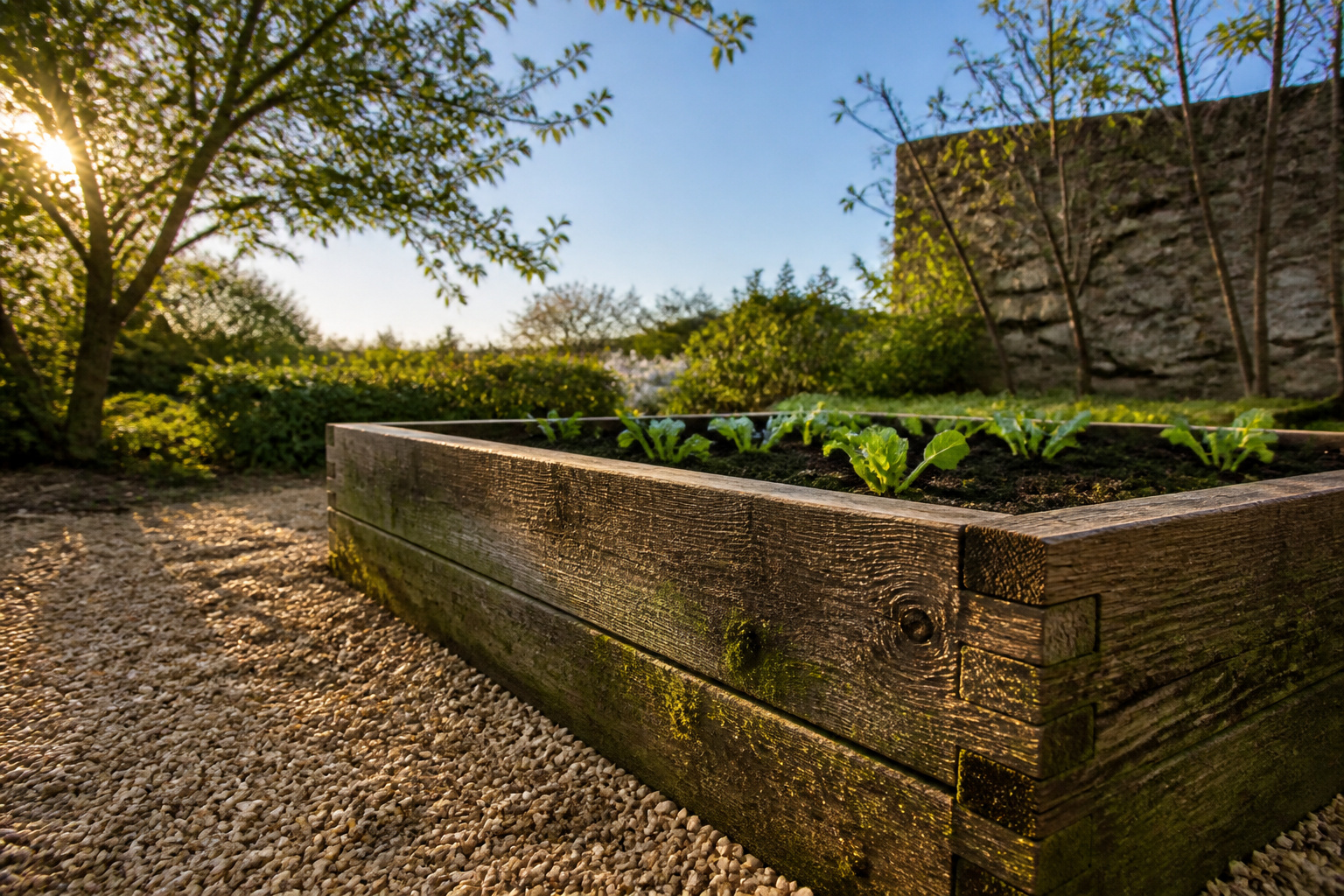
A raised bed is a contained planting box built above ground level, filled with soil you choose rather than the dirt already there. They buy you control over drainage and root depth, but the cost is real: filling a simple 4-by-8 frame runs several hundred dollars before you plant anything, and the soil inside will settle every season and need topping off. The one-third mix of compost, peat moss, and vermiculite that actually works is not the bargain option.
Aesthetic Appeal

A rectangle of raw dirt planted with vegetables reads as a construction site to most landlords and HOAs. The same plants inside a raised bed read as intentional design, which matters if you are a renter trying to keep your deposit or a new owner navigating covenants. Boards, stone, metal, or brick create that contained look, and the materials themselves become part of the visual structure rather than just a frame for it.
The gap between neat and magazine-ready is where the tension lives. A single wooden bed with tomatoes spilling over the edge looks cared-for. Several beds placed at equal intervals, with paths between and maybe an arbor, start approaching the photo-shoot territory some sources describe. The photo-shoot version costs proportionally more in materials, time, and ongoing soil refreshment. For a weekend project with a few hundred dollars, one or two simple beds hit the sweet spot of looking deliberate without pretending to be a potager garden you saw in a spread.
Superior Soil Control
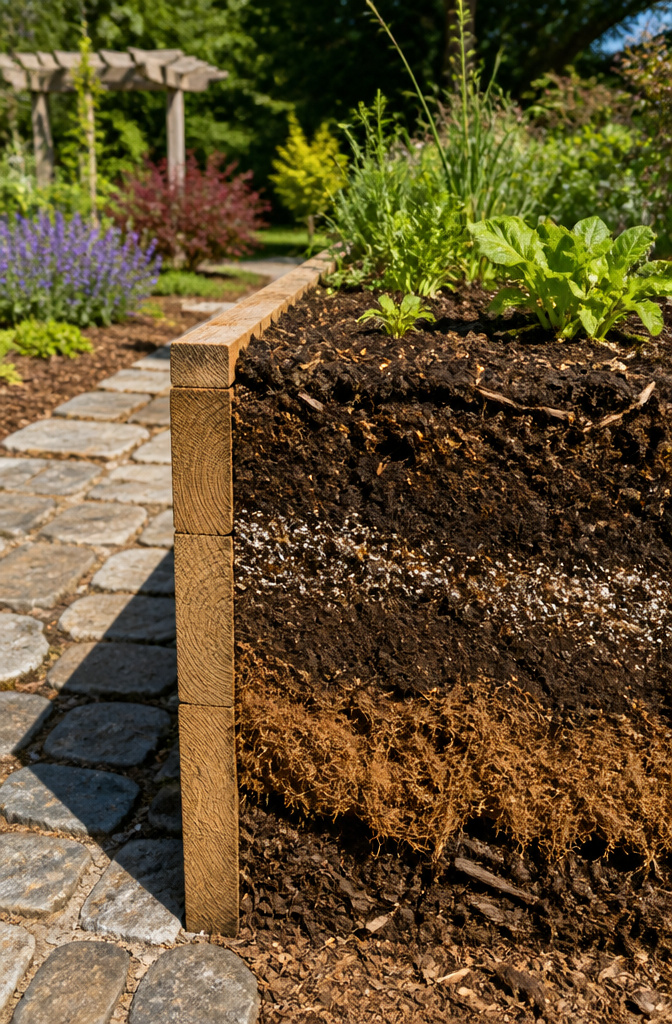
The first time I filled a raised bed, I stood there with a shovel and a bag of compost, guessing at ratios. What actually works is a one-third mix each of compost, peat moss, and vermiculite, and starting from scratch beats fighting your native dirt every time.
Clay or sand soils take years of amendment to loosen, and even then you are guessing at what is down there. A 24-inch bed lets you skip that entirely. You pour in material you chose, and the depth matters more than I expected. Shallow beds force shallow roots; at two feet, tomatoes send roots straight down, carrots grow straight, and the whole range of vegetables opens up rather than just the forgiving few.
If the soil beneath your bed drains poorly, that depth is doing more than holding your mix. It is the only root zone your plants get, so the 24 inches becomes the full usable profile rather than a topping. Good soil below buys you some flexibility, but building deep from the start removes the question entirely.
Healthier Harvests
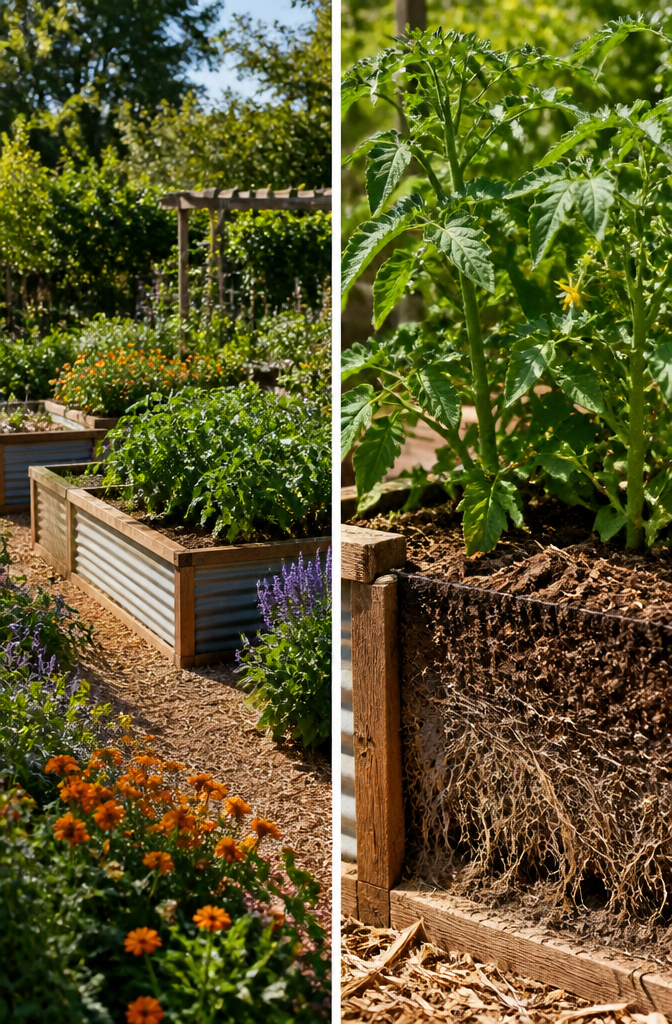
Loose soil lets roots expand without the mechanical resistance that stunts growth in compacted ground. In a raised bed, roots push through the full depth of the built-up soil rather than flattening against a hardpan, and that unrestricted rooting depth translates directly into plant vigor. The difference shows up fast: tomatoes in my beds set fruit two weeks earlier than the ones I once tried in the native clay, and the leaf color stays deep green instead of fading to the yellow that signals stress.
Better structure also means better drainage, which keeps root-zone diseases in check. Water moves through the profile instead of pooling, so pathogens that thrive in saturated conditions lose their foothold. The compost or organic matter worked into the fill during construction improves both aeration and nutrient-holding capacity, giving roots the steady supply they need rather than boom-and-bust cycles. A bed built to at least 24 inches deep handles the widest range of vegetables, though shallower construction can work if the native soil below is already loose and draining well.
Prolific Produce
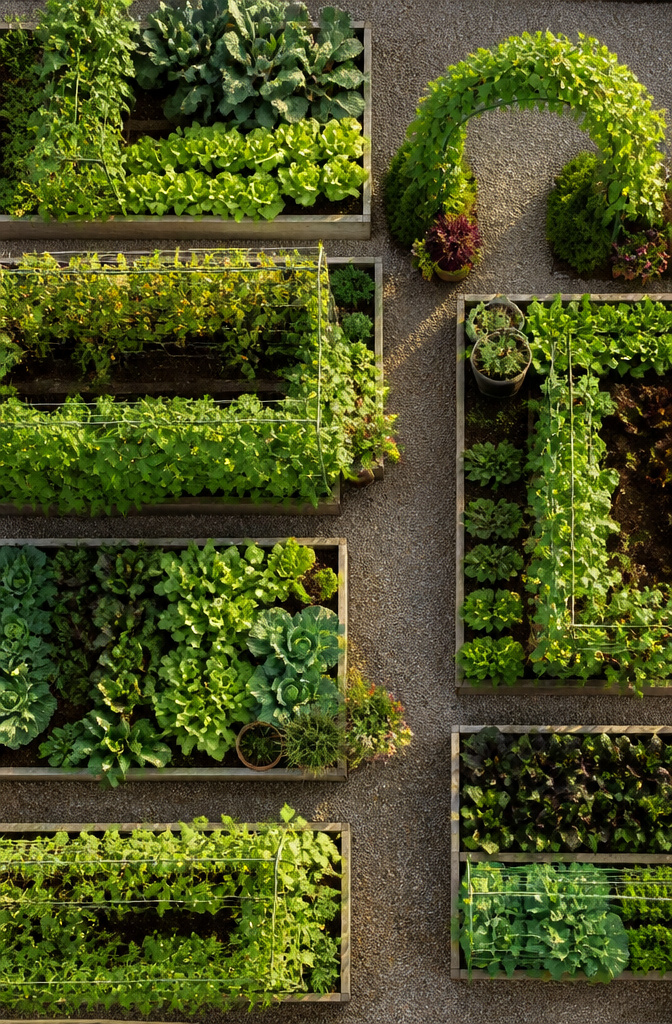
Closer spacing in raised beds is not a trick so much as a consequence of the control you gain. In-ground rows need wide paths for walking, tilling, and wrestling weeds back into submission; the soil between plants compacts underfoot and the roots pay for it. A raised bed lets you reach across from the edge, so every inch inside grows something. Intensive planting, sometimes called square-foot spacing, shrinks the gap between plants to what their mature leaves actually need rather than what machinery demands.
The vertical dimension matters just as much. A trellis across one end of a 4-by-8 bed turns peas into a green wall; lettuce tucked underneath harvests before the canopy closes. Two beds joined by an arching tunnel, beans or cucumbers climbing overhead, turn the walkway itself into production space that still leaves room to pass underneath. The harvest per square foot goes up without the garden eating more yard.
I have seen the slope and rooftop examples too, beds bolted to solid rock or perched on a Malibu hillside where in-ground planting was never an option. The yield comparison there is almost unfair: some produce against none at all.
Water Control
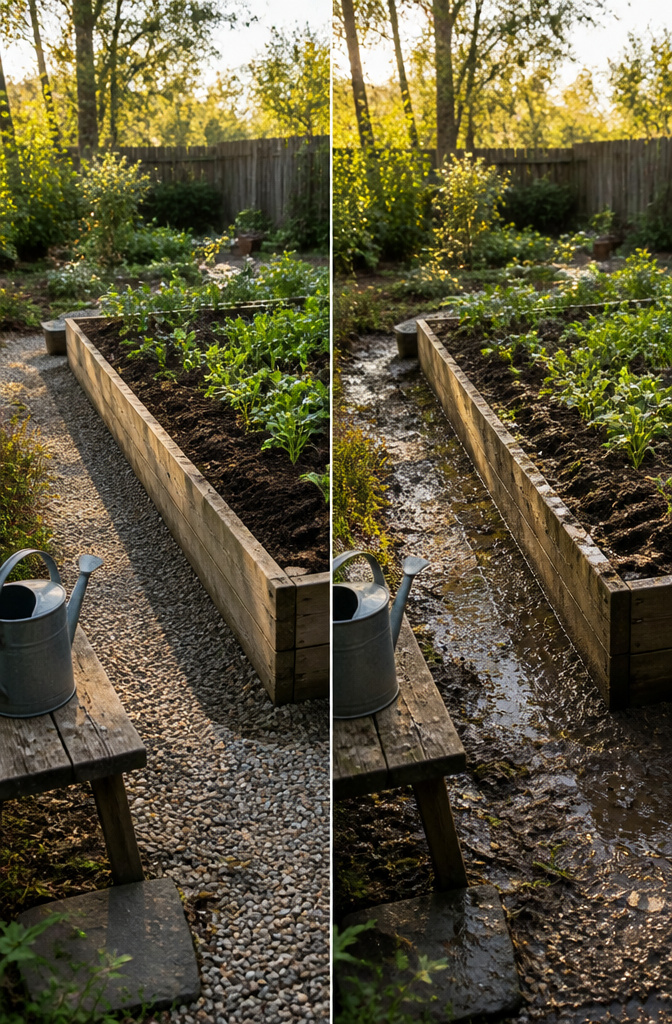
Raised beds drain fast enough that heavy rain won’t leave roots sitting in water, which is the main reason I built mine over clay that puddled for days. The soil sits above the compacted layer, so water moves through instead of pooling where roots need air.
The tradeoff is that raised beds dry out faster in a dry spell, and irrigation takes more thought than laying a hose on the ground. Gravity fights even pressure: water pools in low spots, like the walking paths between beds, if the line runs downhill into one bed and uphill into the next. Drip kits built for raised beds exist, and they help target roots directly, but the setup is fussy enough that some gardeners I read about never got it right and just watered by hand.
Pest Protection
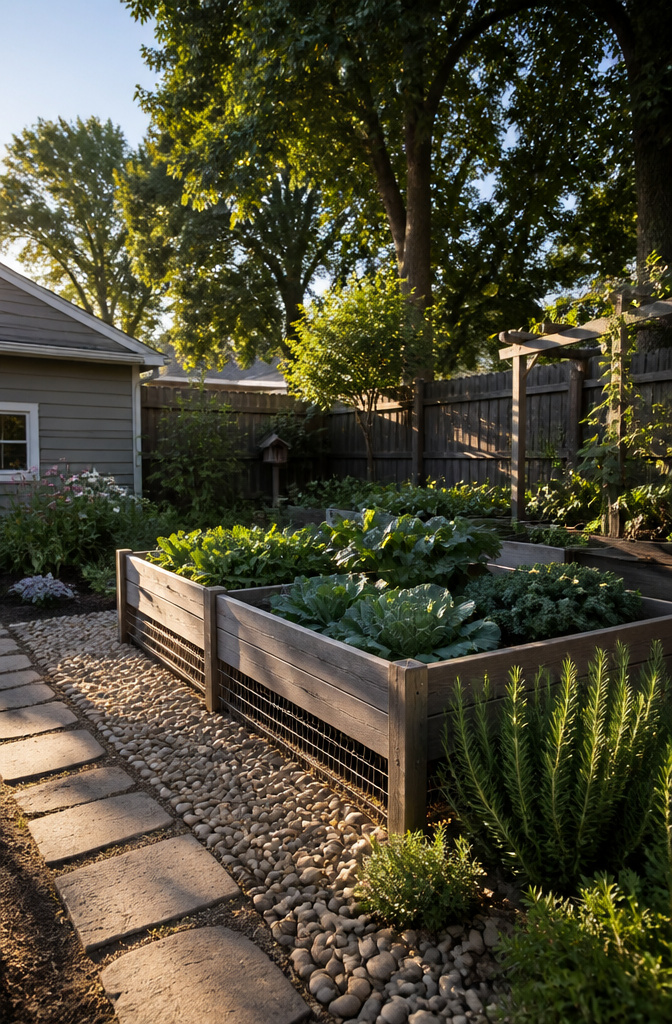
A raised bed stops some pests cold and leaves the door wide open for others, so the wire you put underneath matters more than the height of the walls. Hardware cloth or heavy-gauge gopher wire across the bottom is the only reliable barrier against voles and gophers, stapled tight with no gaps they can squeeze through. Expect to replace it every five or six years as the metal degrades and those same animals chew their way back in. That bottom layer does cost you some root depth below the bed line, so plan a deeper box to compensate. Above ground, a simple row cover or a set of mini-hoops over the bed keeps cabbage worms off leafy crops. What a raised bed will not do is fence out rabbits, deer, or anything that can hop or climb. For those, the bed is just a frame; the pest protection is whatever cover you add on top.
Season Extension
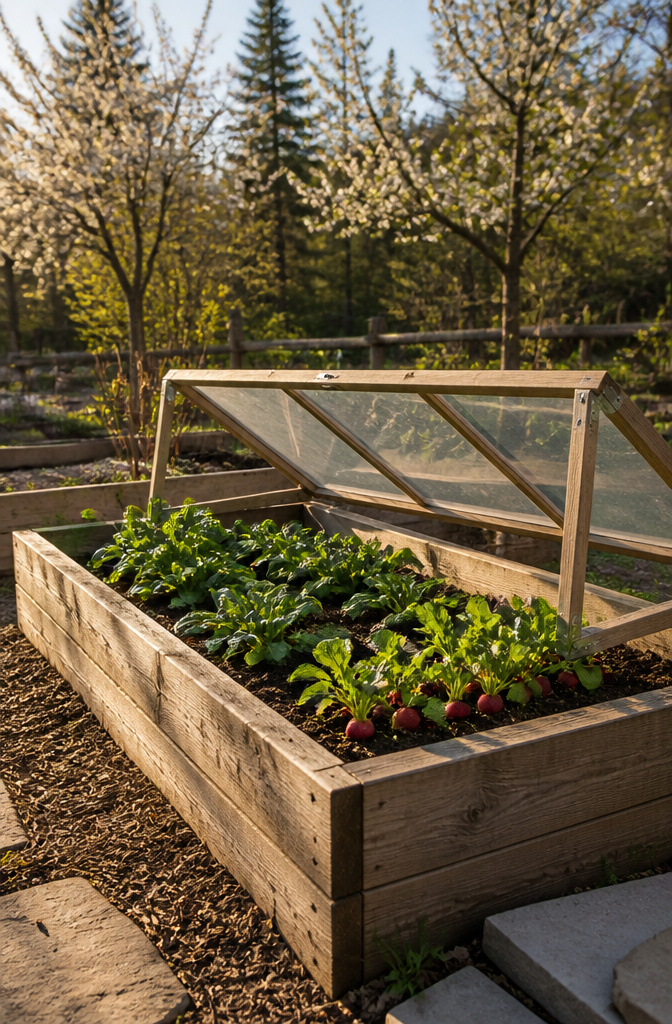
Soil in a raised bed warms faster in spring because it sits above the cold ground and catches sun on its sides as well as its surface. The drainage helps too; water runs through instead of sitting in a mass that chills overnight. In my own reading, the gain runs about two to three weeks of earlier planting in a typical mid-Atlantic spring, not the month some charts suggest. The limit is air temperature, not soil warmth. Tomatoes will still stall if nights stay below 50°F, and lettuce bolts just as fast once true heat arrives. I treat the extra weeks as a buffer for cool-season crops, not a license to rush summer seedlings. A cold frame on top of the bed pushes the season further, but that is a second project with its own cost and fuss. For most renters or first-time owners, the built-in lift from the raised height is enough without adding gear.
Easier Maintenance
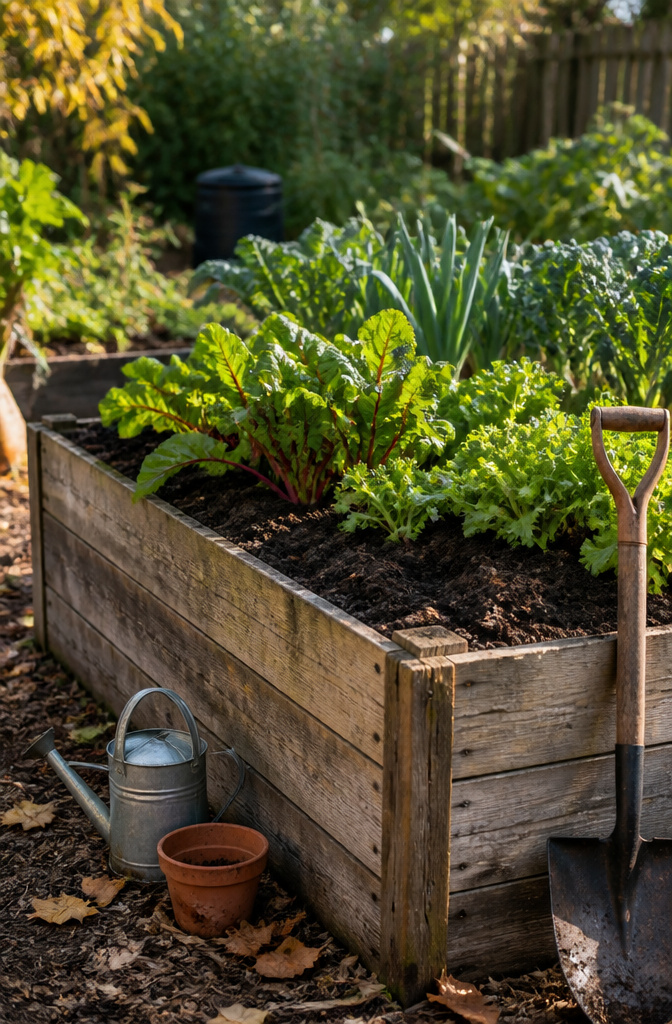
Shredded leaves, straw, and the odd stick or log do fill a raised bed cheaply, and they add organic matter while they’re at it. The catch is that organic material breaks down. After a couple of seasons, the level drops and you’re left wondering where half the soil went. I top mine off with several inches of compost and fresh soil every year, and across a full grid of beds that turns into real volume.
The work is still easier than digging amendments into packed ground. In a raised bed, replenishing nutrients is a surface job: spread compost, fork it in lightly, and plant. No battling clay, no worrying about what disease lingered in last season’s plot. The soil structure you built stays intact, and the drainage keeps working as long as the bed stays full.
Plan on adding material annually, not as a one-time fill. Budget for that ongoing cost, or the "low maintenance" promise turns into a slow sinkhole.
Accessibility for Mobility Issues
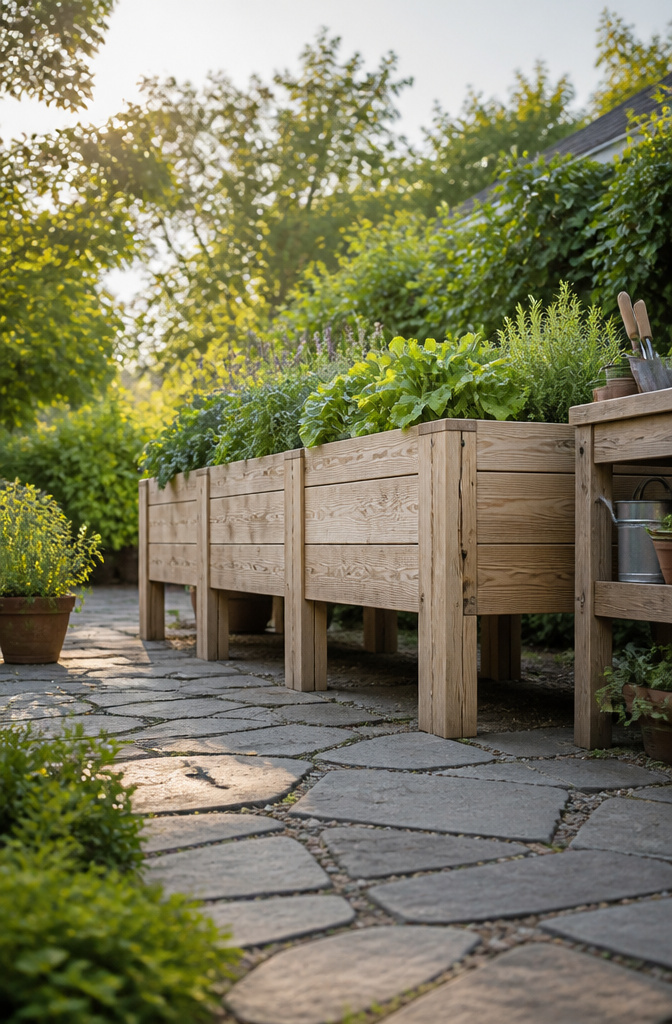
A bed that sits 24 inches high or above changes who can keep a garden at all. Bending to ground level and kneeling on hard soil are the first tasks that stop people, not the planting itself. My neighbor across the street stopped growing tomatoes after her hip replacement; the year she built a 30-inch box, she started again.
Width matters as much as height. Four feet across lets most people reach the middle from either side without stepping in and compacting the soil. If the bed backs against a wall or fence and you can only work from one side, three feet is the practical limit. A wheelchair needs knee space underneath, which means an open frame rather than a solid box, but the same 24-inch minimum applies.
Cedar or redwood lasts five to ten years even unsealed, and raw linseed oil buys more time without bringing pressure-treated chemicals near food soil. The height you build is the difference between a garden you tend and one you watch someone else manage.
What Building One Costs
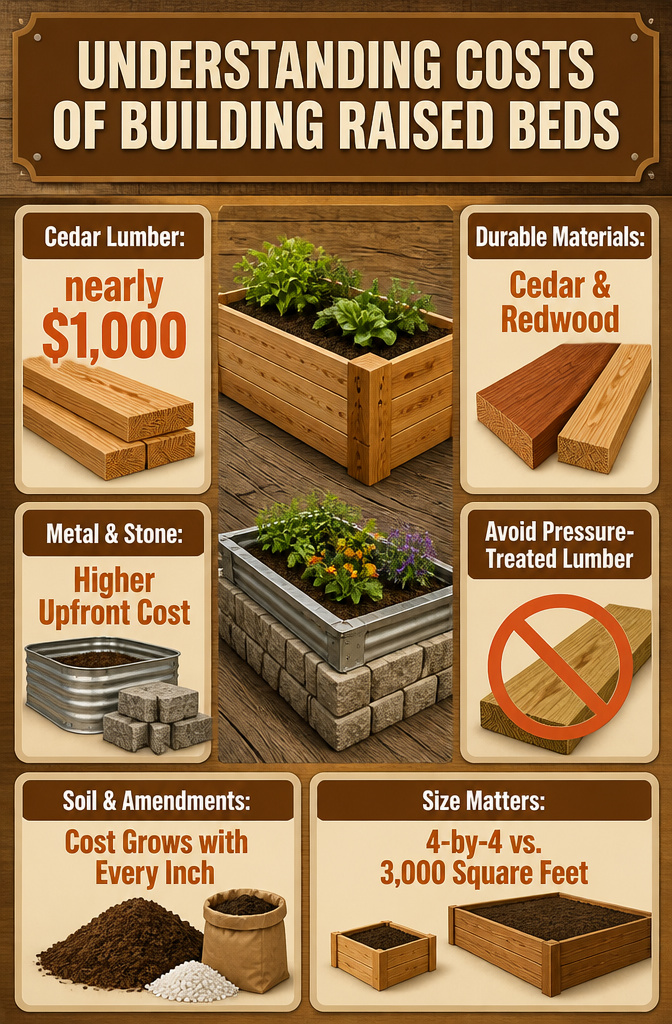
Cedar lumber for a large garden can run nearly $1,000, which is the number that stops most people mid-plan. I had used untreated wood once to save money and it rotted out in three years, so the second time I paid more for something that would actually last.
Cedar and redwood hold up well and cut cleanly to whatever size you need. Metal beds and stone borders last too, though they cost more upfront and limit how easily you can resize later. Pressure-treated lumber is the option most big-box stores push, but I skip it for anything growing food. The chemicals used to keep it from rotting are not something I want leaching into soil I’ll later eat from.
You also have to buy the soil and amendments to fill whatever you build, and that bill grows with every inch of height you add. For a smaller 4-by-4-foot bed the total stays reasonable. Scale up to something like 3,000 square feet and the materials alone become a real budget line, before you haul a single bag of compost.
Design You Are Stuck With
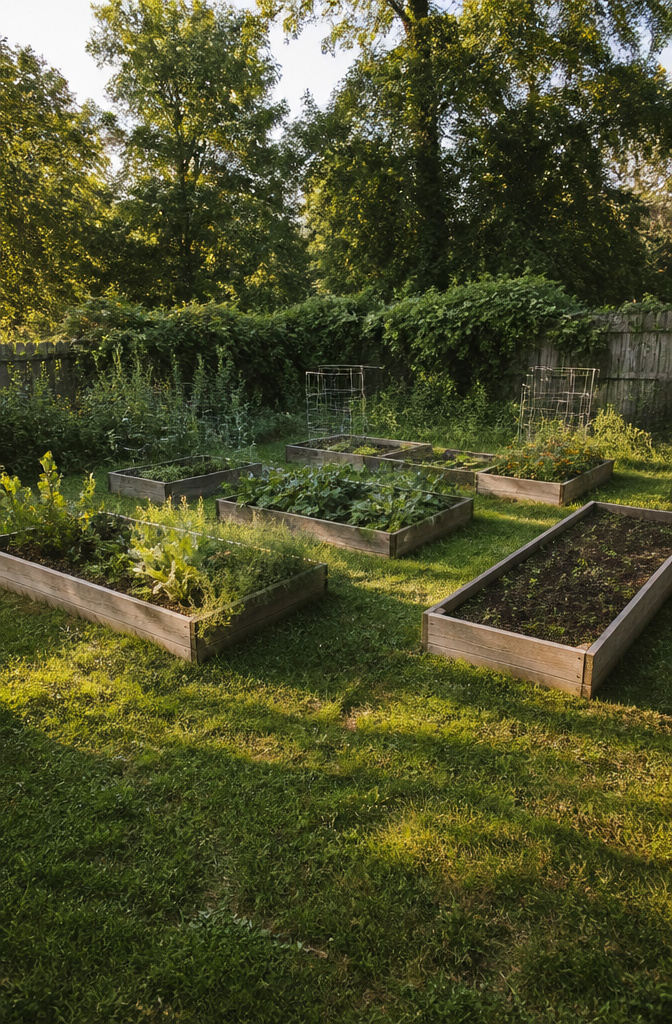
Permanent structures lock a garden into choices that outlast the gardener’s plans. One grower spent years and considerable money installing raised beds across three separate gardens before realizing the layout wasted space and blocked the efficient rows needed for serious food production. Moving them afterward demanded more labor and expense than starting fresh.
The commitment runs deeper than carpentry. Filling those frames means importing soil or excavating what exists and regrading the surrounding ground, and that soil will need refreshing season after season just as any bed would. For renters especially, the structure you build becomes the design you are stuck with until move-out day, with no guarantee the next tenant will want vegetables where you left them.
Two ways to play this: build deep, durable beds only where the layout has proven itself through at least one full growing season, or start with temporary edging, straw bales, or mounded rows that can shift while you learn how sun and water actually move across the space. The temporary route wins if your five-year plan includes a different yard, a different crop mix, or a landlord who notices alterations.
Soil That Needs Refreshing
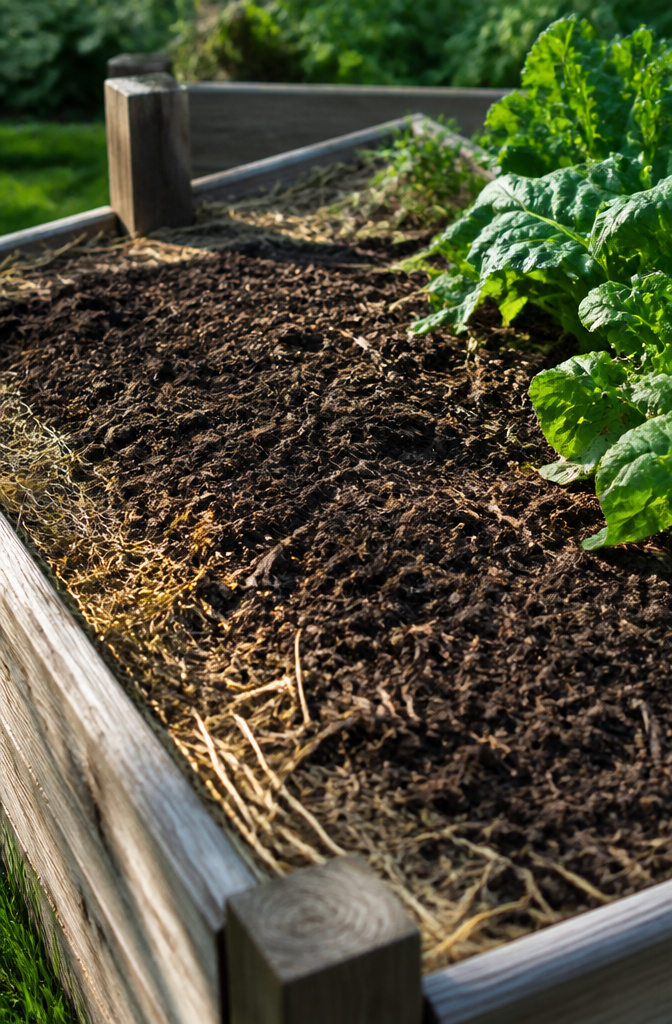
The soil in a raised bed settles. Shredded leaves, straw, and the roots of spent plants all break down or get pulled out, and by the second season you are topping off several inches of lost volume. I have sixteen beds in my garden, and the math of refilling them every year is not gentle on the back or the compost pile.
That same turnover is also the advantage. You start with a mix you control, whether that is bagged raised-bed soil or your own blend, and after each harvest you work in fresh compost rather than fighting the clay or compaction you were given. The drainage improves with that organic matter, and so does the soil’s capacity to hold nutrients where roots can actually reach them.
Plan on adding a few inches of compost annually to replace what decomposes. The alternative is watching your tomatoes sit in soil that has dropped six inches below the frame, their roots too shallow to support the plant.
Irrigation Complications
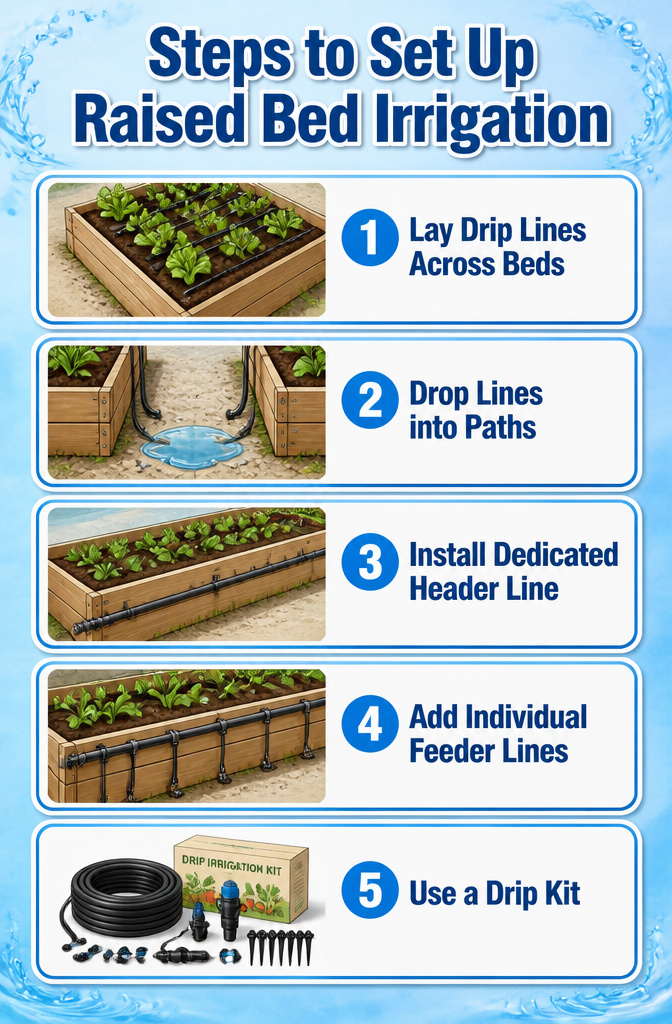
Water has to climb to reach a raised bed, and gravity does not cooperate for free. Drip lines or soaker hoses laid across the top of the beds and then dropped down into the paths between them will pool exactly where you walk, not where roots need it. The low spots between beds collect runoff while the soil inside stays unevenly damp. The fix is a dedicated header line running the length of the bed row with individual feeder lines dropping into each box, not one continuous hose zigzagging up and down. Raised beds do drain faster than ground-level soil, which saves plants from waterlogging but also means the top layer dries out sooner. A drip kit sized for raised beds, like the ones Johnny’s Selected Seeds sells as a complete set, keeps moisture at the root zone without the waste of broadcast sprinklers. I have seen the same beds go from frustratingly spotty to steady once the water path is planned as a closed loop inside each box rather than a path across the open yard.
Frequently Asked Questions
What are the benefits of raised bed gardening?
Raised beds give you superior soil control, healthier harvests, more produce per square foot, better water drainage, and easier maintenance. A 24-inch depth lets vegetables root freely instead of fighting compacted native soil, and the contained design looks intentional to landlords and HOAs. Soil warms two to three weeks earlier in spring, and beds built 24 inches high or above make gardening possible for people who cannot bend or kneel.
How do I build a raised bed?
Choose your material, size the bed so you can reach the middle without stepping in, and fill it with a one-third mix each of compost, peat moss, and vermiculite. Cedar and redwood cut cleanly to custom dimensions and last five to ten years unsealed; raw linseed oil extends that life. Four feet across works for access from both sides, three feet if one side is against a wall.
What materials should I use for raised beds?
Cedar, redwood, metal, stone, or brick all work well, with cedar and redwood holding up five to ten years even without sealant. Skip pressure-treated lumber for food gardens; the chemicals used to prevent rot can leach into soil. Raw linseed oil is an acceptable organic-friendly preservative if you want more years from untreated wood.
How deep should a raised bed be?
Build to at least 24 inches deep for the widest range of vegetables, especially if your native soil drains poorly or is compacted. At that depth tomatoes root straight down, carrots grow straight, and the bed becomes the full usable root zone rather than just a topping. Shallower construction only works if the soil below is already loose and draining well.