
Organizing clothes is the process of clearing, sorting, and arranging your wardrobe so that what you actually wear stays visible and reachable. The catch is that most systems fail by spring because they skip the first step: pulling every item out of the closet until you are staring at empty rods and bare shelves. A seasonal rotation twice a year, once in spring and once in fall, keeps the right clothes in the prime shoulder-to-hip zone where you do not have to bend or stretch.
Declutter First
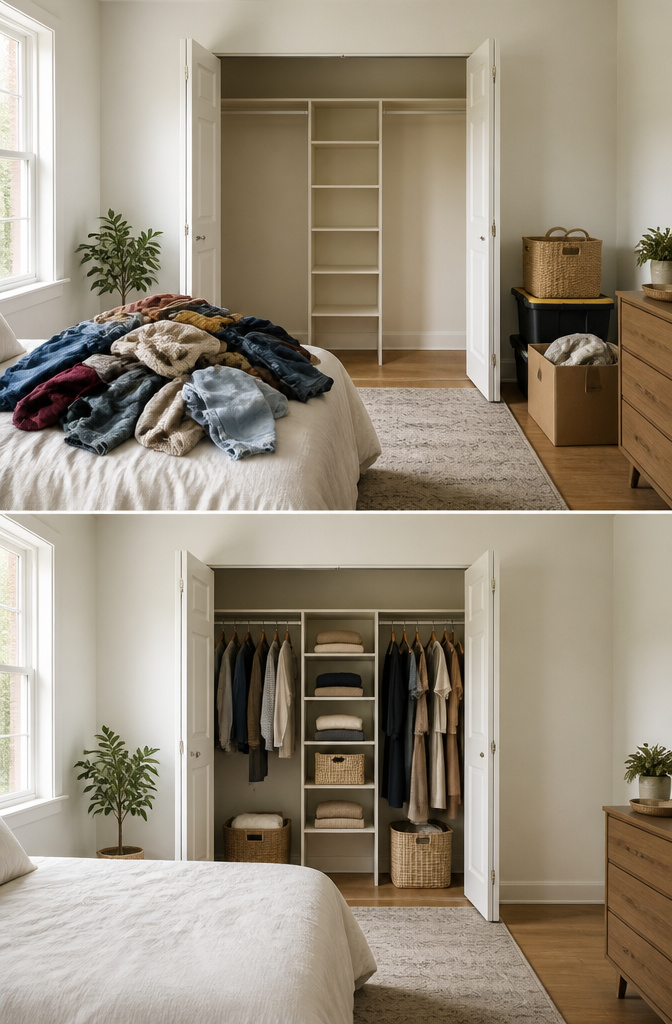
Clear the closet completely. Every hanger, shoe box, and scarf comes out until you are staring at empty rods and bare shelves. That pile on the bed is the point: seeing everything you own in one heap makes the keep-or-lose decision real in a way that nudging hangers left and right never does.
Sort into three piles. Keep what fits, what you actually wear, and what is not worn out. Donate pieces in good condition that you skip past anyway: wrong size, wrong style, just not you anymore. Toss what is damaged past repair. Some organizers add a maybe pile for items you need to try on; set those aside and decide after the definite keeps go back.
Bag the donate and toss piles and move them out of the room immediately. If they stay within reach, they creep back onto the rod. Getting them out frees floor space for arranging what remains and locks in the progress.
This step is the foundation every organizing guide shares. It creates the physical space for a system to work and strips tomorrow’s choice down to only clothes you will actually wear.
Categorize What Stays
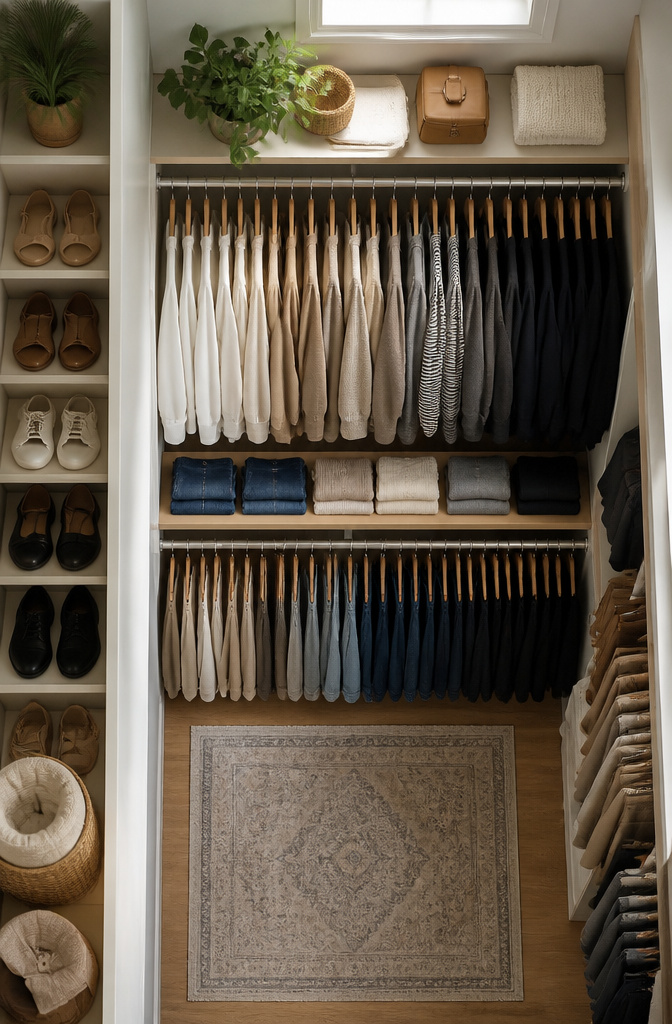
Sorting by type, tops with tops and bottoms with bottoms, is the starting point most closet guides agree on because it mirrors how you actually get dressed. I used to mix everything by color, which looked tidy on Instagram but meant I was hunting through a rainbow of hangers to find a single clean shirt. The reformcph approach keeps it basic: tops, bottoms, dresses, outerwear. From there, the tgstylist method adds sleeve length within each category, running camisole to tank to cap sleeve to long sleeve, then light to dark within that. That level of sorting is optional; the core win is just having all your shirts in one zone and all your pants in another.
You can organize clothes by color, by season, by occasion, or even pre-built outfits, and each has its fans. Color-coded closets photograph well. Seasonal rotation saves space if you store off-months elsewhere. Outfit grouping speeds up rushed mornings. But those are refinements, not foundations. Start with type. Once the basic grouping is holding, you can layer in a second system where it actually solves a problem you hit daily.
Choose Storage Solutions
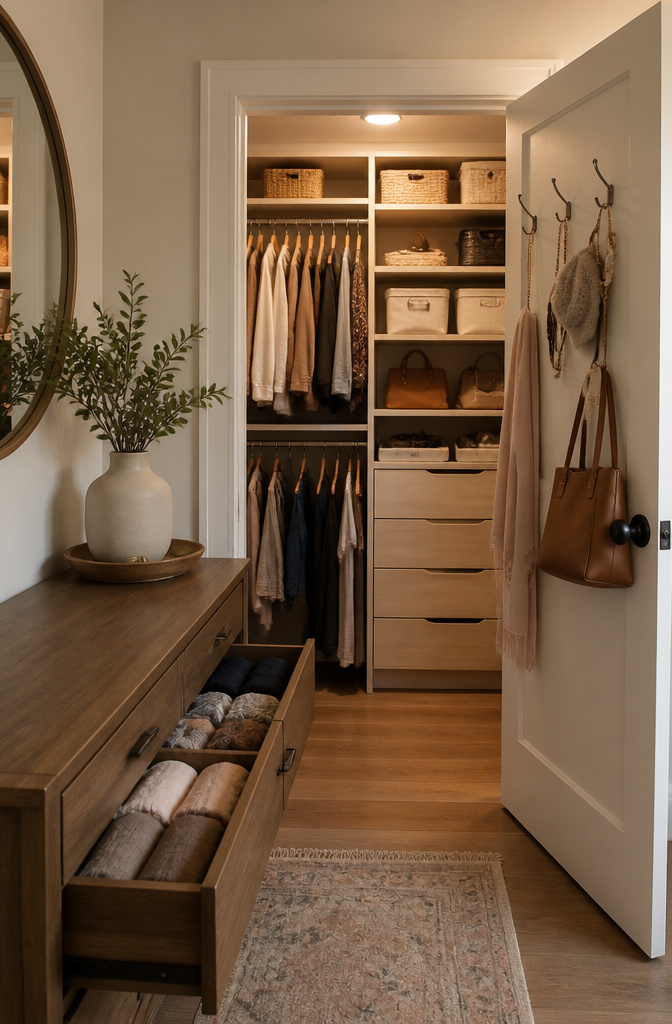
Slim hangers earn back their cost in inches. Velvet or similar low-profile styles remove the bulk that standard hangers add, which means either more garments on the rod or enough breathing room to actually see what you own. Empty hangers left on the rod do the opposite; they create visual clutter and steal space that active hangers need. Stash extras in a corner or a drawer until laundry day.
The floor and the back of the door are fair game for storage. Shoes stack on shelves, bulky items land in bins, and hooks handle accessories that do not belong on a hanger. A shallow dresser just outside the closet keeps socks and pajamas out of hanging territory entirely, which frees the rod for what actually needs it.
Organizing is not just about putting things in place. It is about curating a space that feels personal and intentional, and the storage you choose shapes that feeling directly. A pull-out pant hanger or a divided sock tray does not merely sort your clothes; it makes the morning routine feel like something built for you rather than inherited from the previous tenant. Quality pieces, chosen for the exact habits you already have, keep the system from sliding back into chaos by June.
Arrange by Frequency of Use

The clothes you reach for every morning belong in the zone between your shoulders and hips, where you do not have to bend or stretch. I learned this after watching a roommate store her work blouses on a high shelf while her sweatshirts hogged the prime rail; she reset the whole closet by week three. Seasonal rotation typically happens twice a year, once in spring for warm-weather pieces and once in fall for cold-weather wear. Off-season items go to the back, an upper shelf, or a second closet if you have one. Some pieces straddle seasons, and those stay visible in a middle section you can grab from as the weather shifts. The goal is to stop sifting through puffer coats in July or tank tops in January to find what you actually need today.
Maintain the System
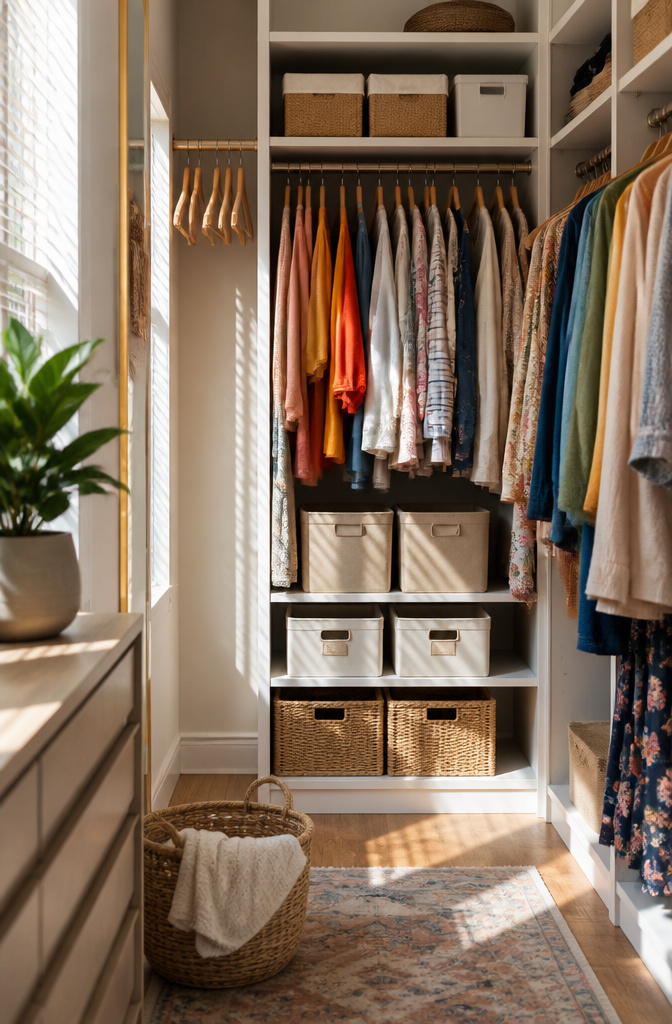
A closet that looks tidy on Saturday morning turns into a mess by Wednesday if clean laundry lands on a chair instead of on its hanger. The systems that work are the ones you can keep alive between big resets.
Twice a year, when the weather shifts, pull everything out and review. Spring and fall are the natural checkpoints. In spring, summer pieces come forward and winter wool moves to storage, a guest closet, or the back row. The reverse happens in fall. Each swap is a chance to check what got skipped all season and why.
Between those swaps, maintenance is smaller and daily. Fold clean clothes the way the drawer is already organized and put them back in their zone. When you buy something new, something old should leave. Sources rarely spell out exact schedules for this, and that gap makes sense, because closets vary too much in size and in how hard people wear their clothes. The general rule is enough: touch everything at the seasonal turn, and never let the "in" side grow past what the space can hold without crowding.
By Category, Color, Season, Occasion, and Outfit

The five methods for sorting clothes each solve a different morning problem. Grouping by category keeps all pants, shirts, and jackets in their own zones, which is the most common starting point and the easiest to maintain when you add color order from light to dark within each group. Color sorting alone makes a closet look pulled together, but its real payoff is showing you where your wardrobe is heavy, where it is thin, and where you own four of the same thing in slightly different shades; one organizer spotted a client with far too many pinstripe pieces only after every color sat together. Seasonal rotation puts what you are actually wearing at the front and stores off-season pieces out of the daily path, with year-round staples kept visible and transitional items placed between dedicated warm-weather and cold-weather sections. Organizing by occasion, work versus weekend versus evening, builds zones that match how you actually live; stylists who travel constantly or move between shoots use this because it cuts decision time. Pre-arranging full outfits goes furthest in that direction, though it takes more upkeep; photographing combinations and keeping an album or phone folder works around the closet space this would otherwise eat.
The best system depends on your mornings. Color wins if you shop your closet visually or want to spot gaps fast. Category plus color suits most people. Seasonal rotation helps if storage is tight. Lifestyle zones matter when your days split sharply between uniforms. Outfits-first works if you would rather not think at 6 a.m. Most closets end up mixing two or three.
Using What You Already Own
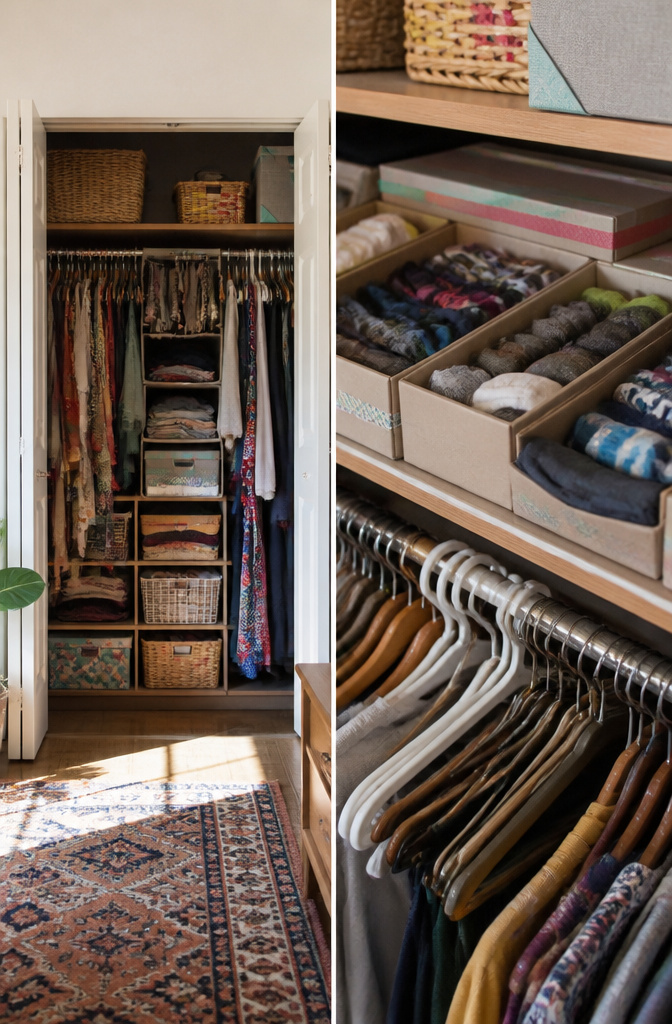
Shoeboxes stack neatly inside drawers to separate socks, underwear, or folded tees without a trip to the store. Lids work as dividers too; a strip of duct tape along the edge keeps cardboard stiff through daily opening and closing. The tape comes in enough colors that the inside of a dresser can look intentional rather than improvised.
Existing hangers need no replacing if you group them by type. Uniformity does more for visual calm than any matching set bought new. When I help friends reset a closet, we start with what is already on the floor: boxes from their last pair of sneakers, the thirty hangers already mixed on the rod, a spare tension rod from the laundry room. Buying bins interrupts the job more than it helps it. The interim fix often holds longer than expected, and for a renter who may pack again in a year, interim is all the system needs to be.
Making the Closet Visually Appealing

Most closet advice stops at function, but the space still feels like a storage unit. A few deliberate details turn it into somewhere you actually want to stand in the morning.
A jewelry stand with some weight to it, a handbag hung by its strap so the shape stays visible, shoes lined so you see the toe rather than the stacked sole: these are the touches that make a closet feel curated rather than contained. The goal is the ease of a favorite store, whether that reads Saks or Target to you. Everything in sight, nothing to dig for.
The shopping matters as much as the sorting. A generic bin from a big-box store does the job; a brass catchall or a wooden valet tray makes the job feel intentional. These pieces do not have to be expensive, but they should be specific, something you chose rather than defaulted to.
For renters especially, this is where the temporary becomes the personal. The rods and shelves belong to the landlord. The tray that holds your watch, the stand that frames your necklace: those travel with you.
Frequently Asked Questions
How do I declutter my closet?
Pull everything out until the rods and shelves are bare, then sort into keep, donate, and toss piles. Keep what fits, what you actually wear, and what is not worn out; donate pieces in good condition that you skip past; toss what is damaged past repair. Bag the donate and toss piles and move them out of the room immediately so they cannot creep back onto the rod.
What is the best way to organize clothes?
Start by grouping everything by type, tops with tops and bottoms with bottoms, since that mirrors how you actually get dressed. From there you can layer in color order, sleeve length, season, occasion, or even pre-built outfits if one of those solves a daily problem you hit. Most closets end up mixing two or three methods.
How often should I reorganize my closet?
Do a full pull-out-and-review twice a year, in spring and fall, when you swap seasonal pieces forward and back. Between those swaps, maintenance is daily: put clean laundry back in its zone, fold to match the existing drawer organization, and follow the one-in-one-out rule so the closet never grows past what the space can hold.