
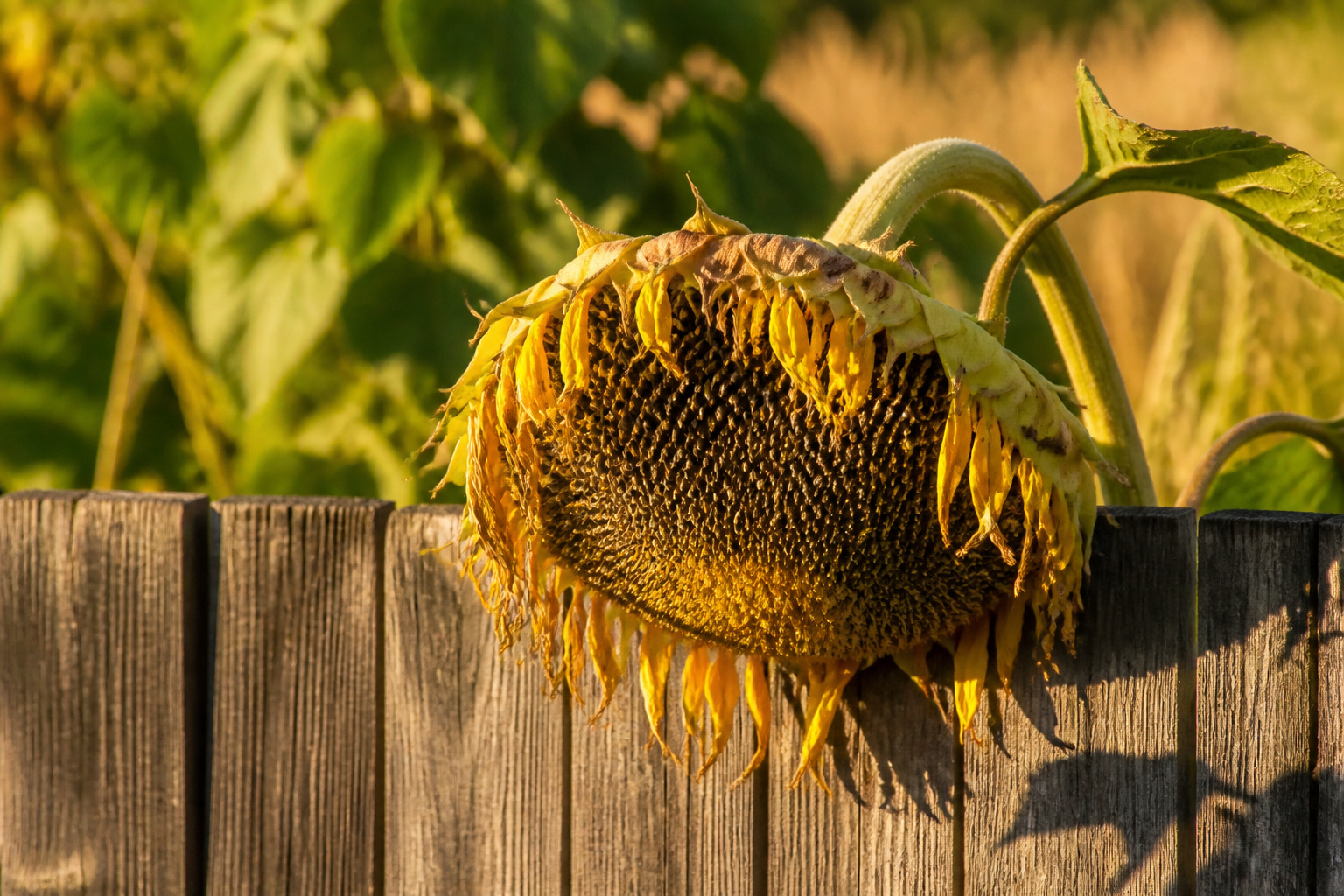
Harvesting sunflower seeds takes about one to two weeks from cutting to storage, and the only real skill is knowing when to start. Most gardeners wait too long.
Birds will strip a ripe head in hours, yet the seeds are often ready while the stalk still stands upright and the back of the head is only yellow, not brown. That timing window is what makes or breaks the crop.
The Mammoth variety common in backyards can droop by mid-summer and set seed fast. Leave the stem 12–18 inches long when you cut, and hang it somewhere warm with moving air.
1. Determine Readiness

The head drops first. By late summer or early fall, most sunflowers bow under the weight of their own seeds, and the bright petals yellow, dry, and fall away. The back of the head turns from green to yellow or brown, which is the clearest signal that the plant has shifted from flowering to seed production. Seeds should look plump and feel loose when you tug on them, not small and flat.
You do not have to wait for the entire head to turn brown, especially if birds are already circling. Wildlife moves fast once the seeds fatten up, and a head left too long can be picked clean. The Mammoth variety, common in backyard gardens, often hangs its head by mid-summer and sets seed shortly after.
Standing sunflowers can still be ready. If the back of the head has yellowed and a test pull releases plump seeds easily, the timing is right even if the stalk has not fully drooped. Waiting for the plant to fall over on its own risks losing the crop to birds or rot from late-season rain.
2. Cut the Sunflower Head

Sharp garden shears or a good pair of pruners make the cleanest cut, and clean matters here because a ragged stalk tears more plant tissue than necessary and invites rot if you’re hanging the head to dry. Leave 12–18 inches of stem attached to the flower head. That length gives you enough material to tie twine around securely later, whether you hang the head in a garage or lay it in a shallow container to catch the loose seeds that start falling almost immediately.
A dry day is the right day for this cut. Moisture on the seeds at harvest raises the risk of mold during drying, and a damp stalk slips in your grip. If birds have been working the edges of the bloom, you probably already covered the head with cheesecloth or breathable fabric a week or two back. The back of the flower head should be brown, the seeds plump and loose enough that you can feel them shift when you brush the surface with your thumb. Cut about a foot below the bloom, place the head seed-side down in something that can catch what falls, and move on to drying.
3. Dry the Sunflower Heads

Hang each sunflower head upside down in a warm, dry spot with steady airflow, somewhere like a garage corner or a shed hook, and give it 1 to 2 weeks before you try pulling seeds. The ventilation matters more than the exact temperature; sunflowers hold surprising moisture in both the head and the seed, and still air lets mold start before you notice.
Tie the stems with twine or string, spacing the heads a few inches apart so they are not touching. A loose cheesecloth or burlap wrap around each head catches any seeds that drop while they hang. You will know drying is done when the back of the head turns crisp and the seeds feel firm, not pliable.
Some growers lay heads on screens with fans running, especially where autumn nights drop the temperature. That works, but it takes more setup than the hanging method and does not change the timeline much. A food dehydrator can speed things up, though for a home harvest of a few heads the extra equipment and cleanup rarely pays off against simply waiting the week.
4. Remove the Seeds

A Mammoth Grey Stripe standing twelve feet tall means the head can outweigh your wrist by the time it dries, so rubbing the seed head over a bucket works best if you cut the stalk long enough to use as a handle. I have seen growers brace the stem against their hip and scrape downward with a stiff dry brush, letting the seeds fall through their fingers into the container. The brush looseds the seeds without the grit that gloves collect, though bare hands are fine if the dried face of the head does not bother you. Petals and disk florets will tumble in with the seed; leave them. Separation comes after, and trying to keep the debris out only slows the work.
5. Dry the Seeds

Spread the seeds in a single layer across a tray, plate, or old window screen if you have one. Crowding them traps moisture between the shells, and that is where mold starts. I give mine a gentle stir once a day so every side sees air, but I am not fussy about it.
The moisture level you are after is 10 percent or less. Without a meter, the rattle test works: shake a seed and listen for the kernel knocking loose inside the hull. If you hear nothing, they need more time.
How long? That depends on humidity and airflow, so I will not hand you a fake number. What matters is that they are fully dry before they go into any container you seal. Last season I thought mine were ready at four days; they were not, and I lost a pint to fuzz. Now I wait for the rattle, then I wait one day more. A silica gel packet in the jar buys extra insurance, but it does not fix seeds that went in damp.
6. Store the Seeds

A mason jar or any airtight container keeps moisture and pests out once the seeds are fully dry. I slide mine into the back of a pantry, where it stays cool and dark, though a refrigerator works if you have the space. Room temperature is fine for seeds you will plant the next spring; for longer storage, the cooler spot preserves freshness and keeps them viable.
Sunflower seeds stay viable for 2 to 3 years when stored properly, and under ideal conditions they can last even longer. For eating, plan to use them within a year so the flavor and nutrition hold up.
Label the jar with the variety and the harvest date before you put it away. You will think you will remember. Next spring, you will not.
Protect Seeds from Wildlife

Wildlife usually finds sunflower seeds before you do. Three methods keep the heads intact while the seeds finish maturing, and each suits a different kind of gardener.
The simplest route is leaving the plant in place and checking daily once the back of the head turns yellow. That works only if birds and squirrels have not already staked a claim. Covering the head with breathable netting, tulle, or cheesecloth creates a physical barrier without trapping moisture; sources suggest adding this a week or two before the expected harvest date. Cutting the stalk 12–18 inches below the head and hanging it indoors skips the vigil entirely. The heads dry in 4–5 days in a warm spot with air circulation, and tying a paper bag or cheesecloth beneath catches any seeds that loosen early.
| Method | Labor | Risk of loss | Best for |
|---|---|---|---|
| Netting in garden | Low, but daily checks help | Moderate if netting shifts | Dry weather, light wildlife pressure |
| Cut and hang indoors | One cut, then wait 4–5 days | Low | Wet falls, heavy bird pressure |
| Paper bag over bloom | Low | Moderate; bag can tear | Quick, temporary fix |
I would cut and hang if the forecast turns wet, since damp seeds mold faster than they dry on the stalk. Netting wins only in dry weeks when you are in the garden daily anyway.
One pest note: sunflower weevils lay eggs in the head that hatch into larvae inside stored seed. Freezing finished seed for three days, sealed with desiccant after the initial drying, kills them outright. The cold ruptures weevil cells while the low moisture keeps the seed itself viable for planting seasons later.
Roast or Eat Raw

Raw sunflower seeds are edible, though most people prefer them roasted for the crunch and salt. The sources I found skip right past hulling and go straight to soaking the whole seeds in brine, which tells me the shell stays on for eating.
For a basic roast, soak unshelled seeds overnight in 1/4 to 1/2 cup salt per 2 quarts water. Drain without rinsing, then spread them on a baking sheet. One method bakes at 300°F for 30 to 40 minutes until golden, while another runs slightly hotter at 325°F for 25 to 30 minutes. Both work; the lower temperature buys you more margin against burning if you step away. Stir once or twice so the ones at the edges don’t scorch.
I have not found any instructions for shelling seeds for human consumption in these guides. If you want kernels without the hull, you are likely buying those already processed. For home-harvested seeds, the roasted shell-on version is the practical snack, and the leftovers store for weeks in a jar.
Seed Viability

Properly stored sunflower seeds stay viable for about two to three years, though the germination rate drops with each season they sit. I learned this the hard way after planting a row of three-year-old seeds and getting maybe one in five to sprout, while the fresh batch from the same packet the year before had nearly all come up. The decline is gradual, not a cliff, so older seeds still work if you sow thicker and accept some gaps.
Moisture is what kills viability fastest, even in a sealed jar. I dry mine on a screen for a full week before they go into storage, and I still check the lid seal each spring. If you are saving seeds for eating, the two-to-three-year rule still applies to planting stock; the ones you roast do not need the same vigilance, but the biology is the same.
Frequently Asked Questions
When are sunflower seeds ready to harvest?
Sunflower seeds are ready when the back of the head turns from green to yellow or brown, the petals have dried and fallen, and the seeds themselves look plump and feel loose when you tug on them. The head often droops under the weight, though standing plants can still be ready if the other signs are there. You do not need to wait for the entire head to turn brown, especially if birds are already showing interest.
How do I know when to cut my sunflower heads?
Cut when the back of the head has yellowed or browned and a test pull releases plump seeds easily. Choose a dry day, use sharp shears, and leave 12–18 inches of stem attached for hanging. A ragged cut invites rot, and moisture on the seeds at harvest raises the risk of mold during drying.
How long do sunflower seeds need to dry before storage?
Hang sunflower heads upside down for 1 to 2 weeks, then spread removed seeds in a single layer and dry until they pass the rattle test: shake a seed and listen for the kernel knocking loose inside the hull. The total time depends on humidity and airflow, so go by the sound rather than a set number of days. Only seal them in a container once they are fully dry.
How do I store sunflower seeds after harvesting?
Store fully dried seeds in a mason jar or other airtight container, kept in a cool, dark place such as a pantry or refrigerator. Sunflower seeds stay viable for 2 to 3 years when stored properly, and even longer under ideal conditions. Label the jar with the variety and harvest date before you put it away.
Can I eat sunflower seeds after harvesting?
Yes, harvested sunflower seeds can be eaten raw or roasted. For roasting, soak unshelled seeds overnight in 1/4 to 1/2 cup salt per 2 quarts water, drain without rinsing, then bake at 300°F for 30 to 40 minutes until golden. Most home growers eat them shell-on; kernels without hulls generally require equipment not found in a typical kitchen.