
Small window treatments run from under $10 temporary paper to $200 custom shutters, and the right choice depends on whether you own the wall or will need your security deposit back. Renters face a different math than buyers: peel-and-stick film and tension rods leave no trace, but both fail predictably if you load them past their limits or skip the soapy water step that lets the film slide flat. I keep spare paper shades in my closet for move-in day, yet the two-year test in my last rental proved frosted static-cling film holds longer and reads less like a stopgap.
1. Custom Shutters
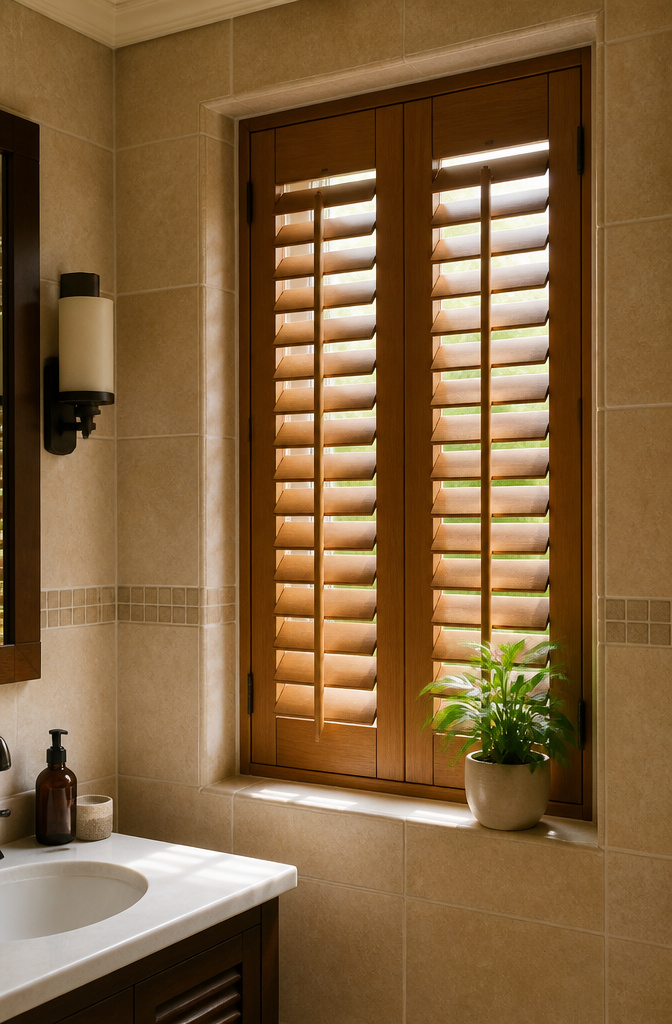
Custom shutters solve the gap problem that drives renters and first-time owners crazy with off-the-shelf sizes. Standard shutters leave you shimming or trimming to cover a window that measures 18 inches across or sits at an odd height in a 1940s bathroom wall. Custom work measures the exact opening, including any out-of-square angle, and builds to that number.
The louver size matters more on a small window than a large one. Adjustable louvers on real wood custom shutters start around $200 per window, and that tailored fit is what you are paying for. Off-the-shelf plantation shutters usually come in set widths, 24 or 36 inches, which forces you to order up and live with side gaps or a frame that overlaps your trim.
Woodlore and Normandy shutter lines both offer that louver adjustment for light control in tight spaces. The custom route also means you pick louver size by window, not by what the big-box stock happens to hold. A smaller louver, 2.5 inches, keeps the proportions right on a narrow window and still tilts to block the afternoon sun or open to the alley view.
2. Sheer Shades
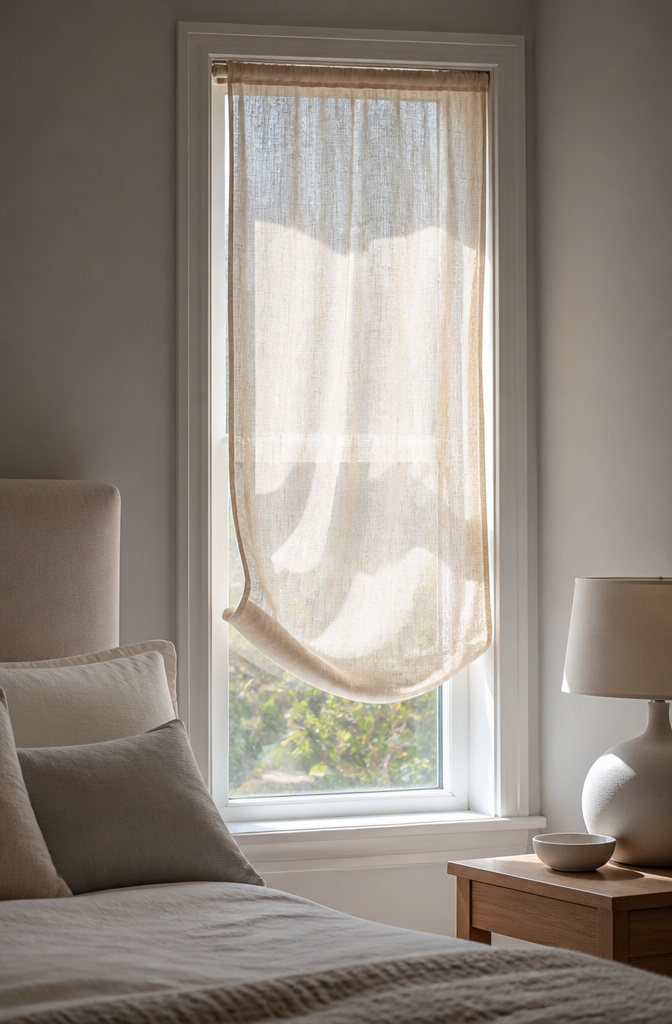
Sheer shades make the most sense where you want light without the glare. The lightweight fabric diffuses what comes through, which turns an east-facing living room or a bedroom into something airy rather than washed out. Bedrooms especially benefit; you get morning light softened enough to sleep past sunrise, and the room still feels open.
The fabric weight matters more than people expect. Anything below about 80 GSM turns billowy and cheap-looking in six months, while something in the 120–160 GSM range holds its shape and still lets light through. You can feel the difference hanging a panel and watching how it falls.
For renters, the tension-mount option keeps things simple. A spring-loaded rod wedges inside the window frame, no drilling, no patching later. The catch is weight; sheer linen stays up fine, but heavier cotton panels will sag the rod or pull it down entirely. Check the rod’s rating before you buy, and stick to lightweight fabric if you are hanging from tension alone.
3. Roller Shades
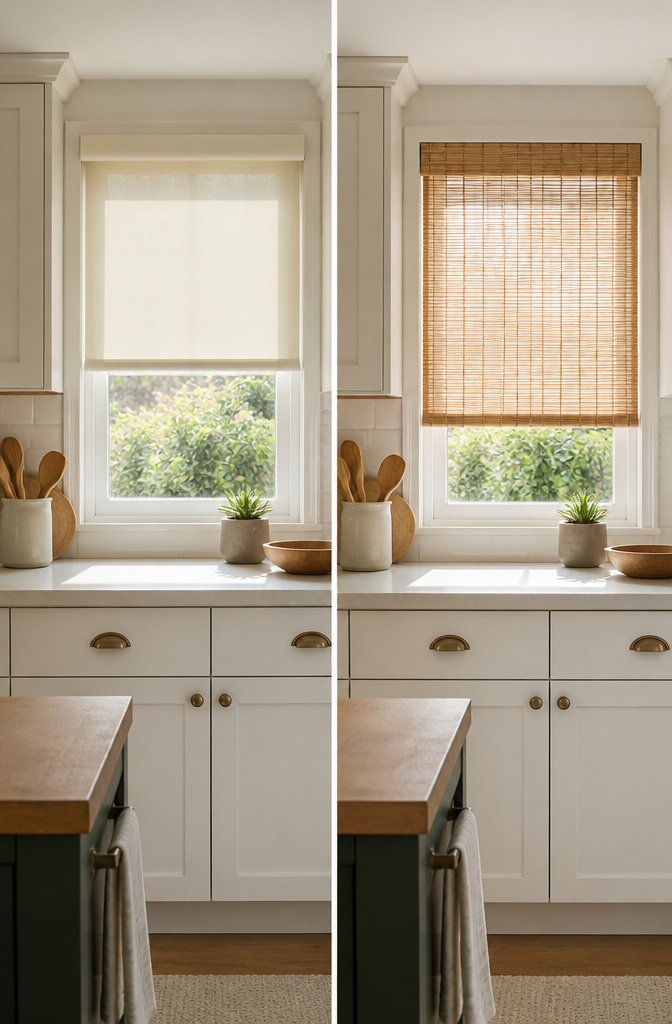
Roller shades give small windows the cleanest possible profile because the fabric rolls up to nothing, leaving the frame exposed. That matters in a tight room where every visual line counts. The cassette valance hides the rolled tube and the hardware from the outside, which keeps the top edge from looking like a bulky afterthought on a 24-inch-wide bathroom or laundry window.
Light-filtering and blackout fabrics are both available cut-to-size, so the same shade style works for a bedroom that needs darkness or a kitchen that only wants glare cut down. The clutch mechanism is where the decision sits. Standard corded versions cost less upfront but leave a hanging cord that small-window placement often puts right at hand height in a hallway or above a sink. Cordless lift, which runs on a spring or a slow-rise system inside the tube, eliminates that entirely. Expect to pay roughly $30 for a basic cut-to-size light-filtering roller, and closer to $90 for a cordless blackout with a cassette valance in a custom width. The valance is worth the add-on on small windows because the exposed tube otherwise becomes the single biggest visual element in an already narrow frame.
4. Roman Shades
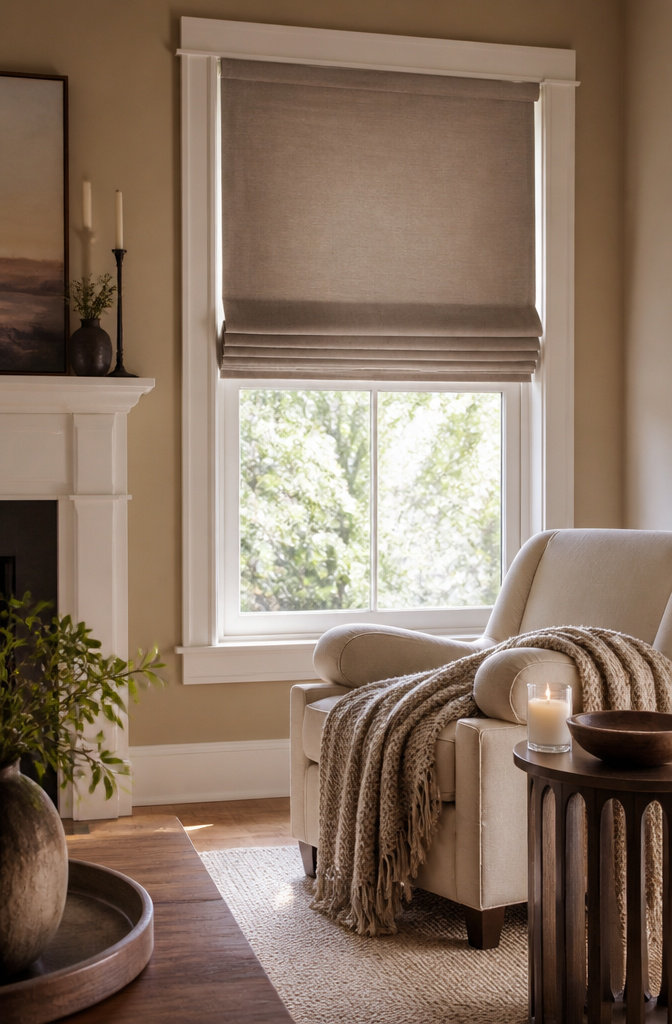
Roman shades fold fabric into clean horizontal pleats that stack up from the sill, and the tailored look works in nearly any room without reading too formal. Two builds dominate the market: flat-fold keeps every pleat crisp and level when lowered, while relaxed lets the bottom curve softly, almost like a valance that happens to close. For a small window, the difference matters less than the stack height. A shade on a window under 24 inches tall can swallow a third of the glass even when fully raised, so a flat-fold usually wins there because it compacts tighter. The yardage rule is fabric width plus 6 inches, which covers side hems and the rod pocket or ring tape at top and bottom. That extra six inches disappears fast if you pattern-match stripes or plaids, so buy the repeat length, not just the cut. I have relaxed-style shades in my own kitchen and like the slight droop, but I mounted them on a 28-inch window where the stack sits clear of the view. On anything shorter, I would go flat-fold and keep the fabric light, not the heavy decorator linen that looks rich but bulks up an extra inch or two.
5. Wood Blinds
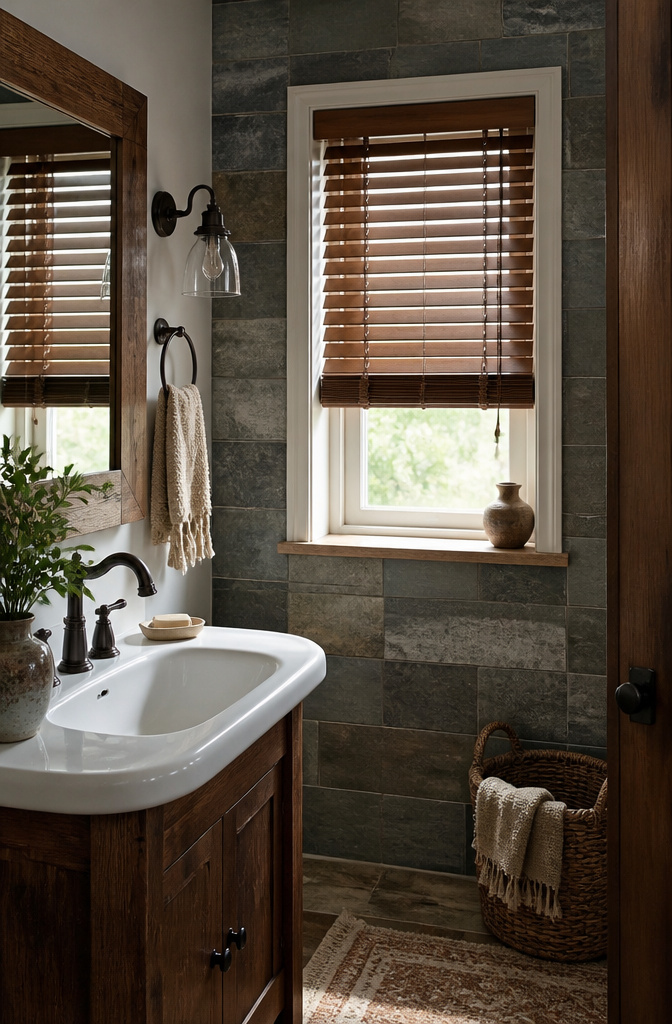
Hardwood blinds bring in warmth that aluminum or vinyl never quite matches, and the insulation they add is noticeable in a small room where every edge of glass fights the thermostat. For a compact window, 1-inch slats keep the proportions right; anything wider starts to look like borrowed hardware. The catch is weight. Real wood gets heavy fast, and past 36 inches wide the hardware strain shows in slow cords and a frame that tires out the mounting brackets. I skip them entirely in bathrooms. Steam does what steam does, and hardwood warps no matter how good the sealant was in the shop. Faux wood handles that moisture for less, which is why that material exists.
6. Faux Wood Blinds
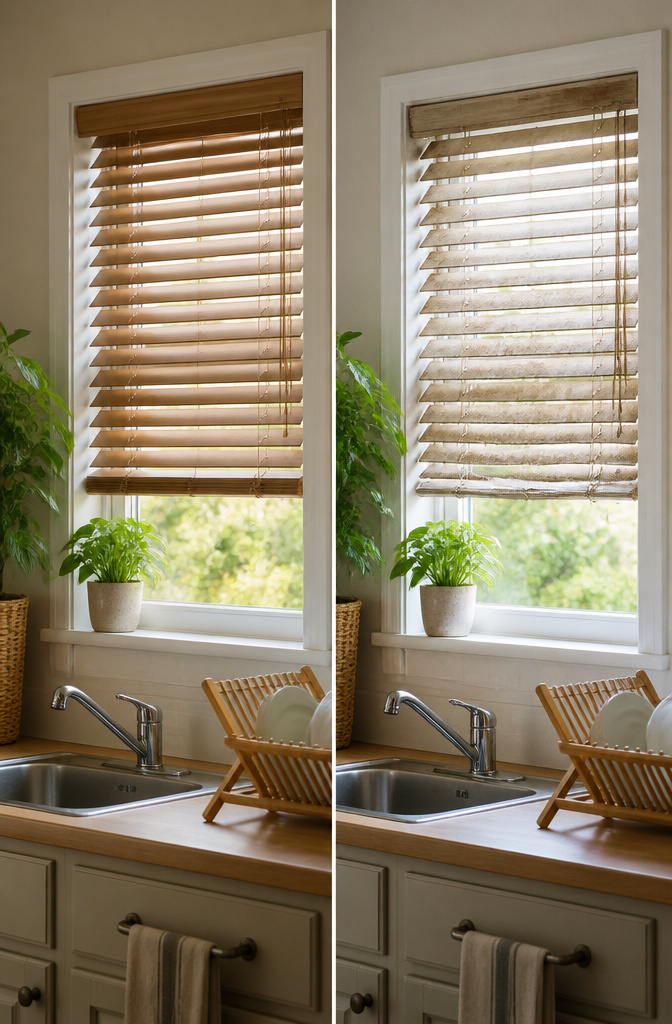
Faux wood blinds handle steam and splashes without warping, which is why they land in so many bathrooms and kitchens. The material is synthetic, not actual timber, so the moisture that ruins real wood just wipes off these.
The shelf usually holds two versions: PVC and composite. PVC runs lighter and cheaper, around $25 to $60, while composite adds heft and a closer grain match at the higher end of that same span. Both read as wood from across the room; neither swells when the shower runs.
Slat width is where these can trip you up. A 2-inch slat looks right on a standard window, but drop below 20 inches wide and the slats start to feel chunky, like ladder rungs on a dollhouse. For those narrower openings, a slimmer profile keeps the proportions in check.
7. Mini Blinds
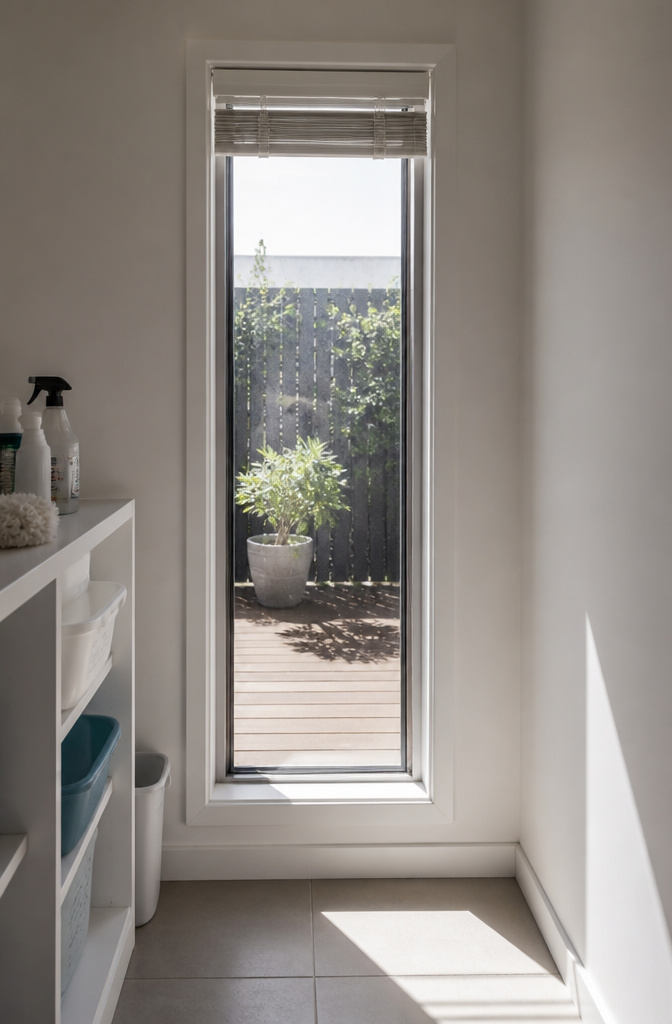
One-inch aluminum slats run about $8 to $20 and disappear against the glass better than wider blinds, which matters when your window is already the size of a laundry room porthole. The minimal profile keeps sight lines clean, and the weight stays low enough that you can mount them inside the frame without worrying about the casing.
The slats bend. Within two years, in my experience, the ones you touch daily start to kink at the grab point, and from there they catch instead of glide. The hardware still works; the aluminum just fatigues. If you are buying for a bathroom or a utility space you barely open, this matters less. If it is above a sink you lean into every morning, plan on replacement sooner.
Cord safety is the other reason I have stopped defaulting to the cheapest option. Dangling cords are a real hazard in homes with children or pets, and the cordless versions worth buying now come at only a small price bump. For a few dollars more, the blind operates with a push or a pull at the bottom rail. That is the version I would hang today.
8. No-Sew Roman Shades
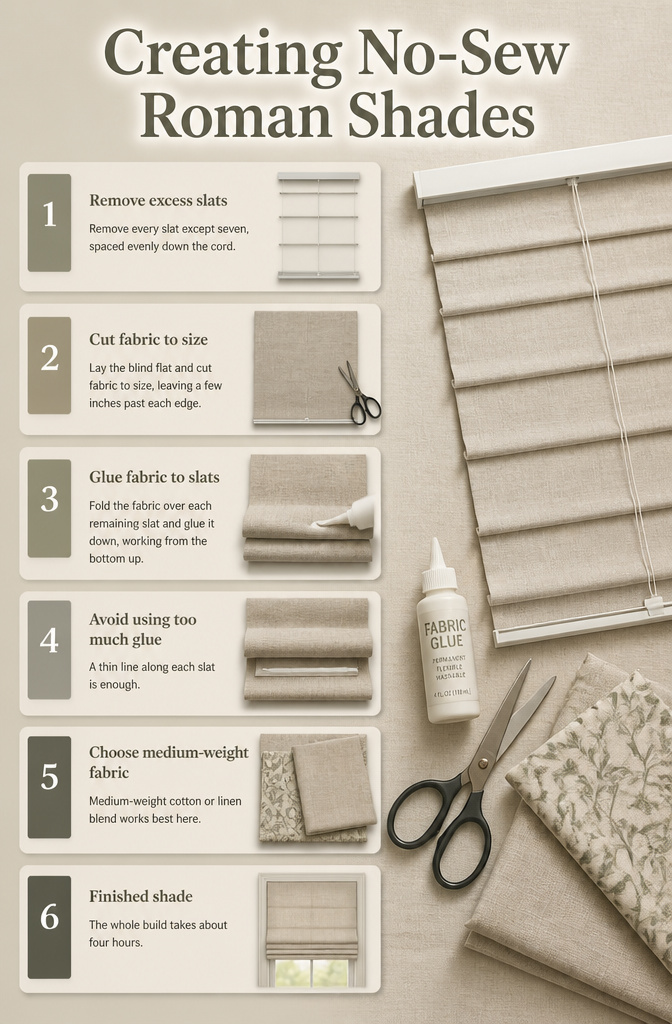
A vinyl mini blind becomes the bones of a no-sew Roman shade for about $15 per window and half a Saturday. You need the blind, a yard or two of fabric, fabric glue, and scissors.
- Remove every slat except seven, spaced evenly down the cord. The headrail and bottom rail stay.
- Lay the blind flat and cut fabric to size, leaving a few inches past each edge.
- Fold the fabric over each remaining slat and glue it down, working from the bottom up.
The whole build takes about four hours. The mistake most people make is using too much glue; it bleeds through and stiffens the folds so the shade will not raise evenly. A thin line along each slat is enough. Medium-weight cotton or linen blend works best here: sheer fabric shows the mechanism, and anything as heavy as upholstery velvet will not fold up neatly.
9. Drop Cloth Curtains
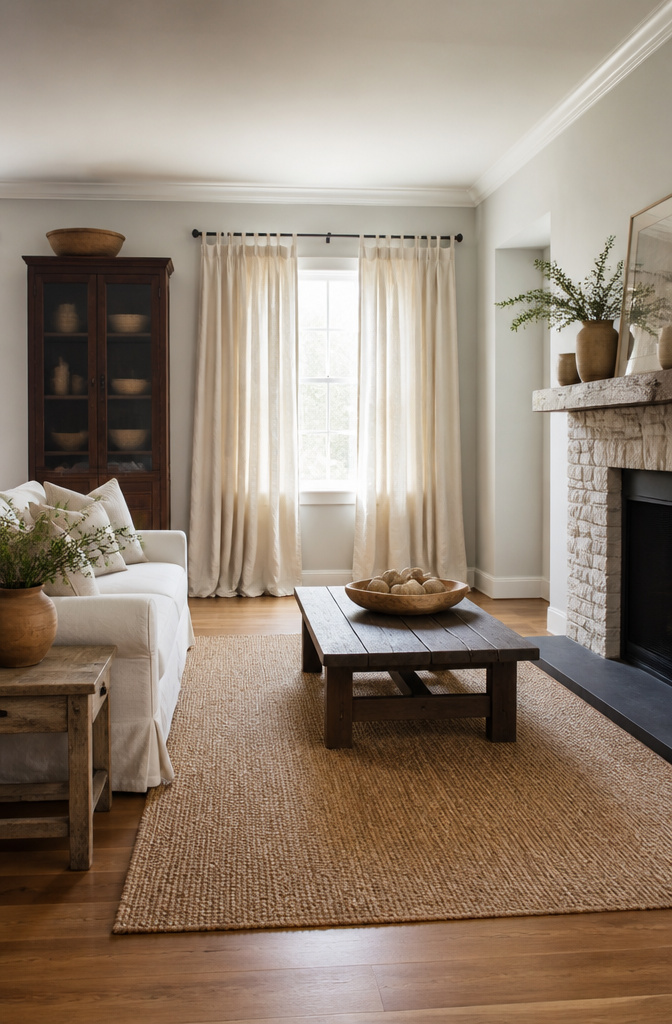
Canvas painter’s drop cloths run about $12 to $20 per panel and outlast most budget curtain fabrics by years. The stiff, yellowish-beige canvas straight from the package is a mistake; wash it on high heat first to soften the hand and lose the factory smell, then bleach if you want that creamy off-white look instead of the raw utilitarian tone.
The nine-foot length matches standard windows with fabric to spare. Hemming is optional: curtain rings with clips give a clean fold at the top and an intentionally undone bottom edge, or you can run a straight stitch across the excess and cut it off for a custom length. Either way, the drape reads as relaxed linen at a fraction of the cost.
10. Temporary Paper Shades
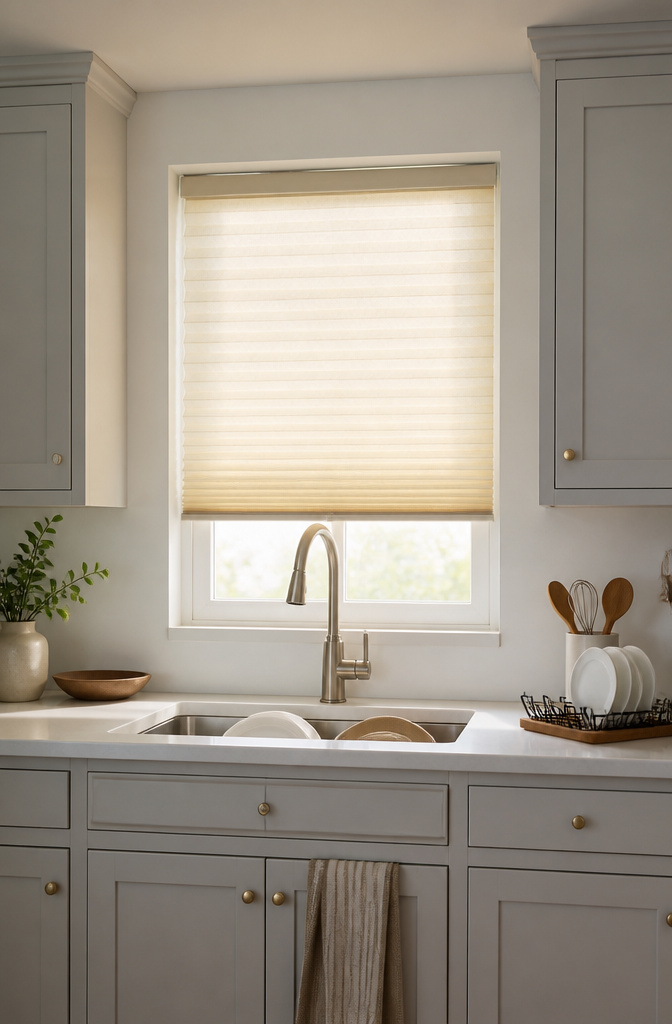
Temporary paper shades are the absolute cheapest privacy solution on the market, clocking in at under $10 per window. I keep a spare pack in my closet for the exact moment a new rental hands me bare glass and a neighbor’s view.
The pleated style folds down accordion-style and bounces light around a little, while the flat ones look like smooth parchment. Both mount the same way: trim the shade to width with scissors, peel the backing off the adhesive strip, and stick it directly to the window frame. Double-sided tape is doing the holding, so the whole job takes about two minutes per window.
Six months is roughly the lifespan before the paper starts to sag or the adhesive gives up in humidity. That is the tradeoff for the price. For a room you are not sure about yet, or for that first week after a move when the rest of life is still in boxes, they earn their keep.
11. Tension Rods
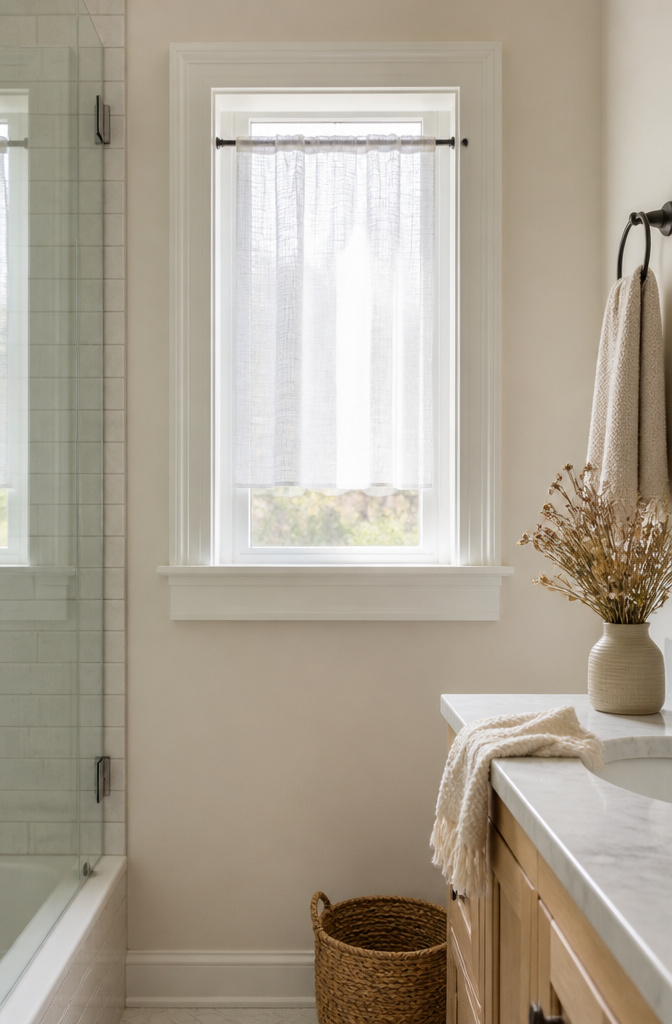
A standard tension rod spans 24 to 36 inches and carries about 10 pounds before it starts to sag. That is enough for a single panel of lightweight cotton or sheer linen, but not much more. I have watched people load one with a blackout curtain and a decorative valance, then wonder why it lands in the windowsill by Tuesday.
The rubber end grips that hold the rod in place work fine on raw wood or vinyl trim. On painted trim, especially semigloss or satin, they slip. The spring compresses, the rod relaxes, and the whole thing drops. A reader facing that can wrap the ends in a thin strip of shelf liner, but that is a patch, not a fix.
Spring-loaded rods fail predictably once you pass 30 inches. The longer the span, the more the center bows under even light fabric, and the more tension the spring needs to keep gripping. At 36 inches you are at the edge of the range with no margin left. For anything wider, a different mount makes more sense.
12. Peel-and-Stick Window Film
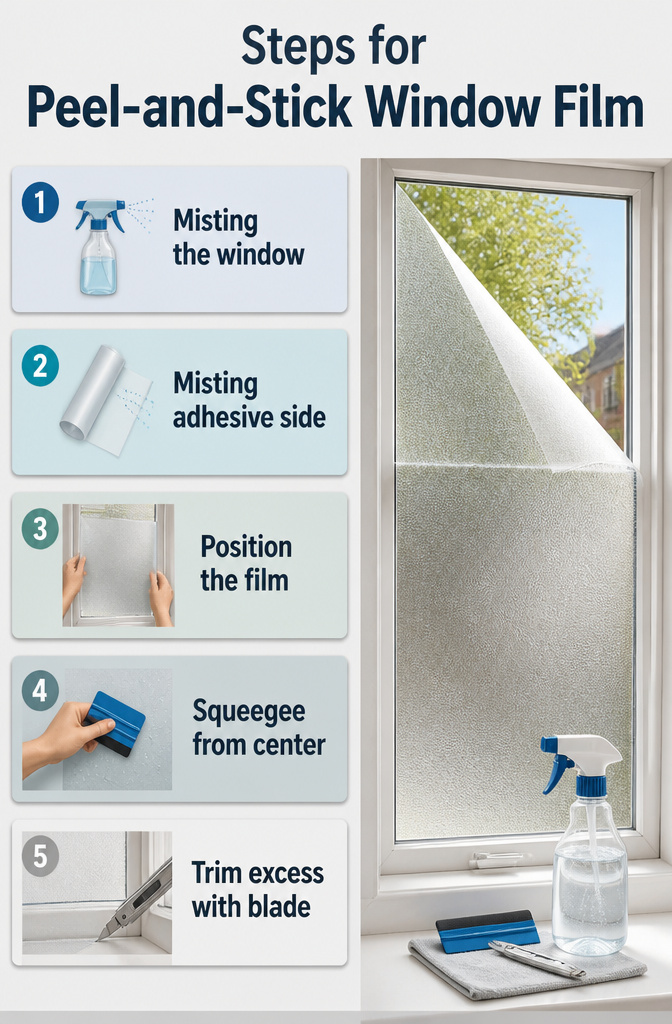
Peel-and-stick window film gives renters privacy and a finished look with nothing to drill. Most rolls run $8 to $25 and cover two standard windows, which puts it in the same ballpark as temporary paper shades but with a cleaner result that reads more like intentional decor.
The application method matters more than the film itself. A spray bottle of soapy water is what separates a smooth finish from a bubble-covered headache. The window and the adhesive side of the film both get a generous misting so the sheet can slide into place before you squeegee the water and air out from the center. A credit card works in place of a squeegee. Trim the excess with a sharp blade once it is flat.
Frosted film diffuses light without blocking it and suits bathrooms or street-facing windows. Patterned options add texture but read busier in smaller rooms, so the choice depends on whether the window faces a wall you want to soften or a view you want to obscure completely.
Static-cling versions peel off without residue, which is the main appeal for anyone who wants their security deposit back. Standard adhesive-backed films can leave a sticky film behind, especially after long sun exposure, so the frosted static-cling is the safer bet for a temporary stay.
13. Living Curtains with Plants
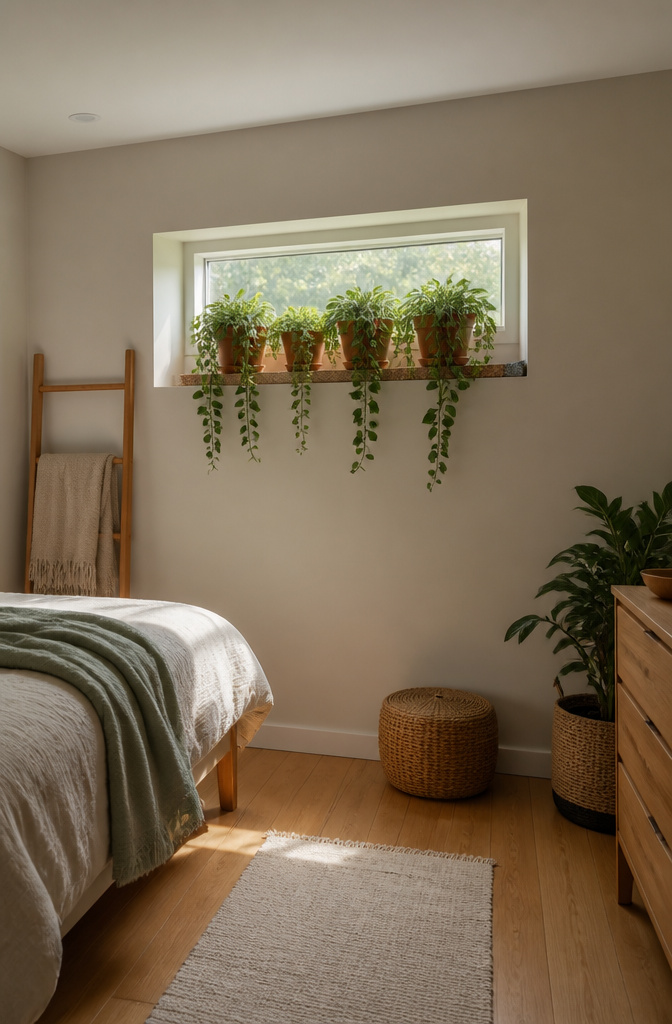
A deep shelf, six inches at minimum, gives pothos or snake plant stems room to trail and ZZ plants enough soil mass to stay upright without crowding the glass. Anything shallower tips toward the light and leaves a gap at the top someone on the street can still see through.
The real risk is the sill itself. Terracotta sweats, glazed pots weep through their drainage holes, and even a single overwatering sends moisture into paint or wood veneer that does not show damage until it bubbles. A plastic tray lifted on cork feet keeps the surface dry and buys time to catch spills.
North-facing windows in most U.S. climates lose their density from October through March. Growth stalls, leaves thin, and the screen you built in June reads as sad sticks by January. This works best as a warm-season layer, swapped out for a fabric shade once the light drops and the heating vents dry the air below forty percent.
What I Spend and Where I Save
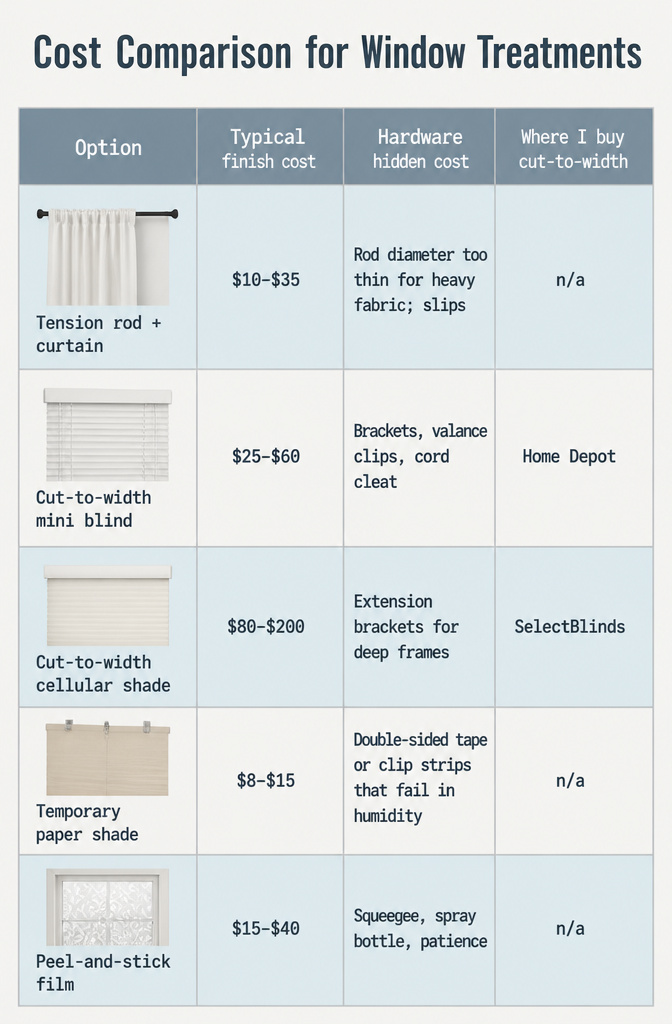
Hardware runs the bill up faster than fabric. A basic tension rod and a cut-to-width roller from the big-box store can land under $10 if you already own shears and a level, but most first-timers forget the brackets, anchors, and the second trip for a drill bit that matches their wall. Finishing one small window properly, start to finish, sits closer to $35–$75 once you count the hardware you did not plan on.
For the two places that cut blinds to width, I order from Home Depot’s in-house service for vinyl minis and from SelectBlinds online when I want a cordless cellular. Both ask for the inside-frame measurement to the nearest 1/8 inch, and both ship in about a week. The cellular shades run higher, but their honeycomb pockets trap air well enough to notice on the heating bill; the off-the-shelf versions at the store perform almost as well for half the cost if you can live with standard widths.
| Option | Typical finish cost | Hardware hidden cost | Where I buy cut-to-width |
|---|---|---|---|
| Tension rod + curtain | $10–$35 | Rod diameter too thin for heavy fabric; slips | n/a |
| Cut-to-width mini blind | $25–$60 | Brackets, valance clips, cord cleat | Home Depot |
| Cut-to-width cellular shade | $80–$200 | Extension brackets for deep frames | SelectBlinds |
| Temporary paper shade | $8–$15 | Double-sided tape or clip strips that fail in humidity | n/a |
| Peel-and-stick film | $15–$40 | Squeegee, spray bottle, patience | n/a |
I save by skipping the custom liner and adding a thermal blackout liner to curtains I already own. The liner costs $12–$20 and hangs on the same rod; it is less polished than a shade built for insulation, but it works for a rental bedroom where the window faces east and the landlord chose the cheapest glass code allowed.
Renter Mounts That Leave No Trace
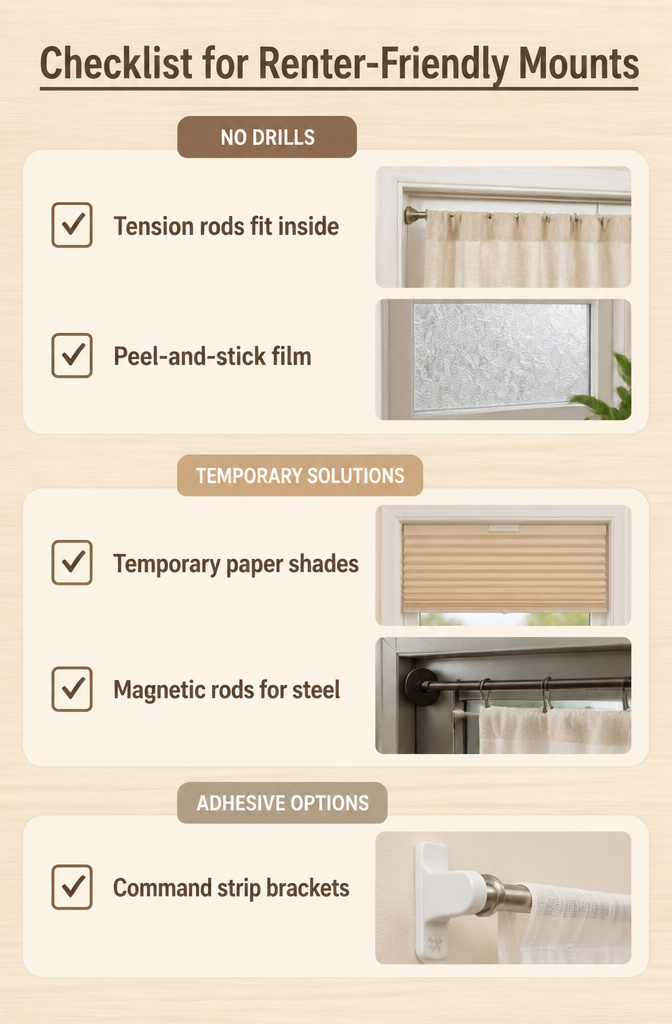
A hole larger than a finishing nail is enough to put your deposit at risk, so the hardware you choose matters as much as the curtain itself. These are the mounts I have used or considered for windows I could not drill:
- Tension rods inside the frame work best when the sides are flat and the rod is sized exactly; spring-loaded ends grip without adhesive, and a too-short rod will drop on you by morning.
- Peel-and-stick film gives privacy without any moving parts. I cut it to fit a bathroom casement with a utility blade and soapy water, and the backing held for two years without residue when I pulled it free.
- Temporary paper shades attach with adhesive strips to the frame itself. They are the cheapest stopgap I have found, meant for scissors-and-go rather than long-term use.
- Magnetic rods only function on steel door or window frames; test yours with a refrigerator magnet before you buy, because aluminum and vinyl will leave you with a rod and no way to mount it.
- Command strip brackets rated for curtain weight exist, but the weight limit on the package is the limit. I would not push past it with thermal-lined panels; lightweight sheers are the safer match.
Cordless and Low-Hardware Choices
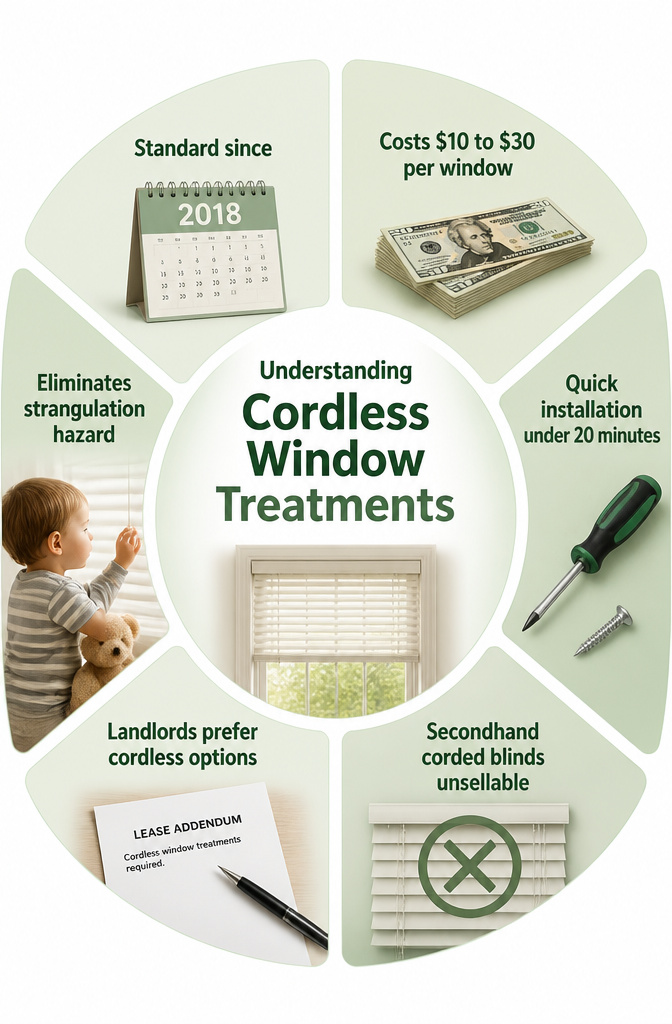
Cordless lift mechanisms have been standard on every new blind sold in the U.S. since 2018, when a federal safety rule took effect to address the strangulation hazard posed by exposed cords. The change was overdue: looped pull cords on older mini blinds can form a noose if a child or pet tangles in them, and breakaway tassels sold as retrofits only solve part of the problem since the inner cord loop remains accessible.
For anyone still running corded hardware, the retrofit is straightforward. Most manufacturers sell cordless conversion kits or replacement heads that swap the tilt mechanism out entirely, typically running $10 to $30 per window depending on width and whether you need a wand tilt or a lift-only setup. The work takes about twenty minutes with a screwdriver and does not require removing the brackets.
The upgrade pays for itself in one regard: secondhand corded blinds are nearly unsellable now, and landlords increasingly write cordless into lease addenda for family units. Spending the few extra dollars at purchase rather than retrofitting later saves the labor and the guilt of realizing you’ve been living with a hazard you assumed had already been phased out.
Frequently Asked Questions
What is the absolute cheapest way to cover a window for privacy?
Temporary paper shades are the cheapest option at under $10 per window. Trim them to width with scissors, peel off the adhesive backing, and stick them directly to the frame. Expect roughly six months of use before sagging or humidity weakens the hold.
How can I make cheap blinds look more expensive?
Layering helps. Add a fabric-covered valance or hang curtain panels over basic blinds to hide hardware and soften edges. Custom shutters with louver adjustment also upgrade the look for about $200 per window, since tailored fit eliminates the side gaps that read as off-the-shelf.
Are there any cheap window options that also save energy?
Cellular shades trap air in honeycomb pockets and cut heating and cooling costs. Off-the-shelf versions at big-box stores perform nearly as well as custom for half the price if standard widths fit. Adding a $12–$20 thermal blackout liner to curtains you already own is another cheap insulation boost.