

Wall-to-wall curtains run floor-to-ceiling fabric across an entire wall rather than framing a single window, and the format changes how every fabric behaves. A sheer that filters light politely on a three-foot span becomes a backlit stage curtain after dark when stretched to eight feet, which is why most successful installs layer. The blackout version only works if the rod mounts high and wide enough that the stacked panel overlaps the wall by several inches on each side; every gap is a light leak you will notice every sunrise.
Sheer Curtains

Sheer curtains are the lightest entry point into wall-to-wall coverage, and they behave differently stretched across a full span than they do on a single window. Filtered daylight is what they sell, but the privacy math changes when you are covering six or eight feet of glass instead of three. During the day, the fabric reads as a soft screen from the outside; someone walking past sees movement and shape, not detail. After dark, with interior lights on, the effect reverses. The wall of sheers becomes a backlit stage curtain if you do not layer.
That layering is where the wall-to-wall format actually helps. A single rod installed for the full width lets you hang sheers as a baseline and add heavier panels in front without doubling your hardware budget. The sheers stay, giving you daytime diffusion even when the blackout panels are open. What convinced me, reading through a dozen setups, is that renters especially benefit from this two-step approach: one rod, one installation, and you are not committed to a single mood.
The fabric weight matters more than the pattern. Cheap polyester sheers billow and tangle on a long rod; linen-blend or a tighter weave holds its line across the span. Expect to double the fullness you would use on a standard window if you want the gathered look that makes wall-to-wall feel intentional rather than like a stretched bedsheet.
Blackout Curtains

Blackout fabric is woven with a dense, opaque layer that stops light rather than filtering it. In a bedroom or media room, the difference between "mostly dark" and fully dark is the difference between sleeping through sunrise and waking at 5:30 a.m. with a stripe of light across your eyes.
The weak points are always the edges. A rod mounted just above the window frame leaves gaps where morning light pours in like water finding a crack. Mount the rod high and wide enough that the stacked curtain overlaps the wall by several inches on each side. Wall-to-wall installation matters more here than with any other curtain type because every inch of exposed surface is an inch of failed blackout.
Dry cleaning is non-negotiable for most blackout linings. The coating that blocks light breaks down in a standard washer cycle, and once it flakes, the panel turns into expensive semi-sheer fabric. Budget for that maintenance or you will replace the whole set in two years.
Thermal Curtains

Thermal curtains line the back of a fabric panel with a dense foam or felt layer that traps still air against the glass. Across a full wall, that barrier only works when it actually sits close to the wall. A gap of even a few inches lets convection currents loop behind the drape, pulling cold from the window straight into the room and killing the insulation entirely. The fix is a wraparound rod or ceiling track that lets the panel seal to the wall at the sides and top, or at minimum weights in the hem that keep the bottom from ballooning.
In a drafty rental I had in Minneapolis, the bedroom ran ten degrees colder than the living room all winter. Swapping standard drapes for thermal panels and pinning the edges to the wall with Velcro strips changed the feel of the room within a day. The heating bill that January dropped enough that I noticed it, though the landlord’s ancient radiator deserves some credit too. The curtains paid for themselves before spring, but only because I bothered to close the gap.
Patterned Curtains

Pattern scale behaves like a zoom function stretched across twelve feet of fabric. A motif that looks playful on a four-foot panel turns into a billboard when it repeats six times across a wall, and the repeat you loved in the store becomes a visual drumbeat you cannot escape. I learned this with a pair of floral panels that seemed charming holding them up at arm’s length. Hung wall to wall, the same roses felt like wallpaper from a hotel lobby, crowding out every other decision in the room. The print ate the furniture.
Smaller, more scattered patterns tend to read as texture from a distance, which is usually what you want at that span. Dense geometrics can flatten into static. If you are drawn to something bold, order a single yard first and pin it across the full width at the rod height before committing. That twenty-dollar test would have saved me the cost of a full set and a Saturday of rehanging.
Solid Color Curtains
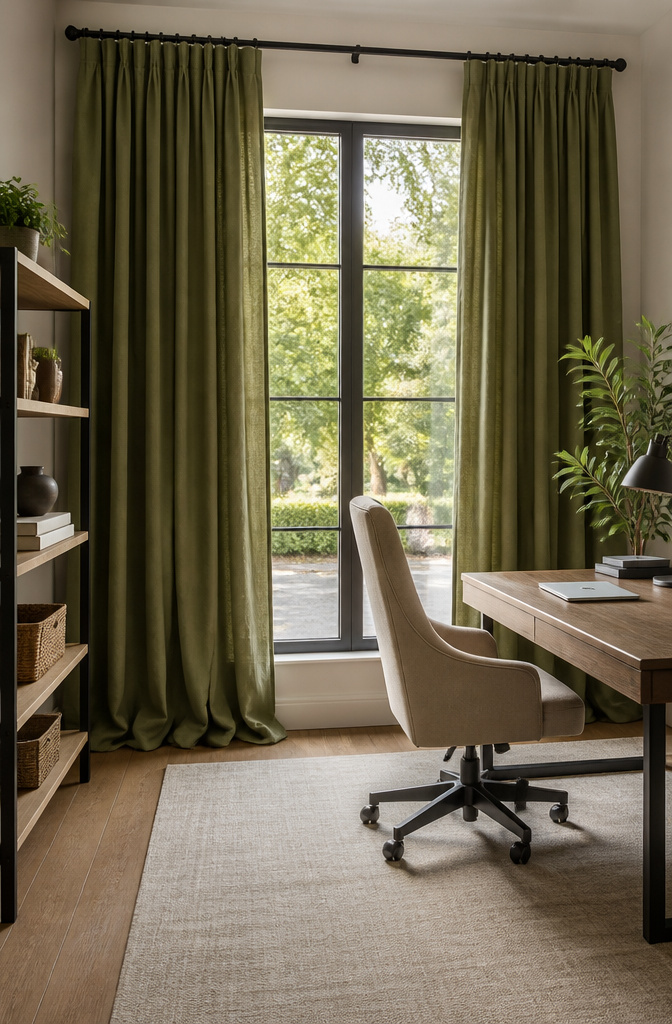
Solid color curtains are what most people picture when they think of wall-to-wall installs, and for good reason. A single uninterrupted hue across a wide span reads as architecture rather than decoration, which is exactly what you want when the goal is to make a rental feel finished without fighting the lease.
Color behaves differently stretched across twelve or sixteen feet than it does on a swatch card or a throw pillow. Saturated tones deepen and pool in the folds; pale ones flatten into near-white under direct afternoon light. The safest bet for a space you might leave in a year is a mid-tone neutral with enough gray or brown in it to mute the shifts rather than a clean primary that will look different at 9 AM and 9 PM.
The flexibility is the real argument. Solid panels move with a room: the same flax-colored linen reads Scandinavian against pale wood, coastal against white wicker, and transitional against a leather sofa you found on Craigslist. Patterned curtains make a statement about the moment you bought them. Solids make a statement about the room they are in, which means you are not repurchasing when your taste or your landlord’s paint job changes.
I have hung the same charcoal cotton panels in three apartments now. They have framed a lake view in Minnesota, hidden a brick wall in Chicago, and softened a sliding glass door in Tucson. The hardware changed each time. The curtains never had to.
Custom-Made Curtains
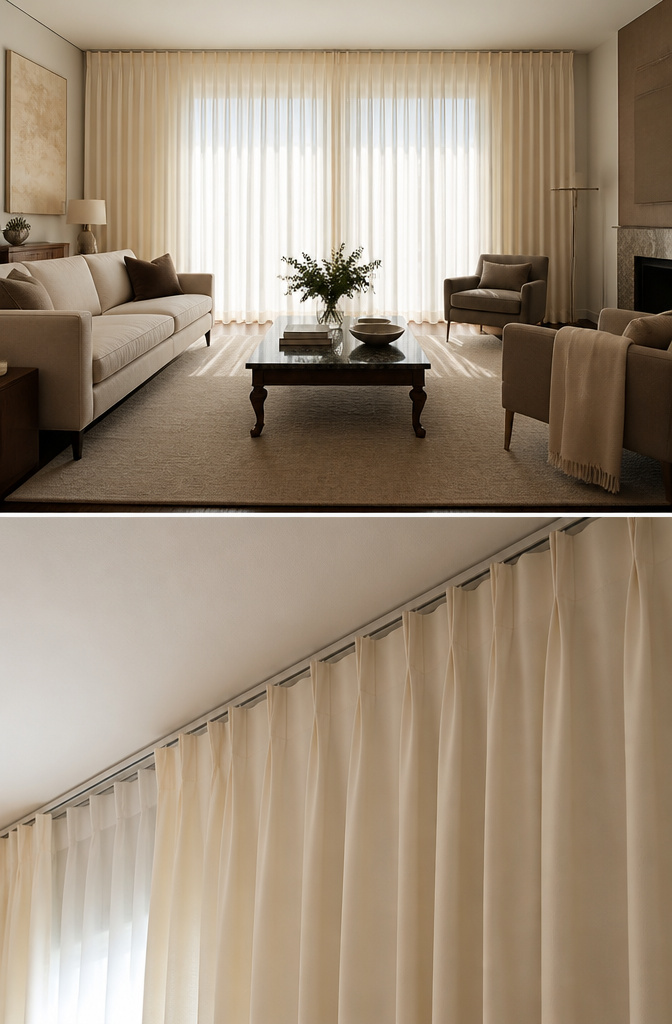
Custom-made curtains run anywhere from $50 to $200 per panel, and the jump from off-the-shelf only makes sense once you’ve watched standard panels gap on a wide wall. I learned this the slow way in my first apartment, where three supposedly identical 52-inch panels left an inch of morning light between each one no matter how I tugged them. The wall was 144 inches total; the math seemed clean until fabric behaves like fabric and refuses to lie ruler-straight.
A workroom doesn’t need what I initially brought them. I showed up with a hand-sketched floor plan and the height from baseboard to crown, proud of my thoroughness. What they actually need is the exact finished width you want the rod to cover, the return depth, and whether you want the leading edges to just kiss or overlap by a few inches. They’ll add their own fullness multiplier, usually 2 to 2.5 times the width for proper gather. My sketch ended up in their recycling bin while we remeasured the rod placement with a steel tape on the actual wall.
For true wall-to-wall, custom width matters more than custom height. Most workrooms stock standard lengths and alter them; width is where the sewing happens. The precision is expensive, but the alternative is light leaks you notice every sunrise.
Measuring for Wall-to-Wall
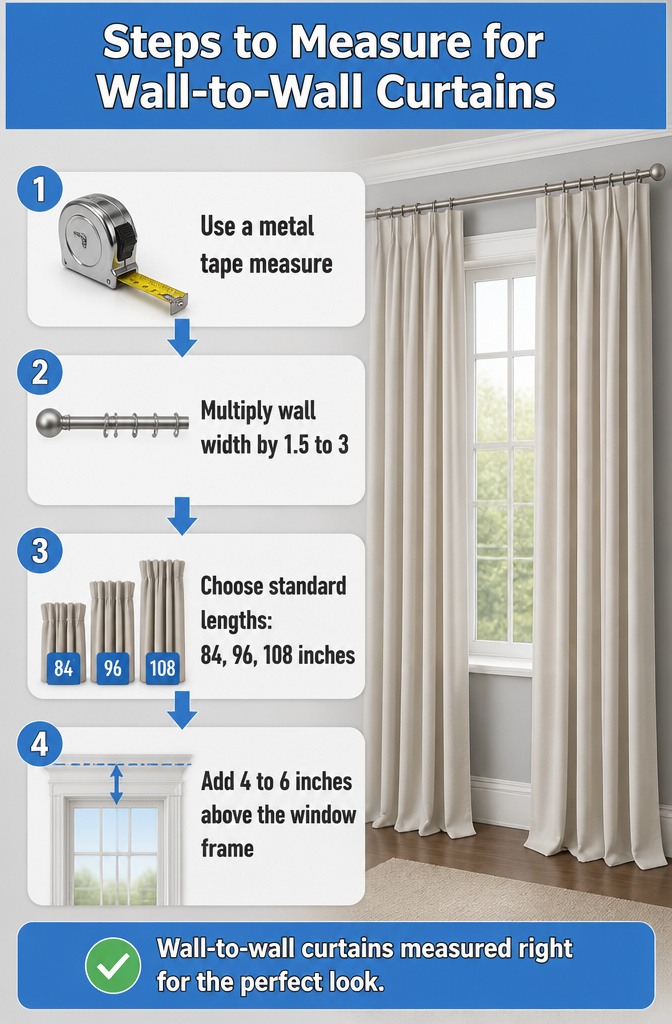
A metal tape measure works better than a cloth one for long spans. The wall width gets multiplied by 1.5 to 3 times for fullness, depending on the fabric weight. Sheers need the higher end, thick cotton settles lower.
Standard curtain lengths run 84, 96, and 108 inches. The 84-inch panel almost never works for wall-to-wall unless you mount the rod nearly at the frame, which defeats the point. I learned that with crown molding in my last rental. I measured to the ceiling, ordered 96-inch panels, and watched them hover two inches above the floor because the molding dropped the rod lower than the raw wall height suggested. The 108-inch set I replaced them with pooled slightly, which looked intentional at least.
For height, add 4 to 6 inches above the window frame. That shift draws the eye up and buys you length if your ceilings are closer to nine feet than eight.
Installing the Hardware
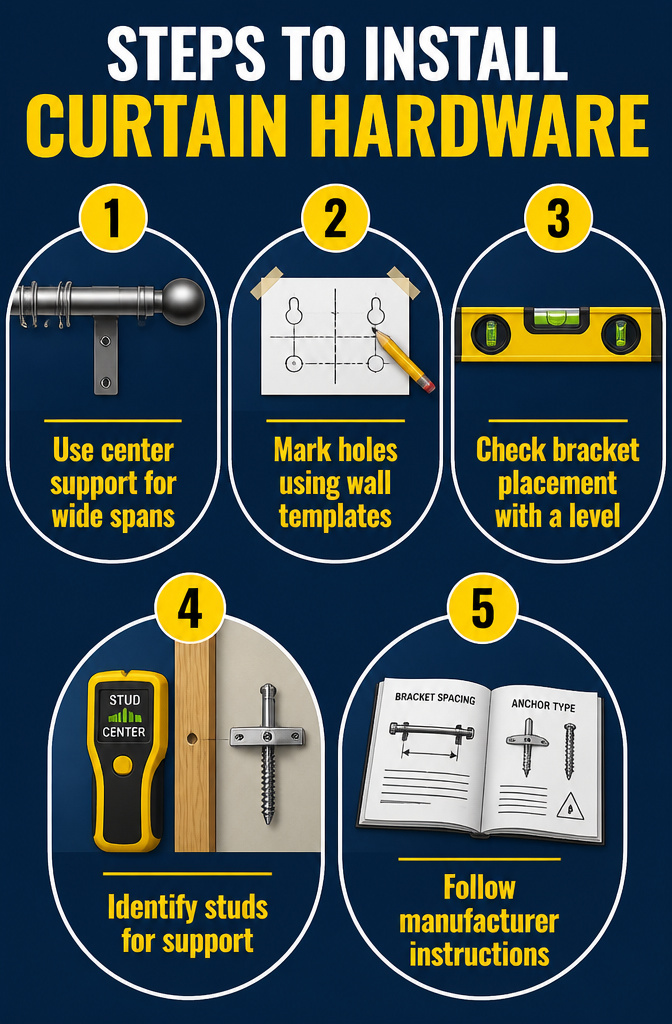
- A wide span needs more than a pretty rod; it needs a center support bracket at eight feet or longer, or the whole line bows in the middle within a month.
- I skipped that bracket once, thinking the wall looked cleaner without it. The rod held for about three days, then the center dropped nearly two inches and the curtains pooled on the floor.
- Most brackets ship with templates; tape them to the wall, mark the holes, and check with a level before you drill anything. A bubble off by half a degree reads like a major slope across twelve feet of wall.
- Studs matter for the weight, especially with blackout or thermal panels. A stud finder works, or you can tap for the hollow sound and drill test holes. When you hit empty space, use toggle anchors rated for the load, not the small plastic sleeves that pull out under steady tension.
- The manufacturer instructions usually specify bracket spacing and anchor type; following them beats guessing, especially since a wall-to-wall failure means patching drywall and starting over.
Styling and Layering

Layering sheers under solid panels gives a wall-to-wall run more function than either fabric manages alone. The sheers stay fixed across the rod while the outer panels open and close, so you get filtered daylight with the option of full privacy after dark. I learned the hard way that both layers need the same fullness; my first attempt used narrower sheers that went flat and skimpy whenever the solids were drawn back.
Tieback placement on a wide span matters more than I expected. Set tiebacks roughly one-third of the way in from each edge, not at the halfway point of the window itself. On a ten-foot wall, that leaves a generous central drape and keeps the stacked fabric from swallowing too much of the glass. Too close to the edge and the curtains look like they are trying to escape the room.
The symmetry problem took me two installations to figure out. When the window sits off-center on the wall, running curtains truly wall to wall actually corrects the imbalance better than framing the window alone. The eye reads the full fabric span as the architectural feature, not the glass behind it. I kept the pattern quiet and the hardware simple so nothing called attention back to where the window actually sits.
Care and Cleaning

Wall-to-wall curtains collect dust and pet hair the same way any fabric does, but taking them down for a wash is a bigger commitment when you are dealing with twelve or sixteen feet of rod and multiple panels. Blackout lining almost always needs dry cleaning; the bonded foam layer separates in a home washer and the curtains turn into expensive rags. I learned that the hard way on a pair I assumed were "machine washable" because the face fabric was cotton.
For fabrics that can handle water, sheer polyester and unlined cotton usually survive a gentle cycle in a mesh bag if the seams are sturdy, but the weight of wet panels this wide will strain a home dryer and wrinkle badly on a line. I shake them out in the backyard and let gravity do most of the work.
For dusting without removing hardware, a vacuum with a soft brush attachment and an extension wand works on sheer and solid panels alike. I close the curtains to one side, run the brush downward in overlapping strokes, then reverse and do the other direction. The whole 12-foot span takes about five minutes, and I do it monthly so the dust never embeds. Thermal curtains with quilted batting need more care; the stitching catches on rough vacuum attachments, so a lint roller or a handheld upholstery tool with a smooth edge is safer.
Frequently Asked Questions
What are the best materials for wall-to-wall curtains?
Cotton, polyester, and linen each work for different jobs. Polyester sheers billow on long rods unless you pick a tighter weave or linen blend that holds its line across the span. Unlined cotton survives a gentle wash cycle if the seams are sturdy. Blackout and thermal linings are a different story: the bonded foam breaks down in water, so dry cleaning is the only safe route.
How do I measure for wall-to-wall curtains?
Multiply the wall width by 1.5 to 3 times for fullness; sheers need the higher end, thick cotton the lower. For height, add 4 to 6 inches above the window frame, and watch out for crown molding that drops the rod lower than raw wall height suggests. Standard lengths run 84, 96, and 108 inches, but 84 almost never works for wall-to-wall unless you mount nearly at the frame.
Can I install wall-to-wall curtains myself?
Yes, with a metal tape measure, a level, and the right anchors. Use a center support bracket for any rod eight feet or longer or the line bows within weeks. Find studs for the weight of blackout or thermal panels; where you hit empty space, use toggle anchors rated for the load, not small plastic sleeves that pull out under tension.