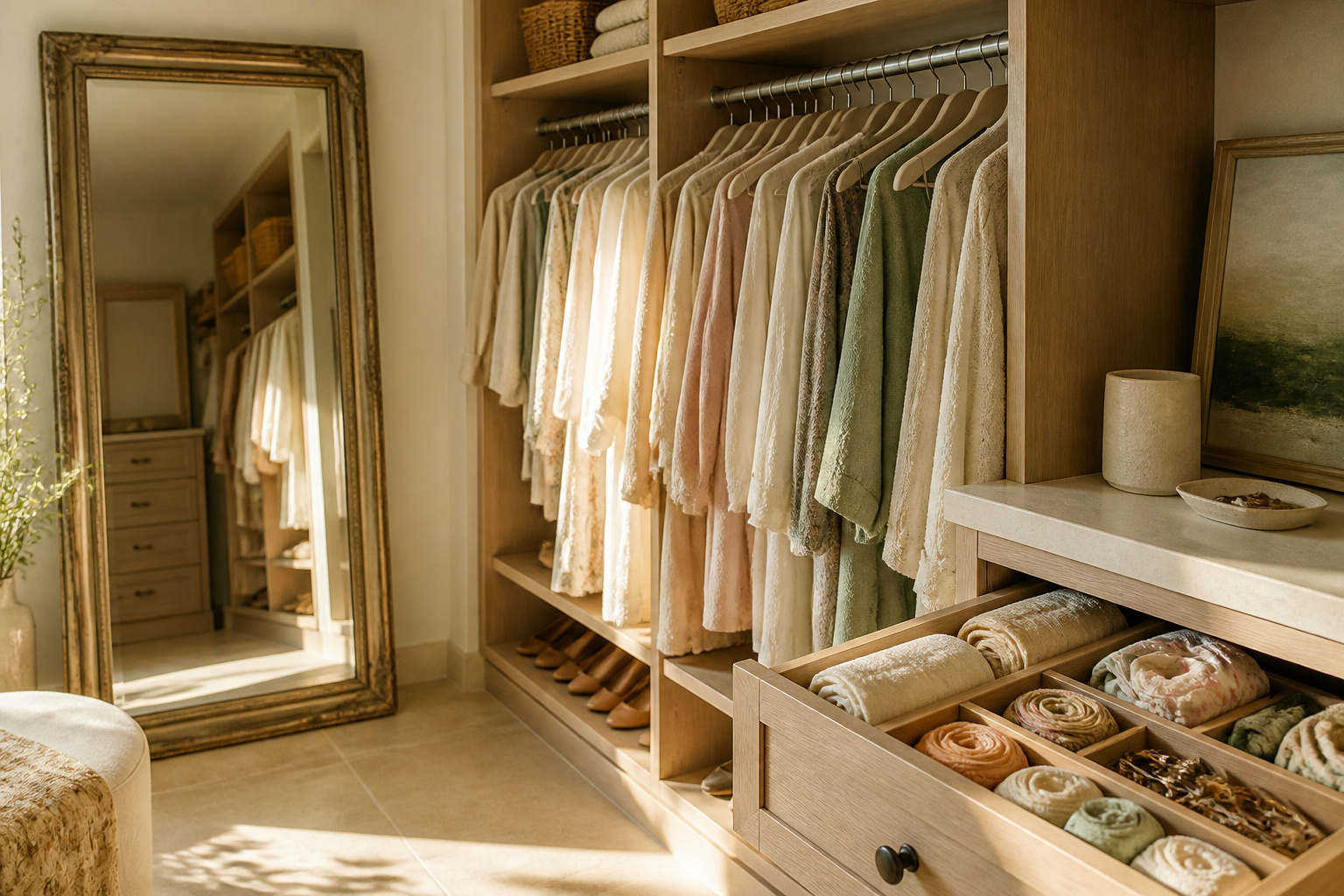
Master closet organization is the practice of arranging a walk-in or reach-in closet so the storage actually matches how you get dressed. The catch is that most setups fail not from lack of space but from using the wrong containers for the habits you already have; a $20 pack of slimline velvet hangers earned back two full inches of rod length in my own closet, while the $2,800 custom system I priced stayed in the showroom.
Slimline Velvet Hangers
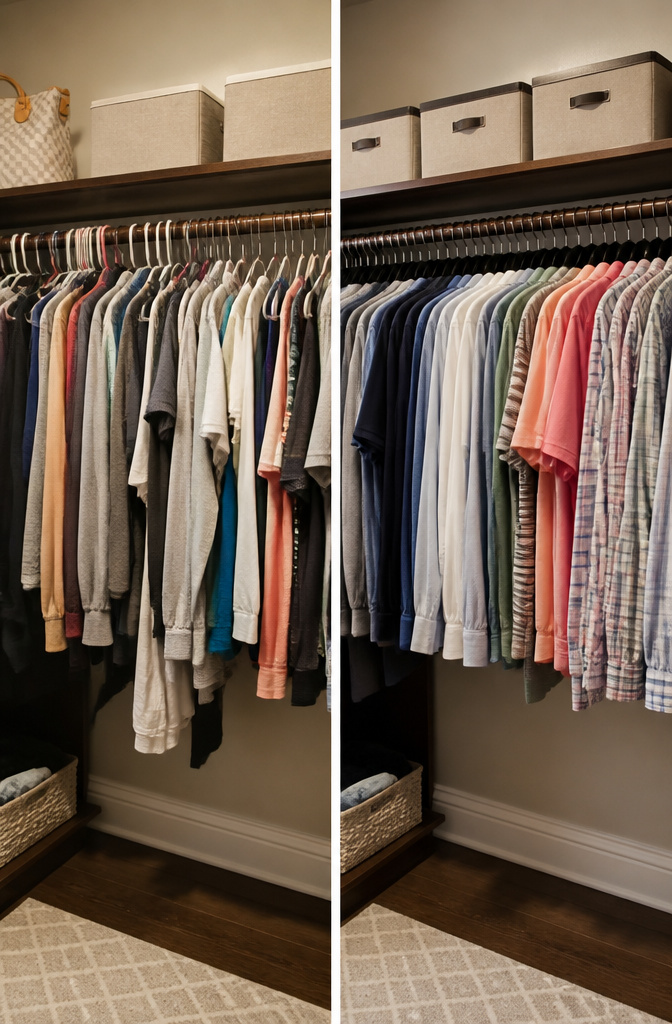
The bulk of what eats rod space in a master closet is not the clothes but the hangers holding them. I learned this after swapping out a plastic and wood collection for slimline velvet hangers and counting what changed. Same rod, same shirts, two extra inches of usable length once the shoulder bulks were gone. The velvet surface grips silk and wide necks without clips, so nothing slides to the floor overnight. A 50-pack runs about $20, which is enough to handle a season of tops for most people. If you want something sturdier for heavy coats, rubberized slim hangers hold up better under weight, though they cost a bit more. For bottoms, skip the clip-on velvet attachments; they break too easily. Metal-clip velvet hangers or a coated steel bar like Mawa’s PVC-coated rod are the saner choices for pants and skirts.
Open-Ended Pant Hangers
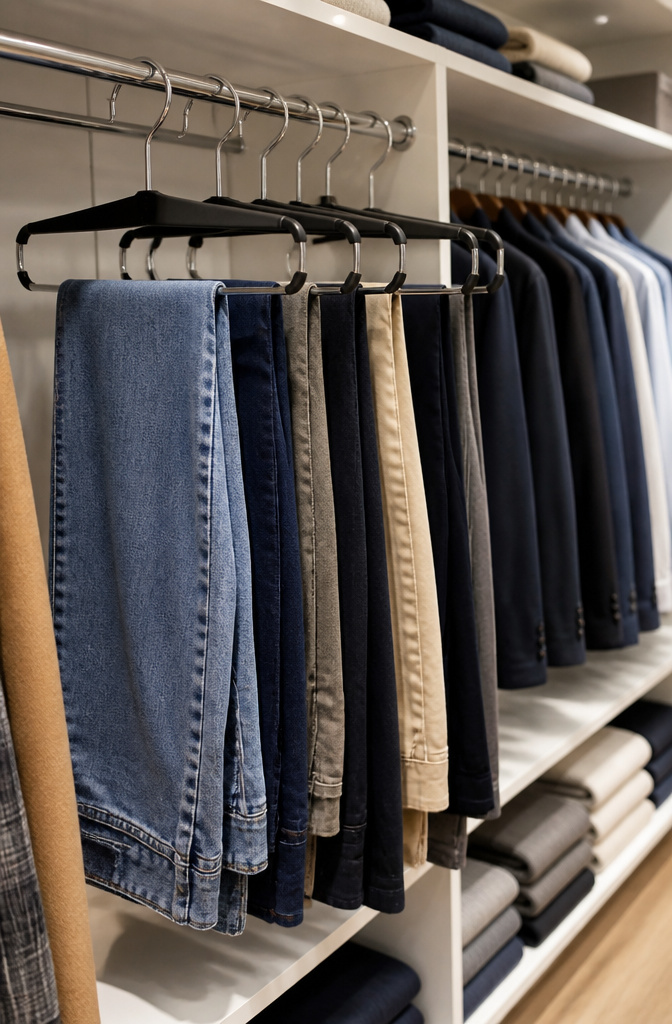
Open-ended pant hangers solve the one annoyance that makes people give up on hanging pants: the full loop. With a standard hanger, sliding trousers off means threading them through a closed oval, which is why most jeans end up folded in a drawer instead.
The open side lets you lift pants straight out without disturbing the whole bar. The detail that matters is which way the opening faces. Most are built to open toward the front, so you can hook a pair with one hand while your coffee cup stays in the other. Some face backward instead, which flips the math: either turn every hanger around during setup, or pull the whole hanger free each morning. The second option is not as fast, but it does leave you with a clean trick for empties. Slide used hangers to one end of the rod as you go, and you never face that tangled nest when putting laundry away.
I use mine for jeans, not just dress pants. Denim holds a crease if folded too long, and the vertical line of hung jeans fills the closet depth without the shelf-stack avalanche. The hangers come in black most places, though white versions exist if you are matching an existing set. Either way, the open end matters more than the color; the point is getting the pants out without a wrestling match.
Basic White Bins for Storage
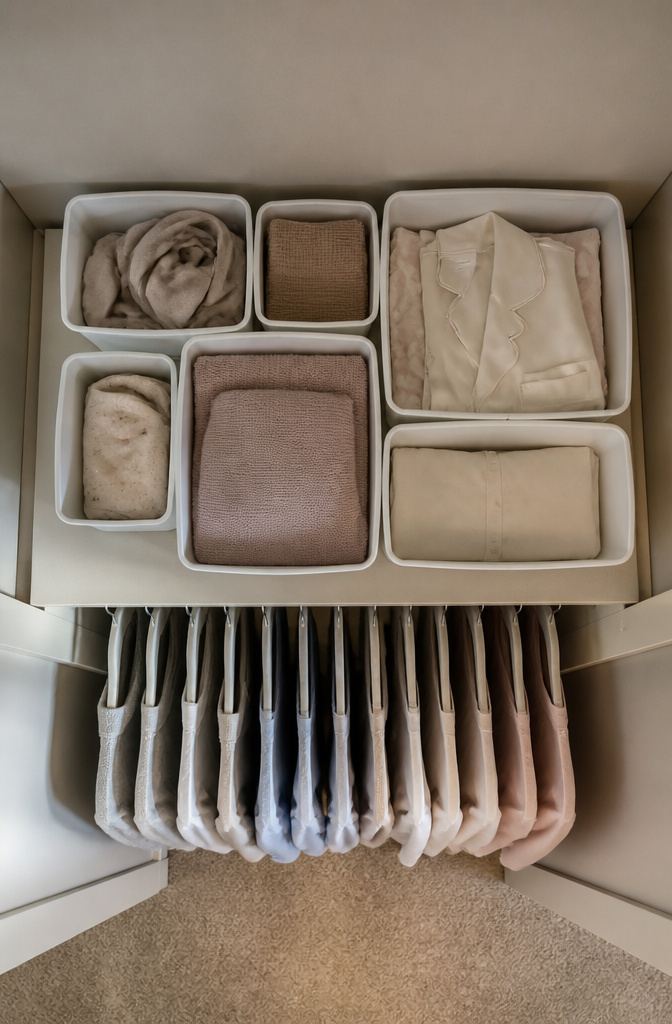
White bins in four sizes became my go-to for the stuff I reach for once a month or less. Extra-small holds spare buttons and single earrings that used to rattle around in jewelry trays. Small fits folded scarves and thin belts. Medium swallowed up offseason sleep shirts and the running shorts I only grab in July. Large sits on the top shelf with spare bedding and the down vest I pull out maybe twice a winter.
I lined them along the upper rod where depth is awkward for hanging clothes but perfect for uniform boxes. The XS and small sizes stack two-high on the half-depth shelf above the shoe row. Medium and large stay single so I am not playing Jenga with a comforter at 7 a.m.
Color was a deliberate choice. My closet walls are the standard rental beige and the rods are dark wood-tone. Anything with pattern or bright color read as visual noise in that tight rectangle. White reflects what light the single bulb gives and lets the bins disappear into a calm grid. I tried kraft cardboard boxes first and the closet felt like a stockroom every time I opened the door.
Hooks for Belts and Bags
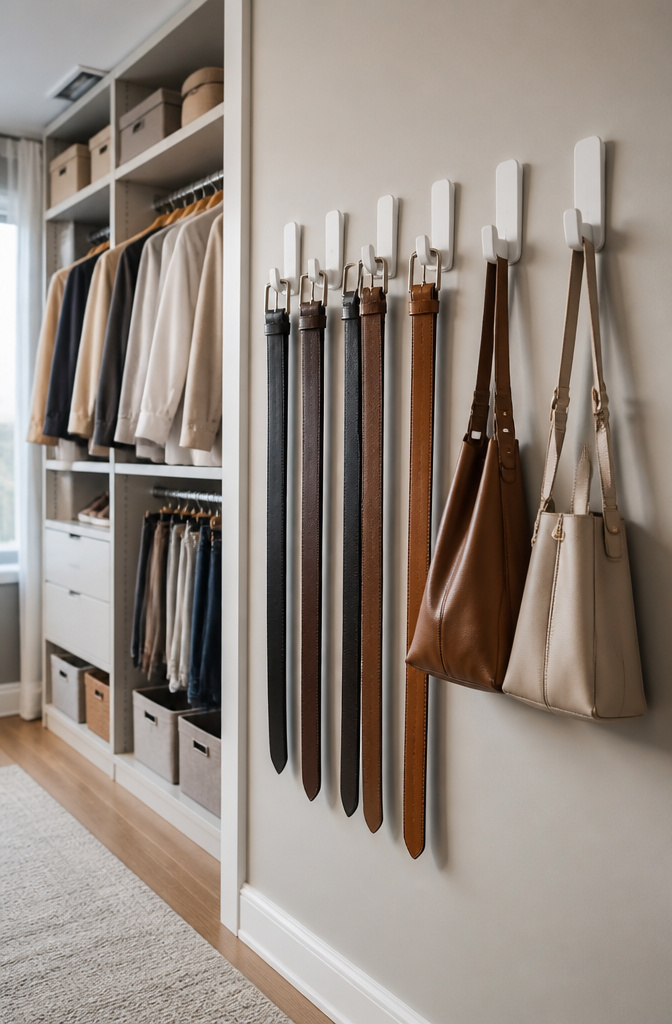
Wall hooks turned out to be the single fix that kept my belts from curling into leather donuts and my bags from collapsing into soft piles on the shelf. I added a row of six simple wall hooks on the blank wall beside my hanging clothes, spaced about a foot apart, and assigned the left three to belts and the right three to the two purses I reach for daily. Belts hang by their buckles without creasing the leather, and bags keep their shape instead of folding under the weight of whatever sits on top of them. The hooks I chose hold up to 35 pounds when mounted into a stud, which is far more than a belt or standard purse demands, so I felt comfortable using the included anchors on the spots where I missed the stud. A hook beats a drawer because you see what you own; nothing hides in the back corner of a pile. The white finish disappears against my closet wall, though black, brass, and nickel are out there if your closet reads differently.
Drawer Dividers for Small Items
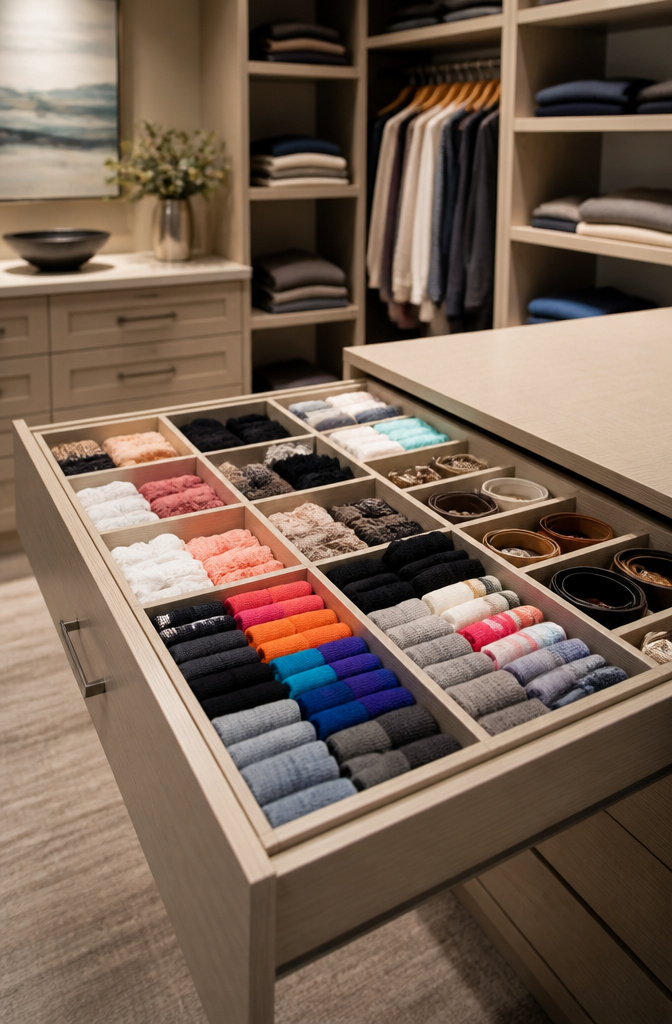
A shallow drawer without dividers turns into a black hole the second you drop the first pair of socks on top of a folded stack. I learned that in my last apartment, where two wide drawers held everything from underwear to running socks. Within a week the edges of each pile crumbled into each other, and finding a matching pair meant excavating through layers of mixed fabric. The visible top layer was never what I needed.
Adjustable drawer organizers fix this by creating narrow channels that hold items upright, the way file folding does for shirts. You can see every pair at once and pull one without avalanche. The passages note 2–3 dividers per drawer as the workable range; more and you lose the flexibility for bulkier items like folded workout gear or thicker winter socks. For the shallow top drawers where lingerie and small accessories live, compartmentalized inserts work better than long strips, more kitchen-drawer logic than closet logic.
I still use a mix: bamboo adjustables for socks and a segmented plastic tray for belts and sunglasses. The combination costs less than replacing a drawer that slides badly because it is overstuffed, and it takes about twenty minutes to set up. The real payoff is morning speed.
Shoe Organizers
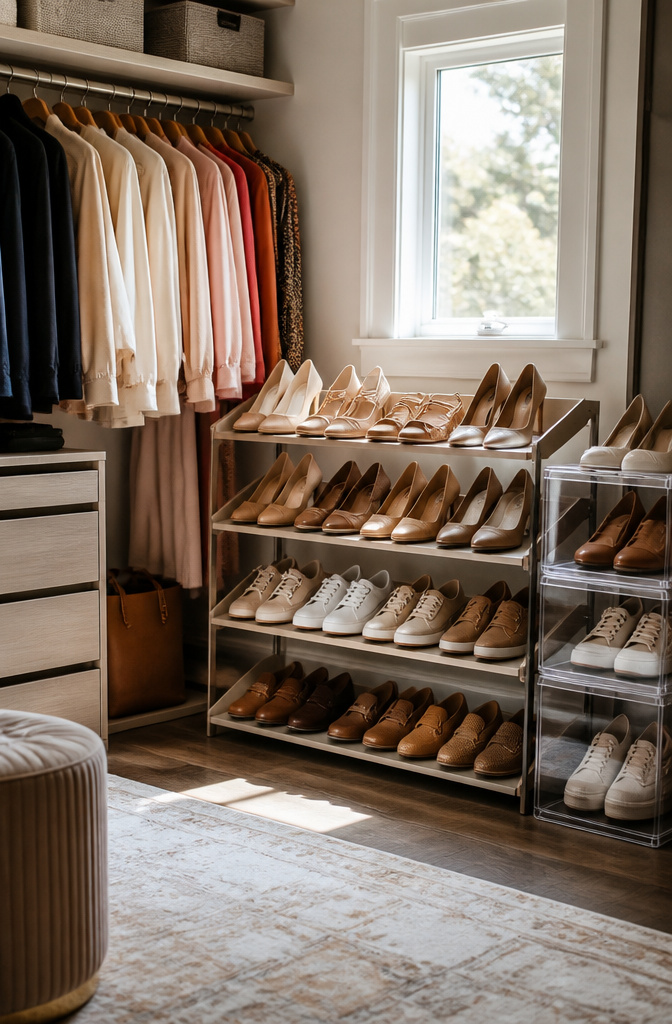
Shoes are where my closet organization falls apart fastest if I let them. The floor becomes a default shelf, and suddenly I’m digging through a heap to find the right pair. What actually worked was splitting daily shoes from special-occasion pairs entirely.
For the everyday rotation, a simple rack keeps things visible and off the ground. The Seville Classics 3-Tier Resin Slatted Shoe Rack has wide, closely spaced slats that hold everything from heels to smaller sizes without tipping, and the stackable design lets you add vertical storage as needed. It’s nothing decorative, but hidden inside a closet, looks don’t really matter — function does.
Special-occasion pairs and anything I wear rarely go into clear acrylic boxes. The drop-front style saves you from unstacking to reach a pair, and the acrylic lets you see exactly what you have without opening anything. I use them for the pairs I’m not ready to part with but don’t need weekly access to; they stay clean, and I stay honest about what I actually own. Flat shelves or stacked pairs in boxes work for boots and bulkier styles that won’t fit standard rack spacing.
The mistake I made early was treating all shoes the same. Daily grab-and-go pairs need to be exactly that: grab-and-go, at lower height. Everything else earns its shelf space by staying protected but visible.
Color-Coded Organization
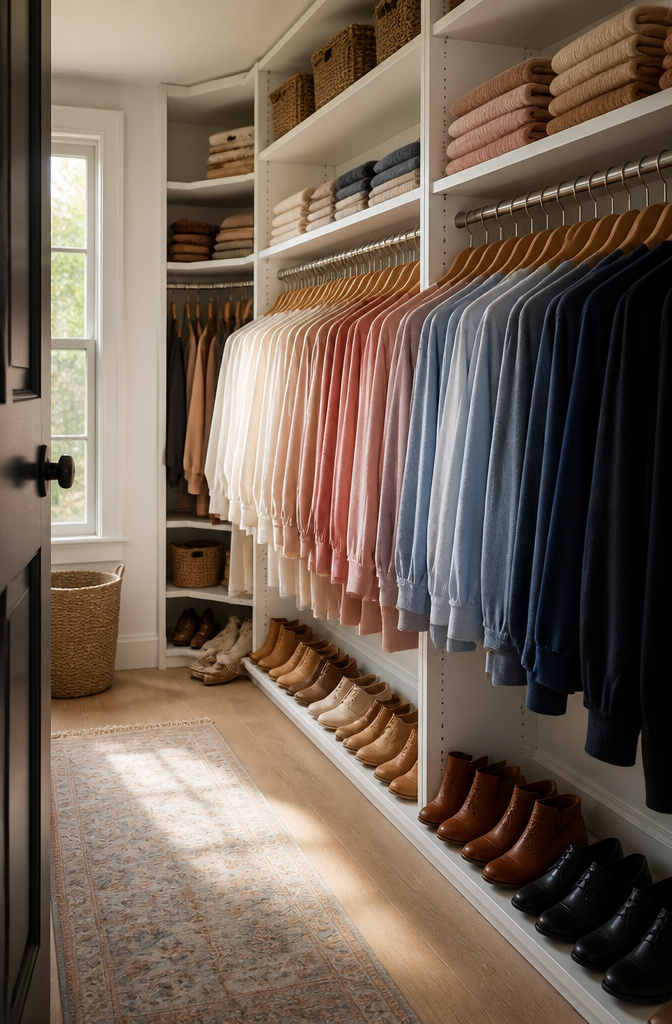
Sorting by type first is the move that matters: tanks with tanks, long sleeves with long sleeves, pants with pants. Color comes after that, and it is what makes the whole wall of clothing readable at a glance. I tried strict rainbow order once, ROYGBIV and all, and the morning hunt for a navy sweater that I had mentally filed as blue, not purple-adjacent, slowed me down more than it helped. A loose color grouping, light to dark within each category, is enough. Your eye catches the shift from cream to charcoal without needing a graduate degree in the color wheel. Folded items on shelves benefit just as much: sweaters grouped by color, and if you own a lot of one color, segment by knit weight so you are not lifting three merino pieces to find the chunky one underneath. The payoff is speed, not theater. When you are rushing to get dressed, you find your things because the color signals where to look, not because the closet looks like a showroom.
Seasonal Storage Solutions
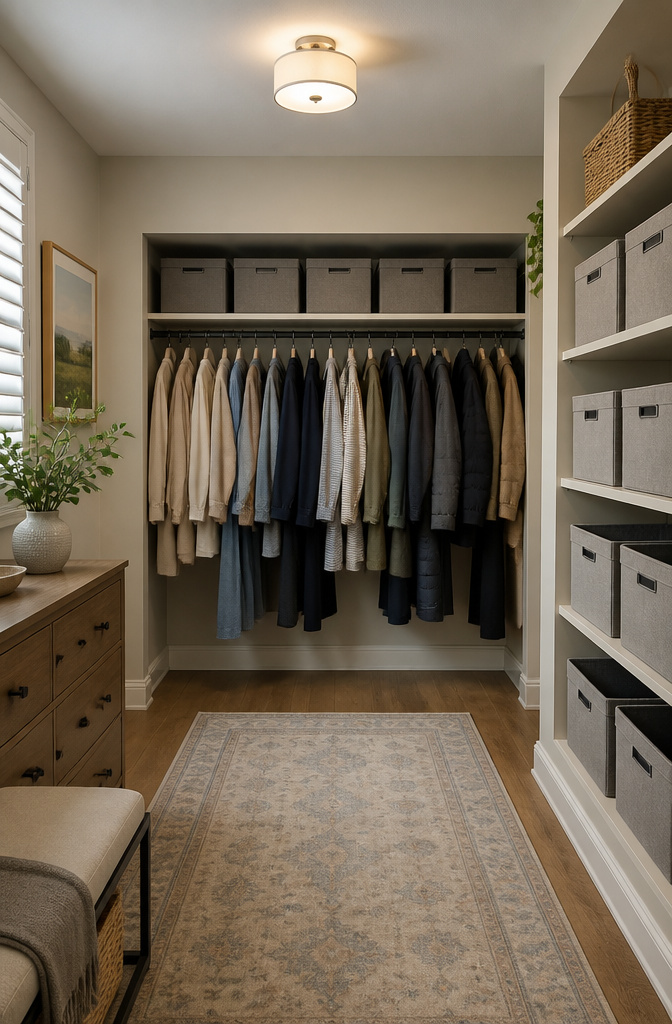
The top shelf in my master closet holds two kinds of things: what I need rarely, and what I need exactly once a year when the temperature drops forty degrees overnight. I learned the hard way that storing every sweater the minute April hits means digging through bins at midnight when a cold front rolls in.
These days I keep a middle layer or two hanging even through summer. The rest goes into zippered boxes on the highest shelf, labeled on both sides with a strip of masking tape and a Sharpie so I can read it from below or from the side when the box gets turned around. I used to think clip labels looked more polished, but plain tape peels clean when the contents swap and costs next to nothing.
The real trick is the calendar, not the container. I rotate bins on the equinoxes, not by some internal sense of season, because my internal sense is reliably two weeks late. Last October I left the lightweight blouses up front until November and wore the same three cardigans on repeat while the rest sat sealed and useless above my head.
Folded Storage for Sweaters and Jeans
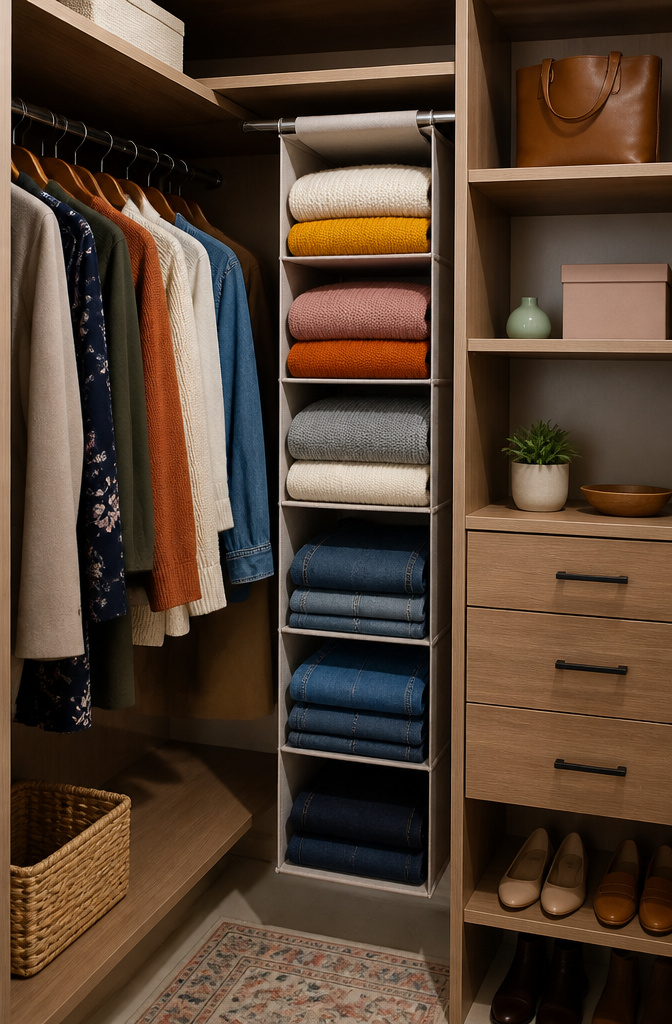
Sweaters stretch on hangers, and heavy denim creases if you fold it sloppily on a shelf. The sturdier pieces, denim and sweaters especially, hold their shape better folded and stacked where you can see them.
I tried The Container Store’s 6-Compartment Hanging Wide Closet Organizer after reading that a home decor editor had packed hers to the brim for seven years without it sagging. The poly-cotton blend breathes better than all-plastic versions, and the hooks felt more stable than the IKEA Skubb I used before, which only comes in one length and eats the vertical space below it.
"A good rule of thumb is to hang anything that wrinkles easily, like dresses, blouses, skirts, and slacks, while folding sturdier pieces like denim, sweaters, T-shirts, and athleisure."
What this means in practice: the folded items need a system that keeps them visible, not piled. I put sweaters in the top two slots of the organizer, jeans in the middle two, and T-shirts and athleisure in the bottom. The compartments keep them from shifting into a heap, and the vertical layout uses rod space that would otherwise sit empty above a shoe rack.
Back-of-the-Door Organizers
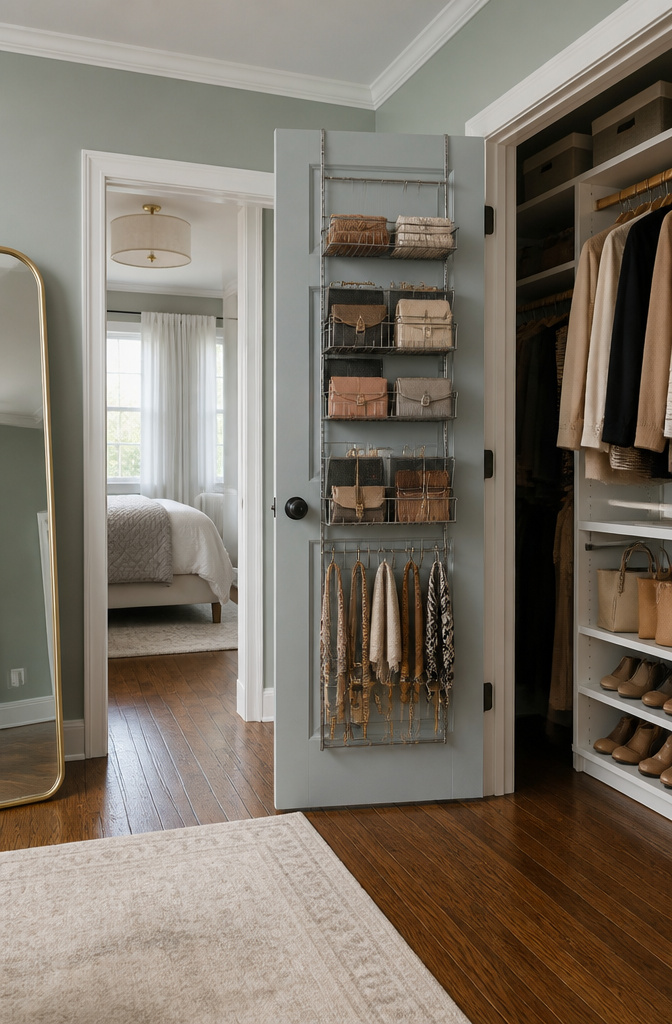
The back of a closet door is the easiest square footage to waste because it looks like dead space until you hang something there. I went with an Elfa back-of-the-door organizer after seeing how many configurations they make for closet situations, and it turned out to hold far more than I expected. Mine keeps accessories and smaller items off the shelf so the main rods and floor stay clear. A swinging door wins here — accordion or pocket doors won’t take the hardware, so if yours swings, treat it as found storage. For renters, the over-the-door style means no drilling into the door face itself, and you can move it to the next closet when you leave. A full-length mirror hung on the inside surface is another move worth considering; it uses the same real estate and saves wall space in the bedroom proper.
Declutter Before You Organize
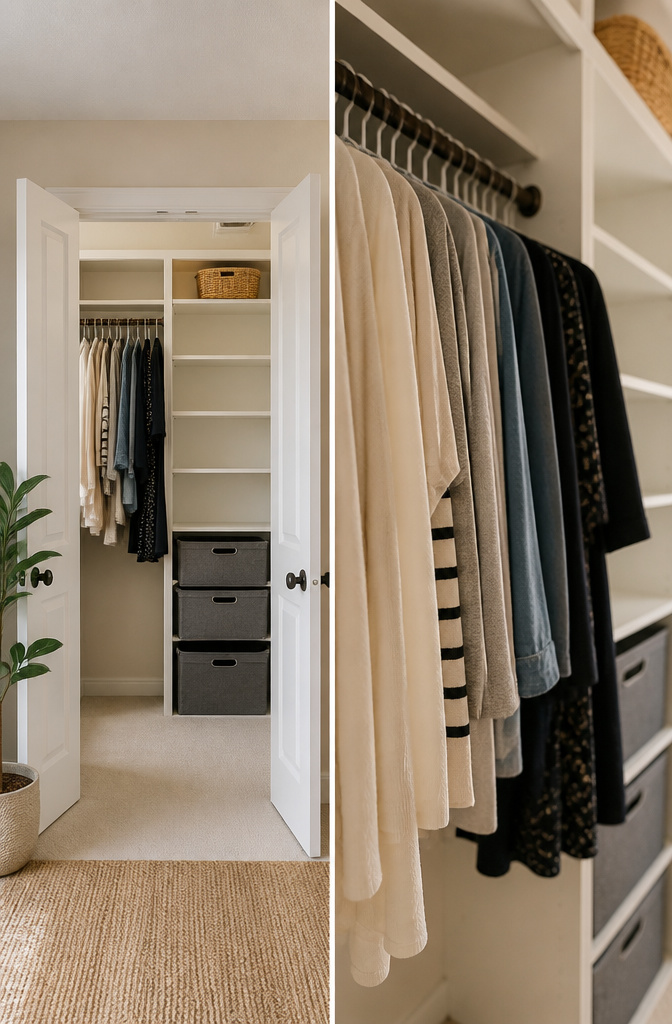
Most people wear 20% of their clothes 80% of the time, and I spent years proving it. Before I touched a single organizer, I turned every hanger backward in my closet. Six months later, the hooks still facing me told the real story: a small rotation of jeans and button-downs I reached for without thinking, while the rest hung there taking up the space I kept complaining I didn’t have.
The backward hanger trick comes from Discardian’s Closet Trick, and it works because it removes the guesswork. You don’t have to decide in one afternoon whether those dress pants still fit your life. The hangers decide for you.
What went out was predictable after that. Anything with a backward hook got sorted into donate, repair, or seasonal storage. The repair pile was the smallest because, honestly, if I hadn’t fixed a missing button in two years, I wasn’t going to. Shoes followed the same rule. I had pairs I’d worn once for a wedding and kept out of vague guilt, but they were just more things to move around.
Skipping this step costs whatever you spend on bins and rods. An organizer holding clothes you never wear is just a more expensive way to keep clutter.
Maximizing Vertical Space
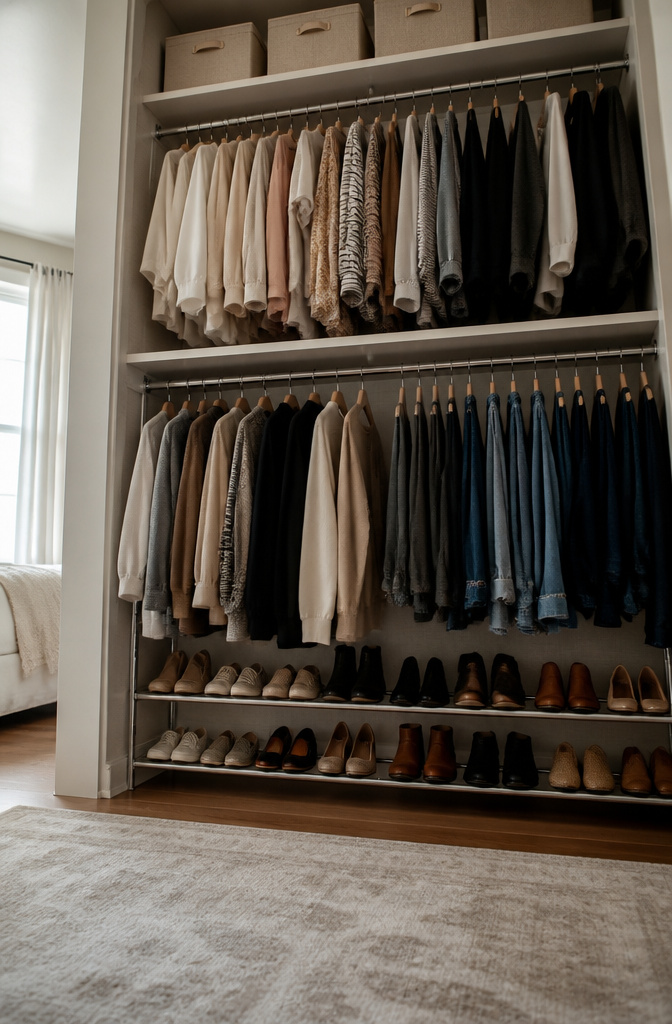
The top foot of a closet is easy to ignore until you mount a shelf 12–18 inches below the ceiling and suddenly half your storage lives up there. I built in a double-hang rod first, splitting the vertical space so short items stacked in two rows while dresses and coats kept the full height they needed. A hanging organizer with clear drawers filled the gap beneath the short rod, and shelf risers let me stack folded items without losing the back row to darkness.
The mistake came with placement. I set the high shelf at the very top of the frame for out-of-season bins, then tried to park my everyday sweaters there too. Six months of climbing on a step stool for something I wore twice a week taught me that height demands a real cost in daily friction. The ceiling shelf stayed, but I moved daily-use storage to the middle zone and reserved the top for the winter coat I pull down once a year.
Drawers for Visual Calm
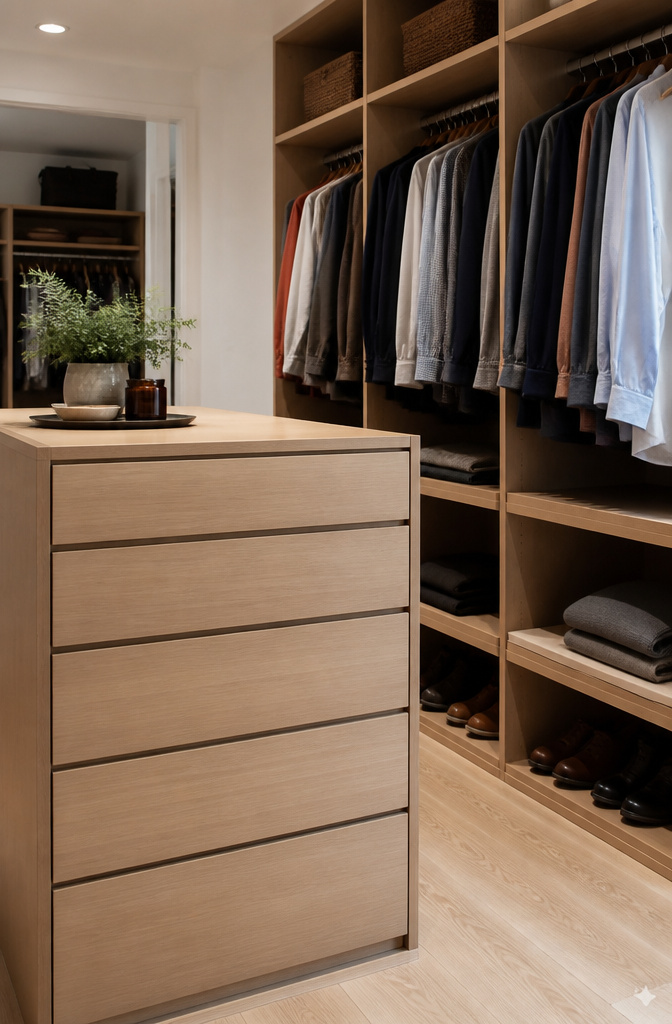
Open shelving in a master closet turns into a visual traffic jam the moment you add socks, workout gear, or the backup cosmetics you bought in bulk. Drawers hide the small stuff that would otherwise fight for attention and let the eye rest on clean lines instead of a field of mismatched items.
I moved my socks, undergarments, scarves, and evening bags into drawers, along with the spare cosmetics I keep stacked in clear pull-out bins. The difference was immediate. What had looked like a busy display of everything I owned became something closer to a wardrobe. Hanging space stayed for dress clothes and sweatshirts, but the visual noise dropped away.
Drawer dividers help, and file-folding t-shirts or jeans keeps the contents readable when you pull one open. If built-in drawers are not an option, storage bins and baskets on existing shelves give a similar effect. I use a mix of both. The result is not perfect minimalism, but it is calmer than open shelves crowded with items too small to stand up and look organized on their own.
Custom Systems I Considered
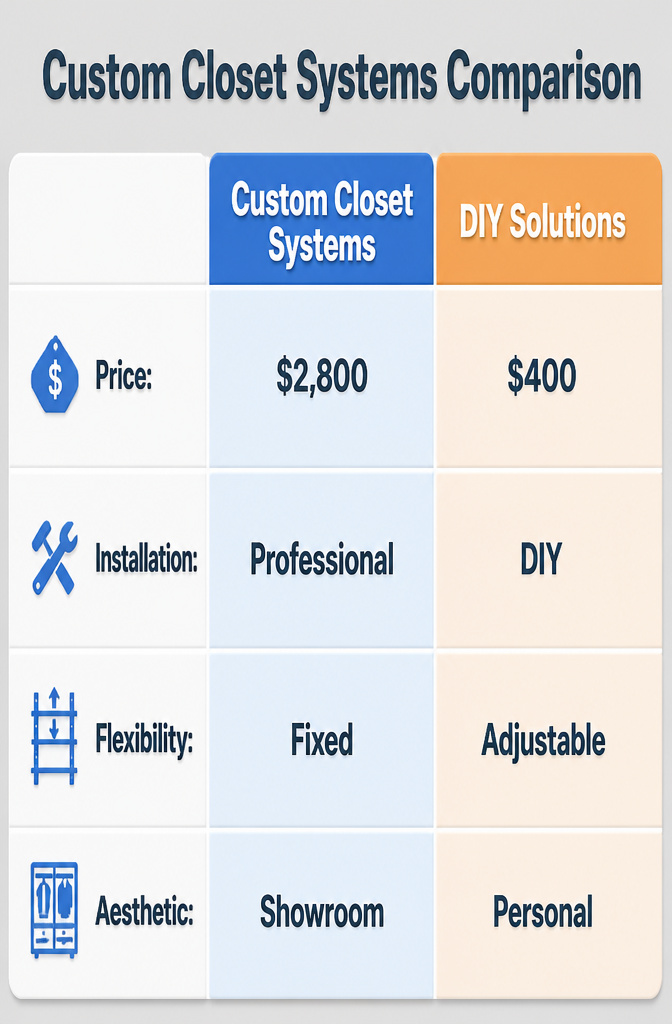
Custom closet systems look great in showroom photos, but the price tags stopped me cold. A basic melamine setup for a standard reach-in closet ran about $2,800 installed, and that was the entry-level package with white laminate and no fancy hardware. The mid-range options with wood-grain finishes and soft-close drawers pushed past $5,000, which was more than I had budgeted for the entire bedroom refresh.
What I spent instead came to just under $400: a double-hang rod kit, two stackable shelf units, and a set of pull-out bins I assembled myself on a Saturday. The systems I priced all required wall anchoring and permanent mounting, which also made me hesitate. As a renter, I would have needed landlord approval and patchwork later, or I would have walked away from that investment when I moved.
The $2,400 difference bought me flexibility. I could shift the shelf height when my boot collection grew, and I took every piece with me to the next apartment. The finished look is not built-in, but the function is nearly identical, and the money I saved covered new bedding and blackout curtains I had been postponing.
Maintaining the System
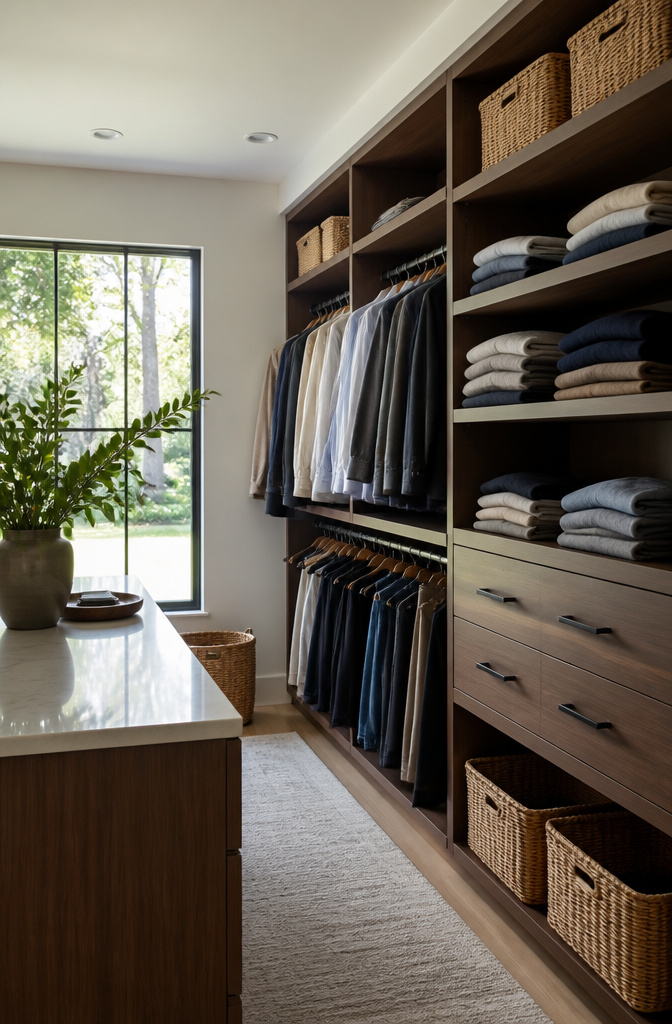
A closet system starts slipping the moment you finish it, so the real work is knowing when to step back in. I reassess mine twice a year, usually when I swap out the clothes for the season and the piles on the floor tell me something stopped working. The trigger is almost always the same: one category has slowly outgrown its space. Sweaters migrate onto the rod because the shelf above got taken over by bags, or shoes end up in a laundry basket because the rack filled with things I never wear. When that happens, I do a hard reset on just that zone rather than tearing everything apart.
The habit that actually keeps drawers from reverting to chaos is folding once and standing things upright, the way filing works. T-shirts or leggings get a single fold into a rectangle, then leaned on edge in rows so you see every item at a glance. Nothing gets buried, so nothing gets dug through, and the drawer stays flat without daily policing. It takes ten seconds longer than stacking, which is why most people skip it, but it buys back that time in the first week.
Frequently Asked Questions
What are the best hangers for organizing a closet?
Slimline velvet hangers save the most rod space because their thin profile frees up inches compared to bulkier plastic or wood versions. The velvet surface grips silk and wide necks without clips, so garments stay put overnight. For heavy coats, rubberized slim hangers hold weight better, while metal-clip velvet hangers or a coated steel bar work better for pants and skirts than clip-on velvet attachments that break easily.
How do I maximize space in a small closet?
Split the vertical space with a double-hang rod so short items stack in two rows while dresses and coats keep full height. Mount a shelf 12–18 inches below the ceiling for out-of-season bins, and use the back of a swinging door with an over-the-door organizer for accessories. Fill awkward gaps beneath short rods with hanging organizers that have clear drawers, and add shelf risers so folded items stack without burying the back row.
What should I do with out-of-season clothes?
Store most off-season items in zippered boxes on the highest shelf, labeled on both sides with masking tape and a Sharpie so you can read them from any angle. Keep a middle layer or two hanging even through summer for surprise cold snaps rather than sealing everything away. Rotate bins on the equinoxes to stay on schedule instead of relying on your internal sense of season.
How can I keep my closet organized?
Sort by type first, tanks with tanks and pants with pants, then group loosely by color light to dark within each category so your eye catches where to look. Fold once and stand items upright in drawers like files so nothing gets buried and nothing gets dug through. Reassess twice a year when seasonal swaps show you which zone has outgrown its space, and reset just that area instead of tearing everything apart.