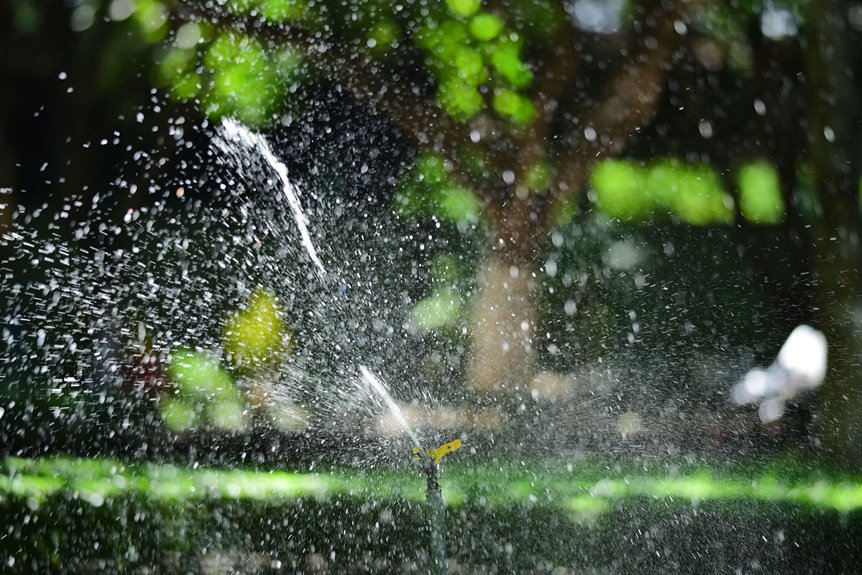
I’ve tested enough systems to know experts rank irrigation by water efficiency first, then how well it fits your yard. Drip irrigation leads at about 90% efficiency, with emitters trickling 2–8 liters per hour straight to roots.
The Rain Bird LNDDRIPKIT works well for small gardens and the DIG GE200 for bigger spaces up to 700 square feet.
Smart controllers like the Rachio 3rd-gen skip watering when rain’s coming.
Hand watering remains useful for tight spots between tomato plants.
Match your system to slope, soil type, and whether you’re growing veggies or lawn.
Buried drip lines under mulch last years longer than sprinklers blasting sidewalks.
Getting each zone right requires careful consideration of multiple factors.
What Experts Prioritize: 5 Criteria for Top-Rated Irrigation Systems
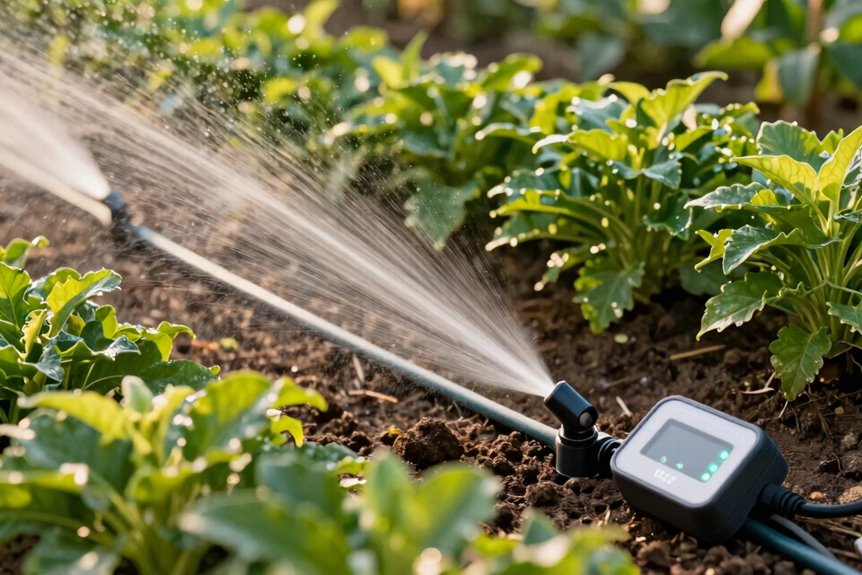
How do you pick an irrigation system that won’t leave your wallet dry or your plants drowning? The five essentials that experts prioritize are these.
First, water efficiency matters most. Drip irrigation wins here: those 2, 4, or 8 LPH emitters deliver moisture straight to roots with no waste. Second, system installation should match your skills; brands like Rain Bird, DIG, and Raindrip offer everything from simple kits to advanced setups. Third, smart controllers like Rachio 3rd-gen or Orbit B-Hyve XR bring weather-based controls that skip watering when rain is coming. Fourth, plan your irrigation zones carefully, as slope, soil, and plant type each need different pressures, typically 40–60 PSI. Finally, brand reputation protects your investment over time through warranty coverage and reliable customer support.
When Hand Watering Still Beats Automation
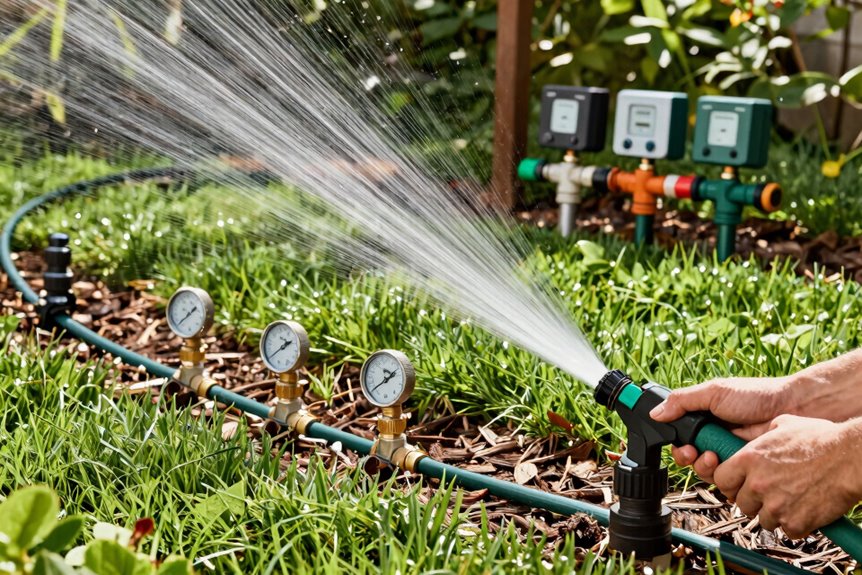
Why would I still lug a watering can around when I’ve got timers and tubes doing the work? Sometimes, you need to get your hands dirty to connect with your garden.
Hand watering still wins when I’m checking soil moisture between tomato plants or reaching containers tucked behind my rain barrel. Unlike drip irrigation or sprinkler systems, I control every drop for targeted watering that supports real water conservation. I spot the drooping pepper before my timer kicks on.
Accessibility matters too. My 2-gallon Haws can weighs under 15 pounds filled, light enough for daily rounds without waking up my lower back. Tight corners and small beds stay impractical for automation.
I balance technology with intuition. The best gardeners I know blend both approaches.
Why Drip Irrigation Systems Save the Most Water
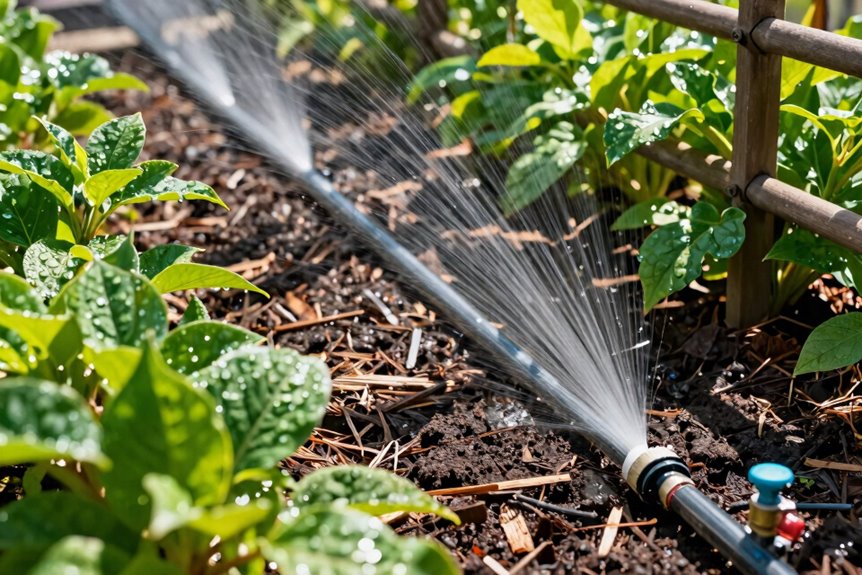
At 90% efficiency, drip irrigation turns every gallon into growth instead of waste. Water moves slowly from emitters straight into the soil with no mist evaporating into the air and no puddles on paths.
Water efficiency happens because you control exactly where moisture goes. Selecting proper emitter flow rates, 2, 4, or 8 liters per hour, matches each plant’s water needs. Tomatoes require higher flow rates while herbs need lower rates.
Pressure regulators keep everything gentle at 15-30 PSI, so tubes don’t burst. Backflow preventers protect your drinking water. Together, these parts create proper soil moisture without guesswork.
Water distribution stays concentrated around roots. Weeds between rows don’t benefit from excess moisture. Drip irrigation works effectively for beds, borders, and pots where water conservation matters.
7 Best Drip Kits for Every Garden Size: Tested and Ranked
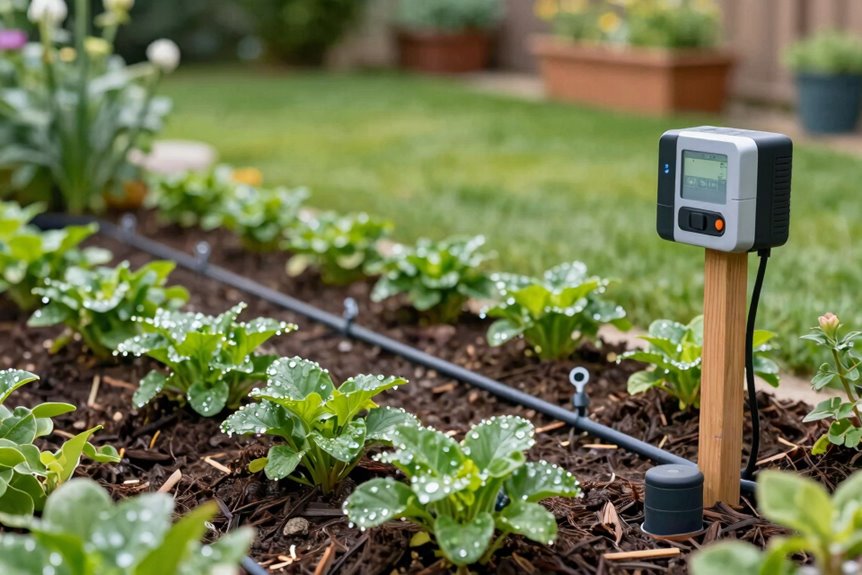
I’ve tested dozens of drip kits in my own backyard, from cramped patio setups to sprawling vegetable patches, to identify what actually matters when selecting one. For small gardens under 100 square feet, look for compact kits like the Rain Bird Drip Irrigation Kit with pre-cut tubing. This eliminates the need to wrestle with scissors or measuring tapes. Medium-sized plots need expandable systems such as the Orbit DripMaster, which lets you snap on extra zones without rebuilding everything from scratch.
Kit Selection Criteria
Three things matter most when picking a drip kit: how much ground I’m covering, what’s in the box, and whether my plants will actually get the right drink. Drip irrigation kits aren’t one-size-fits-all, so I pay close attention to system capacity and emitter flow rates, usually 2, 4, or 8 liters per hour, to match my tomatoes versus my thirsty squash.
Water efficiency starts with smart valve zoning. I keep drip tubing under 400 feet per valve and cap each zone at 200 emitters. Timer compatibility matters too; some kits like the Raindrip R560DR include one, but others require separate sourcing.
Before buying, I always check:
- System capacity matching my garden’s square footage
- Emitter flow rates fitting each plant’s thirst level
- Valve zoning limits for even water pressure
- Timer compatibility (built-in or DIY-ready)
- Installation guidelines I can actually follow
Small Garden Options
Small gardens deserve smart watering, and I’ve found some drip kits that won’t overwhelm my patio or empty my wallet.
Drip irrigation excels for water efficiency in any small garden. I’ve tested several starter options worth considering.
The Rain Bird LNDDRIPKIT ($99.26) handles up to 30 plants with three emitter options: 2, 4, or 8 LPH. No timer, but solid basics. The Raindrip R560DR waters 20 plants and includes timer integration, keeping things affordable.
For tighter spaces, Proven Winners WaterWise ($49.99) covers 10 plants with vinyl tubing and drippers. The Instapark Automatic Watering System ($32.95) offers timer integration too, though build quality varies due to the budget-friendly price point.
Run underground tubing beneath mulch protection for optimal results. This hides lines, keeps soil moist longer, and looks tidy. Keep runs under 400 feet per valve, limit 200 emitters per zone. Plan ahead, as you’ll want weather monitors eventually.
Medium Garden Solutions
Most medium-sized gardens hit that sweet spot where a simple hose feels clumsy, but you don’t need industrial gear either. I’ve tested these drip irrigation options to help you find your perfect match.
- DIG GE200 covers 700 sq. ft. with 11 micro sprinklers for even plant watering across varying soil types. You’ll need a separate timer.
- Rain Bird LNDDRIPKIT handles 30 plants at $99.26. This is a solid system capacity, but no timer is included.
- Raindrip R560DR waters 20 plants and includes a timer. You’ll want to grab batteries and possibly an extra pressure regulator.
- Proven Winners WaterWise starts at 10 plants with expandability to 30 containers for $49.99, offering gentle water efficiency for container gardens.
- Instapark Automatic serves smaller setups with a timer included, though some parts feel flimsy.
Select the system that matches your garden’s specific size and plant count.
Soaker Hoses vs. Sprinklers: Where Each Still Works
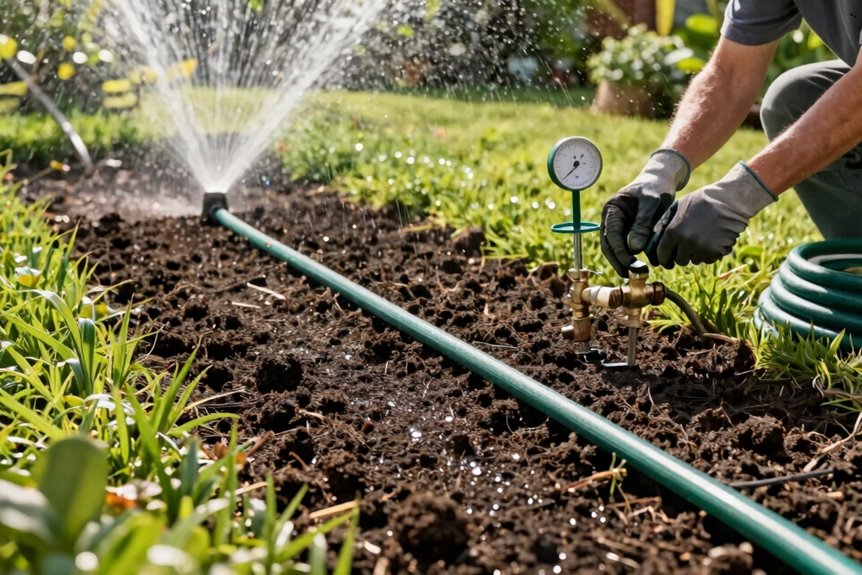
Soaker hoses work best when you’ve got a straight, narrow bed. Think a 20-foot row of tomatoes sitting flat on level ground, where water can seep evenly through the porous rubber without pooling or skipping spots. Sprinklers still earn their keep for broad lawns, though they spray half the water onto driveways when clay soil can’t absorb it fast enough. The real trouble starts on slopes. Soaker hoses turn into trickling rivers that drown the bottom plants and leave the top ones thirsty, while sprinklers send precious water racing downhill before roots can grab it.
Soaker Hose Basics
A few feet of rubber tubing can save you hours of standing with a watering can. Soaker hoses are the friendliest entry point into smarter watering. No fancy gear required, just porous rubber that weeps soil moisture directly to your roots.
What you should know about getting started:
- Water efficiency shines with ground-level soaking instead of spraying leaves
- Soil moisture stays even in straight garden beds about 2-3 feet wide
- Plant health improves when foliage stays dry, dodging pesky fungus issues
- Drip irrigation beats soaker hose precision for containers, but soaker hoses work well in basic rows
- Irrigation systems don’t need to break the bank; a 25-foot soaker costs under $15
Keep it level, keep it simple, and your tomatoes will benefit from consistent watering.
Sprinkler Limitations
Why stick with a sprinkler when your roses are getting drenched and your wallet’s running dry. Sprinkler limitations are significant. Your soil type matters; heavy clay turns into a muddy river, while sandy patches stay thirsty. Wind loss steals your water before it lands. You’re battling runoff, uneven distribution, and endless maintenance just to keep coverage decent.
| What Sprinklers Do | What Actually Happens |
|---|---|
| Spray wide arcs | Water drifts into your neighbor’s yard |
| Promise full coverage | Leaves dry spots like Swiss cheese |
| Run on timers | Create puddles and waste |
| Need weekly checks | Break when you’re busiest |
Soaker hoses aren’t perfect either, but they skip the drama. A simpler watering method reduces maintenance and water waste.
Slope and Layout
Your yard’s got hills and corners? I’ve wrestled with both, and the wrong choice turns watering into a muddy mess. Let’s find your fit.
- Soaker hoses work great for flat, straight rows but puddle at the bottom of slopes
- Sprinkler systems blanket lawns evenly yet waste water streaming downhill on clay
- Drip irrigation shines on inclines. Run tubing downhill to use gravity, or across to slow water distribution
- Rotor heads cover big areas with fewer sprinklers, but demand smart zoning and pressure adjustments
- Buried lines (about 4 inches deep) target soil moisture directly, though watch for hungry rodents
Your irrigation layout isn’t just pipes. It’s strategy. Match your slope management to your plants, and you’ll water effectively on watering day.
Match Your System to Soil, Slope, and Plants
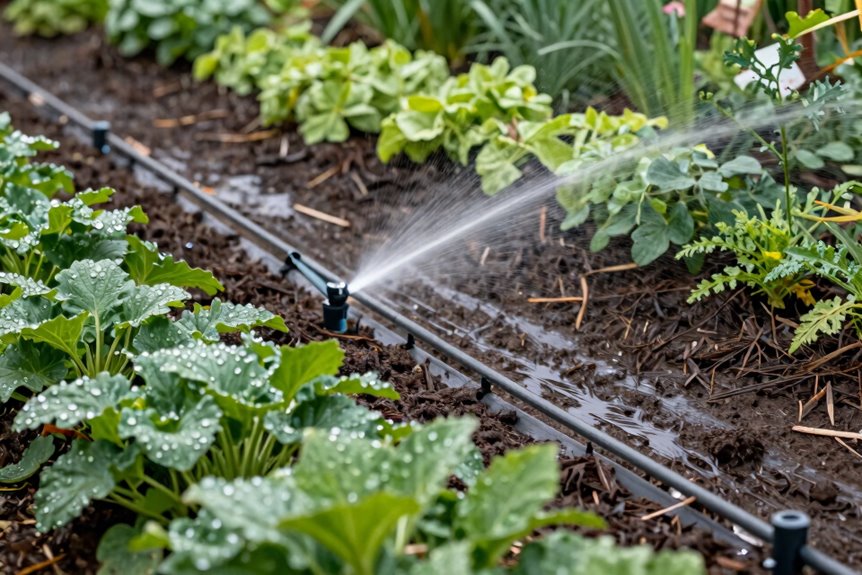
How do you pick the right irrigation setup when your yard has complex needs. First, I check my soil type. Sandy dirt drains like a sieve, so I run drip irrigation longer. Clay holds water, so I cut minutes. Next, I tame the slope. I run lines downhill or across, never straight up, or water pools at the bottom like a muddy soup bowl. For plants, I match tools to needs: rotor sprinkler heads blanket my lawn, while drip hugs my veggie beds and shrubs. I mind water pressure too; most systems want 40–60 PSI. Getting the irrigation system design right means my tomatoes drink slow, my grass gets its shower, and nothing wastes a drop.
Install It Right: Tips That Last for Years
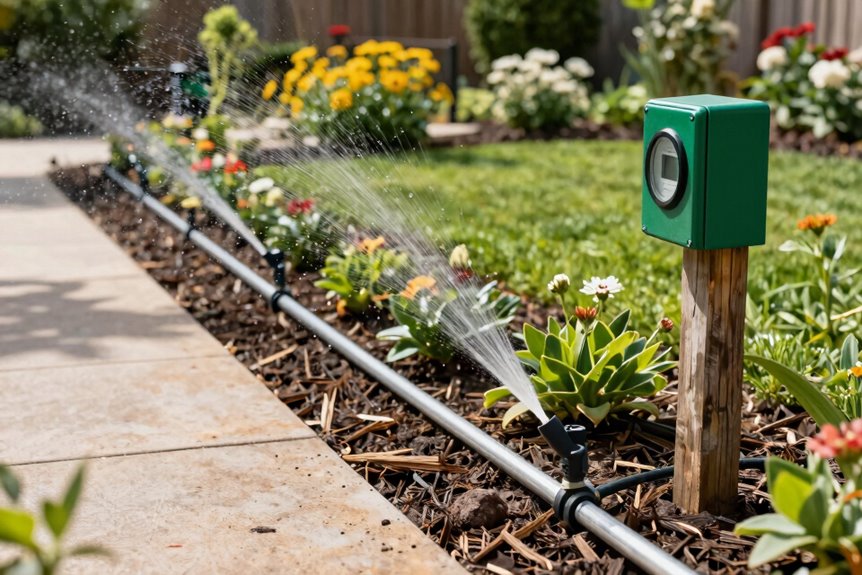
Once you pick your gear, where do you actually put it so it works for years and not just one season? Let me walk you through the installation tips that’ll keep your system humming.
- Place drip irrigation under mulch so the sun doesn’t crack the lines; those 2, 4, or 8 LPH emitters belong right at the root zone watering sweet spot.
- Angle sprinkler systems to hit lawns, not sidewalks. Rotor heads need space to spin.
- Layer a hybrid irrigation setup with drip lines snaking your beds and sprinklers guarding the grass.
- Test water delivery before you bury anything; soggy spots mean you’ve got leaks.
- Space soaker hoses on flat ground only. Uneven terrain makes it difficult to water plants evenly.
Irrigation efficiency requires placing water where roots actually live.