I’ve learned that five netting types cover most garden battles. Standard 1.3–1.4 mm mesh blocks cabbage root fly and birds while letting breezes through. Fine 0.8 mm stops flea beetles and whitefly but restricts airflow. Ultrafine 0.3–0.6 mm thwarts thrips when pest pressure spikes. Butterfly netting at 4–7 mm halts white cabbage moths without overheating your brassicas. Debris netting shields against wind and pigeons but won’t touch tiny insects. Match the mesh to your actual pest, not your hope.
How to Choose Garden Netting: 3 Questions That Decide for You?
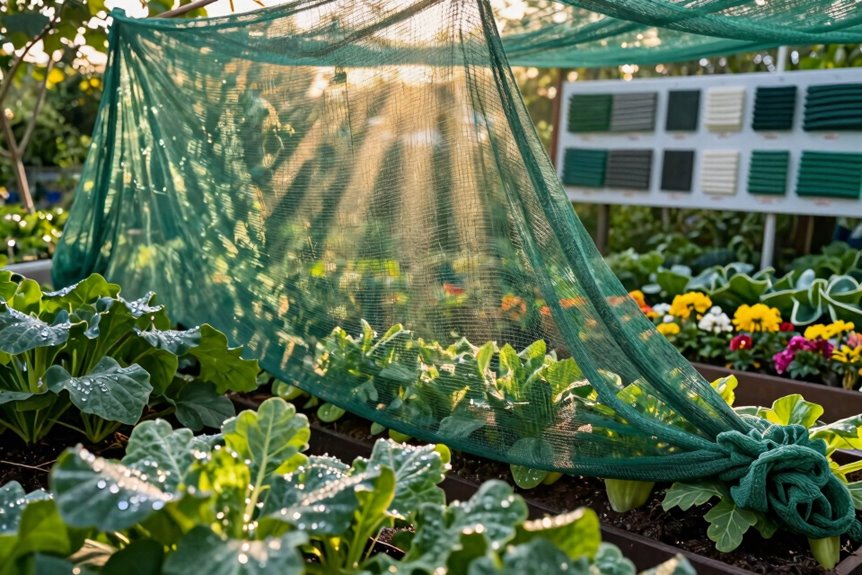
The right garden netting acts as protection against every pest that wants your tomatoes more than you do. Choosing starts with three simple questions. First, what’s bugging you? Bird netting handles pigeons and pheasants, while insect-proof mesh stops cabbage root fly cold. Second, how small are your enemies? Mesh size matters significantly; standard 1.3 mm blocks most pests, but you’ll need 0.8 mm for flea beetles. Butterfly netting at 4–7 mm stops white butterflies without suffocating your brassicas. Third, how much upkeep can you handle? Durability varies widely. Quality garden netting lasts 5–10 years with basic maintenance. Bury edges 5 cm deep and check for rips each spring. Your crops deserve protection that fits your life, not someone else’s garden.
Fine or Standard Garden Netting? Compare Protection Levels
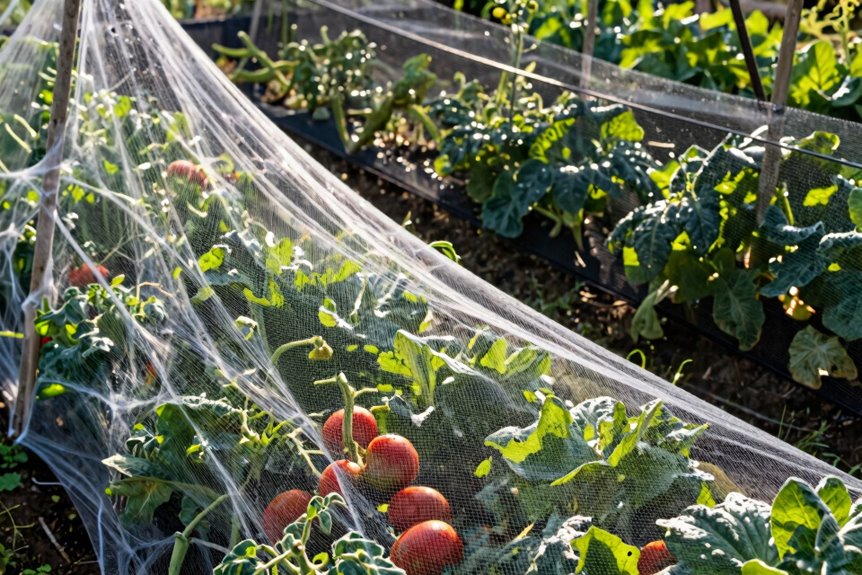
Precision matters when I’m standing in the garden aisle, staring at rolls of netting and wondering which one actually saves my vegetables. Mesh sizes make or break crop protection.
Standard mesh, around 1.3–1.4 mm, handles cabbage root fly, carrot fly, and moths while delivering birds exclusion. However, flea beetles and aphids slip right through like tiny invaders.
Fine mesh, roughly 0.8 mm, stops those sneaky pests: leaf miners, whitefly, greenfly. It continues to exclude birds. The trade-off is slightly less breeze and sunlight reaching plants.
When pest pressure spikes with thrips, ultrafine mesh (0.3–0.6 mm) becomes necessary.
Among garden netting types, matching insect protection to actual pest threats prevents both over-engineering and under-protection.
Netting Alternatives: When Debris Netting or Chicken Wire Work Better
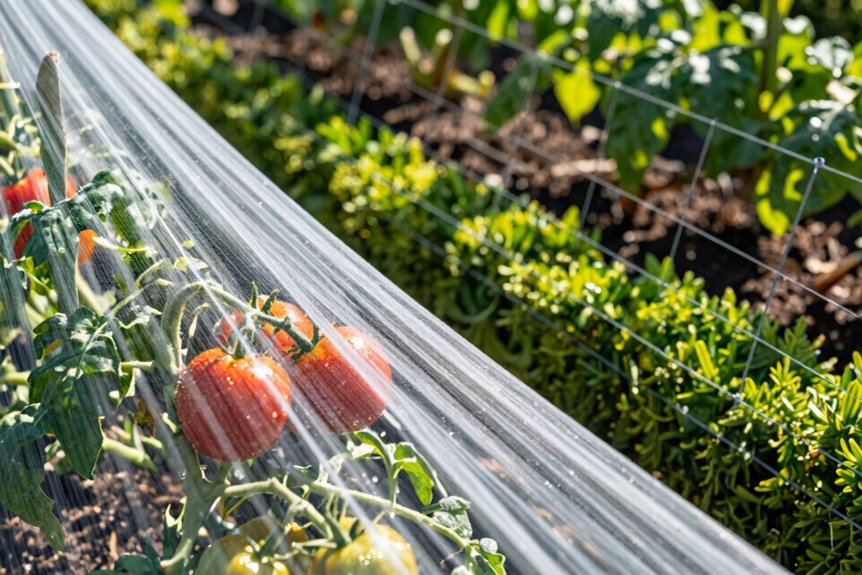
Why stick with garden netting when debris netting or chicken wire might solve my problem better? Sometimes I want simple garden protection without fussing over fancy gear.
Debris netting, the scaffold stuff, makes a solid windbreak for my brassicas. I’ve draped it over broccoli when the breeze gets strong. Its larger mesh lets air through while cushioning harsh gusts. But those holes are too large for flea beetles to notice, so I skip it when I need true pest exclusion.
Chicken wire is my go-to for rabbits and squirrels. Neither option replaces fine insect mesh for carrot flies, but that’s acceptable. I use what’s already in my shed. Netting alternatives mean less stress, more harvests, and more money for seeds.
| Netting Type | Best For | Skip When |
|---|---|---|
| Debris netting | Windbreak, brassicas | Blocking tiny insects |
| Chicken wire | Rabbits, squirrels | Wind protection |
| Insect mesh | Pest exclusion | Budget’s tight |
| Debris netting (repurposed) | Saving money | Long-term small pest control |
| Larger mesh options | Quick fixes | Precision garden protection |
How to Install Garden Netting So Pests Can’t Sneak In
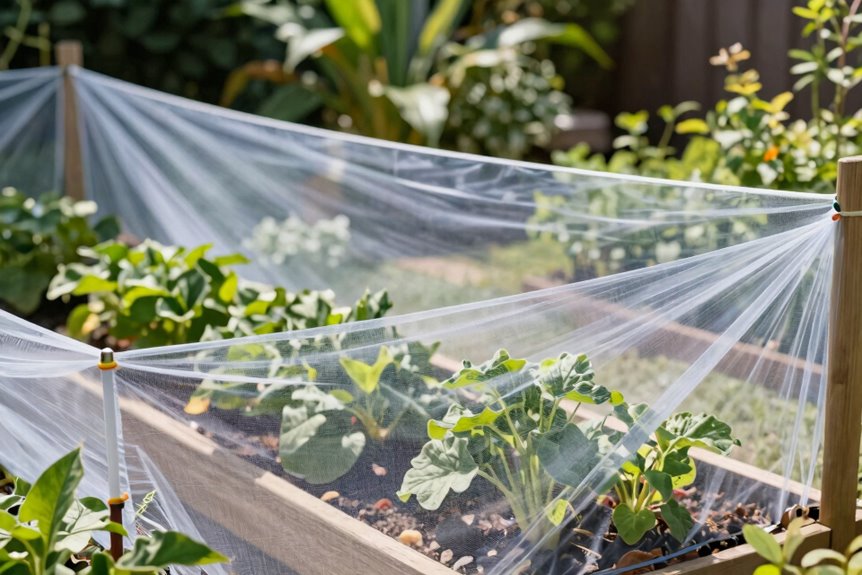
How do I keep every last pest from slipping through? Solid prep wins every time.
I’ll measure my plot twice, then build a sturdy frame and stakes from bamboo or PVC. No gaps means no sneak attacks. When I drape my netting for garden on top, I pull every edge drum-tight. A two-inch seam overlap at joints blocks the clever bugs who’d otherwise cruise right in.
For my brassicas, I choose smaller mesh insect netting, ultrafine like a window screen. To protect from birds over my berry patch, UV-resistant polyethylene nets last multiple seasons without turning brittle. I leave a zippered side for harvest access.
Weather and maintenance require regular attention. I check after storms and patch tears fast with clear tape. One rip means pests can enter freely.
Garden Netting Mesh Sizes: What Blocks Which Pest
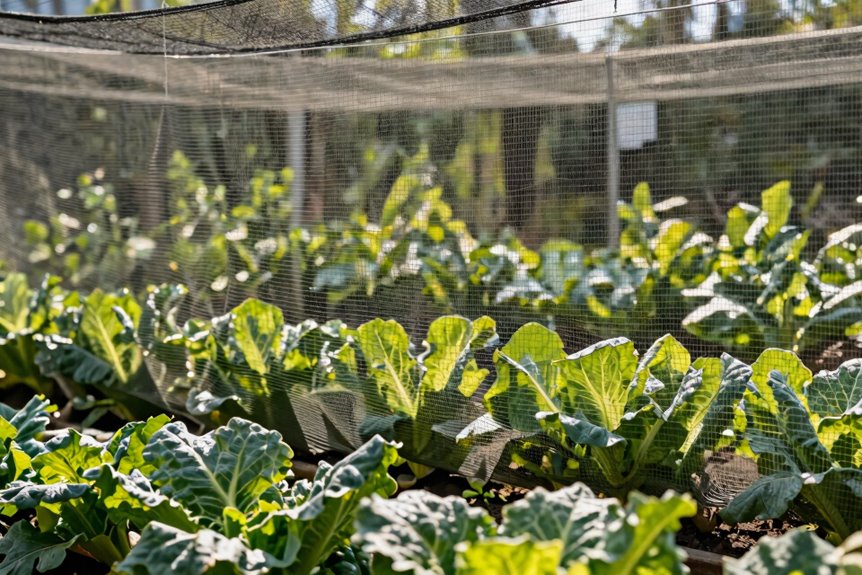
Once my netting’s tight and gap-free, I need to pick the right mesh, or larger pests will find their way through.
Netting mesh sizes determine effectiveness against specific pests. Standard mesh, around 1.3–1.4 mm, stops cabbage root fly, moths, and butterflies, plus birds and mammals. Flea beetles, however, pass through this gap size.
For real pest protection against those little hoppers, I switch to fine mesh at 0.8 mm. It blocks whiteflies, greenfly, and leaf miners too.
When thrips invade, I go ultrafine: 0.3–0.6 mm. Nothing squeezes through that.
Butterfly netting’s different. 4–7 mm works if leaves don’t touch it.
Slug protection needs mentioning: slugs ooze through bigger holes, so finer netting or copper tape prevents damage to lettuce and other vulnerable crops.