
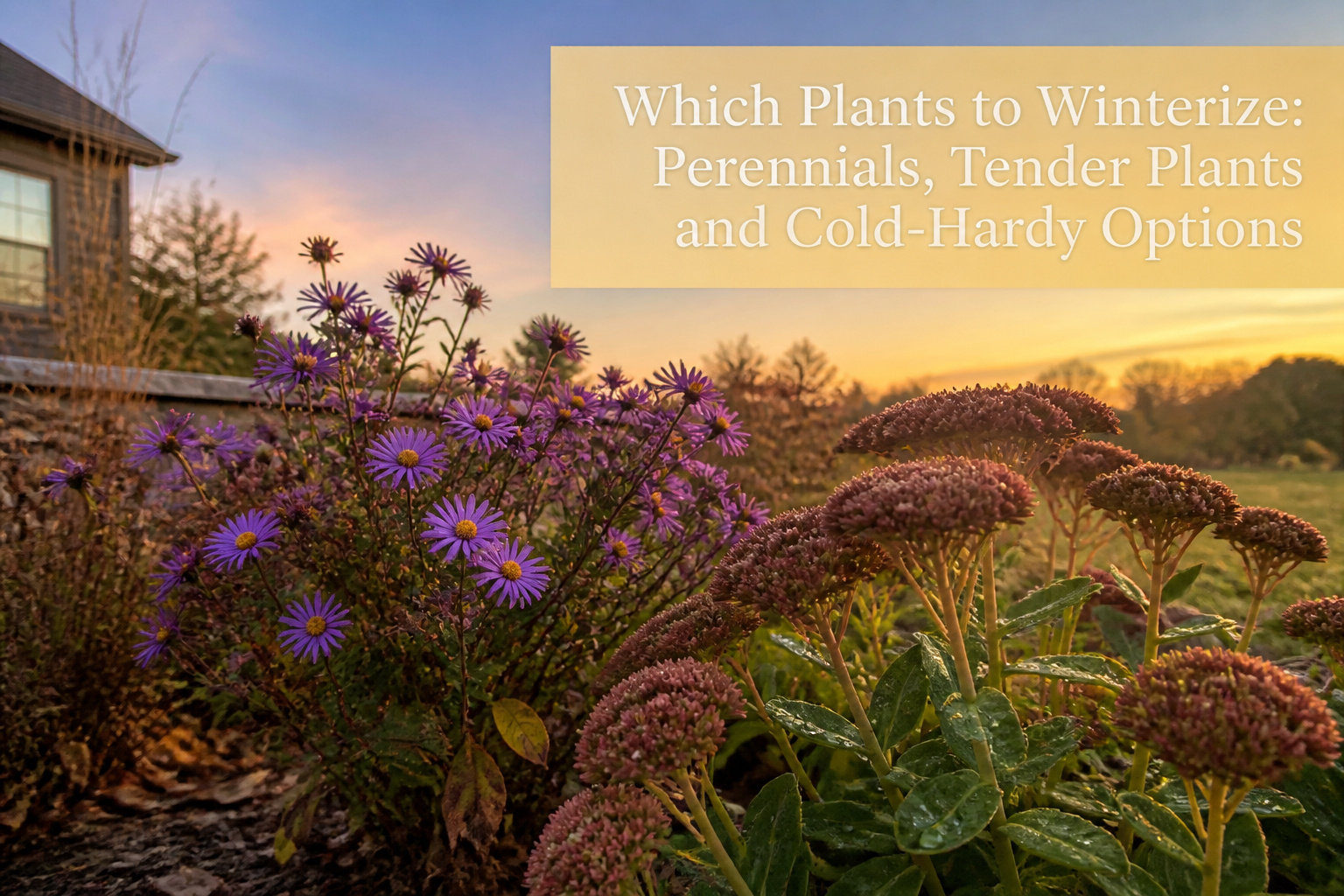
Which plants to winterize depends on how much cold they can take and how little attention you want to give them. The same perennial bed can hold sedum that only needs dead stalks snipped and asters that rot from the crown if you leave more than four inches of stem standing through winter.
Perennials That Need Minimal Winter Care
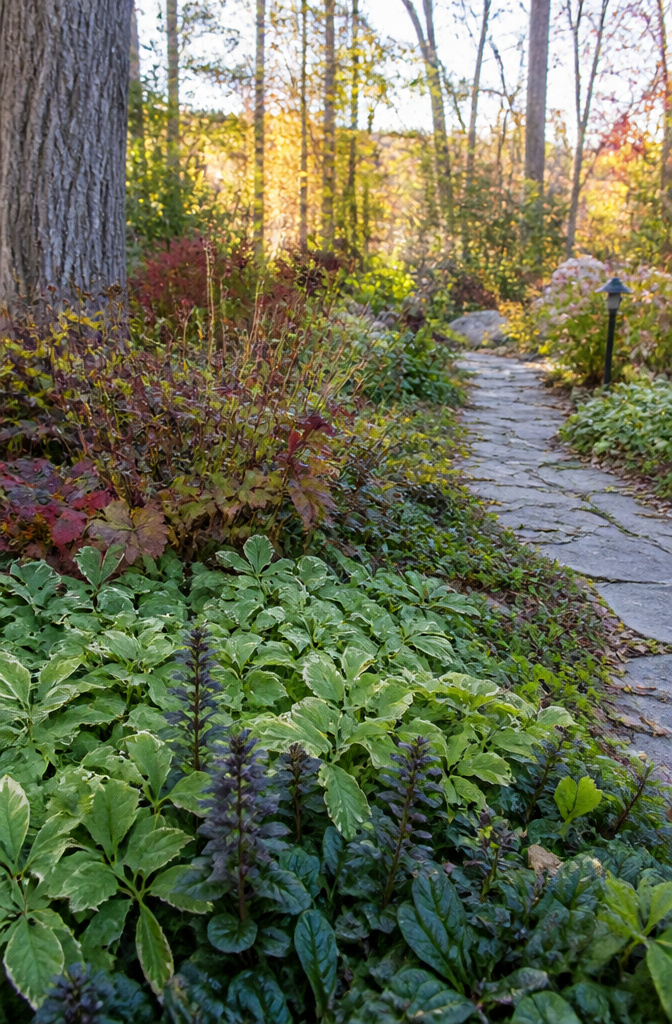
Some perennials ask so little of you in fall that the line between "winterizing" and "tidying up" barely exists. Minimal intervention means cutting out dead stalks or stems and nothing more; no mulch mounds, no burlap wraps, no late-season watering regimen. These plants handle freeze-thaw cycles on their own because their roots sit deep enough or spread wide enough to stay put.
Aegopodium, commonly called bishop’s weed, and Ajuga, or bugleweed, both spread into dense mats that insulate their own crowns. Artemesia, the wormwoods, and Coreopsis Verticillata carry enough woody structure that the remaining stems shield next year’s growth without rotting. Helleborus, the hellebores, often stay semi-evergreen and begin pushing new foliage while snow still covers the ground, so fall cutting does more harm than good. Sedum, with its thick stems and water-storing leaves, shrugs off desiccating winds that would flatten tender annuals. Vinca Minor, the creeping myrtle, roots along its runners so thoroughly that soil heave rarely exposes them.
The difference from plants that need active cutting back is one of timing and risk. Cut a sedum to the ground in November and you remove the bud nodes sitting at each leaf scar; leave the stems standing through frost and the plant knows to drop them on its own. The ones that need intervention, I’ll cover in the next section, but these eight belong on the low-effort side of your garden map.
Perennials to Cut Back to a Few Inches
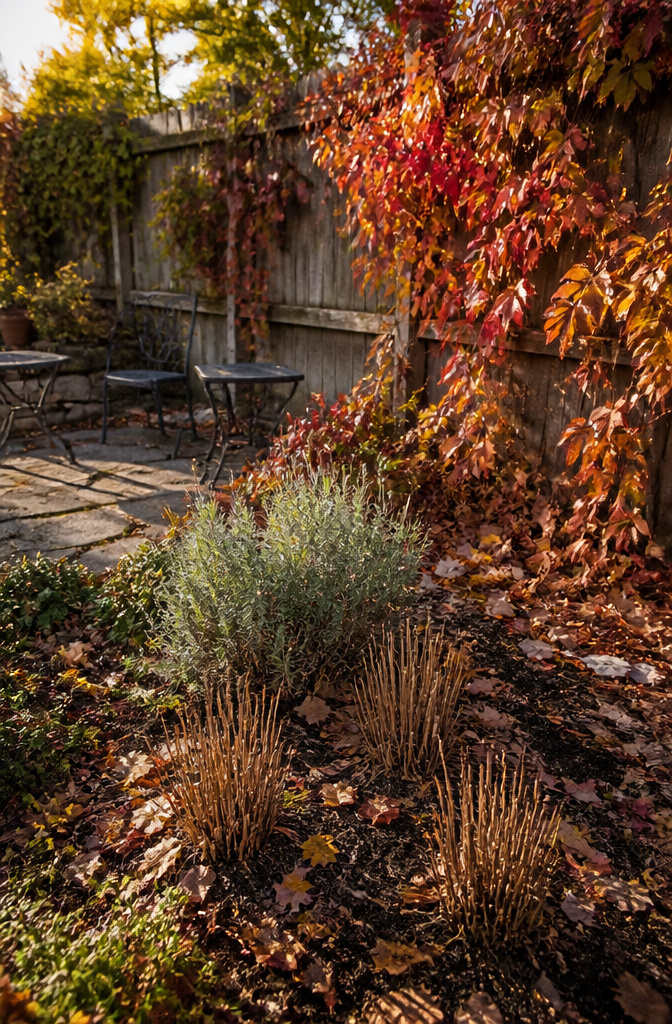
Aster, catmint, and rose mallow all benefit from a hard cutback before the ground freezes. Leave two to four inches of stem above the crown, enough to mark where the plant lives but short enough that no old growth traps moisture and rots through winter.
I used to leave more on asters, thinking the extra height meant extra protection. The opposite happened: six inches of hollow stem filled with rainwater, froze, and split the crowns I was trying to save. Now I cut them to three inches in late October, after the yellowing foliage tells me the plant has drawn everything down into the roots.
Catmint (Nepeta) gets sheared to the same height, though the timing is looser. It rebounds so aggressively in spring that a November trim still works if October slipped past you. The new growth emerges from the base, not from old wood, so any remaining stem above that few-inch stub is dead weight by May.
Rose mallow, the hardy hibiscus, is the one that surprised me. It dies back completely in cold zones, yet cutting to four inches rather than ground level gives you a visible stake to avoid stepping on the dormant crown during early spring cleanup. The stems are thick enough that they take longer to decay, so I remove those stubs once new shoots appear in late spring.
Perennials to Cut Back After Frost Damage
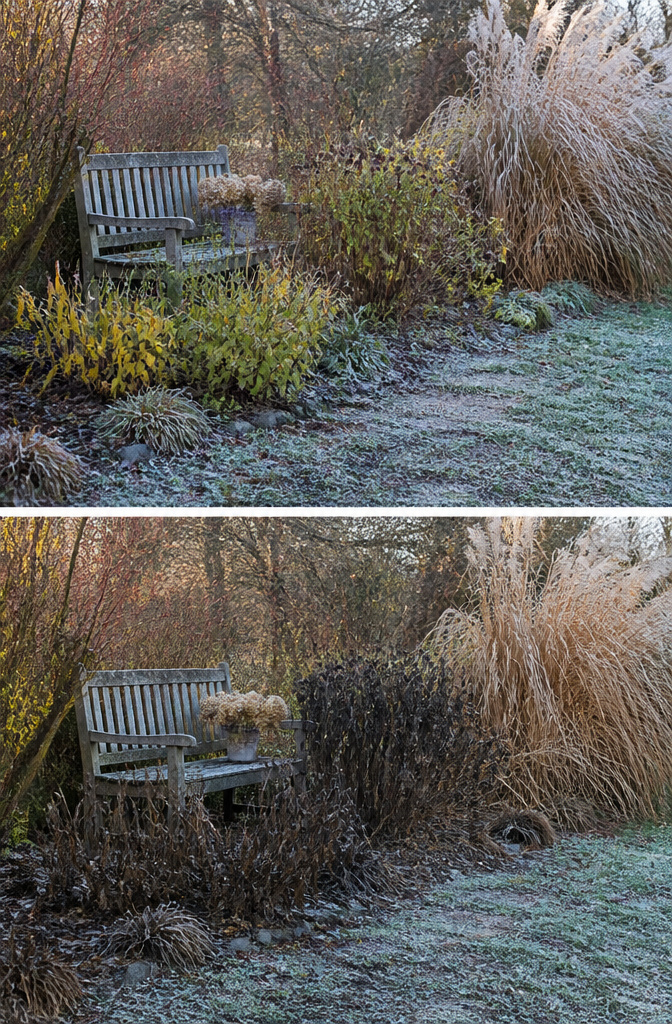
Some perennials look ragged after the first cold snap but still need their stems left alone until frost finishes the job. Anemone, blackberry lily, and Joe-Pye weed all fall into this group. The leaves will blacken and the plant will tell you exactly when it is done for the season. Cutting too early, while the foliage is still green or only partly faded, removes tissue that is still sending energy down to the roots. Wait for blackened leaves after a frost or two before you take the shears to these three. Blackberry lily, botanically Belamcanda chinensis, is often mistaken for a plant that can be tidied up early because its sword-shaped foliage browns unevenly. That patchy look is not the signal. The same applies to Eupatorium: the tall stems may lean and yellow, but the plant is not finished until the frost turns the remaining leaves fully dark. Anemone hybrids in particular will hold green lower leaves late into fall that are still doing work. The test is visual and simple. If the foliage has not blackened, your hands stay in your pockets.
Tender Plants Needing Special Protection
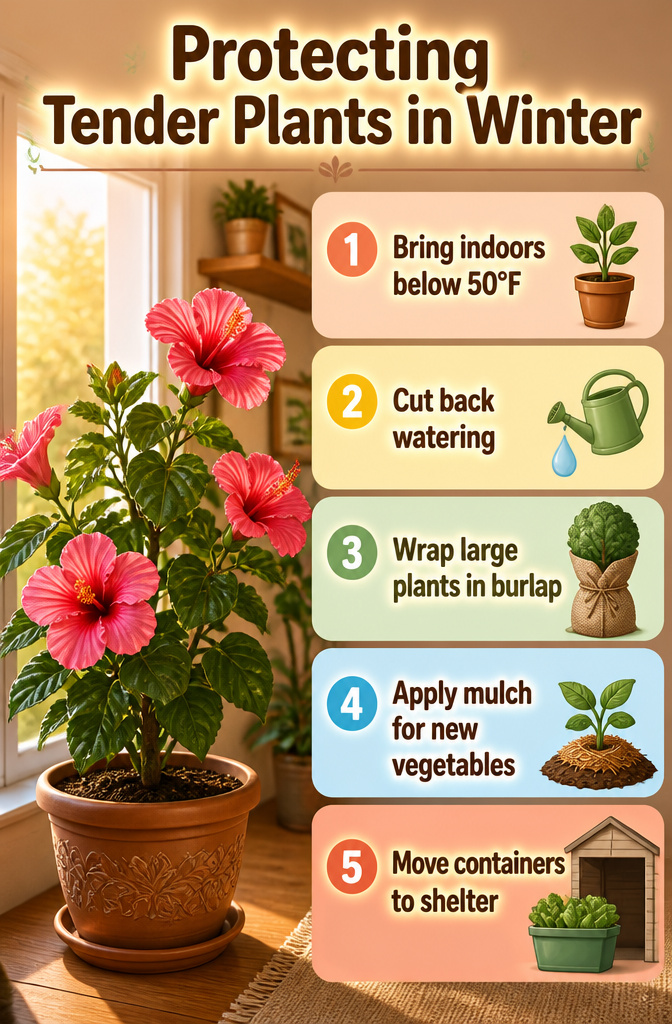
Tropical plants and newly planted vegetables are the two groups that will not make it through a winter without your intervention. The tropicals that spent summer on the patio, hibiscus and bougainvillea and the rest, need to come inside before nighttime temperatures drop below 50°F. I have lost more than one to a single cold snap I thought I could wait out. Once indoors, they sit in the brightest window I have, and I cut water back to avoid root rot in the lower light. For the ones too large to move, burlap wrapping is the usual advice, though the sources I found were thin on exactly how to secure it around a six-foot fiddle-leaf or whether to leave an air gap. My own approach has been to wrap loosely and hope, which is not a method I would recommend.
Newly planted vegetables and tender seedlings fall into a different problem. Their root systems are shallow, so the freeze-thaw cycle that heaves soil can push them right out of the ground. A 2 to 4 inch layer of organic mulch, straw or shredded leaves or bark, applied after the first hard freeze, keeps soil temperature steadier and holds those roots in place. Keep the mulch a couple of inches back from the stem itself; piled against it, the material traps moisture and invites rot, or gives rodents cover to gnaw. Container vegetables are simpler to handle: move them to a garage or basement when frost threatens, water well beforehand since moist soil holds more heat than dry, and bring them back out only when the forecast clears.
Plants That Stay Outside All Winter

Not every plant on your patio needs to come inside once the temperature drops. Christmas cactus actually sets its buds better when it stays outside until frost is pending, so bringing it in early costs you the winter bloom. I used to haul mine in at the first cool night and wondered why I never got flowers until February, if at all.
Hens and chicks are another stay-outer. These succulents are cold-hardy enough to go dormant against a brick wall and revive on their own come spring. The wall matters: it holds daytime heat and blocks wind that would desiccate the rosettes in frozen soil. Without that shelter, even tough plants can dry out rather than freeze out.
Placement is the whole job here. A south-facing foundation wall beats a raised pot on an open balcony, and drainage still counts in winter. Wet roots in a cold pot rot where dry roots in gritty mix simply sleep.
Water Until the Ground Freezes
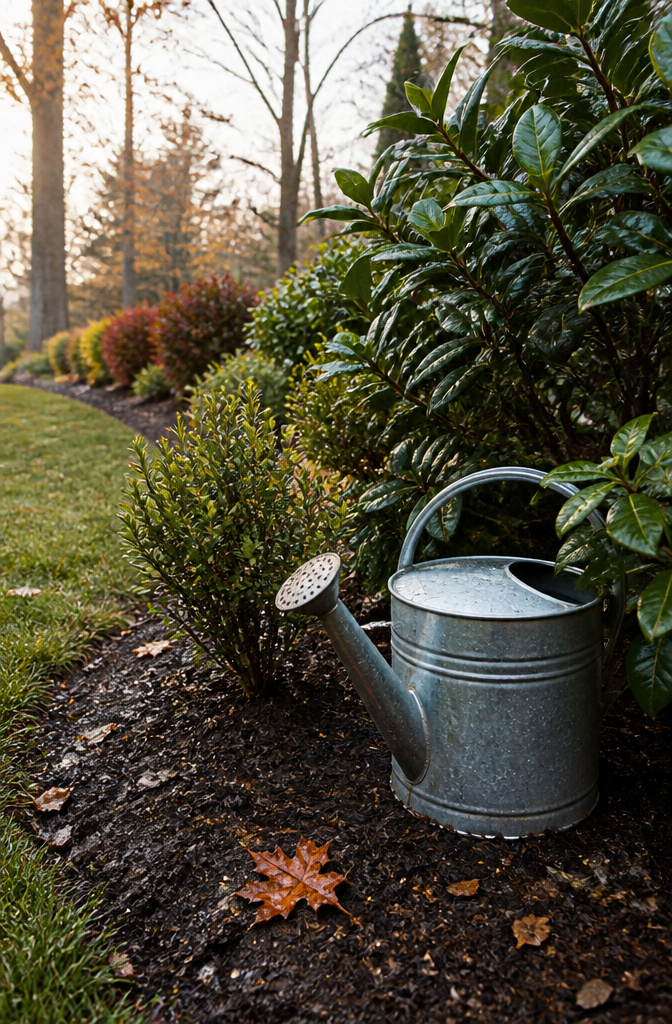
Cold soil pulls moisture from roots even when the air feels still, and frozen ground leaves plants with no way to replace what they lose. Keep watering until the ground freezes is the single most repeated instruction I found across every winter-prep guide, and it applies to nearly everything in the garden, not just the tender ones.
Broadleaf evergreens and conifers need it most. Their foliage stays active all winter, transpiring through leaves and needles while the roots sit locked in ice. Deciduous trees and shrubs drop their leaves and go dormant, but young or newly planted specimens still have shallow, unestablished roots that dry out fast. A thorough fall watering, carried deep into the root zone, gives them a reservoir to draw against.
The stopping point is literal: water until the soil actually freezes solid, not until the first frost or the first cold night. In most zones that means late October into November, depending on the year. Once the ground turns hard, additional water just pools and ices over, so the last round needs to count. I aim for slow, deep soaking rather than a quick sprinkler pass, letting it sink rather than run off.
Mulch for Insulation and Temperature Control
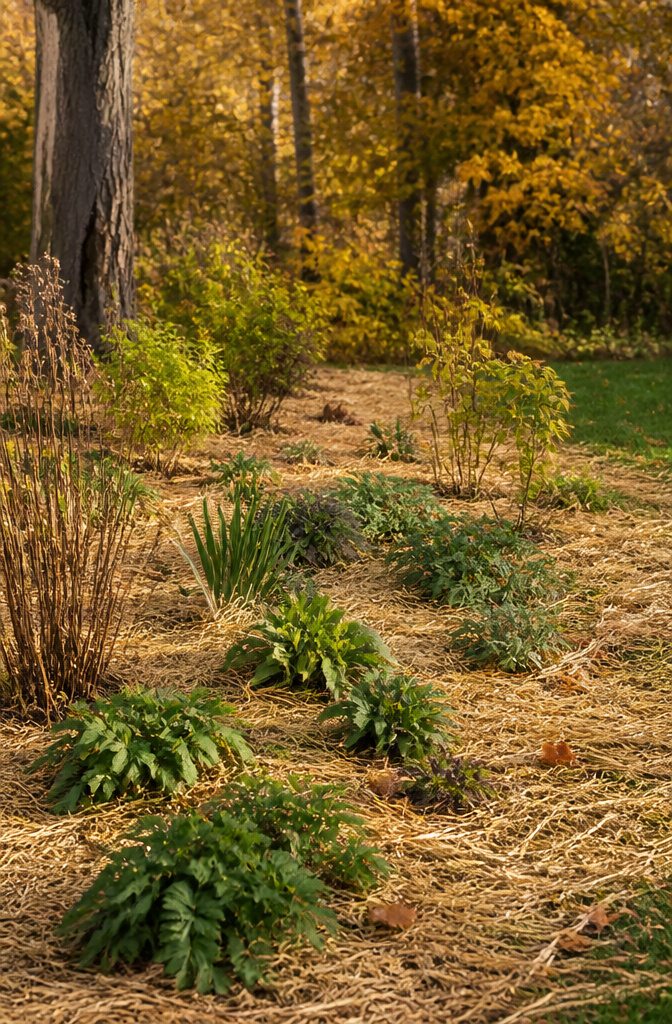
Organic mulch buys time for roots when freeze-thaw cycles heave them toward the surface. Straw, shredded leaves, or bark chips each work; the trick is getting the depth and timing right rather than matching a mulch type to a specific perennial. Two to four inches around the base moderates soil temperature without smothering the crown, and the same depth holds for a heavier blanket of topsoil or wood chips over perennial crowns.
Loose materials like straw or pine needles need more bulk, six to eighteen inches depending on plant size, though leaves alone can mat down and suffocate roots. Chicken wire cages keep deep straw in place around marginally hardy plants such as roses. Wait until the plant is fully dormant but before the ground freezes, typically early to mid-November in cold zones, because mulching too early traps warmth and delays that dormancy. Pull it back in early spring, after the worst cold passes but before buds break; the lower layers may still be frozen, so removal spreads across several days. What comes off can go straight into the garden beds for the growing season.
Why Late Pruning Hurts More Than Helps
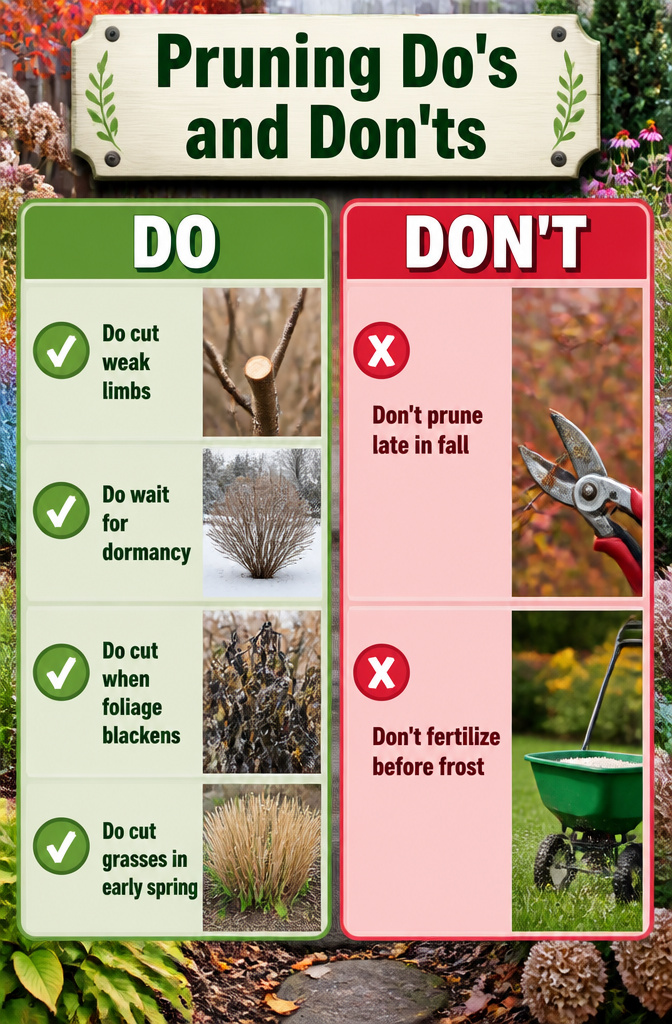
Late pruning pushes a plant to spend its stored energy on soft, new growth that has no time to harden off before frost. The biology is straightforward: cutting stimulates hormones that wake up dormant buds, and those fresh shoots contain more water and less lignin than mature wood. When temperatures drop, they freeze, split, and die back deeper than the original cut would have required. Stop fertilizing about six weeks before the first frost for the same reason; the goal is to let growth taper off naturally rather than force one last flush.
This is where the plant list matters. Woody trees and shrubs should stay largely untouched until a few frosts have passed and true dormancy sets in. The exceptions are weak or dead limbs that might snap under snow load, or branches with obvious disease; those come off now, but lightly. Herbaceous perennials are a different case. Peony, garden phlox, Joe-Pye weed, and bearded iris all tell you themselves when they are ready: foliage blackens after a killing frost, and that is the signal to cut back. Ornamental grasses can wait. Their brown blades and seed heads give you something to look at through winter, and the birds eat well. Cut them back in early spring, though, before new growth starts; once it does, separating dead from living becomes nearly impossible.
Frost Protection with Covers and Wind Screens
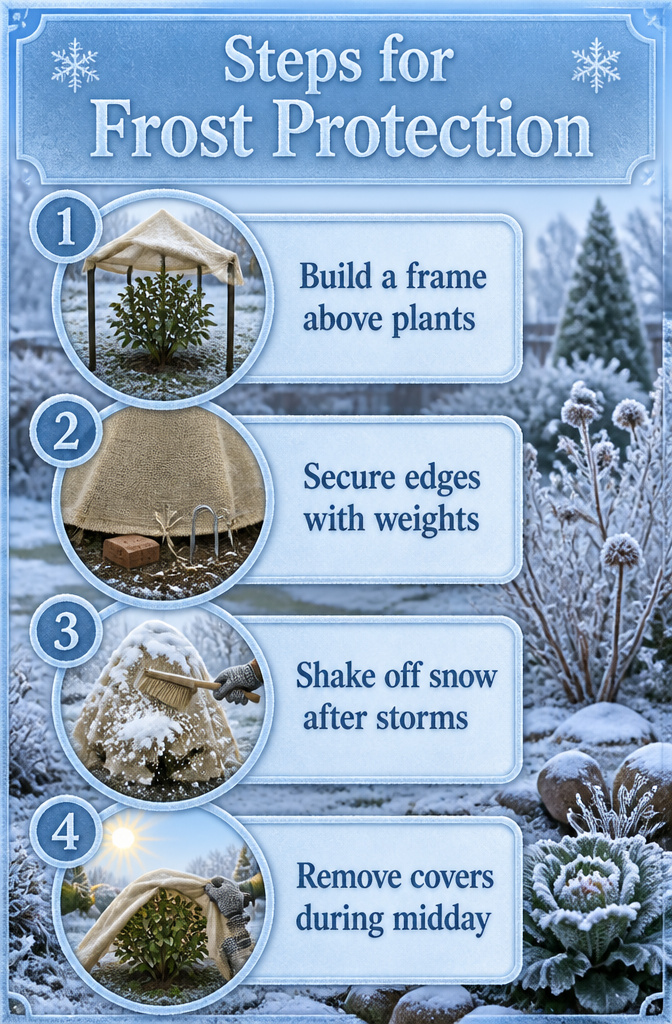
Burlap, old sheets, and frost blankets give tender plants two or three degrees of protection against a sudden freeze, and they still let air move through so moisture does not build up against the leaves. The trick is keeping the fabric off the plant itself. Stretch it over a frame built from rebar, PVC, or wooden stakes rather than wrapping it directly around stems and branches; direct contact damages evergreen foliage and can snap stems when the wind shifts.
Secure the edges with twine, landscape staples, or a few bricks at ground level so the cover does not turn into a sail. If you are bracing for heavy snow or ice, bundle multi-branched shrubs with string first to keep limbs from splitting under the weight, then drape the cover and anchor it around the base. Shake snow off once the threat passes, but let ice melt on its own; pulling at frozen branches breaks more than it saves.
Remove covers during midday when temperatures rise, then put them back on before the next frost hits. A structure that traps too much heat on a sunny day can cook the plant it was meant to save, so leave a gap or choose a breathable material.
Frequently Asked Questions
Which plants should I winterize?
Focus your efforts on tender plants and tropicals that spent summer outdoors, newly planted vegetables with shallow roots, and marginally hardy perennials that need cutting back or mulch protection. Cold-hardy perennials like sedum, hellebore, and Ajuga handle winter with little more than removing dead stalks, while plants such as Christmas cactus and hens and chicks can stay outside entirely with proper placement.
How do I winterize my garden?
Water deeply until the ground actually freezes, cut back specified perennials to two to four inches after frost blackens their foliage, apply two to four inches of organic mulch around bases after the first hard freeze, and move tropicals indoors before nights drop below 50°F. For tender plants staying outside, build frames to hold burlap or frost blankets off the foliage itself.
What plants can stay outside in winter?
Christmas cactus sets buds better when left outdoors until frost is imminent, and hens and chicks survive dormancy against a south-facing brick wall that blocks wind and holds daytime heat. Many established perennials including bishop’s weed, bugleweed, wormwood, threadleaf coreopsis, hellebore, sedum, and creeping myrtle need only minimal tidying to make it through cold months.