Most small bedrooms need one to three gallons, and whole cans prevent running out mid-wall, which leaves a mismatched patch.
A 10-by-12-foot room with eight-foot ceilings covers about 320 square feet, so one gallon handles a single coat while two coats require two gallons.
Textured walls or bold colors like burgundy require extra paint, so adding a buffer is practical.
Primers and cost-saving strategies deserve consideration.
Small Bedroom Paint Needs: 1–3 Gallons (Fast Sizing)
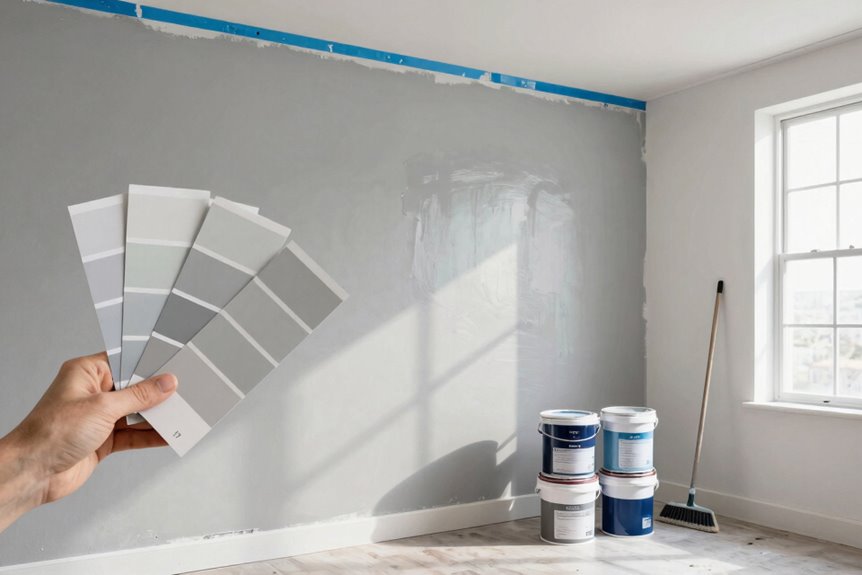
How much paint does a small bedroom actually need? Get the quick math that’ll save you from staring at paint chips forever.
Most small bedrooms need 1–3 gallons total. Standard paint coverage runs about 375–400 square feet per gallon. A 10’×12′ room with 8-foot ceilings has roughly 320 square feet of wall space. One coat needs about one gallon, and two coats need two.
Small bedroom? Plan for 1–3 gallons: one gallon per coat, with a little extra for touch-ups and texture.
Textured walls or switching from dark to light colors require 20% more paint. Round up to whole cans and grab a little extra for inevitable touch-ups when furniture bumps against fresh paint.
Two gallons covers most projects; three gallons ensures complete coverage for multiple coats or larger wall areas.
3 Small Bedroom Paint Scenarios: See Your Match
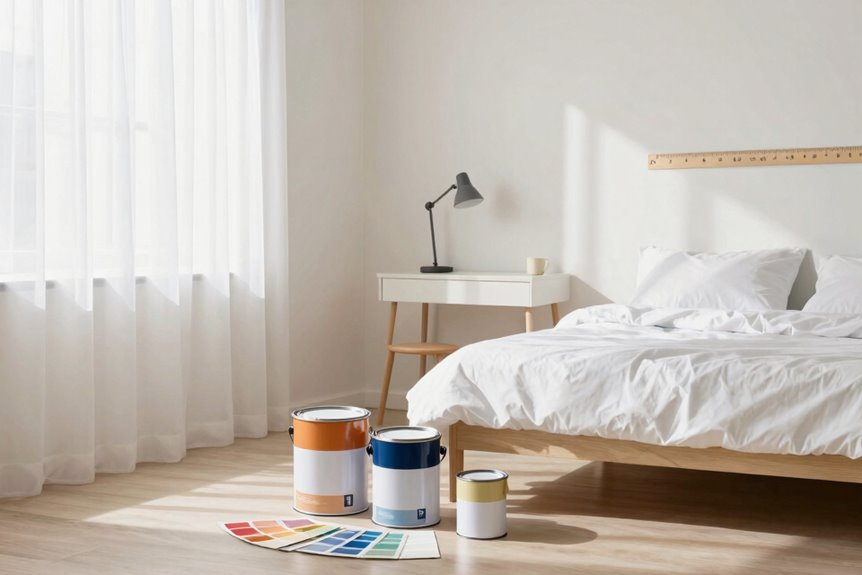
Wondering which paint scenario fits your exact situation? I’ve got three common setups that’ll help you picture your project.
- The Quick Refresh: Your walls look tired but the color’s fine. One coat of paint covers 400 sq ft per gallon, so grab 1–2 gallons for your 800 sq ft bedroom. You’ll finish before lunch.
- The Color Swap: Going from beige to navy? That’s two coats. Plan on 2 gallons of paint, maybe 2.5 if your walls feel like sandpaper.
- The Total Transformation: Textured walls plus a bold new shade means 2.5–4 gallons of paint. The bumps drink up extra coverage, and the result will feel like a brand new room.
Which sounds like your weekend?
Measure Your Small Bedroom Walls (No Skipping)
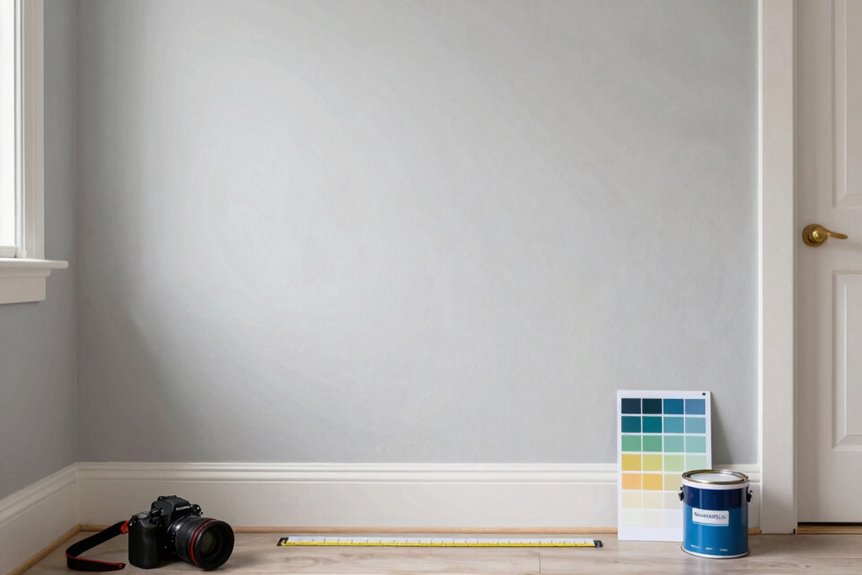
Why skip the step that saves you from a mid-project hardware run? I grab my tape measure and figure out my wall area first. For my 12-by-14-foot bedroom with 8-foot ceilings, I calculate two walls at 12-by-8 (96 square feet each) plus two walls at 14-by-8 (112 square feet each). That gives me 416 square feet of wall area total. I always round up and add 10–15% for touch-ups and mistakes. If my walls are textured or porous, I bump that up another 20% because the surface drinks more paint. Knowing my exact wall area keeps me from standing in the paint aisle twice. Measure once, paint with confidence.
Small Bedroom Paint Coverage: Why the Can Lies
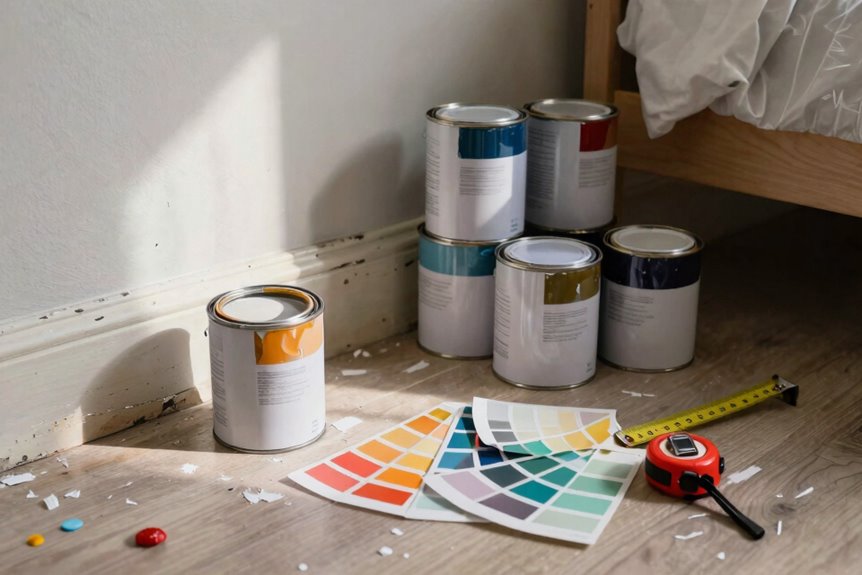
I’ve got my wall measurements, but the paint aisle gets tricky. That can promises 400 square feet of coverage, but don’t bet your weekend on it. Paint coverage ratings are best-case scenario numbers, like gas mileage on a car going downhill with a tailwind.
Here’s what actually happens:
- Your 416-square-foot bedroom swallows more paint than the label suggests
- One coat rarely hides the old color completely, so plan for two
- Grab that extra can because running out mid-wall creates delays and frustration
That 10–15% waste margin? It’s necessary buffer space. You’ll want touch-up paint later when life scuffs your walls.
Watch for Coverage Killers: Texture, Dark Color, New Drywall

Texture, dark colors, and new drywall can quietly wreck your paint math. That bumpy orange-peel texture adds about 20% more surface area, so one gallon now covers closer to 330 square feet instead of 416. Deep navy or charcoal requires three coats instead of two, or you’ll still see streaks when the afternoon light hits the wall.
Texture Demands More Paint
Every textured wall I’ve painted has sucked up way more paint than I expected. That bumpy surface isn’t just for looks; it creates extra nooks and crannies that drink up your paint. I’ve learned the hard way that texture coverage drops from about 400 square feet per gallon down to roughly 250. That’s a significant difference.
Here’s what you’re really dealing with:
- All those tiny peaks and valleys add about 20% more surface area than flat walls
- One coat on textured walls often needs 1.25 cans instead of one smooth can
- Your roller drags and sputters as it fights to push paint into every crevice
I always multiply my wall area by 1.2 before buying. Skip this math and you’ll be making a second trip to the store.
Dark Colors Need Extra
Texture isn’t the only thing that’ll empty your paint cans faster. Dark colors need extra attention. That deep navy or charcoal you’re eyeing? It’s gorgeous, but it’s hungry.
Dark pigments fight you on paint coverage. One coat looks patchy, like a half-faded tattoo. You’ll need two coats minimum, sometimes three if you’re covering something light. For a small bedroom, plan about 0.5–1 gallon more than your single-coat math suggests.
Pair that dark color with new drywall? That thirsty surface drinks primer like lemonades in July. Skip the primer and you’ll be buying cans four and five, guaranteed.
Check your wall’s texture, color jump, and prime accordingly. Your wallet and your Saturday will benefit from this planning.
Prime First: When It Saves You a Gallon

Why start with a smelly, white layer when I’m itching to see color on my walls? Primer isn’t just extra work; it’s my secret weapon for buying less paint overall.
When I prime unfinished drywall or cover nasty stains, that white basecoat seals the surface so my topcoat glides on evenly. Suddenly I don’t need three or four finish coats. That’s where I actually save my gallon.
My go-to strategy for small bedrooms:
- Apply one coat of primer tinted toward my final color for maximum hiding power
- Watch my thirsty drywall stop sucking up expensive pigment
- Enjoy vibrant results without double-dipping into my wallet
Primer transforms my walls into teammates, not opponents. Prime first and you’ll notice the difference at checkout.
Do You Need One Coat or Two?
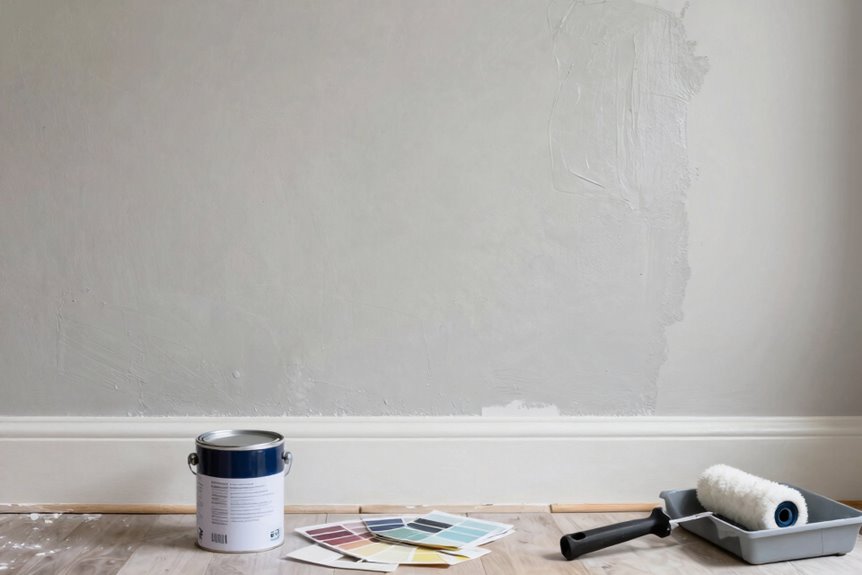
I always ask myself how dramatic the change will be before deciding on coats. If I’m covering a deep navy with soft white, that second coat isn’t optional. It’s the difference between streaky walls and the smooth, velvety finish you want to run your hand across. Fresh drywall or bumpy textures drink up paint like a sponge, so I’ll grab that extra can rather than make a mid-project store run.
Coverage and Color Change
How much wall can you actually cover with one can of paint? I get this question all the time, so let’s break it down together.
One gallon gives you about 375–400 square feet of coverage per coat on smooth walls. My small bedroom has around 416 square feet of wall space. That means I’m grabbing 1–2 gallons for each coat I plan to apply.
Here’s what I’m really dealing with:
- Going from beige to beige? One coat might do the trick
- Covering that dark navy with sunny yellow? Plan on two coats
- Switching from builder’s white to something cozy? Two coats for sure
I always round up to whole cans and toss in an extra 10–20% for touch-ups. You’ll want that buffer when you spot a scuff near the light switch.
Surface Condition Factors
What really changes the math isn’t just the color; it’s what your walls feel like under your hand. Run your palm across the surface. Smooth walls allow standard paint coverage of about 375 to 400 square feet per gallon, so that 12-by-14-foot bedroom with 8-foot ceilings needs roughly 1.1 gallons for one coat. Bumpy, textured walls or raw, thirsty drywall require up to 20% more paint, requiring a second can. One coat might suffice if you’re staying close to your current shade. Going bold requires two coats. Purchasing an extra gallon prevents splotchy patches and uneven coverage.
Paint Durability Needs
Why do some paint jobs look flawless for years while others scuff up after one clumsy elbow bumps the wall? It often comes down to coats of paint. Durability isn’t just about the can you grab; it’s about building layers that actually protect.
For your small bedroom, consider these factors:
- One coat works if you’re refreshing the same color on smooth walls
- Two coats are necessary when you’re covering that burgundy accent wall with soft gray
- Textured or unfinished drywall drinks up 20% more paint per coat
Always round up to whole cans. A gallon covers roughly 350 square feet, and having extra on hand prevents the need to run back mid-wall. Primer tinted to your shade can reduce the number of coats of paint needed, saving money and time.
Ceiling and Trim for Small Bedrooms: Add or Skip?
When I’m standing in the paint aisle, I often wonder whether my small bedroom’s ceiling deserves its own can or if I can just gloss over it. Matching ceiling and wall color saves money and paint cans, since one gallon covers about 375–400 square feet, enough for my 12′ x 12′ room’s walls and ceiling combined. Separate colors mean extra gallons, but sometimes that crisp white overhead feels worth it.
| What I’m Painting | Cans I’ll Need | My Best Tip |
|---|---|---|
| Walls only | 1 gallon per coat | Grab a quality roller with ⅜” nap |
| Walls + matching ceiling | 1–2 gallons total | Roll ceiling first, less bending |
| Walls + white ceiling | 2–3 gallons | Cut edges with angled brush |
Trim typically requires a pint or quart, though it can be skipped when fresh white already peeks through.
Build in 10% Extra for Waste and Touch-Ups
I always tack on an extra 10% to my paint calculations to avoid running short mid-project when I knock over a roller tray or spot a thin patch drying streaky. That cushion covers mistakes and guarantees I can feather in touch-ups with the exact same can, eliminating awkward shade mismatches under your lamp. For your small bedroom, if your math says one gallon, grab 1.1. Since paint sells whole cans, that’s two quarts or one full gallon, but I round up to ensure adequate coverage.
Avoid Shortages Mid-Project
How often have you spotted a thin patch of wall at two in the morning, your roller already rinsed dry? I’ve been there, and it’s maddening. That’s why I always build extra into my paint quantity.
- The last can cracking open at 11 p.m. while I fix a streak I missed near the ceiling fan
- A quarter-gallon hiding in my closet six months later when my kid scuffs the baseboard with her bike
- Plenty left instead of facing the hardware store’s “discontinued” label
I add ten percent to my total. You should too. If my math lands between one and one-and-a-half gallons, I grab two full gallons. I measure wall space twice using the height-width-length formula, then stash a half-gallon minimum for touch-ups. This eliminates last-minute scrambling.
Cover Spills and Errors
Why stop at the bare minimum when a single drip can derail your whole weekend. I always build in 10% extra for waste and touch-ups. You’ll need it.
Here’s how I calculate it. Take your total wall area and add that buffer before buying. My 12′ by 14′ bedroom with 8′ ceilings has 416 square feet of wall. One coat at 400 square feet per gallon needs 1.04 gallons. Add 10% for waste and touch-ups, and I’m at 1.15 gallons. I round up to two one-gallon cans.
Painting two coats. Double your area first, then divide by coverage, then add your 10%. Textured walls soak up more paint, about 20% extra, so factor that in before calculating waste and touch-ups.
Having a little left over saves you a trip back to the store mid-stroke.
Ensure Color Consistency
The worst phone call you can make is begging the store to mix one more can that matches your batch from last weekend. I always build in 10% extra for waste and touch-ups when I calculate paint coverage. You’ll avoid the regret later.
Here’s what that extra paint saves you from:
- Drips on the carpet that need fixing at midnight
- Scuffs from moving furniture back too soon
- Fading patches where sunlight hits hardest
For my 12′ by 14′ room, I figured 416 square feet of wall. At 375 square feet per can, that’s already tight for two coats. I grabbed that second can plus a splash more. With extra paint on hand, your color stays consistent throughout the project, and you have backup for spills and mistakes.
Small Bedroom Paint: Where to Save and Splurge
When I’m staring at rows of paint cans with prices that swing from $15 to $70, I need to decide where to invest my money wisely.
I save on quantity, not quality. My 12’x12′ bedroom with smooth walls needs just one gallon per coat, maybe 1.2 gallons if the texture’s rough or I’m covering burgundy with sky blue. I grab that budget-friendly $25 can for the ceiling, where imperfect brushwork won’t be noticed.
For wall paint, I splurge on premium brands like Benjamin Moore Regal or Sherwin-Williams Duration ($45–55) because they cover better, meaning fewer coats and less total product. I factor in 10% extra for touch-ups, since moving furniture inevitably causes dings in corners. Buying quality paint upfront prevents the need to repaint later.